Please understand, I make this post as much for those we'll never see reading it as I do for you, T J.
First and foremost, it must be said that
there is no safe place to buy coins unless you know what you're looking at. I do not say this to demean you, but to emphasize the fact that numismatics is, more than any other hobby, a game of knowledge. Evaluating coins is a completely subjective activity, and opinions differ even among the experts. We each have our preferences for type, grade, color and the like, and I speak from experience when I say that one's own preferences can easily get in the way of one's opinions.

With that said, there are more than a few online vendors who carry almost-universal approval among knowledgeable collectors. I'm not going to list them all (hopefully a lot of that will happen here without me), but I will emphasize a couple of things:
1) Even the best among us make mistakes. You'll occasionally buy a dud from the most reputable dealer, or a coin which doesn't meet your standards even though it seemed to at the time. A solid return policy is imperative with any vendor you choose to do business with.
2) Buy nothing unseen which you aren't buying for bulk value. See #1 above.
3) Trust no photo completely. I say this from the standpoint of an enthusiastic coin photographer; it's very darn difficult for me to get a truly accurate coin picture and pretty easy to deceive even the experts with regard to grade and condition. The following coin was purchased in a PCGS MS63 slab:
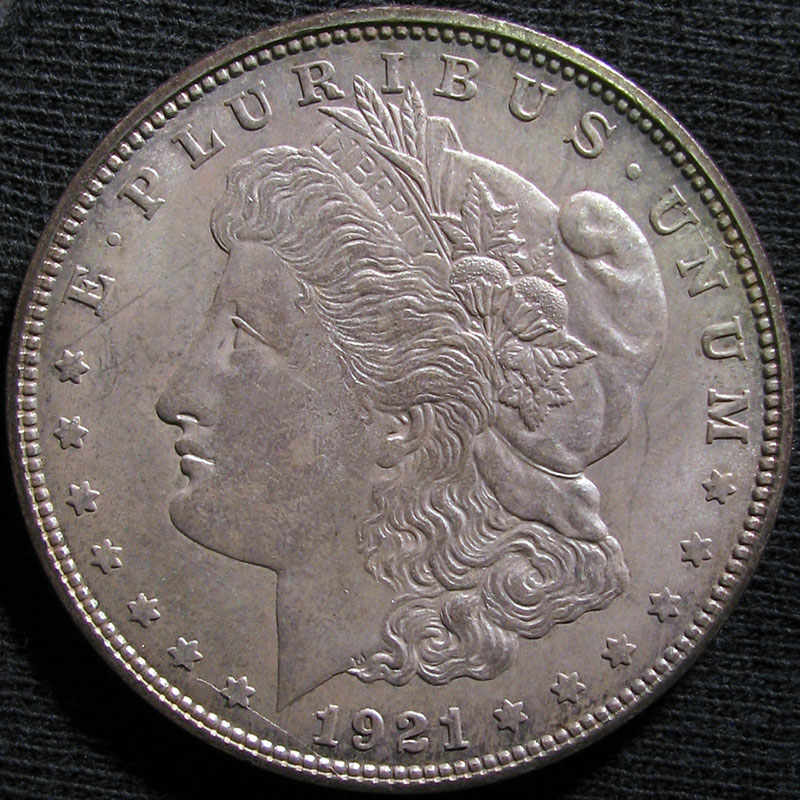
I became suspicious, inspecting the coin in-hand, and did something to it involving a certain liquid which cannot be named in polite company.
This was what lurked under the relatively dull surface:
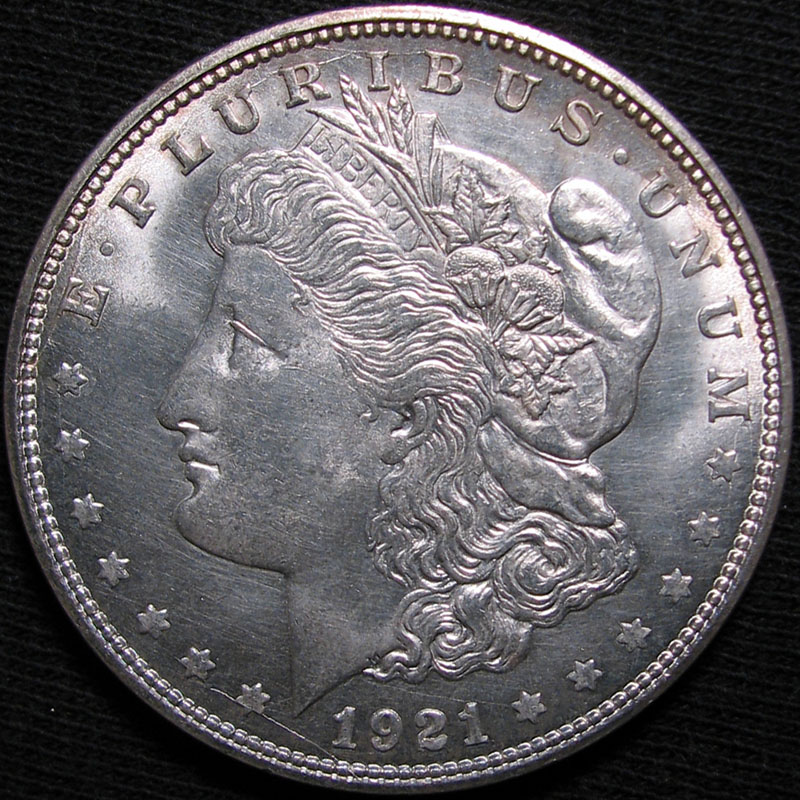
This coin was purchased from a dealer whom I recommend without hesitation, encapsulated in a slab from the most reputable third-party grader. Yet, it had obviously been brushed, hard, and then doctored to hide the brushing.
The point is, had I not known the things I did when I received the coin, I'd have believed it to be a valuable addition to my collection rather than a $100+ mistake.
4)
Know what you're buying. That means knowing how it should look in a specific grade, and knowing what it's worth in that grade. You can only learn this from experience. Allow me to recommend James F. Ruddy's
Photograde Coin Grading Guide as the best way to gain grading experience quickly, and a free membership at Heritage Auctions (Google for a link) to get access to the world's largest database of real-world coin sales as the best way to determine value.
Do not believe published price guides. Many (most) are created by people with a vested interest in high coin prices, and reflect inflated pricing over true value.
The only true measure of a coin's value is what collectors like you and I are willing to pay for it. 5) Don't be afraid to ask. That's what Coin Community is here for. We count among our membership some genuine experts in every facet of collecting, and our mission as a community is to help develop the next generation of collectors. We want to help, and the only dumb question is the one which goes unasked.
Of course, when you ask you're going to hear fifty different opinions. That's the fun of it all.
But there's a lesson to be learned from that, as well - if we're unanimous about a certain opinion, you can take it to the bank, but if we differ it's likely because the "right" answer isn't black and white. So....
6) There are a lot of gray areas in numismatics.
I'm pleased to welcome another addition to our wonderful hobby. Collect what you like, ask every question you can think of, and remember that this is the only hobby where you can say that the more money you spend, the more money you'll have.






 Posted 12/09/2008 8:20 pm





