| Author |
 Replies: 36 / Views: 3,960 Replies: 36 / Views: 3,960 |
|
Pillar of the Community
United States
591 Posts |
This was a big head scratcher for me today!   I see this coin I'm interested in on a well known European based online dealer's website. In addition to inquiring about the coin's backstory (something I routinely do just out of personal interest/curiosity), I ask a few other questions: " I see other coins from this same seller with better high resolution photos. Would it be possible to see similar photos of this coin? Also, has any attempt been made to remove these "spots" using acetone?" Answers: " We did not attempt to remove that spot.
It came in a larger coin collection." I then inquire again about photos: " Can you provide additional high resolution photos; other coins from this same vendor have better photos on your website, and this will help in discerning the extent of luster, etc." Finally, today, a response " I relapsed the photo" Original Photos: 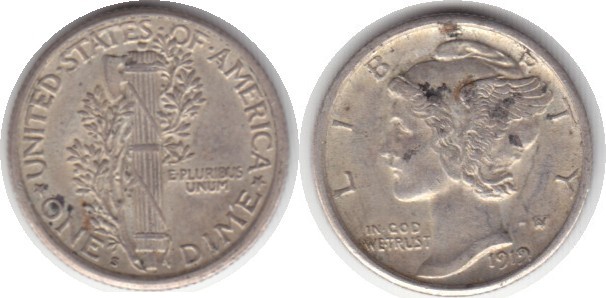 New Photos New Photos: 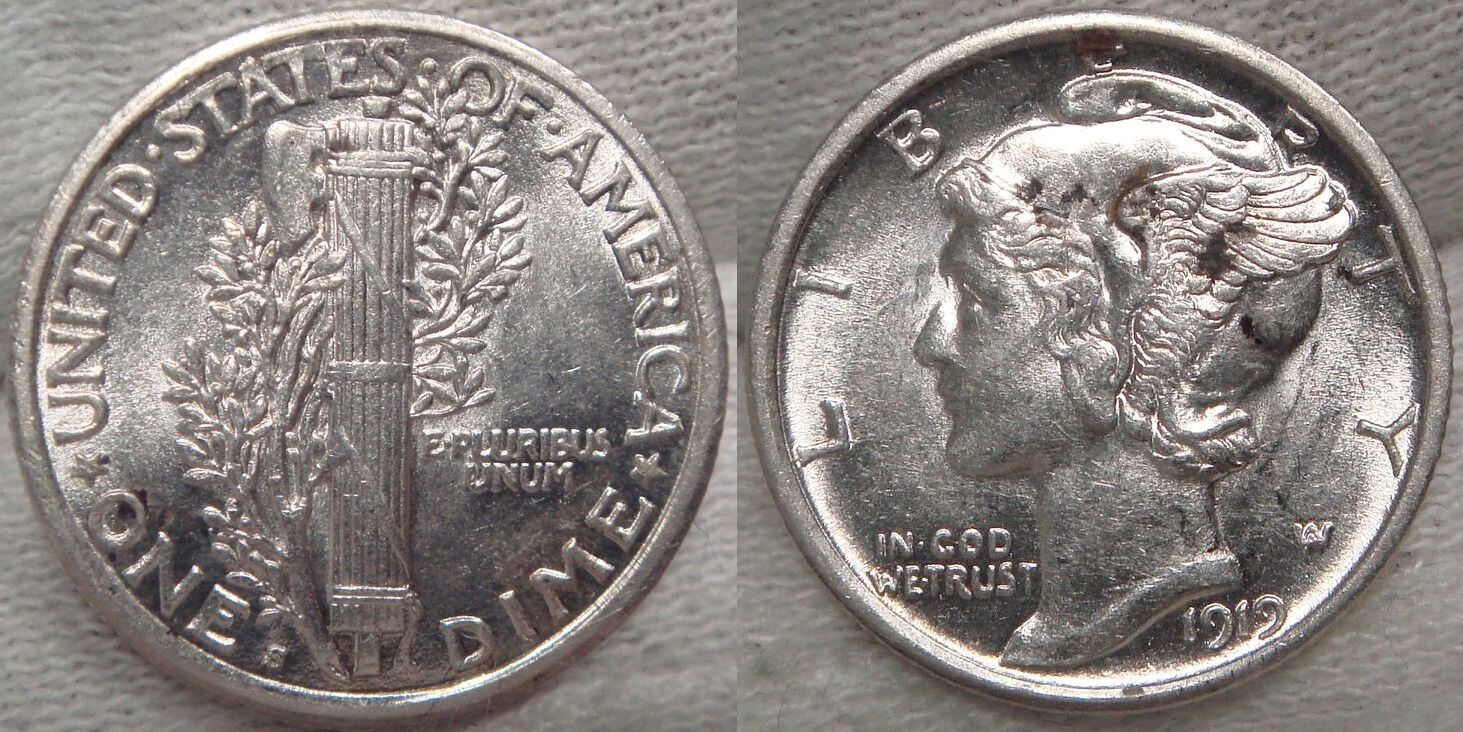 So clearly the coin was dipped! I know others may say, super, great, the coin looks WAY better. However, for myself and many other collectors, much "originality" has now been lost. A 100 year old coin should not look bright and shiny. Sure, the spots, which are now somewhat diminished, took away from eye appeal to some extent, but now the coin is lacking the former natural toning, and now looks brand new. In case anyone is interested, here is a three-part article from a few years ago on the preference for natural toning and originality by US collectors. My approach to coin collecting is generally consistent with this sentiment: " ...almost all sophisticated collectors of U.S. coins have a very strong preference for natural toning, as opposed to coins that have been artificially toned, doctored, or dipped in brightening chemical solutions" https://coinweek.com/us-coins/colle...oins-part-1/https://coinweek.com/us-coins/colle...oins-part-2/https://coinweek.com/us-coins/colle...oins-part-3/After some additional questions about this apparent dipping, the dealer replies with: " Yes,we use an original MS70 for our coins.
We do not use acetone." I was super surprised that asking for better photos resulted in the dealer dipping the coin in MS70. I responded by letting them know that originality is important, and that I would have preferred the coin un-dipped. |
|
|
|
Pillar of the Community
 United States
8946 Posts |
Quote:
A 100 year old coin should not look bright and shiny . That's news to me... I have many coins, some nearly 200 years old that are undipped with full luster. |
|
Pillar of the Community
United States
7398 Posts |
Quote:
. That's news to me... I have many coins, some nearly 200 years old that are undipped with full luster Grape, You know you always win the internet BUT, I do wonder how many of those 200 year old coins are undipped? Same with red copper cents, how can a 200 year old copper coin still be red without any chemical help? |
|
Pillar of the Community
United States
8946 Posts |
Quote:
how can a 200 year old copper coin still be red without any chemical help? It is impossible to bring back natural red color, I have never heard of it being done. The red to brown transition is because of oxidization, unlike with silver where oxidization is on the surface, with copper the oxidization is the surface. Quote:
I do wonder how many of those 200 year old coins are undipped? Likely most (at least that I own). It's always easy to tell an original skinned coin from a dipped coin by the luster and patina. |
|
Pillar of the Community
United States
1005 Posts |
Thats a very sad story, too bad they effectively took that off the market for most collectors. As a side note, why is it called "MS70"? Seems to be a subtle implication that the chemical increases a coin's grade or at least allows it a straight grade
|
|
Pillar of the Community
United States
1005 Posts |
"unlike with silver where oxidization is on the surface, with copper the oxidization is the surface"
This distinction is of dubious veracity, in both cases the passivation involves the surface metal. Sulfur reactions also play a role, particularly for silver.
|
|
Pillar of the Community
United States
5315 Posts |
"Beauty Is In The Eye Of The Beholder".
|
|
Pillar of the Community
 United States
591 Posts |
Quote:
It's always easy to tell an original skinned coin from a dipped coin by the luster and patina. I think "patina" implies toning, which in turn implies not "bright and shiny" (like a dipped coin). "Toning is a term that describes the discoloration or light patina that forms on the surface of coins due to oxygen and chemicals in the air acting on the metal." https://www.coinnews.net/2007/09/03...-value-3565/This seems like a very important point to clarify: In response to my comment " A 100 year old coin should not look bright and shiny" GrapeCollects said " I have many coins, some nearly 200 years old that are undipped with full luster." Yes, "undipped with full luster" is not the same thing as the "bright and shiny" look one sees via dipping (as in the example posted herein). Natural toning does not alter luster, right? But dipping sure does, it alters both toning and luster. The example here is bright and shiny because all the natural toning has been removed. The silver coin is bright and shiny because MS70 is exactly what it says on the bottle, an "Industrial strength coin brightener"! But from what I've read, these dipping agents do in fact diminish the luster as an incremental quantity of surface metal has been removed along with the natural toning (i.e., the oxidized silver on the surface). I don't believe "luster" implies "bright and shiny" at all, or vice versa. Do others disagree? Edited by one_fine_dime
12/29/2020 7:06 pm
|
|
Pillar of the Community
United States
1005 Posts |
Luster is an intrinsic quality of the surface of a struck coin, and is related to how the metal flowing during the strike creates surface textures that affect the albedo. I agree it does not imply bright or shiny, these are distinct concepts; dipping diminishes luster, but increases the coin's shininess.
|
|
Pillar of the Community
2145 Posts |
That's too bad - almost looks like them replated steel cents now with those "grainy" fields.
|
|
Bedrock of the Community
Australia
21794 Posts |
In MS condition, I still prefer original untoned blast white silver coins (that have not been dipped), as if they had just left the coining press,
to
equivalent toned silver coins.
Even more so, with bronze and copper coins.
Why?
For coins that are more than a century old, the high MS untoned coins are much scarcer, sometimes to the point of being non existent.
--------------------------------------------------------------------------------------------------------------------------------------------------------
I don't blame dealers who dip coins if they say so, and they find it is to their commercial advantage.
A dipped coin loses some of it's originality.
Collectors will make up their own mind to buy or not anyway, and the dealer knows that.
|
|
Pillar of the Community
United States
8946 Posts |
Quote:
I think "patina" implies toning, which in turn implies not "bright and shiny" Well not always. I've dealt with and owned a few mint state bust halves, though I was more or less the middleman on the sale, so own isn't the right word per se. A lot of them show full luster with no toning whatsoever but they're not blast like a morgan. Originally undipped and untoned bust era coins have a creamy sort of luster to them that's quite nice. Still full luster, but not toned and not blast. |
|
Pillar of the Community
United States
4085 Posts |
I am not 100% certain this coin was dipped between photo 1 and photo 2. I suspect photo 1 isn't a photo at all but rather is a scan. I've seen many coins look terrible in scans but look fine in a photo, which does a much better job of capturing luster and light.
|
|
Pillar of the Community
United States
591 Posts |
@KenKat -
At first, I was thinking possibly the same. But on closer inspection you can see some of the spots are diminished/removed, for example on Liberty's cheek. When I inquired about this apparent dipping, they admitted using MS70. Yep, all I wanted was better photos as I agree they looked like scanned images.
In any event, the coin sold quickly after the MS70 treatment and new photos!
|
|
CCF Advertiser
United States
1533 Posts |
I can tell you from experience that the dipped coin will sell much more readily than the undipped on in your photo. Maybe not to you, but its a much larger market.
On red cents, I have seen red cents coated in some version of clear nail polish which protects it from oxidation completely. A dip in acetone removes the polish. They used to call it laquer, but I've seen large cents that were preserved that way and they are 170 years old and full red.
Edited by Andrew99
12/30/2020 10:04 am
|
|
Pillar of the Community
United States
3281 Posts |
To my eyes it looks dipped. Something about the fields just look off. I've gone through many BU silver coins from LCSs in the past, and they never looked like this. The texture isn't correct.
And my input when it comes to dipped coins, is that it's a big no no. Unless the coin is at a point of extreme erosion, then I'd vote against it.
|
| |
Replies: 36 / Views: 3,960 |







 Posted 12/29/2020 5:54 pm


