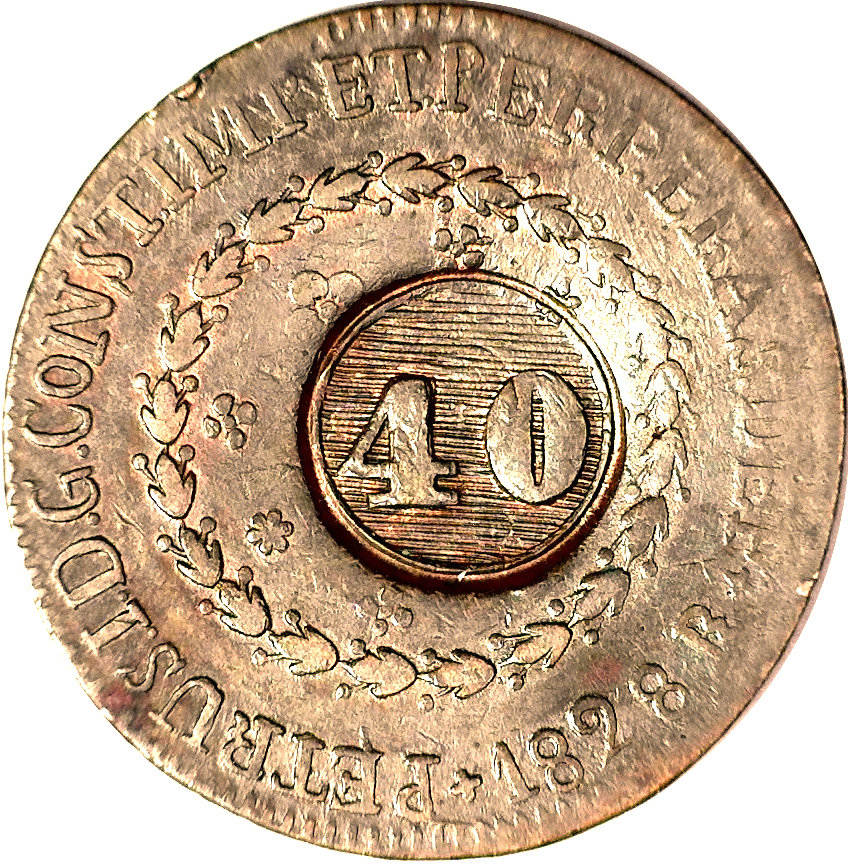
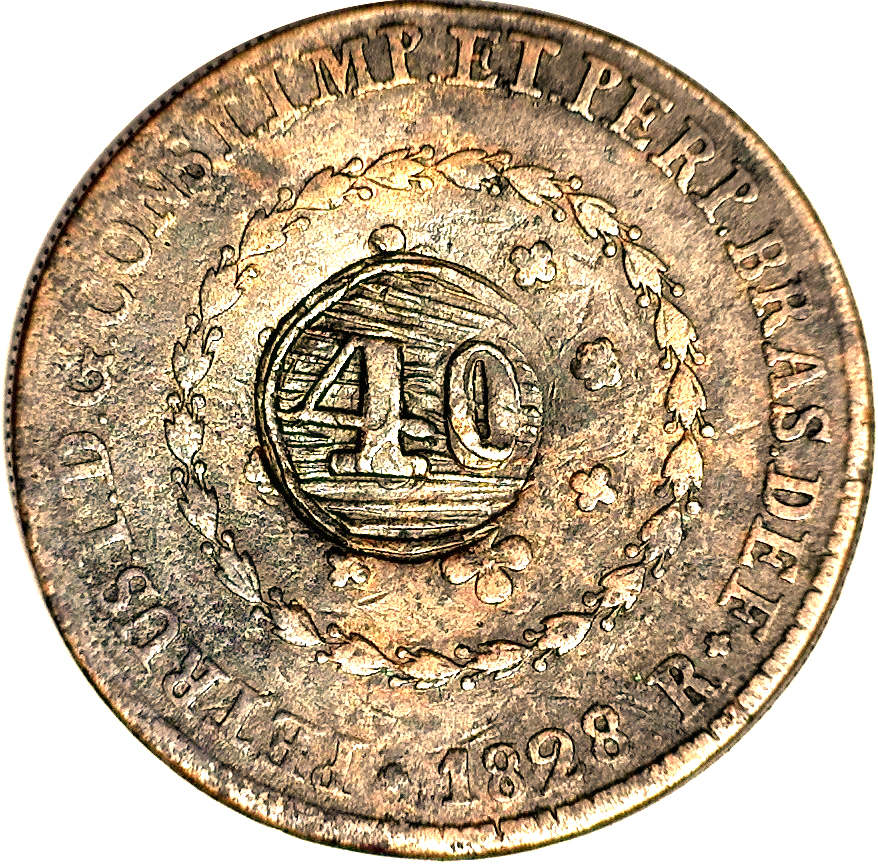
Collecting brazilian copper coins can be very challenging. The documentation regarding these coins is very lacking and the official minting of coins also wasn't so consistent, even in the major mints, not to mention ill equipped mints in the provinces and unauthorized rebellious coinage. As a result, many controversies appear about our copper coins. All of the coins that are presented in this topic are unexpected overstrikes, meaning that there's no legal prevision and no pattern (meaning that there is a much smaller amount of overstrikes than the amount of coins struck over virgin planchets). As they are exceptions, they are just a fraction of a very diverse group. The change in the value to weight ratio of copper coins in 1799 seem to be a reasonable explanation for overstriking, substituting the stamping that took place since 1809 (shield countermarked).


XL Reis 1812 - Rio de Janeiro - (struck over XX Reis, Jose I, 1752-57, GUINEAE)
Though the XX Reis are all overstruck (rare coin), only a handfew of overstruck XL are known. Though the law that authorizes this overstriking is known, it still remains a mistery as why so few XX Reis were made and so few XL were overstruck.


XL Reis 1816 - Bahia - (struck over XX Reis with shield countermark)
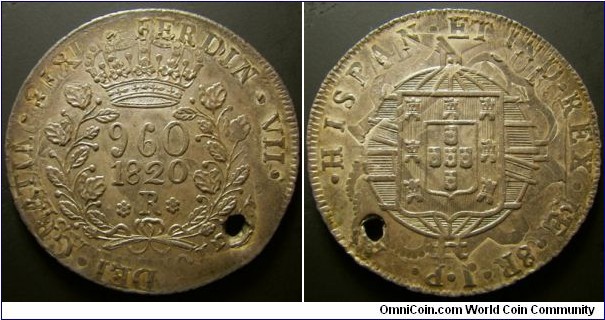
As overstrikes are very common in 1820s Bahia coins and it's known that 960 Reis from this mint with 1816 as the era were struck at least until 1818, this coin may have been struck before the first 1820s dies were manufactured with older dies they had laying around. I know only of another one like this.


20 Reis 1825 - Rio de Janeiro - struck over X Reis with shield countermark (Jose I - 1752-76)
40 Reis 1827 - Rio de Janeiro - struck over XX Reis with shield countermark (João V - 1715-49)
80 Reis 1825 - Rio de Janeiro - struck over XL Reis with shield countermark (1753-96)
80 Reis 1827 - Rio de Janeiro - struck over XL Reis with shield countermark (Jose I - 1753-74)
All the coins above fit in the same context, rare overstrikes among a sea of normal coins. Not much is known. Though there's a law regarding overstriking from 1827, the practice seems to already have been established.


40 Reis 1830 - Rio de Janeiro - struck over XL Reis (João VI - Rio de Janeiro - 1818-1822)
As many counterfeits from the United Kingdom era (1816-1821) appeared in circulation, people started refusing coins from this period. There are discussions since 1830 to overstrike United Kingdom era coins to make sure they were accepted. Though this type of overstrike is common in 1831, this is one of two that I know from 1830.
Full res pictures can be found here:
https://utilidadenumismaticagmp.blo...og-post.html



 Posted 06/12/2021 05:08 am