| Author |
 Replies: 23 / Views: 2,266 Replies: 23 / Views: 2,266 |
|
New Member
United States
4 Posts |
Hi All! Trying to learn the in's and outs of all this. Is the O looking shape above the 2 a carbon spot? Thanks! 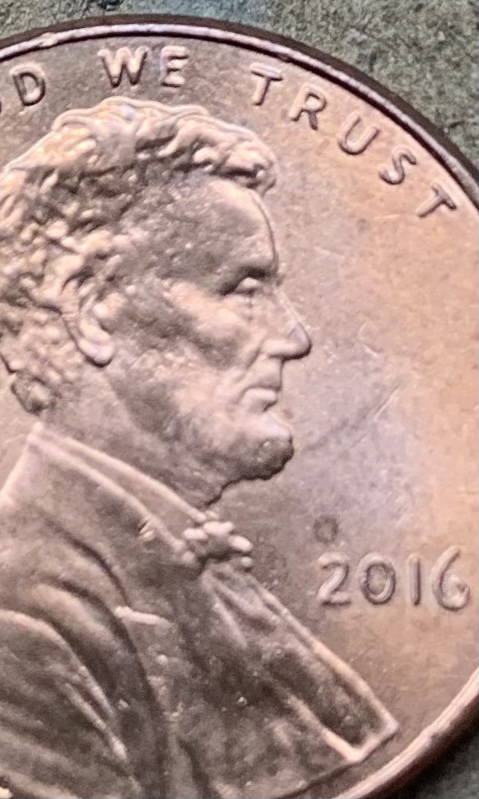 |
|
|
|
Pillar of the Community
United States
524 Posts |
For foundational questions you should consider utilizing the search bar and enter key words of interest, a search of carbon spotting retrieves results for silver, copper and other issues. This may be a good for you: http://goccf.com/t/65710 |
|
Bedrock of the Community
Australia
21792 Posts |
A very shallow form localized corrosion spot, but definitely not a carbon spot.
'Carbon' spots are so named because they are black.
They cannot be removed by an acetone soak.
The chemical composition of black spots on coins is usually due to a copper oxide / sulfide combination, or if a silver coin, silver oxide / sulfide combination.
To help avoid 'carbon' spots on pristine coins, give them an acetone soak first before slabbing, enclosing in a 2x2, or encapsulating.
'Carbon' spots do not occur on coins with a well established patina, because the patina inhibits further surface corrosion.
|
|
Moderator
 United States
56855 Posts |
 . Your photo is out of focus, but the spot looks like a water spot? to me. John1  |
|
Bedrock of the Community
United States
94367 Posts |
Sharper pic would help. to the CCF! |
|
Pillar of the Community
United States
2869 Posts |
I think it is a water spot. Not an error whatsoever.
|
|
Bedrock of the Community
United States
62064 Posts |
Carbon spots are seen on the copper planchet coins. The affected area on your coin looks more like a stain. Just a spender.
|
|
New Member
 United States
4 Posts |
A water spot would come off if I cleaned it, would it not? Again, excuse my ignorance. This is literally week 1 of looking at coins. I've been trying to read up as much as I can and/or search through old posts before posting as to not ask the same question over and over. I've tried taking another picture with a better camera. Hopefully these are clearer. Thanks for everyone's help and insight! 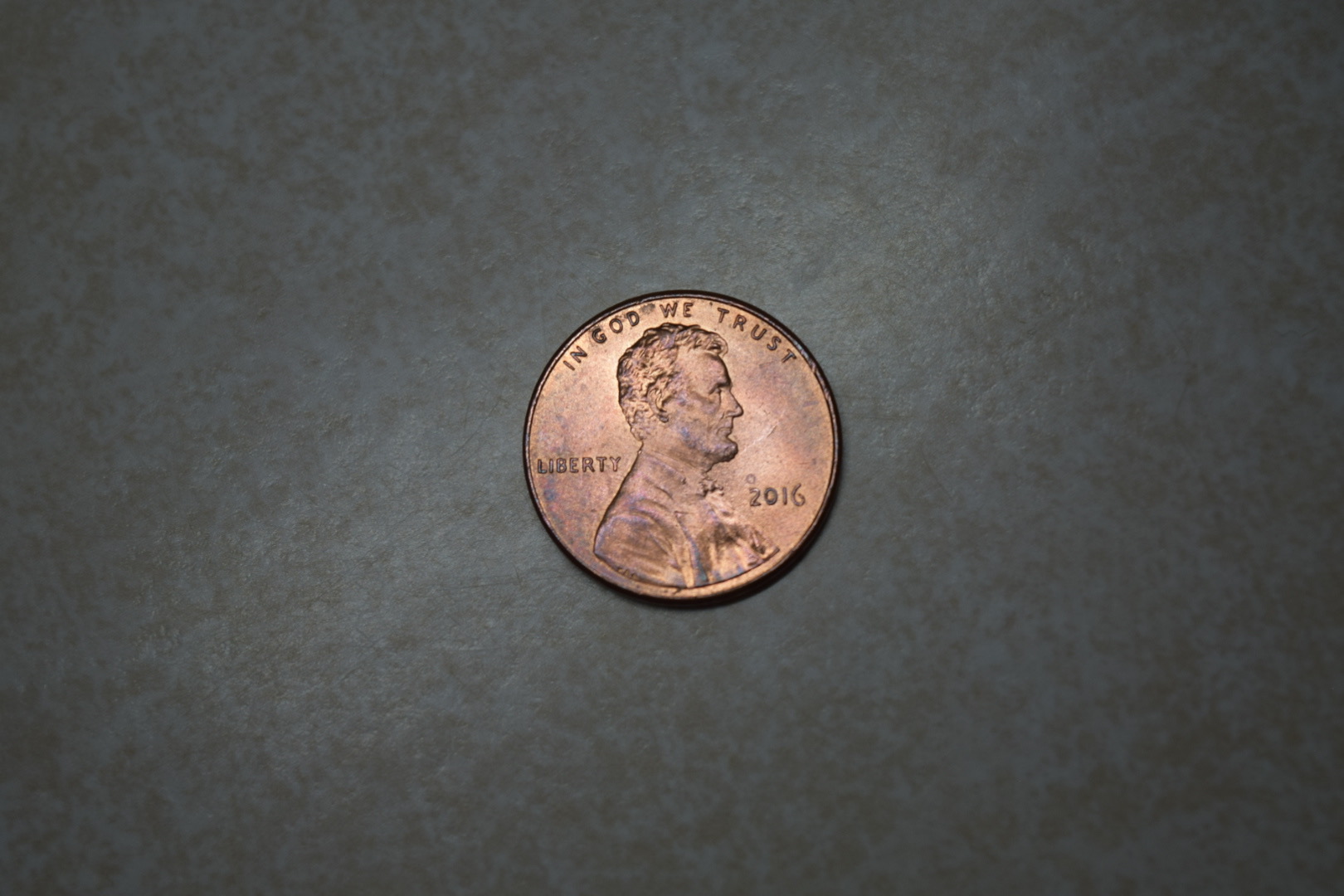 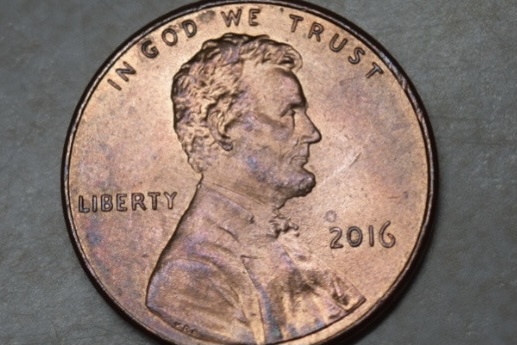 |
|
Pillar of the Community
United States
2869 Posts |
Whatever it is it is a worthless stain that would detract value if the coin was worth over face. The coin is worth 1 cent and the stain is environmental damage of some sort. What sort does not matter
|
|
Bedrock of the Community
United States
19582 Posts |
Some clarification of the term water spotting. The water--or some other fluid--evaporated, leaving behind what was in solution--whether it be dust, fine dirt, or some mineral/chemical concoction. If the spot was formed some time ago, the material(s) involved will have likely bonded with the surface metal, making it very difficult to remove, if at all. You ask a good question.
Edited by ijn1944
07/14/2021 1:08 pm
|
|
Bedrock of the Community
United States
10635 Posts |
NEVER clean your coins. Never.  to the CCF!  |
|
New Member
United States
4 Posts |
While I appreciate your time in replying, Oldfordman, I disagree with you. As someone new to this hobby and eagerly trying to learn about what I am looking at, the stain/damage etc does matter. I'm asking the question because I want to learn about what it is.
Thank you, ijn1944, for going more into depth on the water spotting for me. I looked up all sorts of different coin marks or spots last night before posting this and couldn't find anything that resembled what I was seeing. Definitely makes sense. As a newbie it looked as if it was a 0 from the 2016. Again, thanks for the reply! Can't wait to find my first true error!
|
|
Pillar of the Community
United States
588 Posts |
Kudos to you for being willing to do the hard work and research topics to further your understanding. Far too many people just want to know without having had to learn. Quote:
A water spot would come off if I cleaned it, would it not? Unfortunately, no. The spot you are seeing is actually an area where the copper has reacted with something and changed from copper to a different substance (i.e. copper sulfate or copper oxide or any of a hundred other possibilities). As a result, it's permanent now in the same way the slight darkening visible on Abe's shoulder is also permanent. You can conserve your coins by rinsing in distilled water or acetone (or xylene), but they will only remove surface contaminants that are causing the copper to react and will not change the metal back to copper. Good luck with your hunting and with your learning. |
|
Bedrock of the Community
United States
19582 Posts |
Quote:
Can't wait to find my first true error! Hang in there! For those of us who've been immersed in coin collecting for many, many, many years, most of us have learned that error coins found in circulation are rather few and far between. They're out there, but not mountains of 'em; not several examples per roll of coins. As has been pointed out, keep learning (most of us are still learning), and keep your eyes peeled. Since you're in SoCal, be sure to drop in on a local coin shop and check things out. Edited by ijn1944
07/14/2021 2:32 pm
|
|
Pillar of the Community
United States
549 Posts |
I just want to say that we do clean our coins. It was here that I first learned about acetone and have read that several others use it. Is that not considered cleaning?
|
|
Moderator
United States
56855 Posts |
Quote:
Is that not considered cleaning? No,it it considered conservation. John1 |
| |
Replies: 23 / Views: 2,266 |










 Posted 07/14/2021 01:43 am


