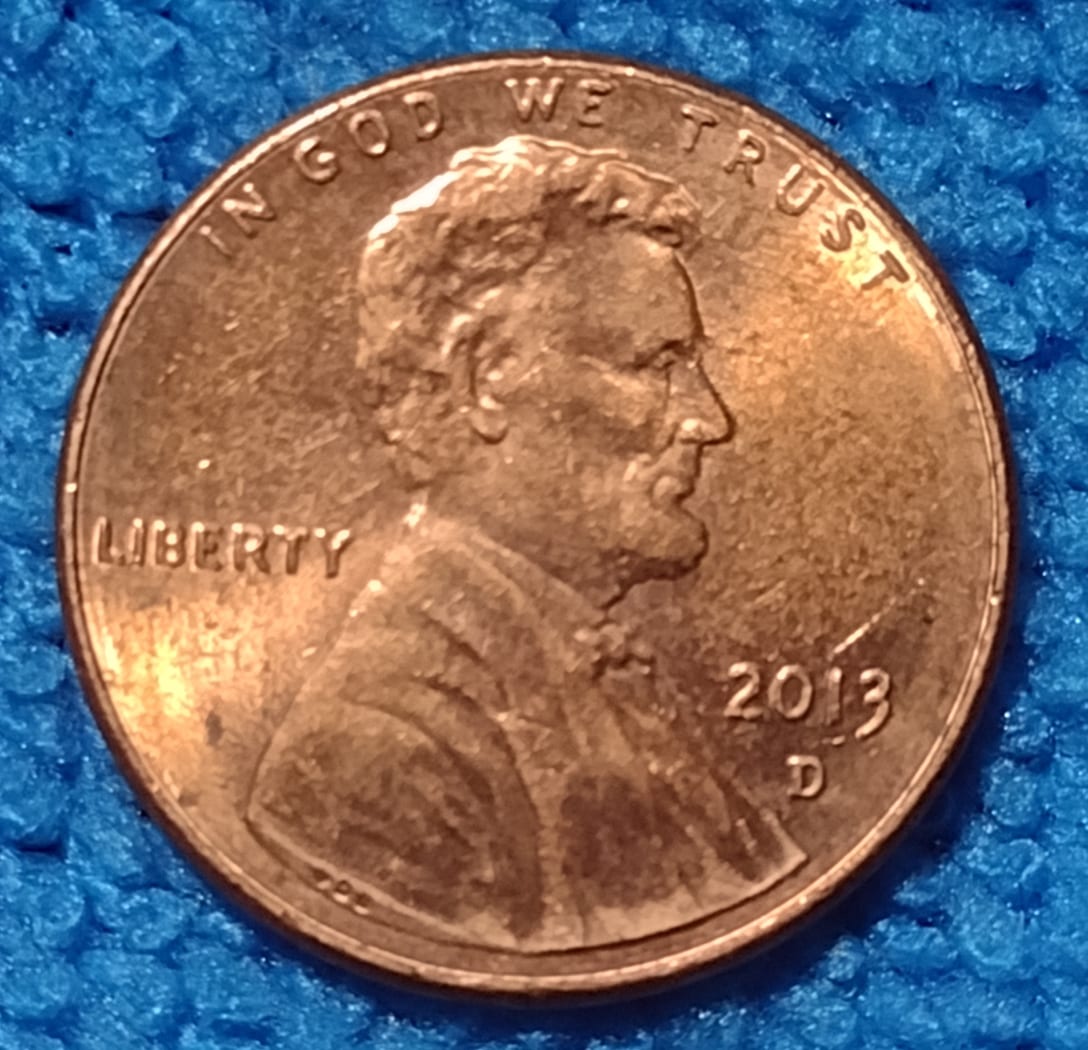
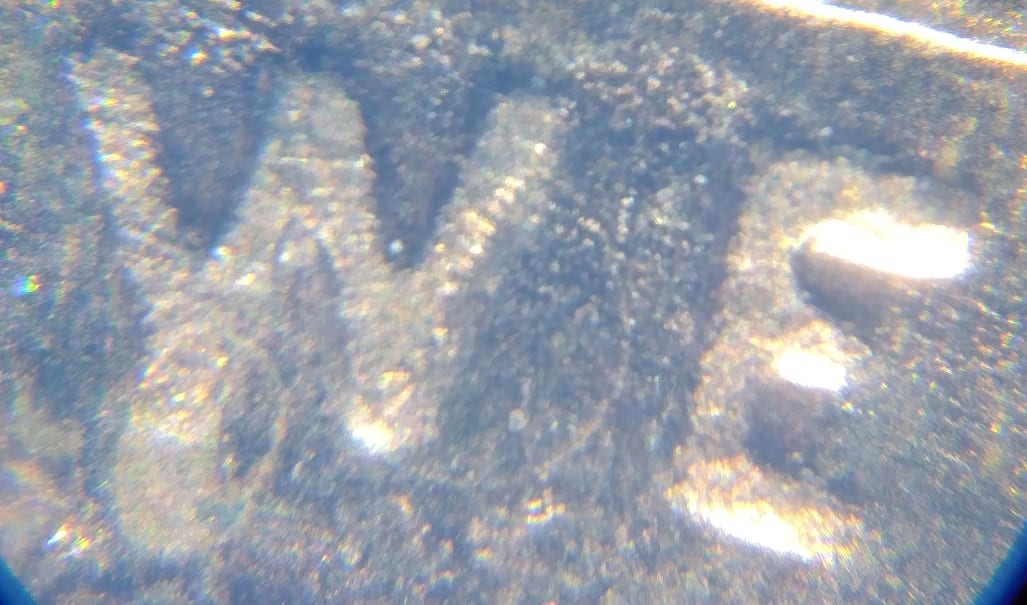
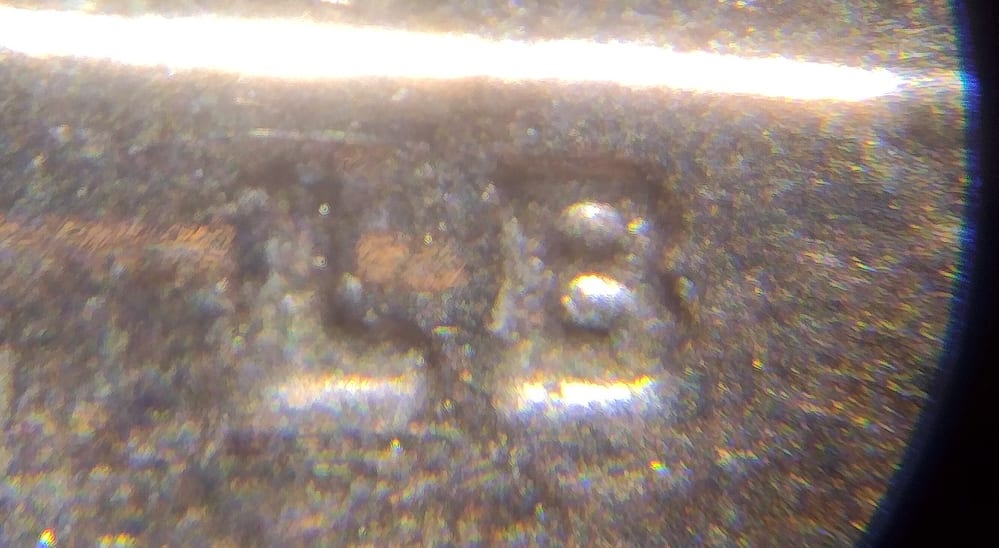
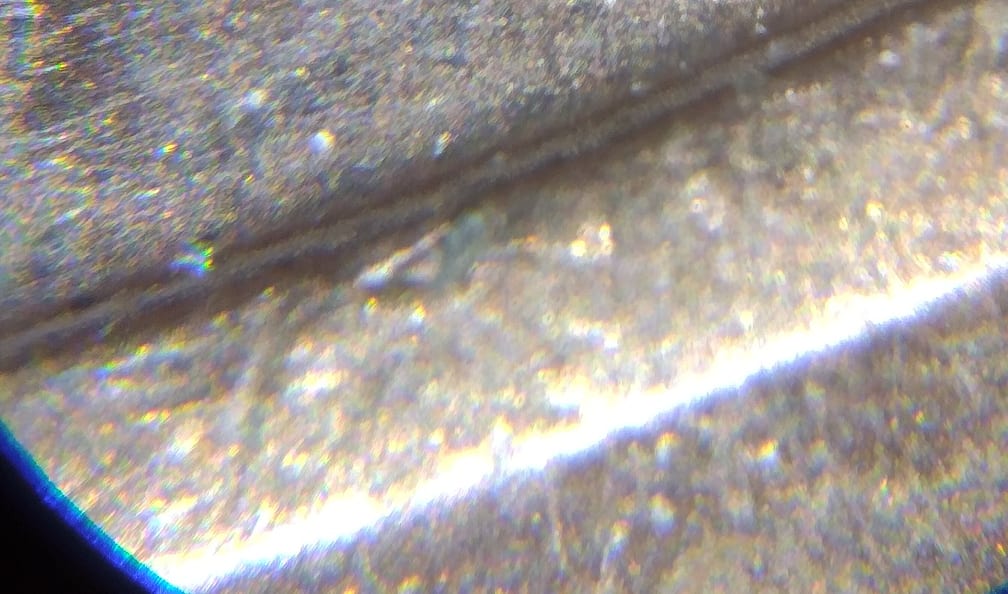
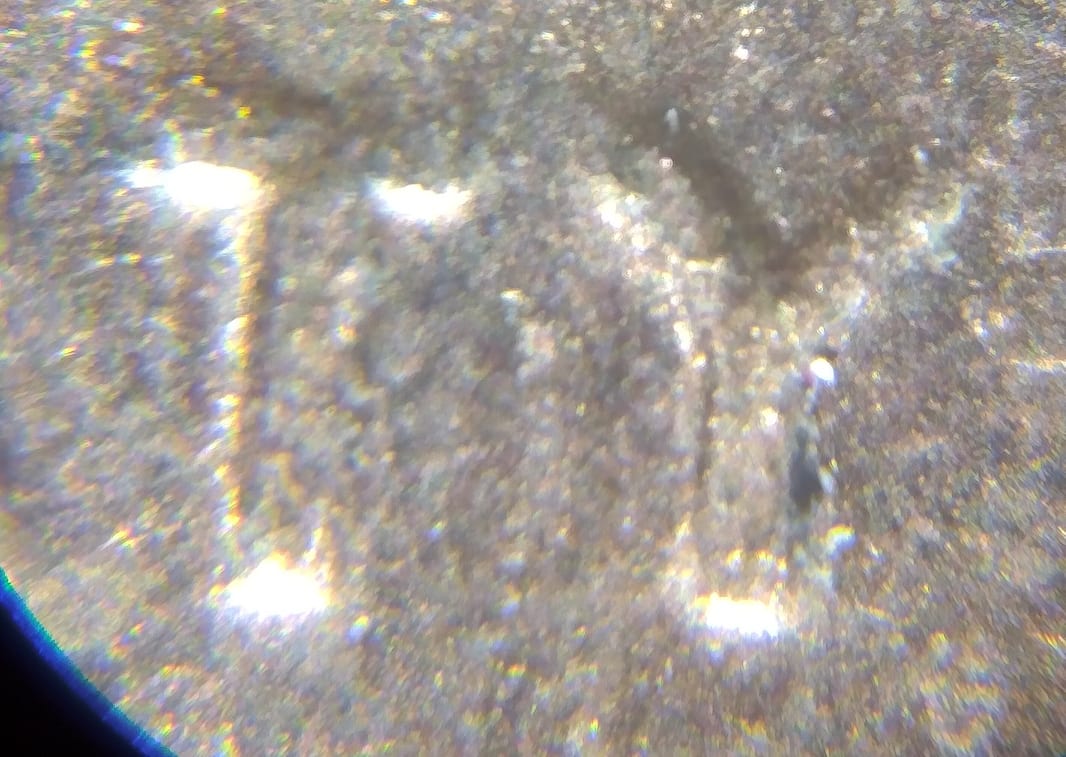
The angle of light is too low. With the light too low, it reflects off the sides of the devices. Note that on your images. Also the light is too bright. Thus making it harder to tell what is going on with your coin. The glare is often caused by
Machine Doubling because the device were flatten on the areas you are trying to show us. So with too much light it is like a spot light on that area and all we see is glare. I often use a trick to show what I'm talking about:
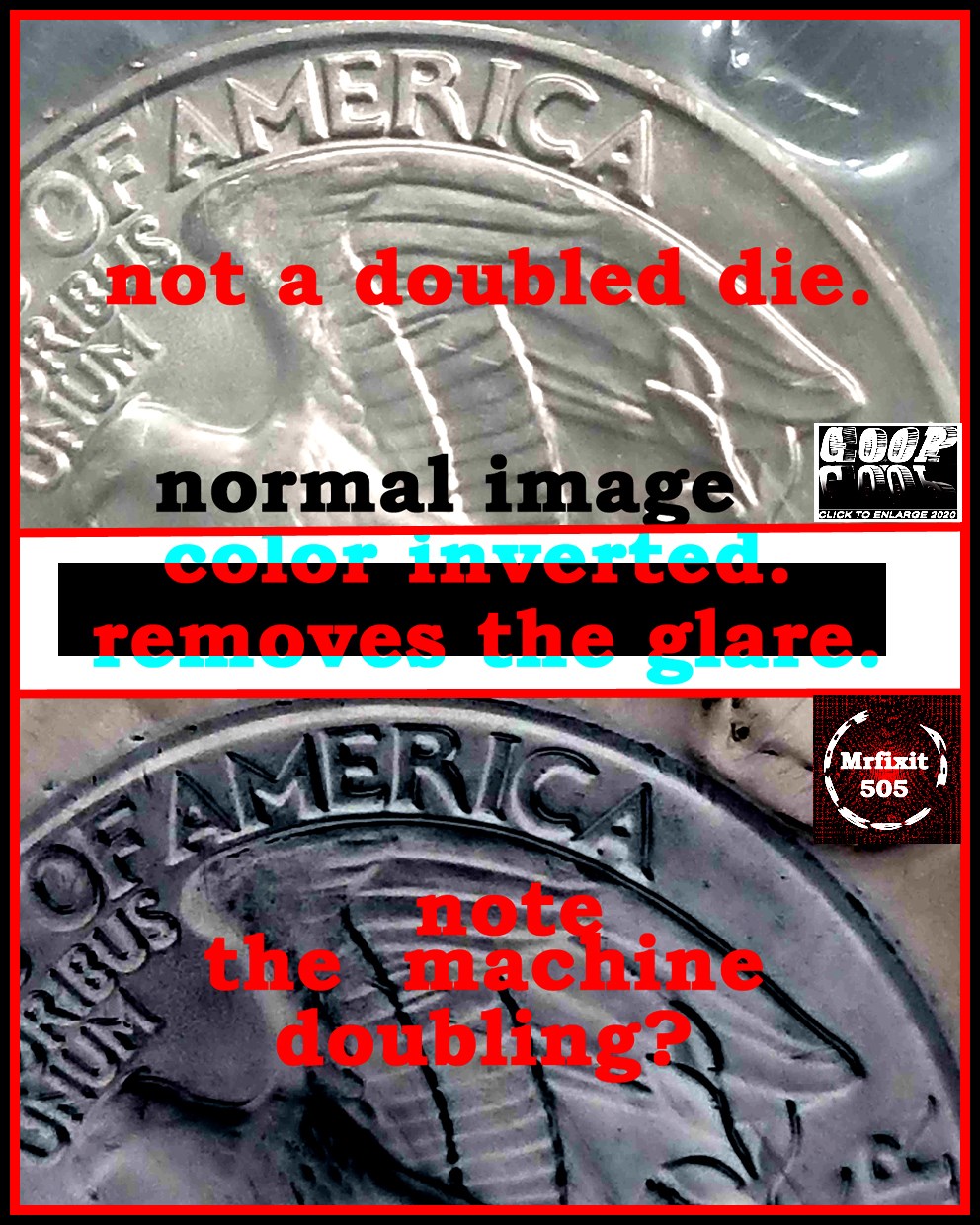
Note when I invert the colors of the images, then you can see the
Machine Doubling on the coin. The glare hides this. If that is what you are seeing, then it is not a doubled die. A doubled die will have enlarged devices on the centers of the devices.
Note on these two images:

The top image is the normal coin example, the lower image is a doubled die. Note where do you see the hub doubling (doubled die)? On the centers of the devices. Back to the previous image, where is the
Machine Doubling? On the outsides of the devices.
Machine Doubling is caused by the machine after the strike. On a doubled die, the doubling is on the die. So all examples will show the same exact spread on the centers of the devices. Look on the centers of the devices, and not on the outside edges of devices. Note on your coin, the centers of the devices are normal size. Thus the glare is hiding what you are seeing. That is
Machine Doubling.
When I re-read my post, then I realized that your coin is a 2013. The doubling on the cent of today are different than the other years in the past as they create dies differently now. The doubling is see often now as distorted devices:
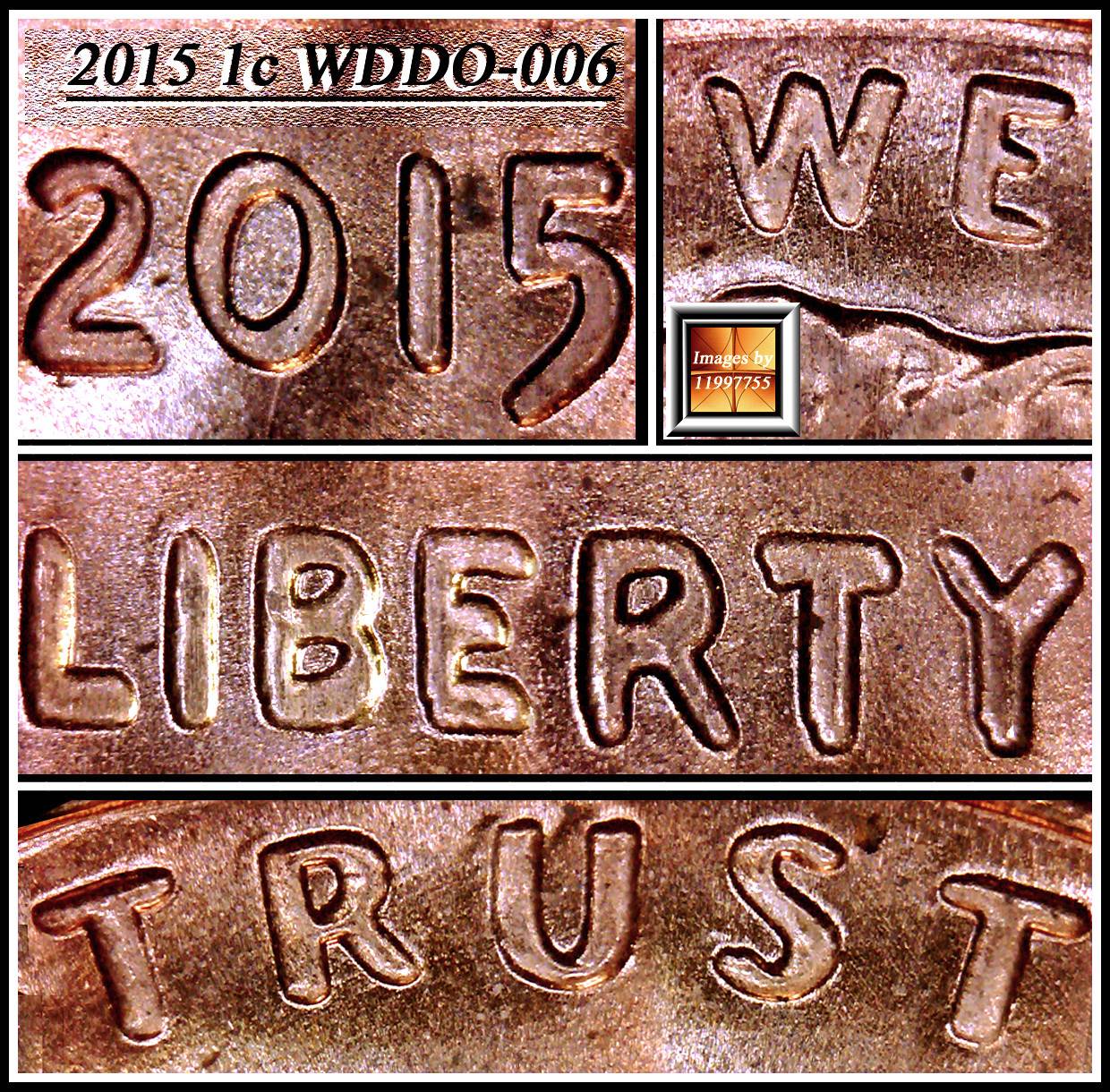
More like this. Note how the devices are like over inflated bicycle tubes?
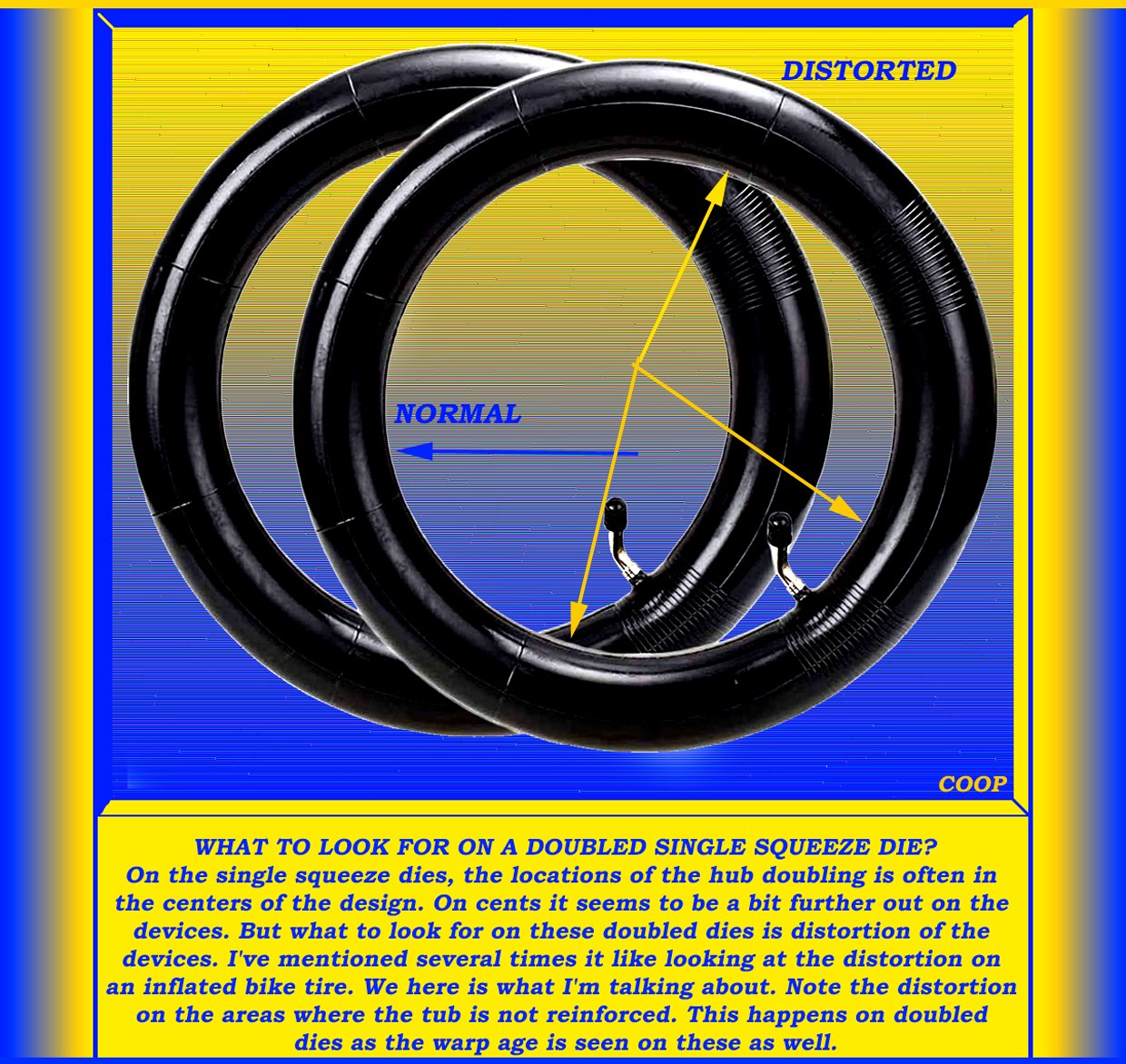
The doubled dies show more distortion the previous multi hub dies. I can't nail down the dates as they all didn't change at the same time. So look at the sites with coin that year to see where to look for doubled dies on the coins of that year:
I see no listings for 2013-D, but there are 2013 plain listing here:
http://doubleddie.com/894355.htmlThat site is called doubledies.com
Another site for coin is called Variety Vista obverses:
http://www.varietyvista.com/01e%20L...Listings.htmThey don't have a listing yet for 2013 for either mint. But drop down to the 2015 year and click on one of the underlines links and look at them. That will show the areas to look for
DDO's so you get the sense of what to look for on these coins.
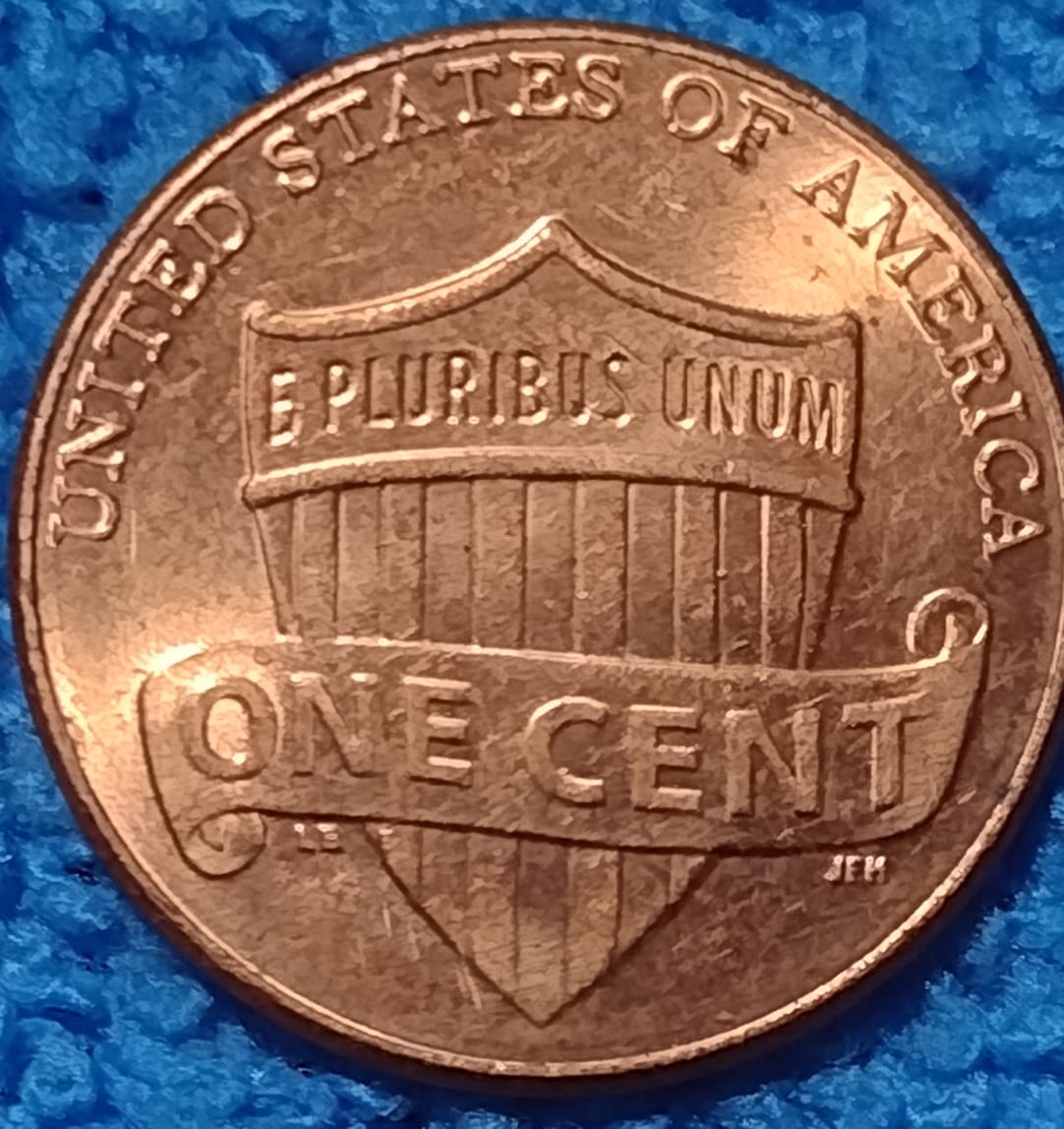
Here are the reverse listings for that year:
http://www.varietyvista.com/01e%20L...Listings.htmTake a look for 2013 there and look at the listings. On this site always note the 'Description' box. That tells you what areas the doubled dies are found for that die. All the rest of the images will be a normal coin, but show die markers to match up to, to determine die stage.
The third site to check out if coppercoins.com:
http://www.coppercoins.com/advsearch.phpThis is the home page but to do a search on this site, you need to find the search feature:

Then a second screen will show:
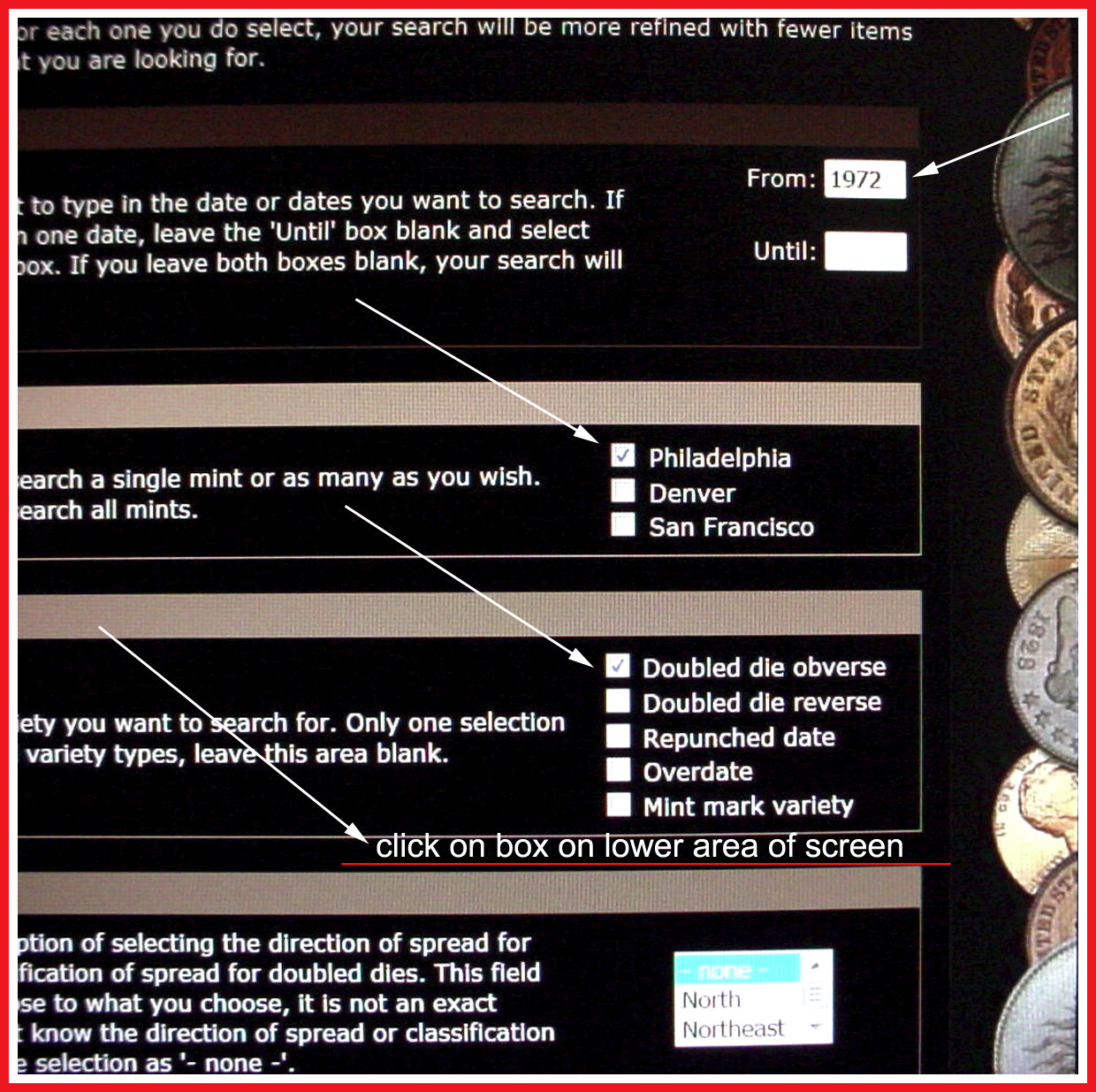
This is where you enter the year/mintmark location/type of variety. This will pull up those varieties checked for that year.
Use this information just like a map. It will help you see what to look for to reach your destination, just like a map. If you don't use this, then what are you looking for? This will give your direction as to what to look for on doubled dies. That is the best places to start, to know what your looking for. If you have questions, always ask. Start your own thread with a question and you will be show what to look for, where to find information and help, that you will not get easily just looking for what ever. Could you imagine going out metal detecting without a machine? You would have no direction of where to dig. With the suggestions here, you will find that you are look for because you will know then what to look for.
CoopHome:
How to advance your knowledge of variety coins? What really works?









 .)
.)


 Posted 07/30/2021 3:56 pm


