| Author |
 Replies: 11 / Views: 1,046 Replies: 11 / Views: 1,046 |
|
|
Valued Member
United States
101 Posts |
I have been looking at this site for a long time. To me it is an educational site. If something has happen to Abe it can be found here. I mean everything from, A-Z. Acid to Zinc rot and all in between. You might call this the C.S.I of Abe. Ok, about my Abe. Have not seen one that looks like this, have no idea which one of the 26 reason this falls into. And by the way, it weighs 2.86g. Thanks. 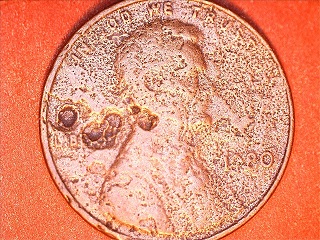 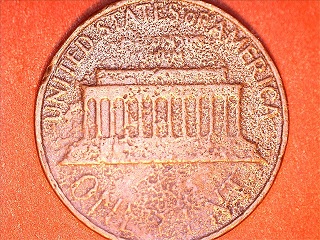 *** Edited by Staff to Add Year / Mintmark / Denomination to Title. Titles are Important! *** *** Edited by Staff to Add Year / Mintmark / Denomination to Title. Titles are Important! *** |
|
|
|
Pillar of the Community
 United States
5715 Posts |
Maybe an acid bath and target practice?
|
|
Pillar of the Community
 United States
4618 Posts |
The coin looks like it's acid damaged. The pitting is deep, so it must have been a strong acid like nitric acid, sulfuric acid, hydrochloric acid and phosphoric acid. I found a topic from 2018 that looks a lot like the damage on your coin. http://goccf.com/t/318358 ANA ID: 3203813 - CONECA ID: N-5637 Clean a coin that may be worth collecting? Please DON'T! When in doubt, leave it dirty!! 
|
|
Pillar of the Community
United States
3237 Posts |
|
|
Bedrock of the Community
United States
10635 Posts |
 , acid damage. Post mint damage ( PMD).  |
|
Valued Member
United States
284 Posts |
I'm vexed by shelter runs to "acid damage" I come across here on CCF. The acid diagnosis comes to me as an over-used refuge from I-dunno! As a familiar with percent hydrion, I ponder why I have yet to find a CCF diagnosis of alkali damage. As to this coin, my suspicion is that it is set apart from common LMC's struck on zinc planchets plated with pure refined copper. I suggest a profit minded entrepreneur may have sold the mint planchets plated with poorly refined copper. I wonder if electrolysis between the impurities and the copper are at work here. For the sake of the site, I'd just like folks to widen their field of view so that acid damage ( deliberate damage) looms less prominently than at present. Maybe I'm wrong; only acid can do a thing like this to a coin or maybe "acid damage' is a useful metaphor for fact that serves all but me well enough. Kevin Edited by Kcm
08/09/2021 2:05 pm
|
|
Bedrock of the Community
United States
62064 Posts |
Either way it is still a damaged coin. Not a mint error.
|
|
Bedrock of the Community
United States
10635 Posts |
Quote:
I'm vexed by shelter runs to "acid damage" I come across here on CCF. The acid diagnosis comes to me as an over-used refuge from I-dunno! Quote:
Either way it is still a damaged coin. Not a mint error. BINGO! Edited by merclover
08/09/2021 4:37 pm
|
|
Pillar of the Community
United States
3343 Posts |
Perhaps we should default to "corrosive damage" and cover both possibilities. But, I would have to think the vast majority of these come from acid exposure.
"Nummi rari mira sunt, si sumptus ferre potes." - Christophorus filius Scotiae
|
|
Pillar of the Community
United States
586 Posts |
Quote:As to this coin, my suspicion is that it is set apart from common LMC's struck on zinc planchets plated with pure refined copper. I suggest a profit minded entrepreneur may have sold the mint planchets plated with poorly refined copper. I wonder if electrolysis between the impurities and the copper are at work here. Except that the coin in question appears to be a 1980 cent, which means no copper plated zinc core. Also, the weight is 2.86, which is greater than that of a zinc core coin and less than that of a solid cooper cent. Hard to imagine an electrolytic process that adds weight to the coin, but easy to imagine a chemical reaction that takes weight away. Most likely explanation is some sort of chemically induced reaction causing both pitting and weight loss, thus PMD. |
|
Valued Member
United States
109 Posts |
Definitely A damaged coin.
|
|
Pillar of the Community
United States
7174 Posts |
Because 99% of them are acid damaged. Not an expert, but I don't think electrolysis would take away .24. If it did it should be black colored.
|
| |
Replies: 11 / Views: 1,046 |
|










 Posted 08/09/2021 11:49 am


