| Author |
 Replies: 10 / Views: 2,304 Replies: 10 / Views: 2,304 |
|
|
New Member
United States
31 Posts |
Recently got a 1993 Philadelphia minted quarter that has no ridges or at least very very slight ridges. But the biggest oddity is an indentation on the reverse. It's on the edge where it says Dollar and it appears that it deforms the edge where it pushes into and perhaps over the "lla" in the word Dollar. Sorry for the quality of the pics, best my camera phone can do. There also appears to be a chip on the eagles wing, by it's neck on the left side. 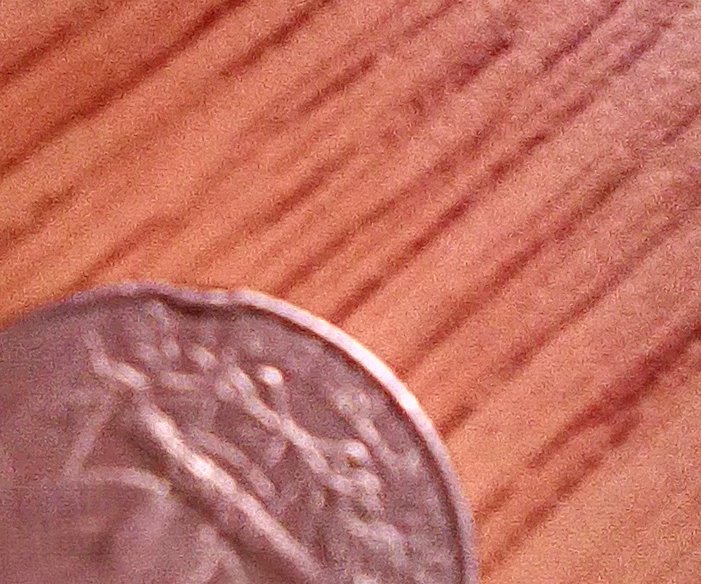 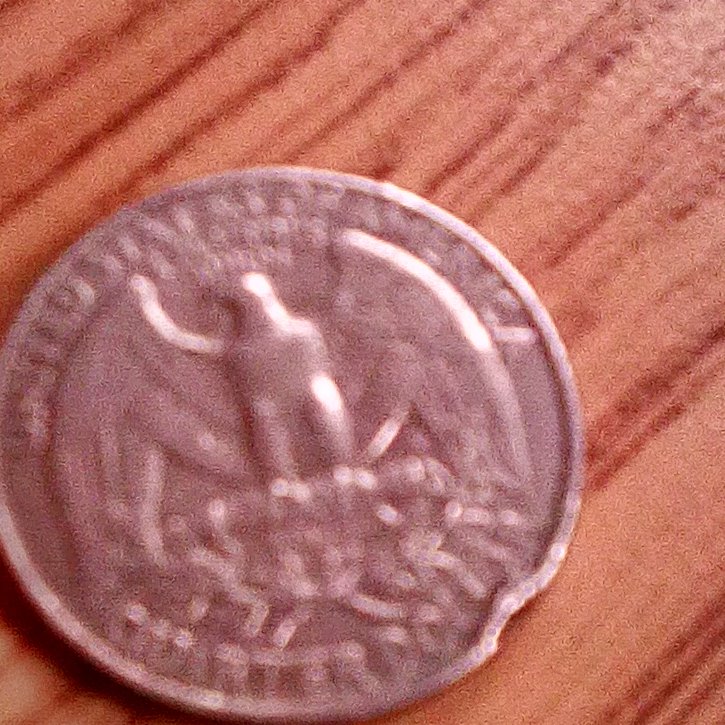  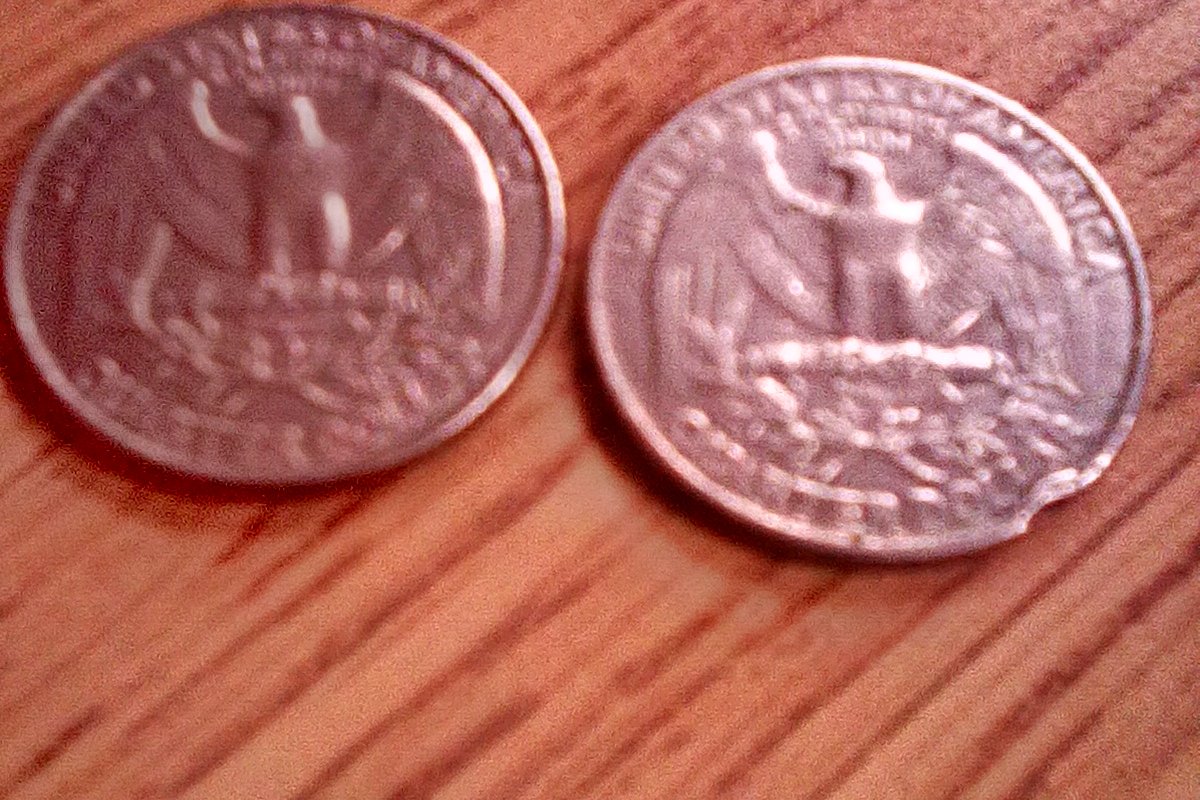 Edited by HesedD67
08/21/2021 2:10 pm
|
|
|
|
Pillar of the Community
United States
1537 Posts |
Almost impossible to tell from the pix provided, but it looks like ragged post-strike damage rather than a clipped planchet.
|
|
Moderator
 United States
107820 Posts |
 it appears that the rim took a hit and was dented. PMD (Post Mint Damage) Edited by Dearborn
08/22/2021 10:08 am
|
|
Moderator
United States
34563 Posts |
I agree that better pics would help, but I do note that a lack of reeding on the edge is most likely due to wear unless this quarter is larger in diameter than a normal one.
"If you climb a good tree, you get a push."
-----Ghanaian proverb
"The danger we all now face is distinguishing between what is authentic and what is performed."
-----King Adz
|
|
Pillar of the Community
United States
3237 Posts |
Damaged coin. You can see that the "missing" material has actually just been displaced inwards making the coin thicker in the area of the ding. Worth face value.
|
|
Bedrock of the Community
United States
62064 Posts |
Just damaged. How can we tell? Note the pushed in area? Do you see the rim was pushed into the new location? If this were a clip, there would be no hint of a rim on that area. 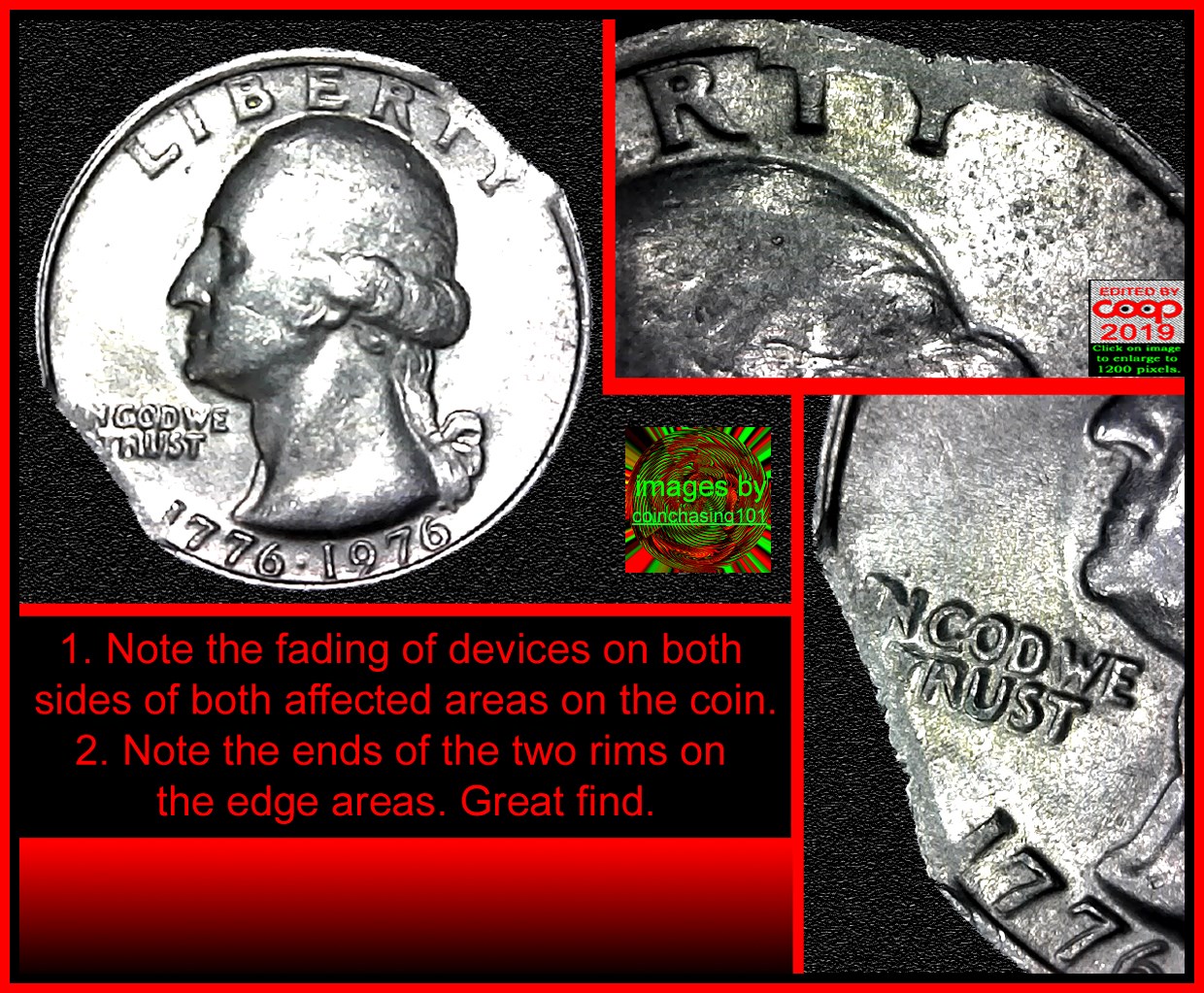 Also on a clipped coin, the devices near the open area will be weaker. |
|
New Member
 United States
31 Posts |
Thanks for all your help and tips.
Still learning.
|
|
Pillar of the Community
United States
3237 Posts |
Happy to help Hesed! Don't be discouraged - really errors and significant varieties are one in a thousand if not more, but it only makes them more satisfying when you finally find one.
|
|
Pillar of the Community
United States
2869 Posts |
|
|
New Member
United States
31 Posts |
Exactly how would a rim ding occur?
I wouldn't think a simple drop would cause damage like this.
For example I got a bicentennial quarter where it's really beat up and looks like someone took pliers or something and squeezed it.
I can even see the grooved in the indentation of the tool used in the indentation on the bicentennial quarter.
So I guess I'm asking, what force is needed, like in pressure to bend the metal of a quarter.
|
|
Pillar of the Community
United States
3824 Posts |
Quote:
So I guess I'm asking, what force is needed, like in pressure to bend the metal of a quarter. To make a dent in the rim of the quarter you showed, it's not really that difficult. No, a simple drop of the coin may not do it, but there are any number of ways a coin could be struck by another metal object, either intentionally or otherwise, that could cause that. I remember when I was a kid in the mid-'60's, my brother and I liked playing in my grandpa's workshop (when grandpa wasn't around of course!), and we often used coins as a sacrificial medium when trying out his vises, clamps, chisels, files, hammers, etc. We normally wouldn't damage them enough where we couldn't spend them (a cent in those days could still buy a piece of candy, and we could get a Coke for a dime), but we were still able to do some impressive "work"  . As coop and others mentioned, the key indicator here is the displaced metal pushed up along the edges the ding. Member of SPMC, FCCB, ANA and ANS. My U.S. Classic Commemorative Complete Set: https://www.NGCcoin.com/registry/co...sets/278741/ |
| |
Replies: 10 / Views: 2,304 |
|










 Posted 08/21/2021 3:04 pm


 Uncirculated American Silver Eagles


