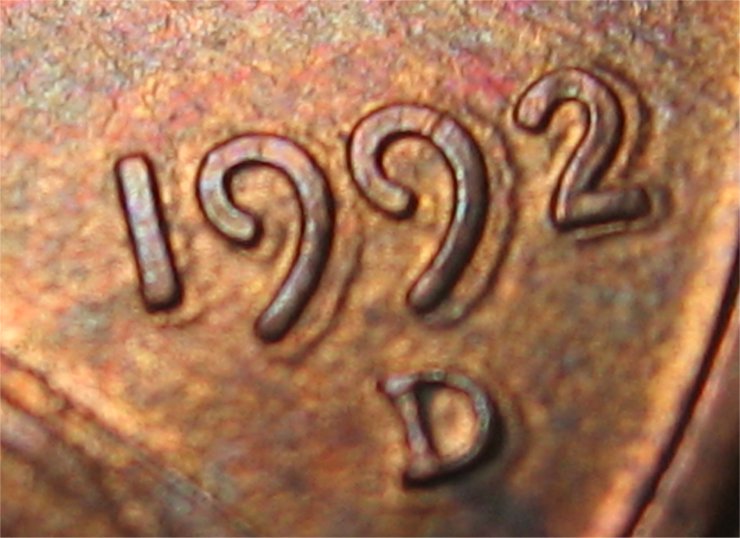
Quote:
What do you mean by hub
It is imperative that one understands the minting process in order to attempt to diagnose error and variety coins.
A hub is the "parent" of the die. The hub stamps the die. The die stamps the coin.
In order for a doubling on a coin to be valuable and collectible, it has to be hub doubling (technically, the term doubled die already specifies this, but it is not commonly understood)
Here is a brief description of it all.
How do I make a coin?A coin is made by placing a blank piece of metal on a die (the anvil die) and then hitting it (really hard) with a second die (the hammer die). Obviously, an over-simplification of a complex process.
What is a die? I'm glad you asked! A die is a metal stamp which has an inverted image of the intended design incused (sunken in) on it. Any area that is "in" on a die will be "out" on the struck coin.
How do you make a die?In theory, one could make a die by simply engraving the image on it. However, that would create only one die and each die has a limited usable "life". If you make several dies, they will be different from each other. We need a copy machine for dies. The solution is to make a master die which makes other dies in its image. But a die is incused (the image is sunken in) and if we try to stamp copies of it, they will be raised images -like the coins that we have. For this you need to transfer to a hub which like a die, but the image is raised. When the hub presses something else, the result is incused. Then you use the hub to create dies. So each transfer from a die to hub or a hub to die switches the image from raised to sunken or vice versa. In fact, the mint starts off with a master hub and from there creates master dies and from those creates working hubs and from those - working dies and finally - coins.
What does this have to do with doubled dies?Here is where we get to doubled dies. The process of transferring the design from a hub to a die is done by squeezing the two together under super high pressure. In the "olden days" they were squeezed together twice. If the hub shifted in relation to the die by even a miniscule amount the image on the die becomes doubled. The greater the shift, the more distinct and apart the two images on the die become. Any coins minted from that die will now have the doubled image on them.
So, the doubling that is collected by serious collectors is a coin that was minted by a doubled die. This is considered a variety.
So, what is worthless doubling? There are 2 main types of worthless doubling.

Machine doubling (by any of its names) is when the die bounces or shifts slightly when it strikes a coin. This distorts the image on the coin.
Die deterioration doubling. This is when the die gets so worn that the image begins to distort. The coins struck by such a die will be increasingly weak and images will begin to "bleed" out toward the rims.
This is not a full explanation of everything, and I encourage you to read up more about it. But hopefully, this helps you to understand doubled dies a little better.









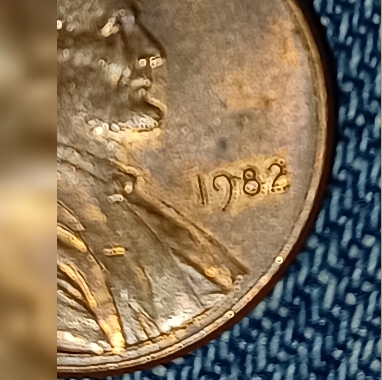

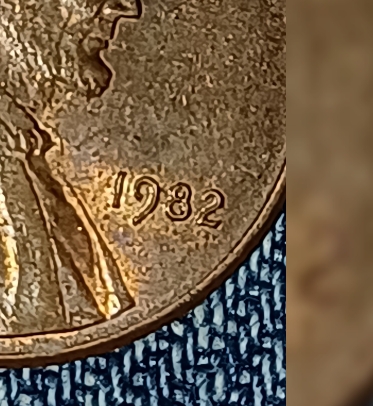


 Posted 09/02/2021 08:51 am