| Author |
 Replies: 12 / Views: 1,150 Replies: 12 / Views: 1,150 |
|
|
Valued Member
United States
113 Posts |
Hello everyone; I have this 1965 mystery Kennedy half dollar and it weighs 11.69 or so.My scale's flux irate a little.It should weigh 11.50. I showed a example of a comparison to show the difference. I was wondering if anyone in this forum has one of these coins.I don't see any info about this in my coin Red Book ,I would think it would be a big deal.I did see a couple of internet mentions but no real clarifications. Thanks and I hope you are having a great weekend. 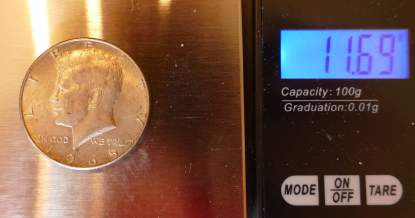 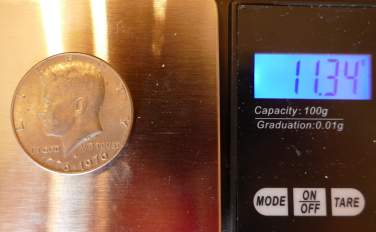 |
|
|
|
Bedrock of the Community
United States
62064 Posts |
When you set your scale up on the location. Make sure to press the tare button to make sure it is set a zero before weighing. But here are the weights for the coins: 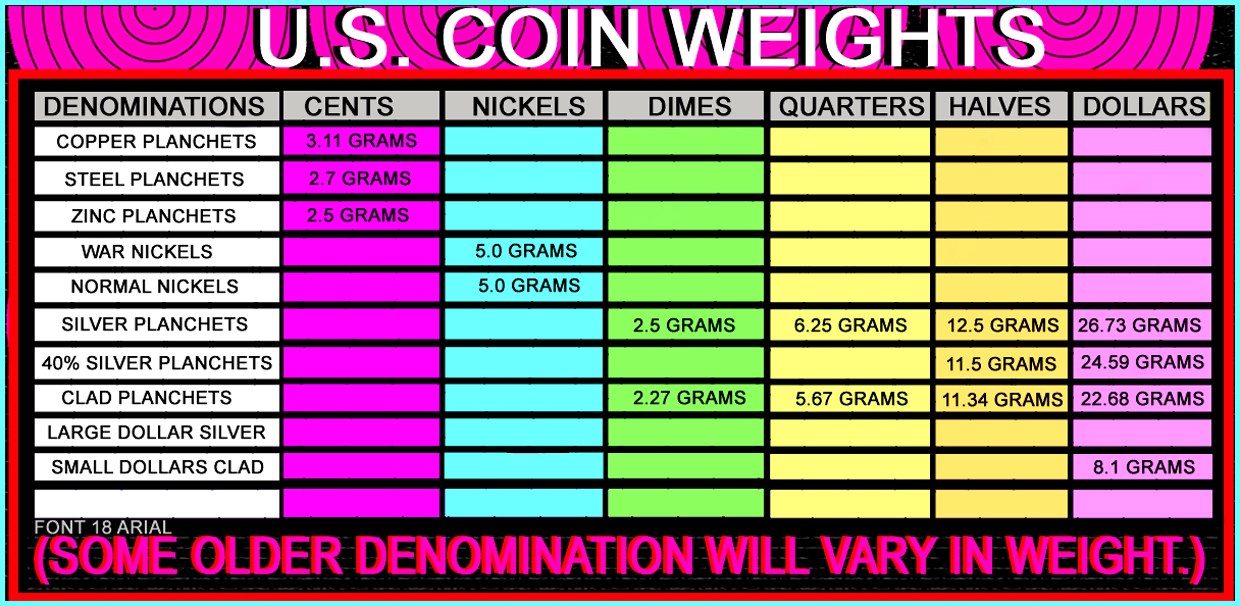 They don't weight the planchets. So you can have a +/- factor. But it appears if is close to correct for the 40% planchets. To light for a silver planchet and too heavy for a clad planchet. (Which didn't start until 1971) If you want the chart for the +/- it is below: 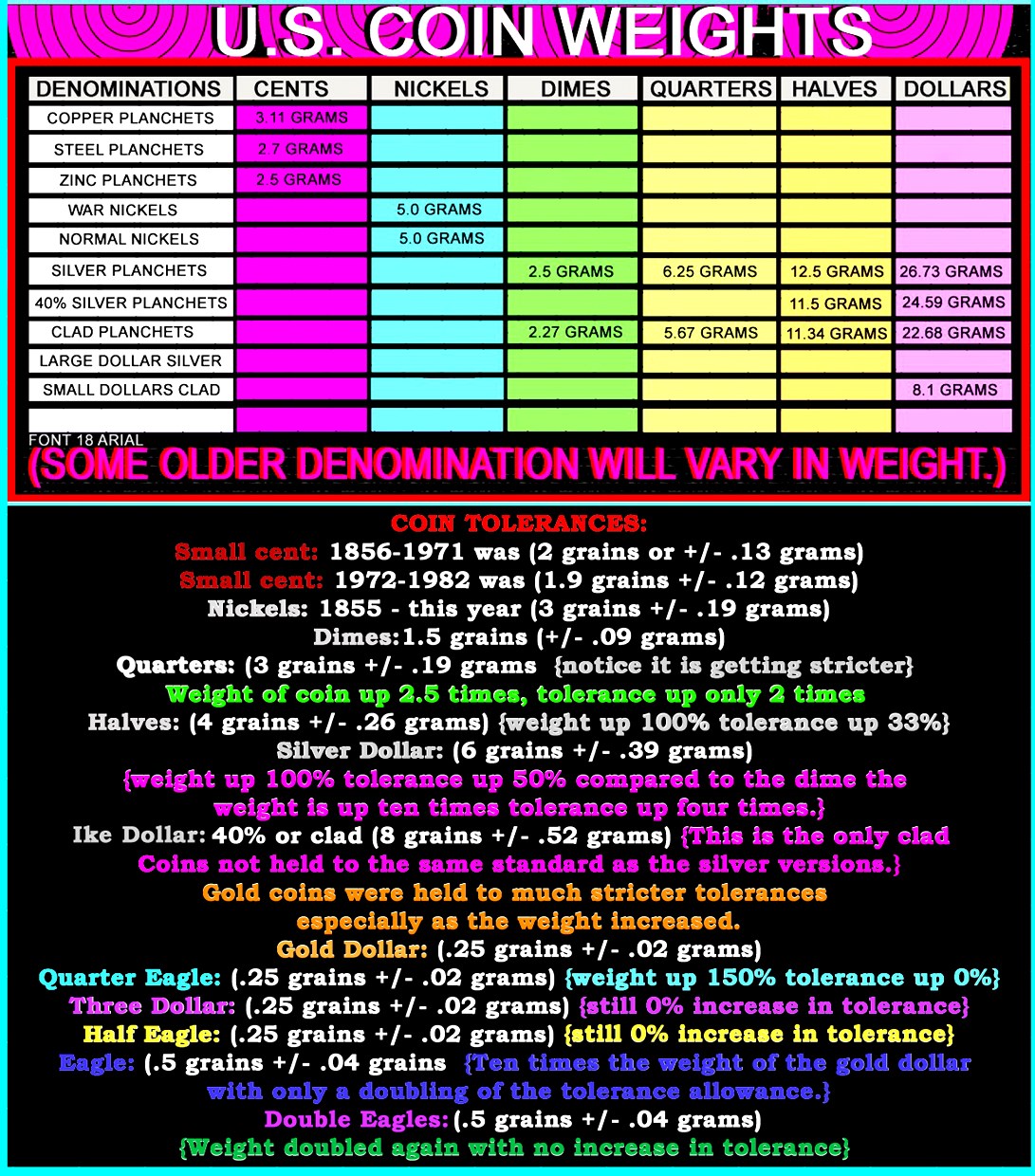 |
|
Valued Member
 United States
113 Posts |
|
|
Valued Member
United States
113 Posts |
I tried it Coop but no change in weight 11.69
|
|
Pillar of the Community
United States
3207 Posts |
|
|
Pillar of the Community
United States
1676 Posts |
Weight seems to be well within tolerance.
|
|
Valued Member
United States
113 Posts |
That's what I was getting at is there a tolerance and why don't they say it in the books
|
|
Pillar of the Community
United States
1676 Posts |
Definitely is a tolerance, it would be impossible to make coins in the numbers that the mint does if every planchet had to be weighed and discard those that were off a little. I do imagine the bullion coins are held to a higher standard though.
|
|
Pillar of the Community
United States
3207 Posts |
Why tolerance is often omitted from books is anyone's guess. I suspect decades ago it was unimportant because few collectors had scales that could measure to the hundreth of a gram. That omission got carried forward to newer books.
|
|
Pillar of the Community
United States
1676 Posts |
I suspect it was just never seen as that important. It seems in recent years with venues like you tube and so on touting the high values of some of the extreme errors, more and more people are mistakenly thinking very minor anomalies are significant.
Edited by lcutler
09/05/2021 3:23 pm
|
|
Valued Member
United States
113 Posts |
Its 2021, I'm hearing excuse's ,but in reality it is a some what error not perfect not 11.50 grams .I know there are coins that there weight is not perfect and the tolerance are a few decimals off. But with this coin tolerance seems a little high with this coin.When I went to the coin auction every Kennedy coin was weighed at 11.50 I didn't see one that weighed 11.69 How many are out there makes it's worth ?In collecting, people collect because of rarity and demand, not because they think it doesn't matter. In order to find out it matters you need to find out if its got rarity you need a number of coins made.I'm guessing ether the metal got thicker or bigger or the formulation got changed more silver content.Just food for thought .
Maybe it doesn't matter
But Thanks for listening
|
|
Pillar of the Community
United States
1676 Posts |
Off weight is usually from a rolled thick or thin planchet. You are correct, it is supply and demand that dictates what a coin is worth. There is a premium for off weight coins, but generally they have to be well outside the mint's allowable tolerance. Going by the chart Coop posted, anything up to 11.76 would be considered normal.
Edited by lcutler
09/05/2021 5:21 pm
|
|
Valued Member
United States
113 Posts |
Thank You Icutlor;
That was great information!
|
| |
Replies: 12 / Views: 1,150 |
|






 Posted 09/05/2021 2:03 pm





