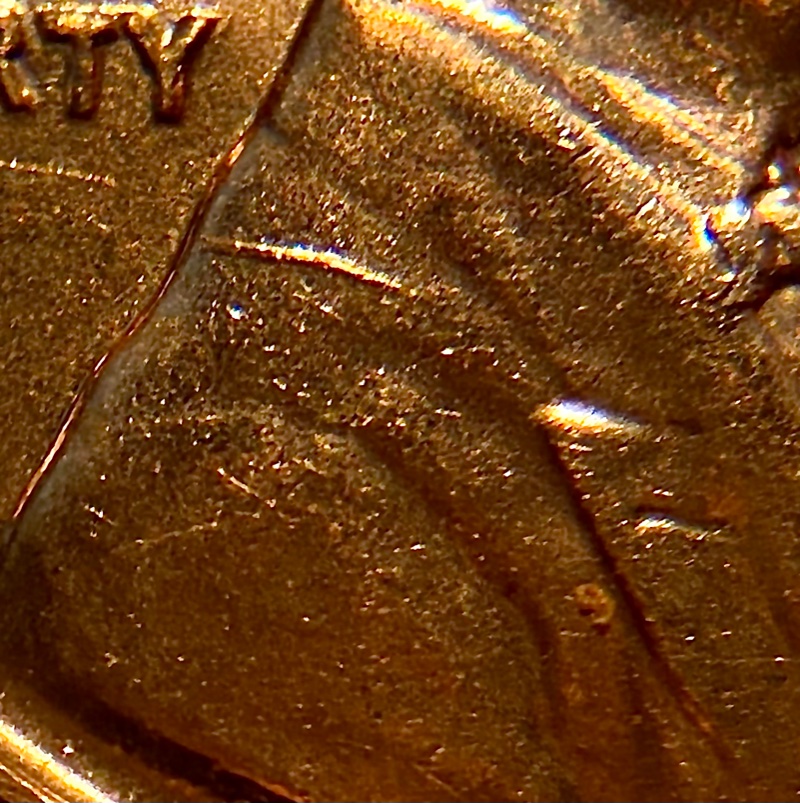
A little education about this great variety for those that may enjoy it:
Back in around 1998 I pulled 47 BU examples of this variety from a small hoard of OBW rolls. I became quite a fan and student of the variety and have since found another 75 or so BU examples.
For education to roll hunters, Small and Large date 1960-D Lincoln's were not separated at the mint. Many OBW's and mint sewn bags often contain both.
I've found this variety in Large date rolls, Small date rolls and and mixed rolls (and one mixed bag).
This variety is known in four recognized die stages (which also means many were struck as the die was in service from fresh to near failure...BTW this is
"the" fundamental way to determine the genuine census rarity of any variety). The stages are known as 1, 2, 3 & 4 and in some circles as A, B, C & D. Information about the die stages can be viewed on page 167 of the Authoritative Reference on Lincoln Cents by Wexler and Flynn.
Common belief is that the Stage 1 or A is the rarest of the stages. This isn't true. Not even close. Stage 3 or C is by far the rarest.
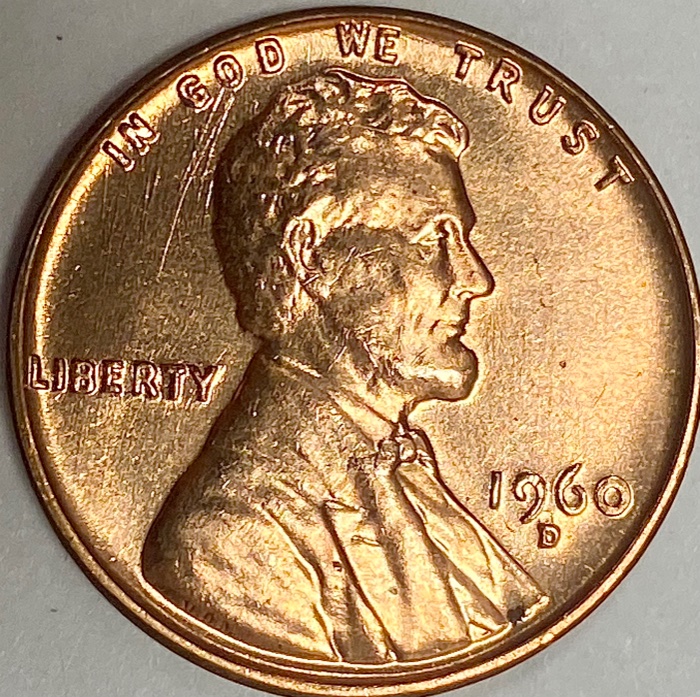
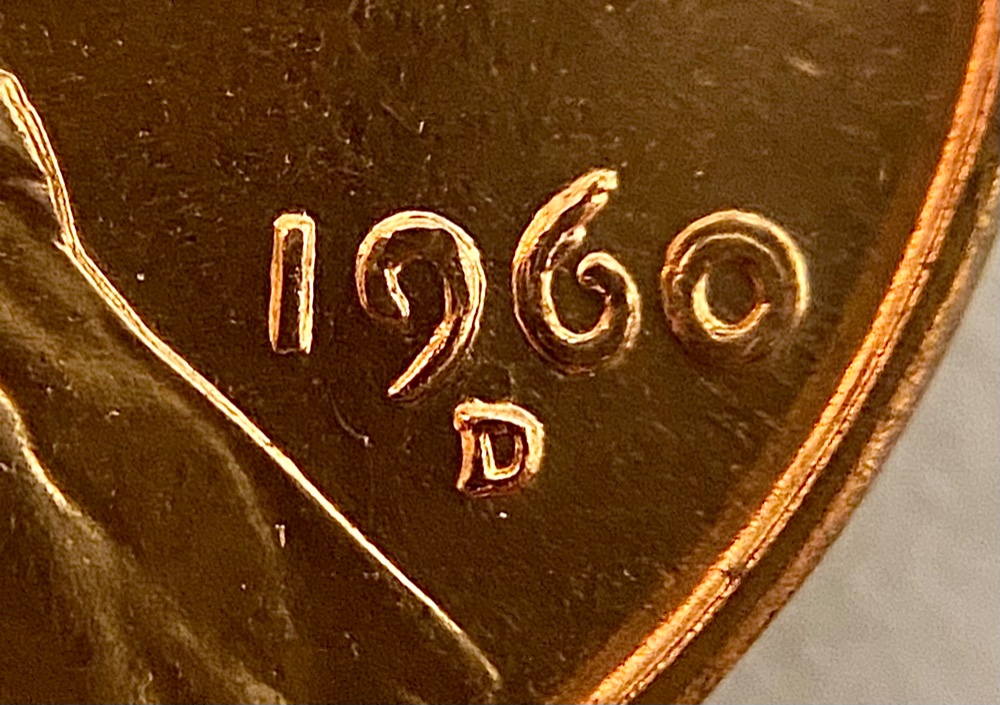
Your example in the images is the Stage 4 or D as evidenced by the die break in the upper leg of the 6 in the date.
The die scratches questioned by Coop are the fundamental indicator of the difference between Stage 2 or B (no die scratches Southwest from God) and Stage 3 or C (die scratches Southwest from God).
One of my personal collecting quests was to assemble a die stage set in PCGS66RED which took from 1998 to 2011 to accomplish.
It's a personal hope of mine that someday the variety marketplace (
TPG) will recognize die stages. Many varieties are worthy of such recognition.
It's a great, dramatic variety!
Great acquisitions my friend, congratulations to you!
E. J. Scott









 Posted 09/05/2021 12:37 pm