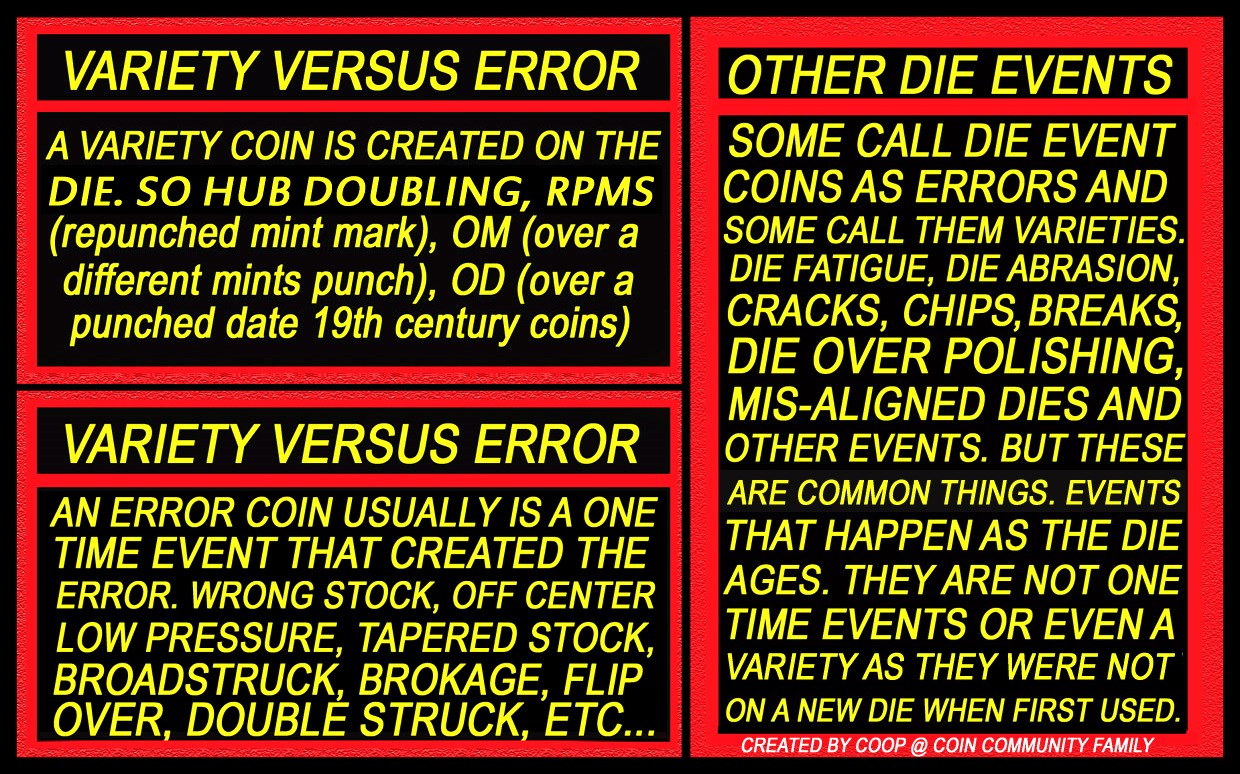
Generally, a variety involves an intentional design change to the coin. In 1982, for instance, there were cents made of zinc and cents made of copper. Each would be a variety because they changed the metal composition of the coin intentionally.
Also, there were cents with a "Large Date" and cents with a "Small Date". Each of these would also be a variety because they intentionally changed the design of the date slightly.
In all, there were 7 different combinations of copper, zinc and date size issued, so 7 different varieties.
An error, on the other hand, involves a event occurring during the minting process. Sometimes this error happens to one coin only, such as with a striking error like a broadstrike. Sometimes, though it happens to many coins, such as with a
Grease Filled Die or a die chip or a die crack.
Remember, they are pumping out literally thousands of coins per minute, so if one die begins to crack and leaves marks on the coins, it will happen to sometimes tens of thousands of coins before it's discovered.
They do quality control by inspecting a certain number of coins from each batch and rejecting entire batches that have errors, but that means that an error that crept into the die late in the cycle produced fewer coins and is more likely to be missed on quality control.
Your coin sounds like a type of error and not a variety as no design changes were made to the nickel in 2021. Searching OBW means you are more likely to find a series of the same error and is really cool in that sometimes you can track the development of the error through a series of the coins, kind of like when you were a kid and drew pictures on the corners of pages and then flipped them to watch them move.
Post some photos for confirmation of the nature of what you've found.










 Posted 10/05/2021 9:34 pm