| Author |
 Replies: 20 / Views: 2,461 Replies: 20 / Views: 2,461 |
|
Pillar of the Community
United States
4510 Posts |
|
|
|
|
Pillar of the Community
United States
3848 Posts |
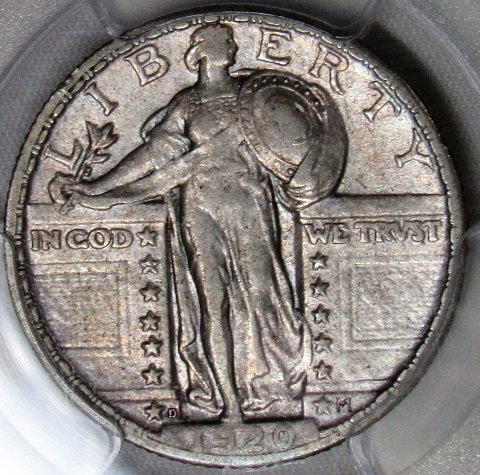
AU-53. I think it is a decently sharp strike with a bit of wear. The date is very weak.
Suffering from bust half fever. Want to learn how to attribute early half dollars by die variety? Click Here: http://goccf.com/t/434955Shoot me a PM if you are looking to sell bust halves. |
|
Pillar of the Community
United States
1048 Posts |
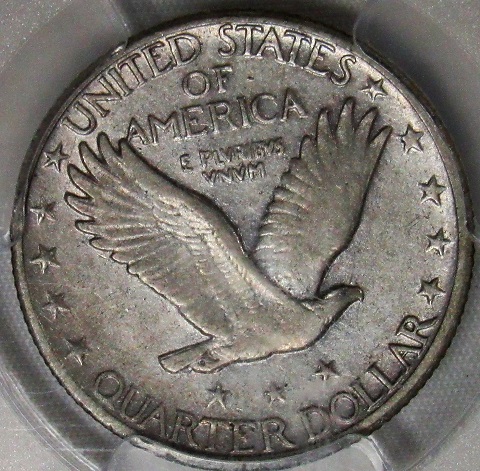
That luster is compelling, but there's considerable wear. No breast feathers left at all. XF40?
|
|
Pillar of the Community
United States
2327 Posts |
XF-45 Is my guess.
You realize when you know how to think, it empowers you far beyond those who know only what to think.
-Neil deGrasse Tyson
|
|
Rest in Peace
United States
10625 Posts |
|
|
Bedrock of the Community
United States
94367 Posts |
|
|
Pillar of the Community
 United States
5721 Posts |
Decent luster, I'd say AU-50.
|
|
Pillar of the Community
United States
9811 Posts |
While it has all the detail of a VF35 or EF40 I think it's mostly a weakly struck coin. Cline rates this date in the series as one of the best struck almost all gems are full heads to speak of. His book says this date may have an issue with the dies not being properly hardened or tempered so they did not last very long in use. 10% of all were struck with full heads. Obviously this one has some wear, but from the luster I think it's a deceiving coin. I'm going to say:
AU55
I might be way off on this one, as I said it looks deceiving.
"Buy the Book Before You Buy the Coin" - Aaron R. Feldman - "And read it" - Me 2013! ANA Life Member #3288 in good standing since 1981, ANS, Early American Coppers Member (EAC), Colonial Coin Collectors Club member (C4), Conder Token Collector Club member (CTCC), Civil War Token Society (CWTS) member, Liberty Seated Collectors Club (LSCC) & Numismatic Bibliomania Society member (NBS), USMex, Member in good standing, 2¢ variety collector. See my want page: http://goccf.com/t/140440Edited by westcoin
11/27/2021 4:27 pm
|
|
Pillar of the Community
United States
3747 Posts |
@westcoin nailed it.
I'll only add that the Denver mint had a really bad habit of seating the hammer dies improperly during this era. This led to uneven obverse strikes and uneven premature wear. This coin shows that uneven obverse strike. I try to grade the uneven Denver obverses by weighing the better struck side more in the overall grade. Others do exactly the opposite for the same reason.
I'm at mid-AU here, but don't really have a feel between 53 and 55. The luster looks more like 55. IMHO, this one would be bourse-floor adjusted to somewhere between a 53 and 55 price. The Greysheet is only $25 apart on these grades, so it wouldn't be much of a haggle.
|
|
Bedrock of the Community
United States
94367 Posts |
@westcoin's evaluation is helpful as always. Grade aside, I certainly wouldn't pay AU-53/55 money for it.  |
|
Rest in Peace
United States
18456 Posts |
Soft strike and a worn coin doesn't make very much eye appeal for me . If I'm going to buy a mid AU SLQ it has to at least have a clear date .  |
|
Pillar of the Community
United States
4680 Posts |
While there's clearly signs of a weak strike, I think there's enough wear to just pull it out of AU, most visible on the reverse. I'm at XF45, wouldn't be surprised if they called it AU.
|
|
Pillar of the Community
United States
9811 Posts |
FortCollins - interesting to know that about the die seating, I had missed reading that. That makes maybe more sense than a weak strike but a loose die that just didn't make full contact (like a weak strike in a way). Thank you for that, we can always learn around here no matter how much we think we know.
"Buy the Book Before You Buy the Coin" - Aaron R. Feldman - "And read it" - Me 2013! ANA Life Member #3288 in good standing since 1981, ANS, Early American Coppers Member (EAC), Colonial Coin Collectors Club member (C4), Conder Token Collector Club member (CTCC), Civil War Token Society (CWTS) member, Liberty Seated Collectors Club (LSCC) & Numismatic Bibliomania Society member (NBS), USMex, Member in good standing, 2¢ variety collector. See my want page: http://goccf.com/t/140440 |
|
Pillar of the Community
United States
3747 Posts |
@westcoin, I don't think the hammer dies were loose. I think QC in Denver was sloppy, and the press operators failed to check close alignment after die swaps and before resuming production runs. Remember, Denver frequently changed one die, rather than the pair in this era, leading to mismatched die states. This is where I think the problem occurred, rather than the initial alignment.
The 1920s Lincoln Cents show this uneven striking on some, but not all, die pairs. The Denver Buffs are all over the lot on alignment and have some wildly mismatched die states during this era. The larger coins and gold coins were better struck, but also used far fewer die pairs.
David Lange and others have noted that Denver resented striking subsidiary coins, and believed that the mint was created specifically to strike gold coins. This attitude no doubt changed after FDR's gold order in 1933, when the need for two western mints started to be questioned. Denver's QC and productivity improved sharply in the late 1930s.
|
|
Pillar of the Community
United States
9811 Posts |
Interesting, as I've been to the mint many times back in the 80's and 90's as I grew up South of Denver in Englewood. Judging from your name you have a connection to Colorado as well? David and I used to have long talks at the summer seminars over a few beers, wish I knew what I do now I think those discussions would be a lot more interesting, back then I had no idea he was so into history and mint procedures and techniques, he was getting deep into writing his book on Buffalo nickels and collecting coin folder albums. I was just a YN or young adult and spent most of my time on learning about grading and VAMs. Makes me want to revisit Dave's book on the history of the early mint again. I'll have to pull it off the shelf and put it in my reading stack. That makes sense as Denver's mint evolved from the early Clark Gruber assay office and mini mint. Last time I was in Denver I noticed the old historical plaque on the location of the Clark Gruber mint was gone and a new apartment building was going up in it's place. "Buy the Book Before You Buy the Coin" - Aaron R. Feldman - "And read it" - Me 2013! ANA Life Member #3288 in good standing since 1981, ANS, Early American Coppers Member (EAC), Colonial Coin Collectors Club member (C4), Conder Token Collector Club member (CTCC), Civil War Token Society (CWTS) member, Liberty Seated Collectors Club (LSCC) & Numismatic Bibliomania Society member (NBS), USMex, Member in good standing, 2¢ variety collector. See my want page: http://goccf.com/t/140440 |
|
Pillar of the Community
United States
3747 Posts |
Yep, basically a Colorado kid. I've been in Colorado since I was in short pants. Grew up in the Denver Highlands until we moved to Fort Fun. Our family had a hardware store in Five Points that is very long gone. We rode our bikes to the Zephyrs games and parks and just about all over Denver. Except Colfax. That was off limits for obvious reasons. Denver sure has grown over the years. A lot of that started when Coors Field was built. I can hardly recognize Five Points now. We have a good friend who was on the floor at the Denver Mint for a long time. He knew a lot of the old timers and heard their stories about having to meet production quotas and have better product than San Francisco because one of the mints was going to close. World War II paused that decision for a while, but Denver out-produced San Francisco almost every year and the rest is history. Fun times.
|
| |
Replies: 20 / Views: 2,461 |






 Posted 11/27/2021 2:31 pm





