| Author |
 Replies: 15 / Views: 2,862 Replies: 15 / Views: 2,862 |
|
|
Valued Member
Hong Kong
176 Posts |
Hello. My late grandfather left behind quite a few Junk Dollars and he claimed that he had them since at least 1950s. I am not too sure whether they are authentic or not. Any ideas? Many thanks. Edit - around 27 gram, non-magnetic. 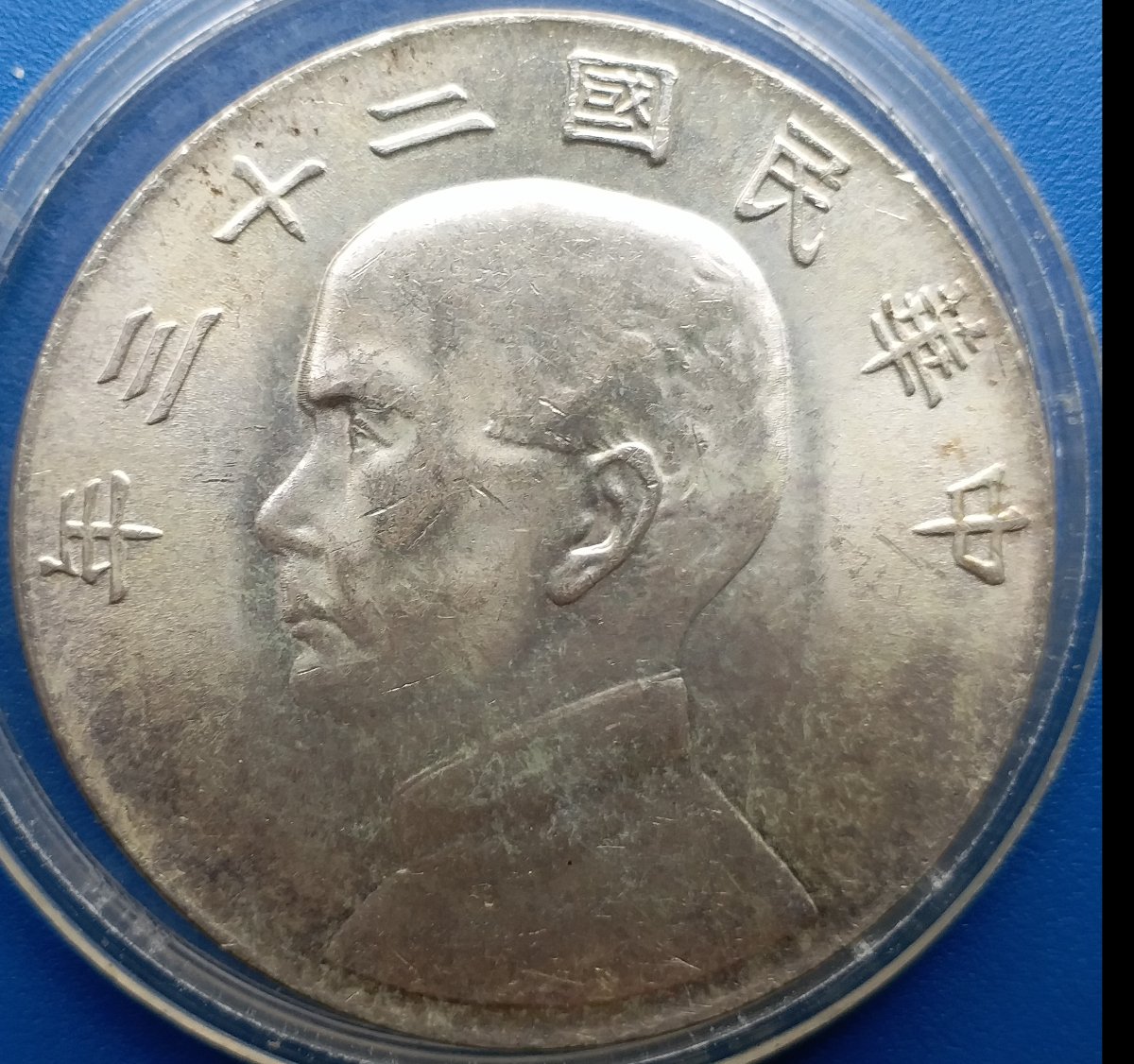 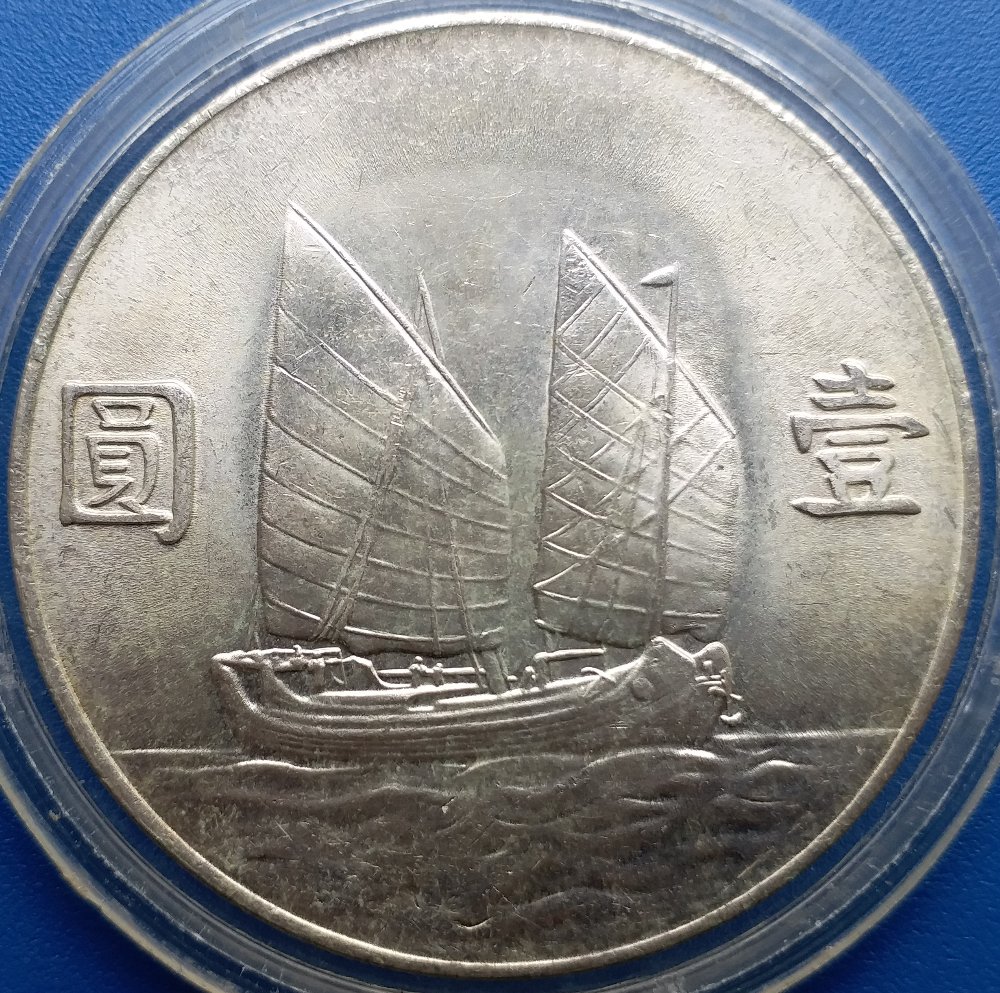 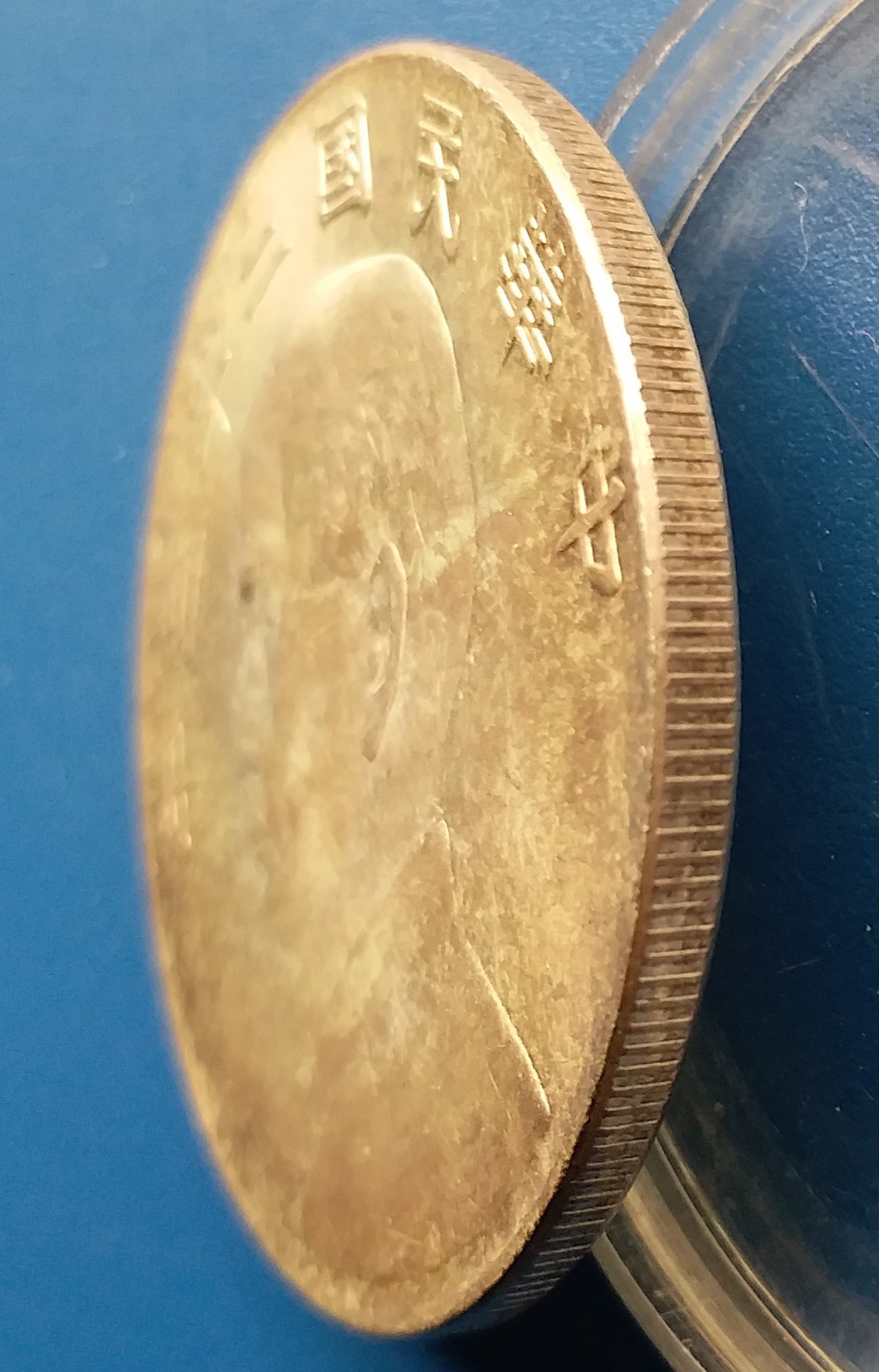 Edited by Wandering Circle
01/29/2022 8:03 pm
|
|
|
|
Moderator
 United States
34531 Posts |
@wand, can you please post the weight of this piece? Also, please confirm whether or not a magnet is attracted to it. Thx.
"If you climb a good tree, you get a push."
-----Ghanaian proverb
"The danger we all now face is distinguishing between what is authentic and what is performed."
-----King Adz
|
|
Valued Member
 Hong Kong
176 Posts |
Ah..I only have a kitchen scale and it came back as 27g. Do I need the exact weight?
It's not magnetic.
Edited by Wandering Circle
01/29/2022 7:43 pm
|
|
Moderator
United States
34531 Posts |
I think yes--best would be to the nearest 0.01 g. You are likely going to need to do a specific gravity test to confirm it is actually silver.
"If you climb a good tree, you get a push."
-----Ghanaian proverb
"The danger we all now face is distinguishing between what is authentic and what is performed."
-----King Adz
|
|
Pillar of the Community
Australia
3839 Posts |
Better info would be much appreciated.
At first glance, it doesn't look like a counterfeit and is more likely to be genuine.
My partial coin collection http://www.omnicoin.com/collection/gxseriesMy numismatics articles and collection: http://www.gxseries.com/numis/numis_index.htmRegularly updated at least once a month. |
|
Pillar of the Community
United States
1915 Posts |
I have an entire stack of these coins.
One genuine and all else false.
By OP pictures alone, it's not so easy to tell.
Some look good but then fail as false as the eye & study gets closer.
More tests or quick fast tests in the shop can prove right or wrong.
We lack that sort of definition in this forum where OP images and missing test results support or deny authenticity.
|
|
Pillar of the Community
United States
5362 Posts |
Numismatic Forgeries of these coins were well known in the 1950's and 1960's. The date of origin should not be used to presume these are genuine.
SG would tell if you are dealing with silver or a base metal.
XRF even a handheld unit would also confirm the coin is silver.
I am not aware of a silver copy being made during the 1930's.
In my own opinion, the edge of this coin looks incorrect. I believe it is one of a great number of Numismatic Forgeries of this particular coin. I see no reason at all to accept this as genuine without absolute proof that the corners of the coin have not been ground down to conceal the fact it was reeded after the coin was struck. I also believe I see at least one clear example of a split top reed on this coin.
So, without solid proof that I am not correct about the edge, I would never pay more than a dollar or two for any such item.
Edited by swamperbob
01/29/2022 9:18 pm
|
|
Valued Member
Hong Kong
176 Posts |
Thanks for everyone's replies! Guess I better do some testing.
|
|
Pillar of the Community
United States
1915 Posts |
It's not hard to tell the difference between genuine silver compared to what most of these fakes are made of.
I'd begin with a small N-52 magnet to see if the coin has dia-magnetic properties and if other common checks & tests were good, then I'd check SG.
There are quite a few differences even on genuine coins of this type.
Like I said as far as mine go, one is good and all others are bad.
And it's easy to tell them apart.
Might be harder to determine if you only have one piece, but it can be done.
Edited by Albert
01/31/2022 3:40 pm
|
|
Valued Member
Canada
122 Posts |
I think these are real, and they should be the non-restrike 1934 Junk dollars based on the edge and the thin rim.
|
|
Valued Member
Hong Kong
176 Posts |
Well, I will be getting some of the more promising Junk Dollars from the same batch graded. Hopefully I would get good results.
|
|
Moderator
United States
34531 Posts |
To help us learn @wc, it would be great if you post here the results from getting this coin verified/graded. Thx.
"If you climb a good tree, you get a push."
-----Ghanaian proverb
"The danger we all now face is distinguishing between what is authentic and what is performed."
-----King Adz
|
|
Valued Member
Hong Kong
176 Posts |
Will do! Spence.  |
|
Pillar of the Community
United States
5362 Posts |
Wandering Circle Please make sure that whichever coin or coins that you submit for grading includes the exact coin photographed to start this article. My comment was strictly about that one coin. That coin has ground off corners and split top reeds. That is what indicates to me that the coin was not struck in a closed collar coining press.
An original and a numismatic forgery can look almost perfectly identical when you compare the obverse and reverse designs. However, the reeding created by a coin being struck in a closed collar press does not have the simple characteristics that I see in the edge photo.
|
|
Valued Member
Hong Kong
176 Posts |
Understood, swamperbob. Apart from the scratches, that's part of the reason why this particular one wasn't send in to grade when I got better one that is more likely to be authentic (finger cross). Still, would probably come back to this one in the future, assuming I didn't receive too many body bags this time...
|
|
Valued Member
United States
333 Posts |
So, I know I'm a bit late here but I just came across the thread. The coin appears to be a cast counterfeit. The most important place to look would be the high points of the coin, which are unusually mashed up. Here's a comparative picture 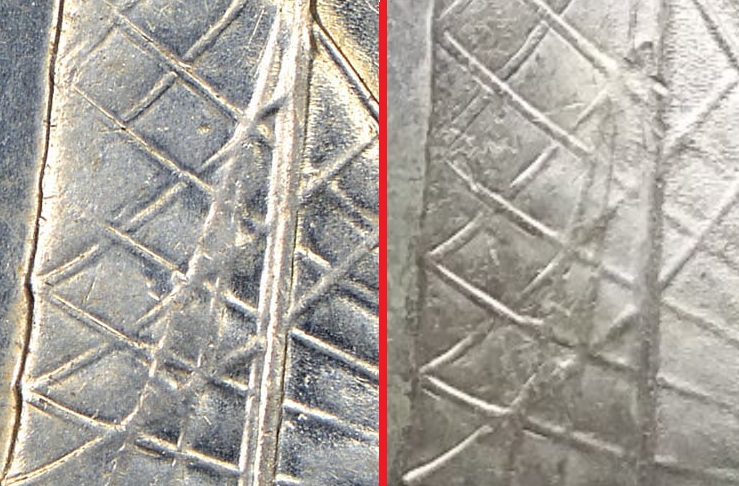 Notice the mashed up details between the center rigging lines in particular. The left picture comes from the NGC article about this sort of counterfeit, seen at https://www.ngccoin.com/resources/c...p/chinese/1/ |
| |
Replies: 15 / Views: 2,862 |
|





 Posted 01/29/2022 7:41 pm





