Hi everyone,
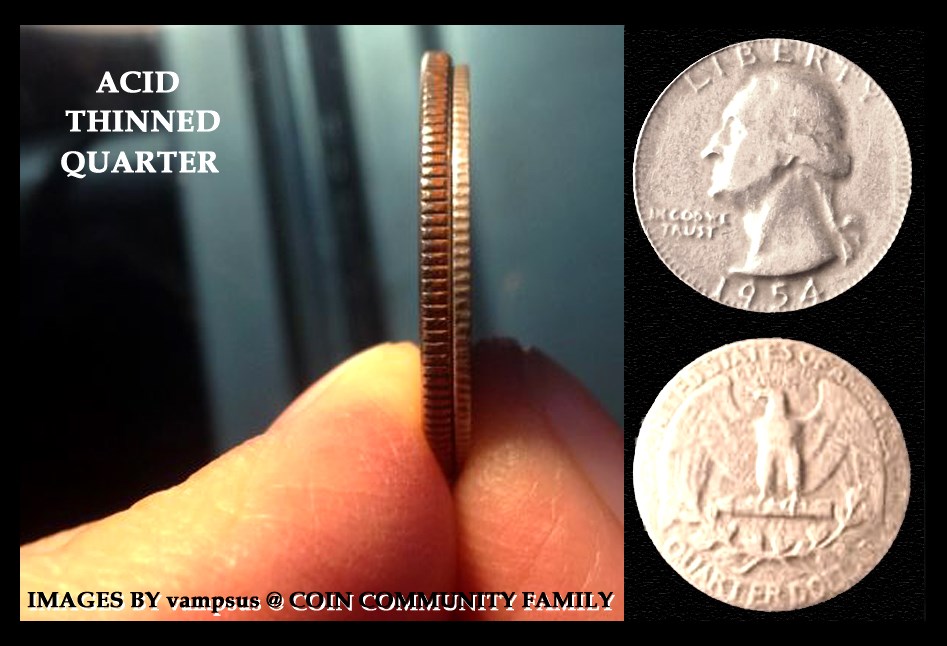
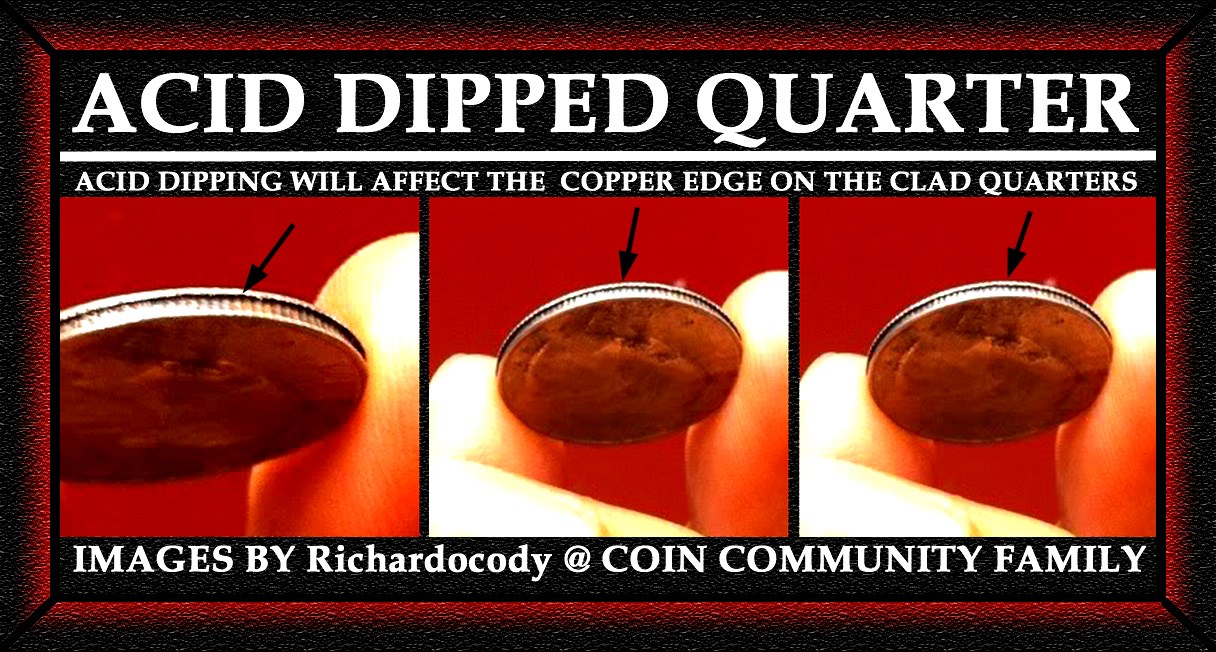
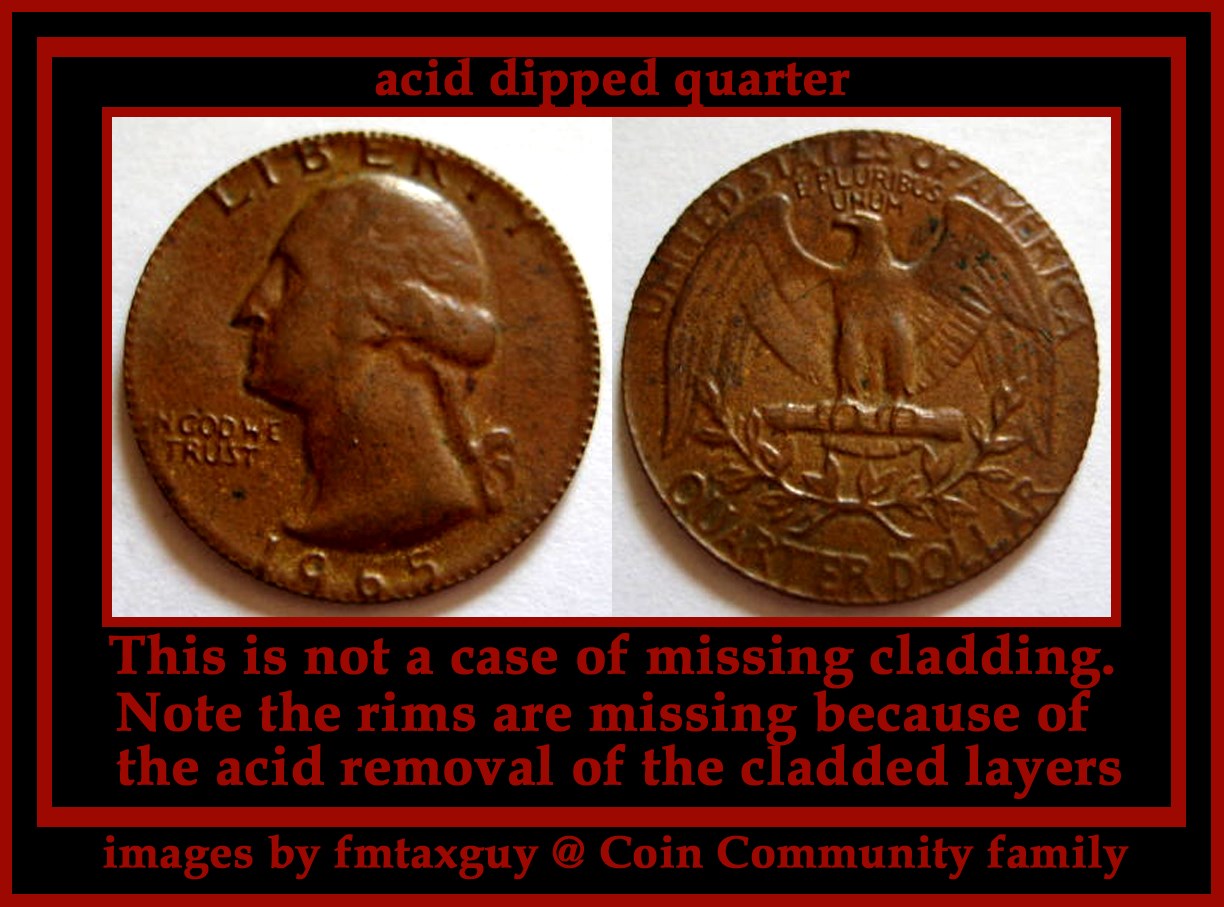
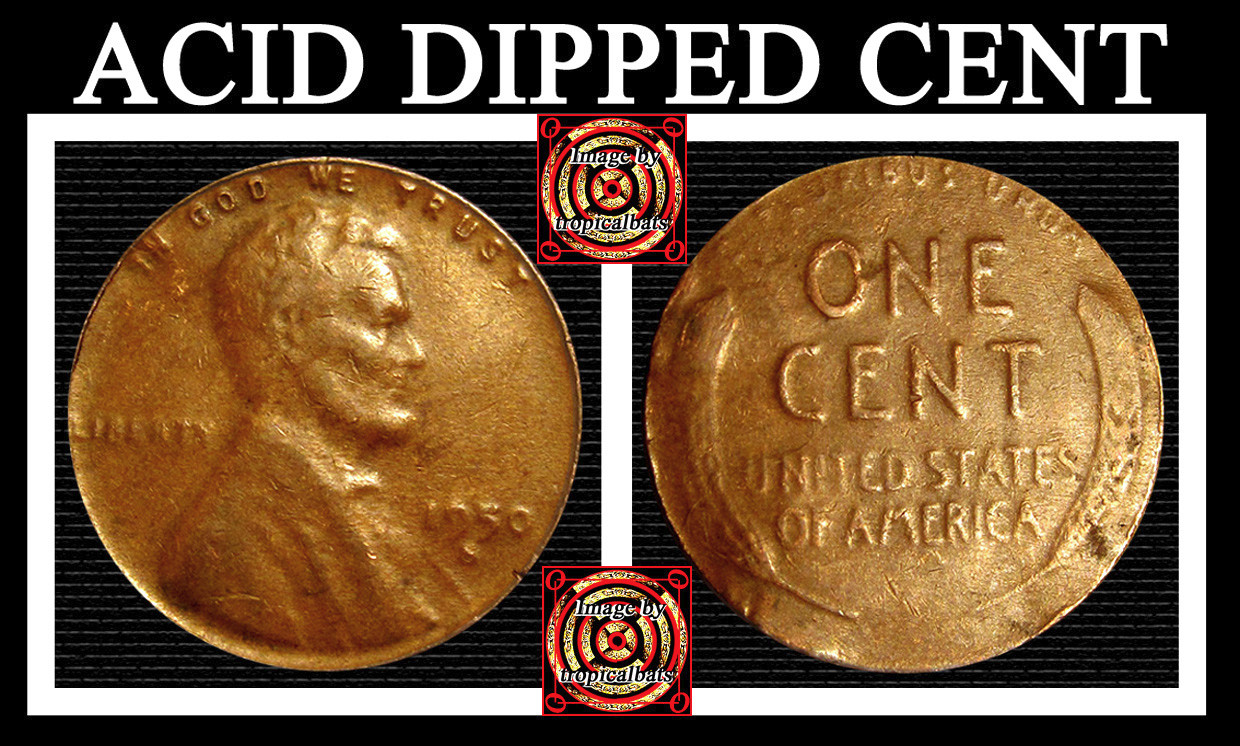
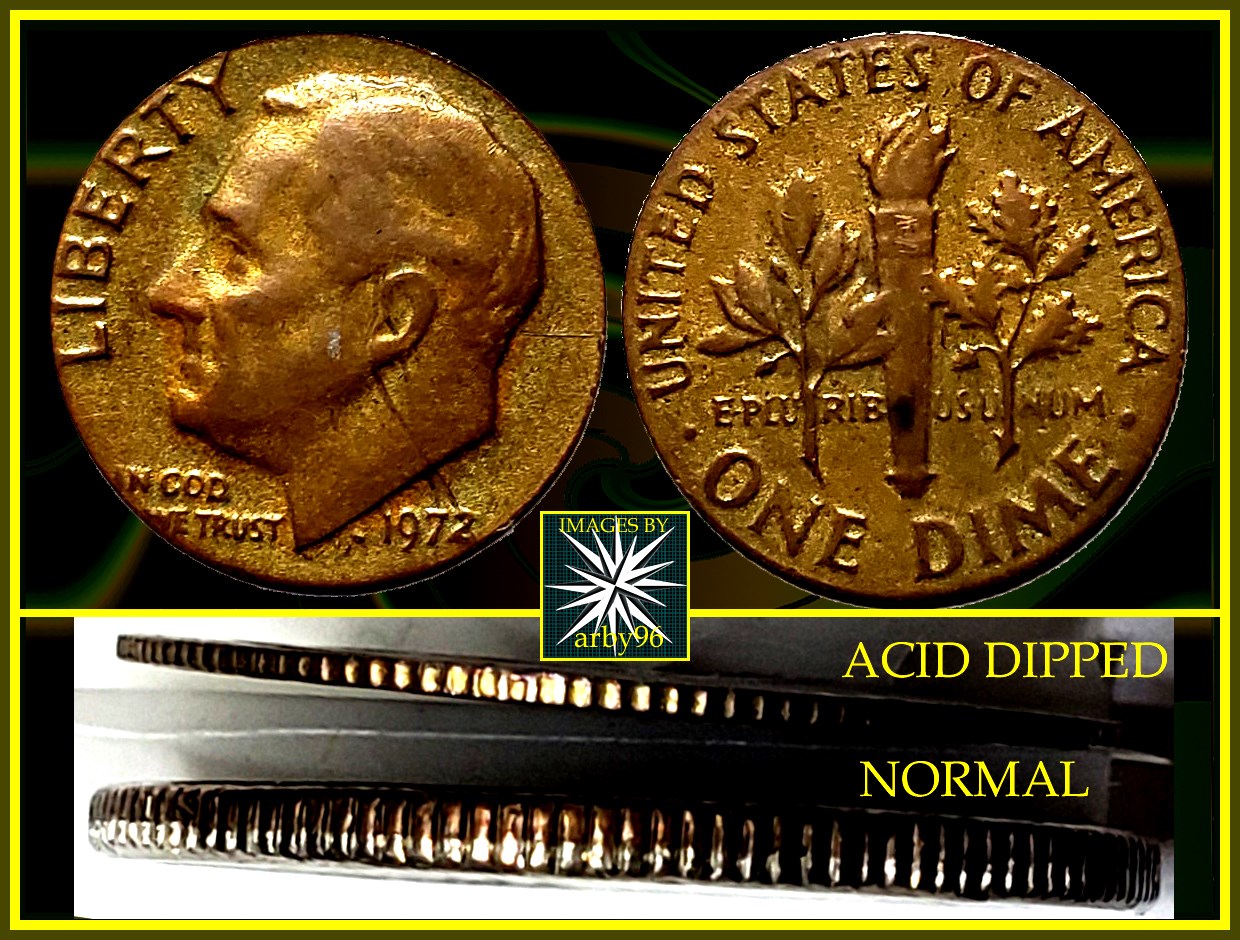
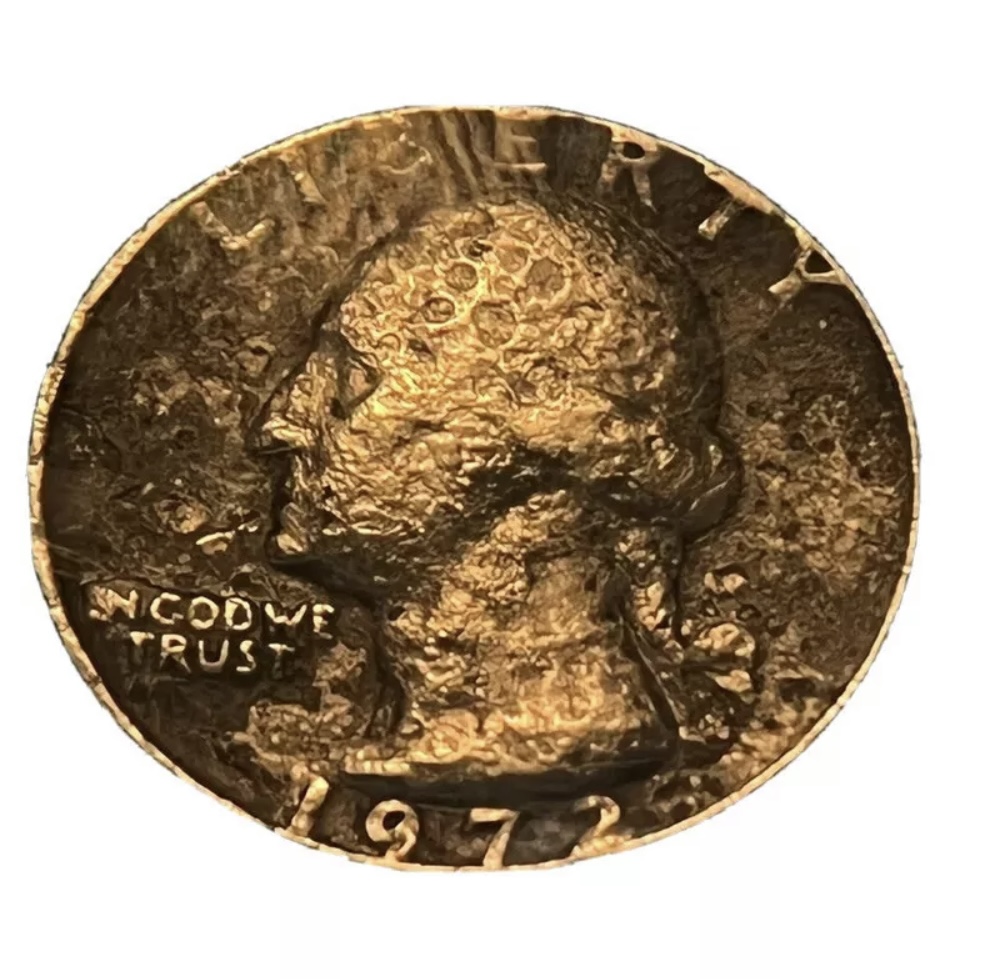
Because COOP post on his site here about the acids corrosion on the coins, I select two of the most representatives coins from my collection. I will explain also the effect of the acids on coins (summary) from the most acids we can have in our environment, and how react with the clad coins and the look of and not for the full metal coins (this will be other time).
1. The first are the
acids: A. sulfuric and B. Nitric or azotic. Formulas: H2SO4; (sulfuric) and HNO3; (azotic). The both has H and O (keep in mind)
2.
What it is CLAD? The clad it is a resurface of a material with other to improve physical proprieties. Clad include plating with 5 variations of, clad (how we say in coins ) with all variations of production which could be pressing (rolling), gluing, plasma and also laser (next one test by mints).
3.
Acid reaction: The acid is an external agent who react first with the first lay of the coin. Due to the fact has in composition H and O will be able to interact with the molecules of the (our case Ni) which has C. In this case the oxygen and the carbon interact with the carbon producing gases knows as CO2 and HC. Those will evaporate. during this slow evaporation heat will be produce, and the Ni will melt. YES will melt.
So I will present the way to see easy this reaction.
I have two coins, not US because I choose non circulated for better probably look.
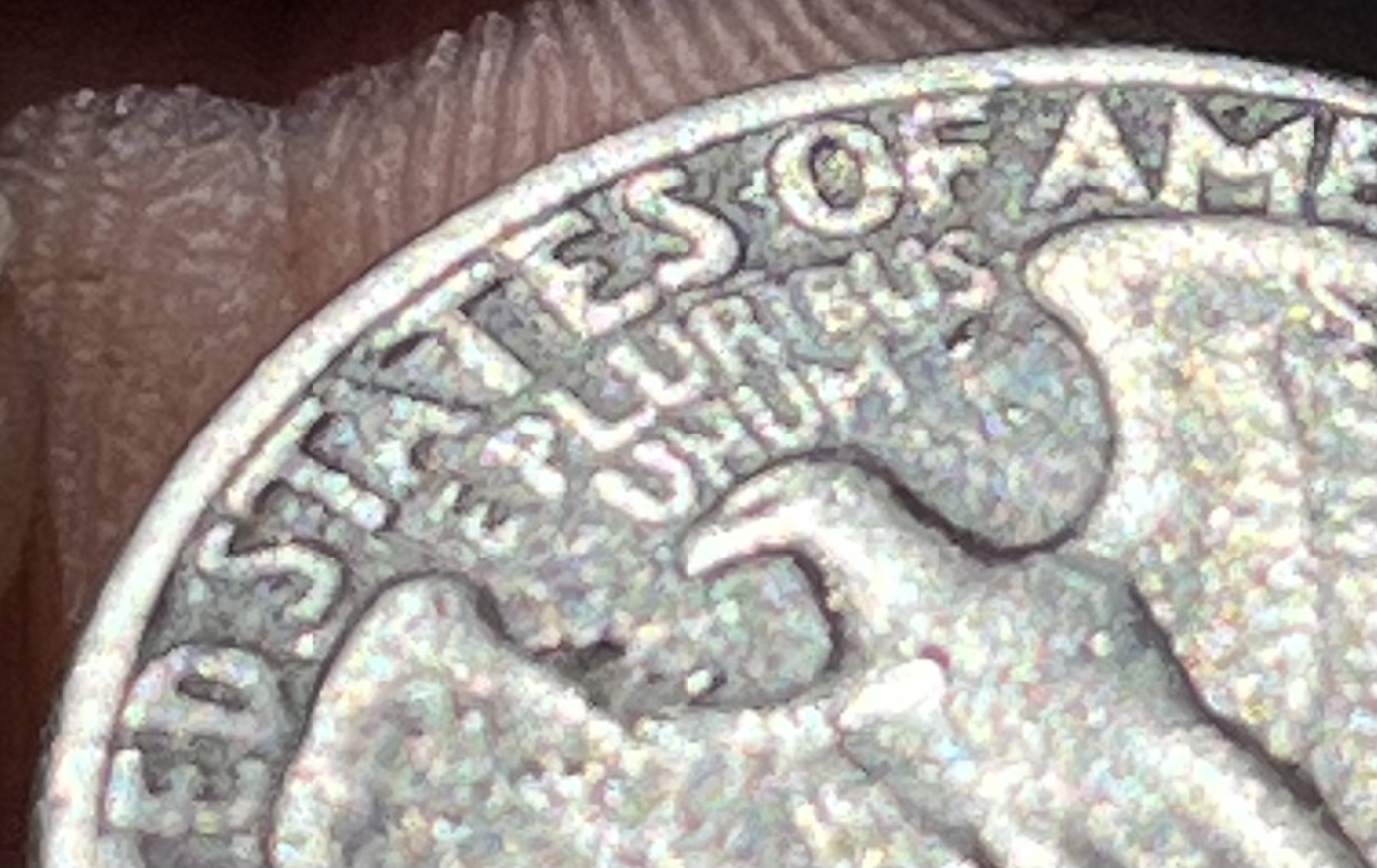
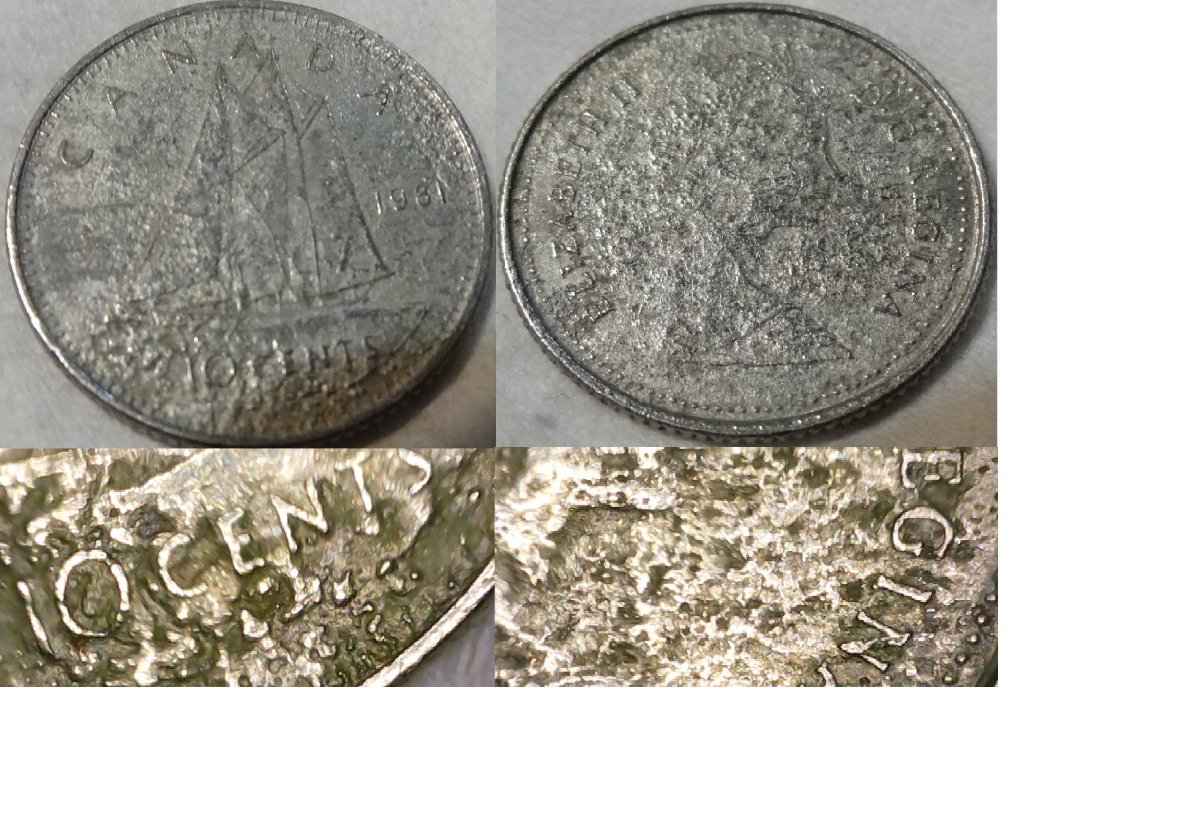
First. 1981 10 cent Canada 100 Ni must be 2.07 gr and 18.03mm diameter.(this one is special)
Example in the photo following. It is an 10 cent struck on foreign planchet for 10 Mongo for Mongolia and must be 2.10 gr and 18.15 mm diameter.
Our coin it is 2.09 gr and 18.14 diameter.
Conclusion: loose in diameter and weight.
 Second:
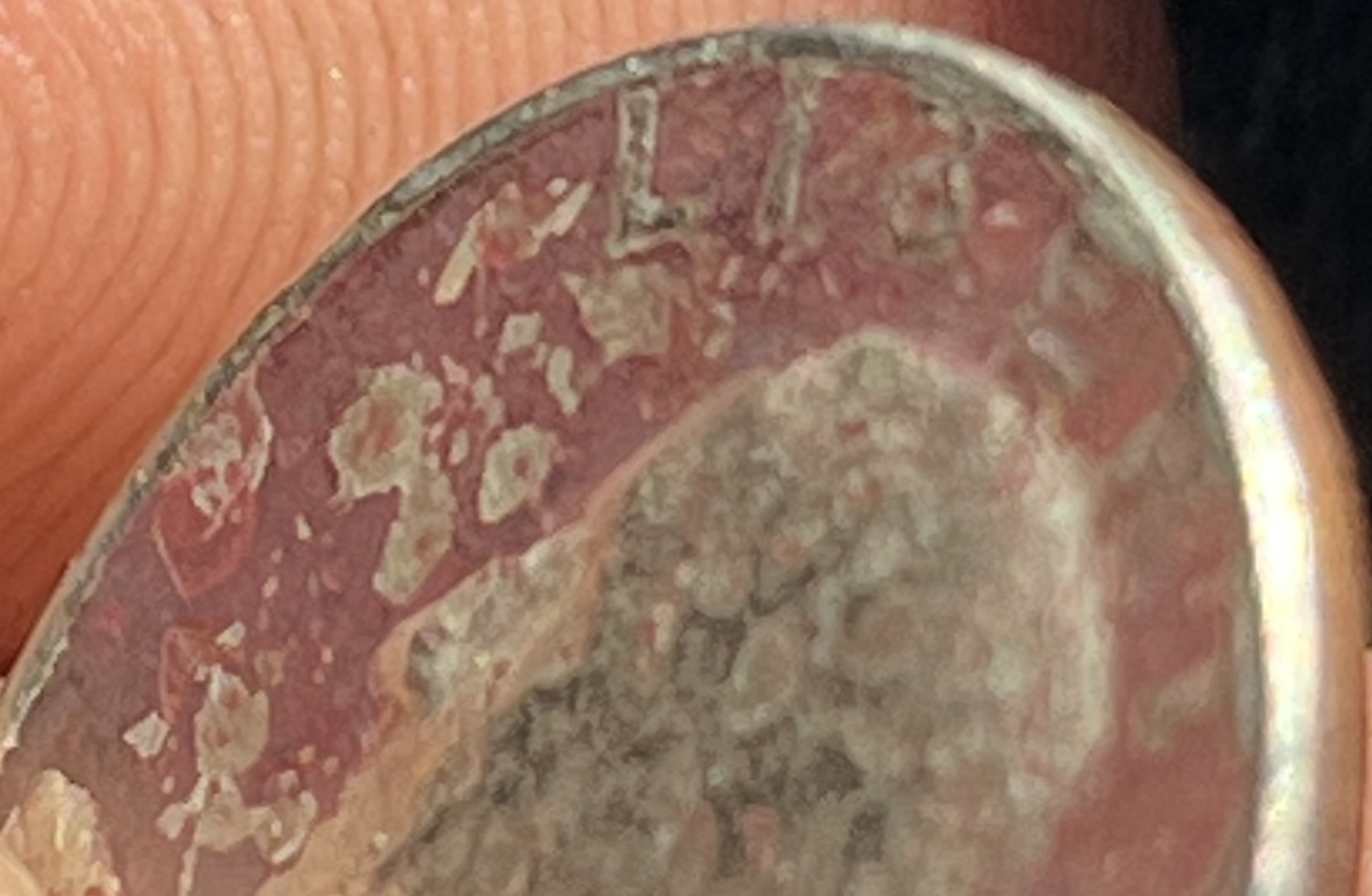
 2001 10 cent Canada error. Composition: .920 steel; .055Cu and plated (gladded) .025Ni.
1.70 gr of the normal 1.75 and diameter not affect.
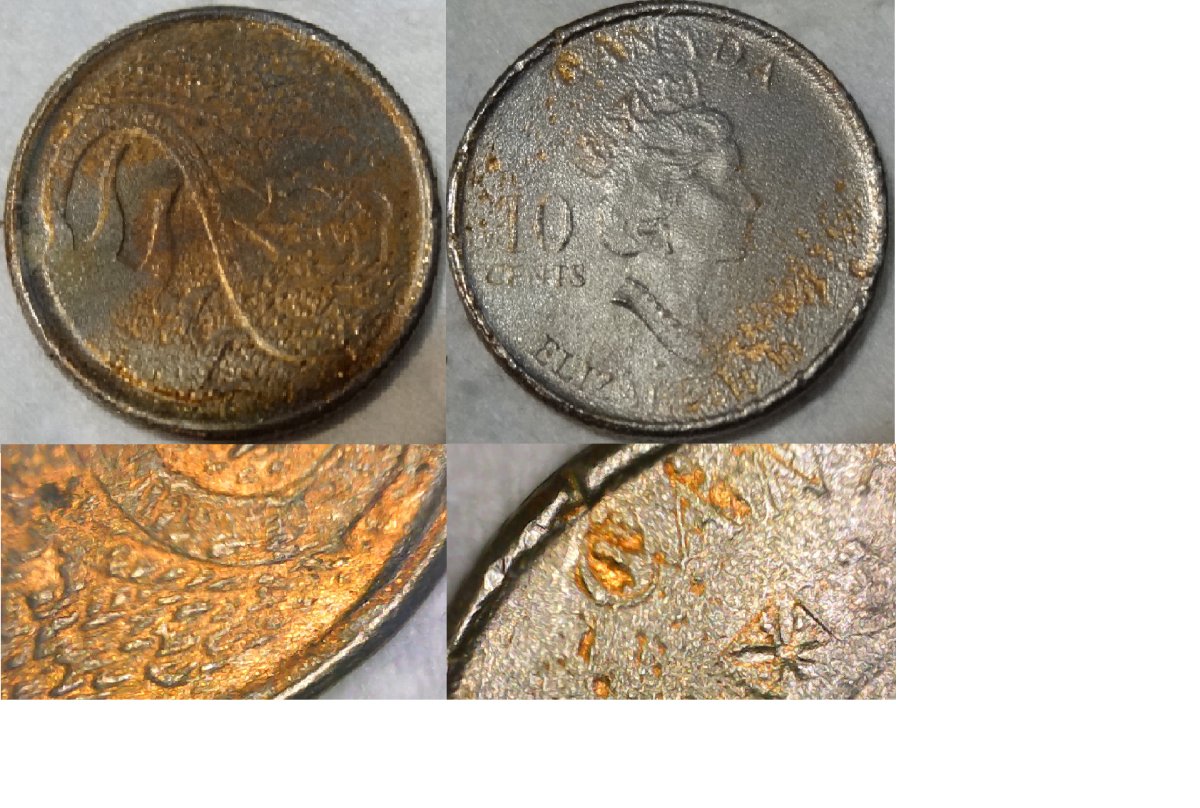
Now you has the two example and we can see: 1. The clad melt in bubbles. 2. The polishing die lines are following by the melt metal. 3. IT IS ONLY SURFACE AND NOT ROTING.
Ps. The 2001 coin it is cooper color because the acid do not interact with the cooper.
Edited by silviosi
03/02/2022 12:40 pm









 Posted 03/01/2022 12:06 pm


 to the Community!