| Author |
 Replies: 14 / Views: 1,960 Replies: 14 / Views: 1,960 |
|
|
Valued Member
United States
157 Posts |
|
|
|
|
Moderator
 United States
100548 Posts |
Very interesting, I never noticed that difference. I'm going to go back and research this a bit and possibly come back to reply again. In the meantime, I want to see what others have to say
|
|
Pillar of the Community
Canada
3328 Posts |
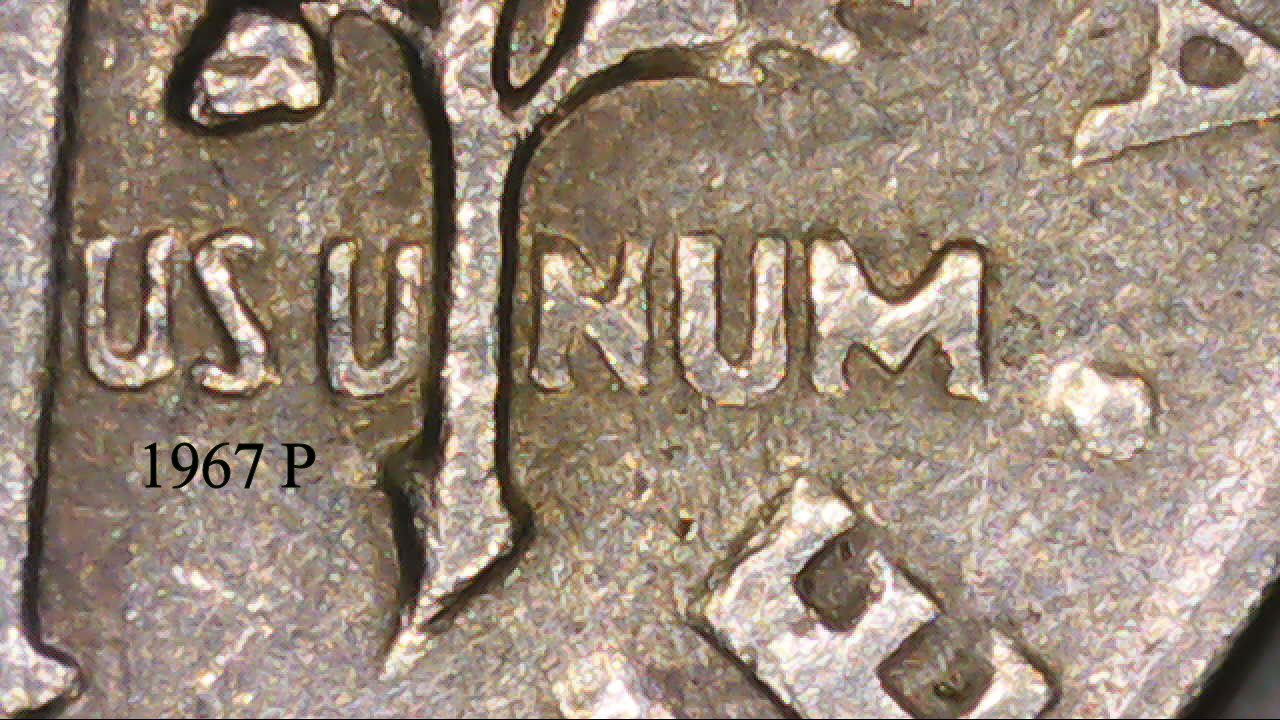
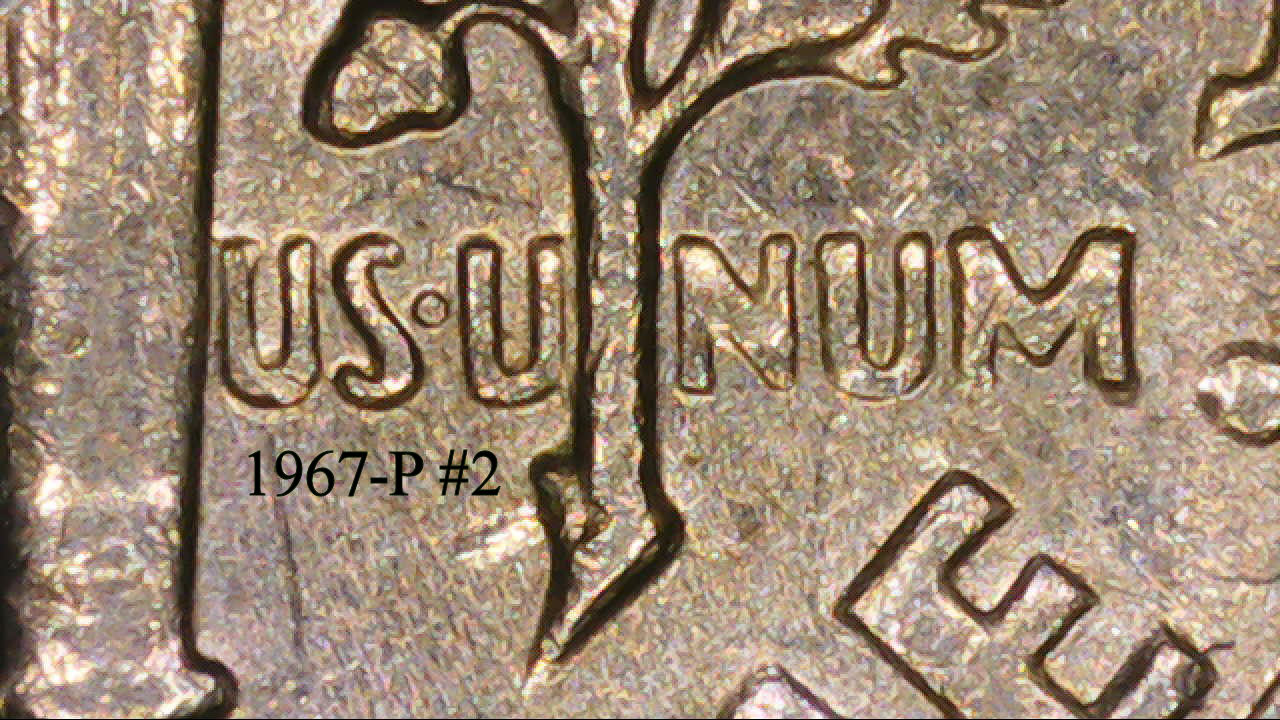
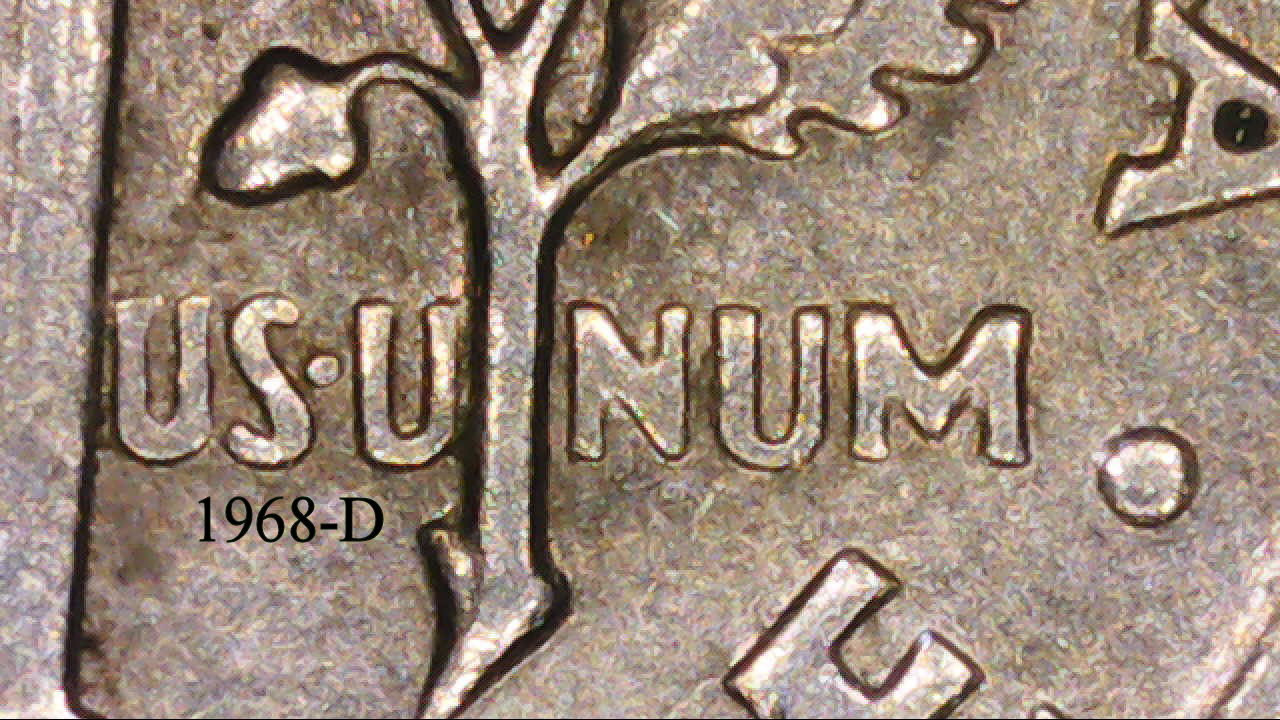
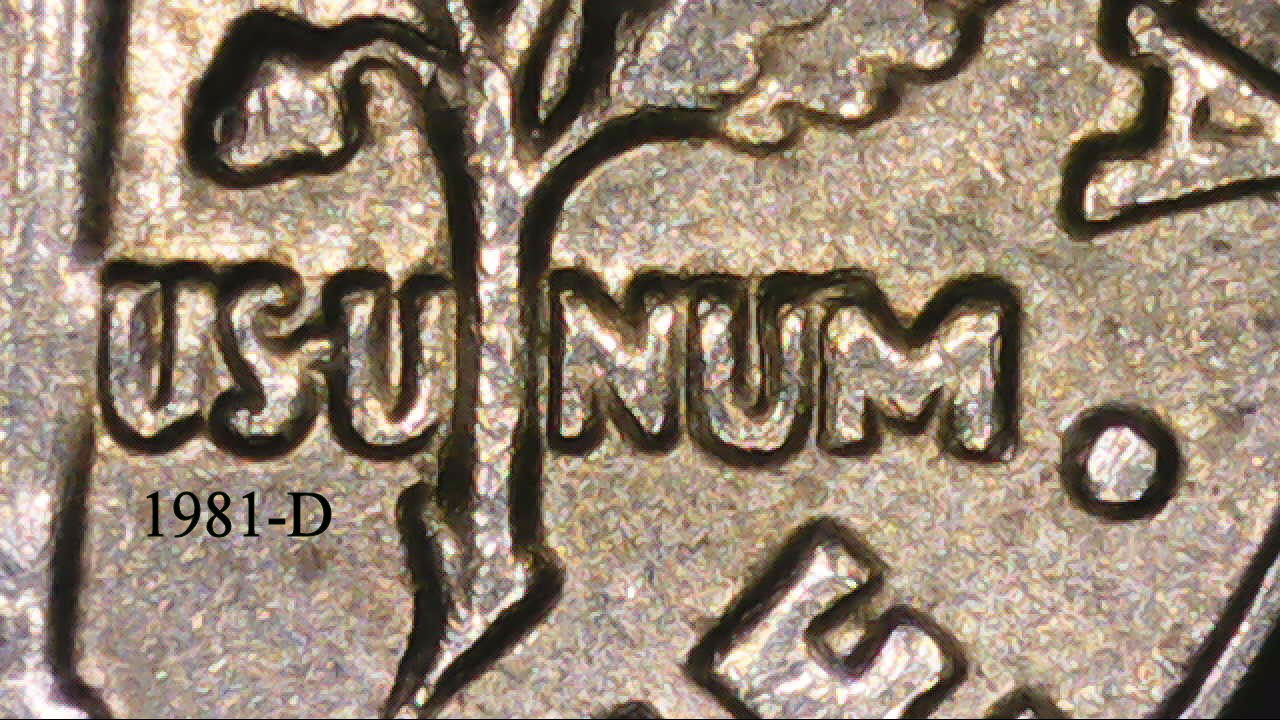
Iv never noticed this either, interesting. I wonder if it's a design change or if it's due to the dot being polished off. I'll keep up with this thread, if it's a design change then perhaps the the 67 you found us a potential mule.
|
|
Bedrock of the Community
United States
62064 Posts |
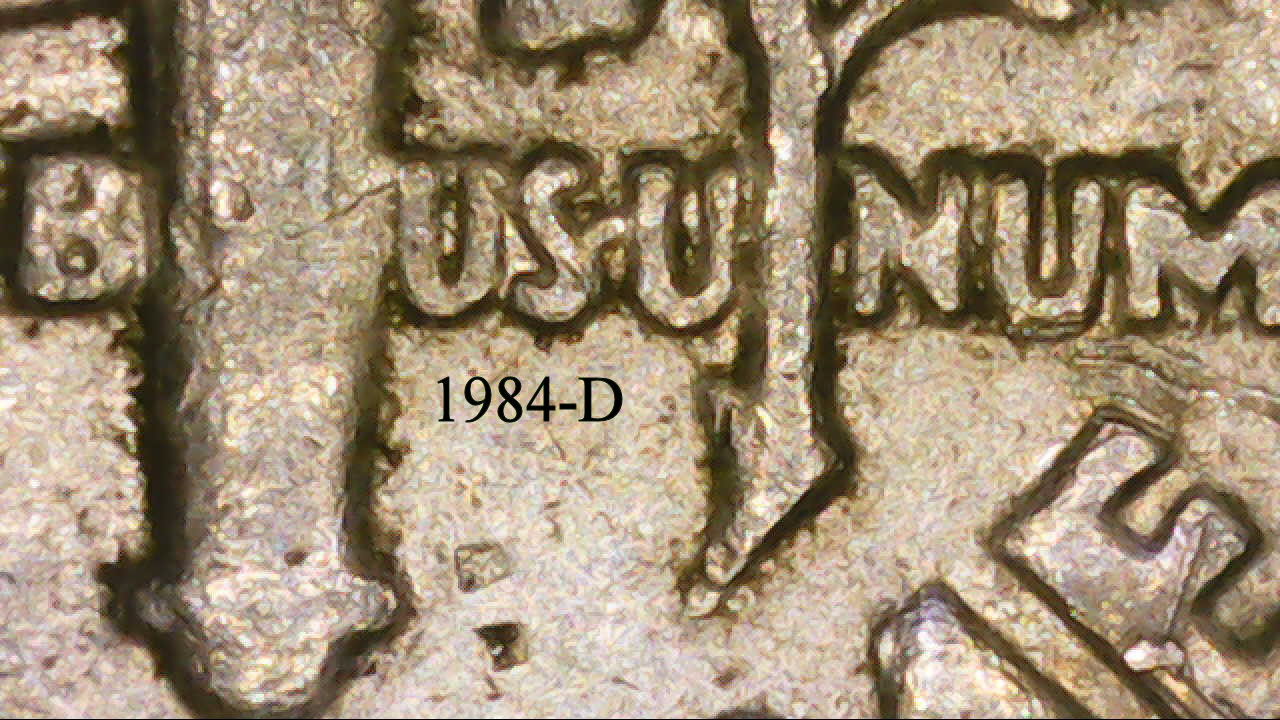
The thinner devices are from over polishing of the dies. When the fields are polished to remove die damage/clash marks, it make the devices thinner and shorter in height. The die was created normal, but the die polishing event altered the die. These are not premiums for the coins. Just as an example of what abrasion can do to a die. There are a lot of dull years on dimes. But note the new post 1999 dimes on the reverses on the listings. The DDR are not in locations you normally expect to find them. So look up with site to see what you could be looking for on the DDR's. The obverses are also "Ho-Hum" though. But save your eyes and look to see what you should be looking for. View it like a map to get to you destination. If you don't you may had a long trip around the world, before you get to where you really want to go? http://varietyvista.com/07%20Roosev...Listings.htmhttp://varietyvista.com/07%20Roosev...Listings.htmLook today. Save your eyes for better searching areas in the future. (And save the eyes) |
|
Pillar of the Community
Canada
3328 Posts |
Instead of the close ups like this I recommend posting the whole coin you are inquiring about front and back, followed by an example of another one of the same year that has the dot.
|
|
Valued Member
 United States
157 Posts |
I have already check that website and found no examples of this. I am still checking across the internet for examples and no luck. Having found two with this oddity, I don't think it is rare but is a curious example. No one as of yet as indicated they have seen this as of yet. Polishing a die can erase features but most of the time I believe it still leaves a faint image behind. The surface does not show this. That is why I included the enlarged photo. As far as a complete photo of the coin, the period on this coin is so small, it would be unlikely you would benefit from it. However, I will try to capture it and include it in this post.
|
|
Valued Member
United States
157 Posts |
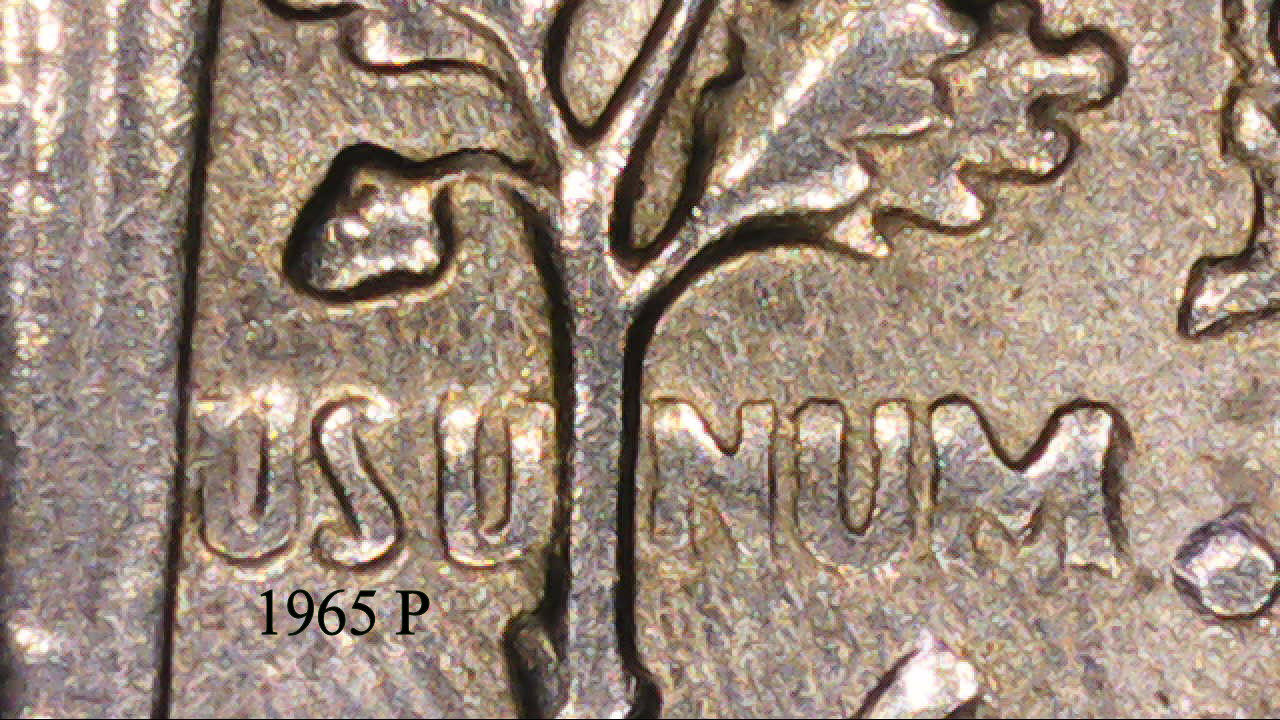
Ok... I have seen an example of this on another site but I am prohibited from showing the link or the name. However, the 1965 dime still showed the dot. Still no answer as to why this was done.
|
|
Pillar of the Community
United States
580 Posts |
I suspect Coop's right that this is just a case of the working die having been over polished. PCGS clearly shows a dot on the 1965 P Rosie: https://www.PCGS.com/coinfacts/coin...10c-fb/85130and on the 1967 P as well: https://www.PCGS.com/coinfacts/coin/1967-10c/5132Notice that the dot on their 1967 looks smaller/less robust, even on a coin graded MS67+. I think if I squint my eyes I can just make out the dots on both your coins exactly where they are supposed to be, albeit much less pronounced. |
|
Valued Member
United States
157 Posts |
Ok.. I did some research and this is what I found. They do polish dies if the surface shows reasonable wear. Polishing a die only touches the surface of the die. All the elements like letters, portrait, date and mint marks are recessed and would not likely receive much polish if any. You can't completely remove an element if it is recessed. If it were raised like what you see on the coin, then that might be possible. Most missing elements like letters and dates are usually caused by a weak strike or grease filling up the element or both. A lot of those occurred at the outer rim of the coin and can be caused by a blank not seated properly. They are very common. This element or dot on the reverse was in the center of the coin and did not disturb the letters near it. This is either grease or just missing from the master die. I have seen this exact oddity occur on dimes in the years 1965, 1966 and 1967. I don't believe they would use the same die for three years running and grease would have been cleaned long before that time. This leaves me with the belief that this was missing from one of the master dies that was used to make the working die. Regardless of how it was done, this appears to be common and would not change the value. And oddly enough, this was the exact years that the mint marks were ordered not to be used, due to people hoarding coins. Probably not related but interesting. Thanks to everyone who responded to my inquiry.
|
|
Pillar of the Community
United States
580 Posts |
Kudos to you for doing your own research. You are far ahead of most people in that regard. However, I would like to point out a couple of minor items to take issue with in regards to what you've said. Quote:
They do polish dies if the surface shows reasonable wear. They polish dies mostly to remove clashes and defects, not to remove wear. As odd as it sounds, working dies are almost like disposable tools to the mint. Once they begin to wear out, they change them out. For a one year run of coins the mint can use as many as 2500 different dies for a common coin like the cent. They don't have the man power to spend refurbishing worn dies. Quote:
Polishing a die only touches the surface of the die. All the elements like letters, portrait, date and mint marks are recessed and would not likely receive much polish if any. You can't completely remove an element if it is recessed. If it were raised like what you see on the coin, then that might be possible. Polishing a die involves removing metal from the surface of the die, which makes the elevation difference between the field and a device less. The less the elevation difference, the less the height of the device on the coin. Think of it like sanding the scratch out of a piece of wood. You sand the wood until the scratch disappears, right? But since the scratch is just a hole, how do you make a hole disappear? You do it by lowering the surface of the wood until there's no more height difference between the scratch and the surface. Same principle on the die surface. There are actually some very well known and collectible over polished (or over abraded as some say) coins: https://www.error-ref.com/thinning-...gn-elements/ |
|
Bedrock of the Community
United States
62064 Posts |
If the master hub was thin, then all the years that it was used would affect all the coins from that thinned master hub. If the master die was affected, then 50% of those years that it was used could affected on the coins from that thinned master die. But the don't polish these dies. These are the masters that create the dies/hubs down the line. 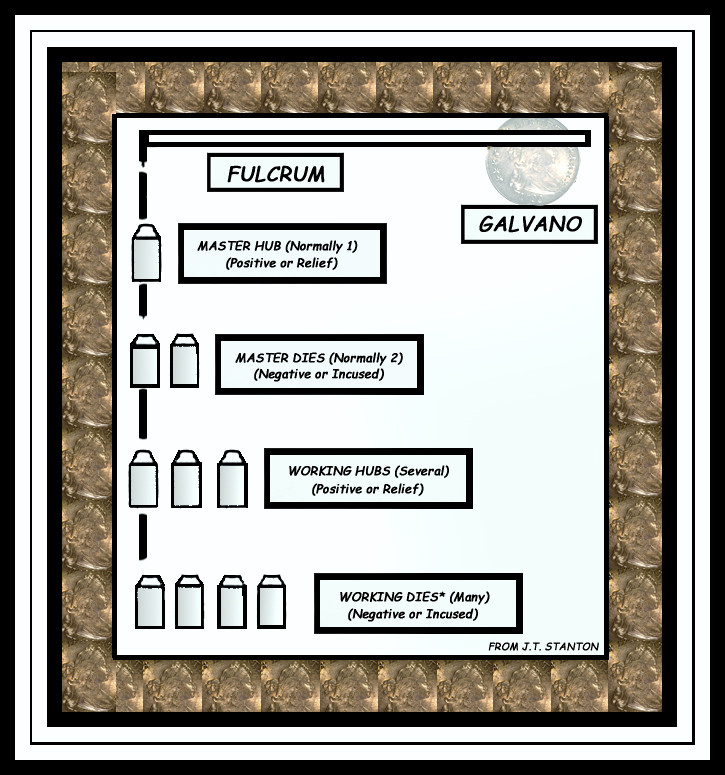 On the reverse dies without the date, the same master hub/die could be used on different years. The worn working hubs are used to be used for a longer time. These transfer/create worn examples. When you look on the older quarter reverses, you see the reverse get very mushy thought the years. When they re-create new working hubs, you can see the differences on working hub states. So it not the polishing of the Master that is the issues. It is the continuing to keep using some of the masters that create the process issues. But on the dimes, the issue is the working die that was damaged and polished. On these die clashes happen, but a stronger alteration of the dies are Feeder Finger Damage. The FFD is horizontal on the reverse/obverse dies: Depending on how deep the damage was on the die, they polishing can alter the devices a lot in a bad way. 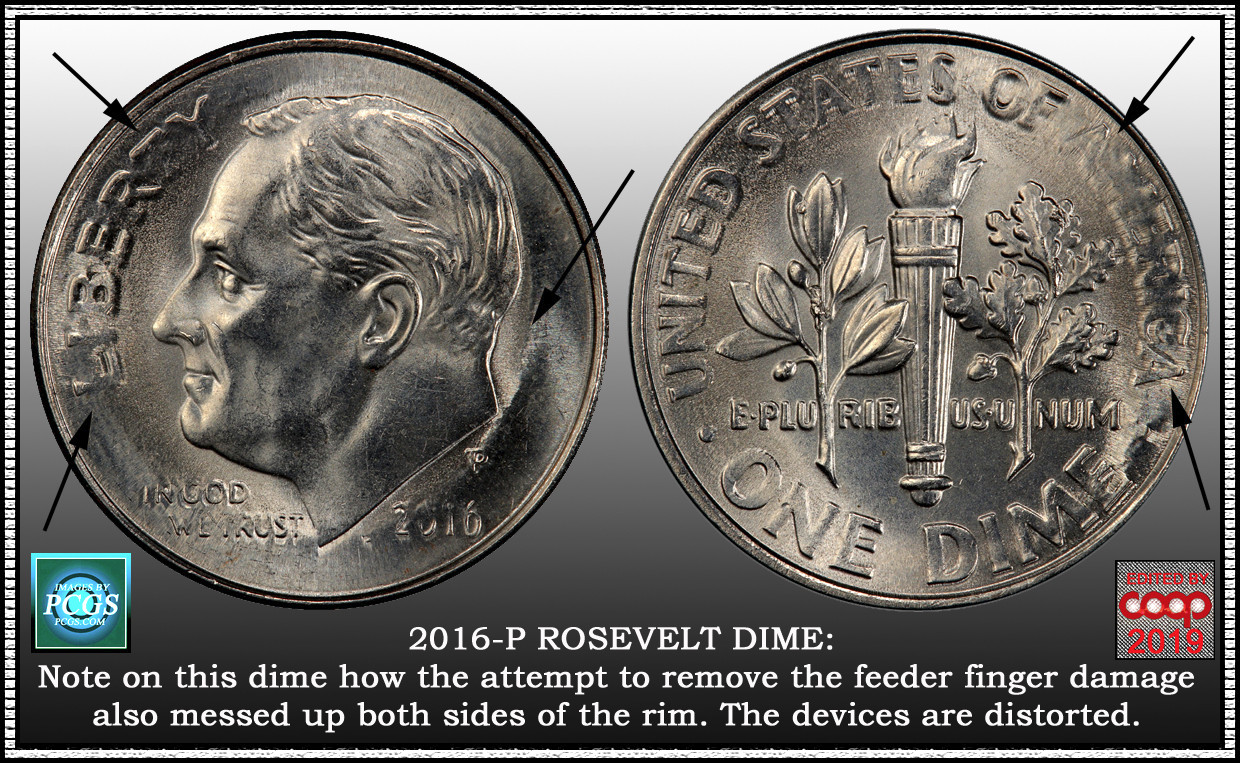 Note the affected areas on the centers of this coins devices? Note how flat the fields are on the reverse. This obverse polishing is also affecting the devices, making them shorter and narrow in size, because of the die abrasion by the polishing. So it is not the masters that are polished, it is the working dies that are polished. The masters Hub/die and working hub can breakdown, but they are not polished. Just the working dies. (Because they are the ones affected by clashes and FFD damage to the dies) Even dropping dies on each other are also affected and these are also polished off on the working dies. 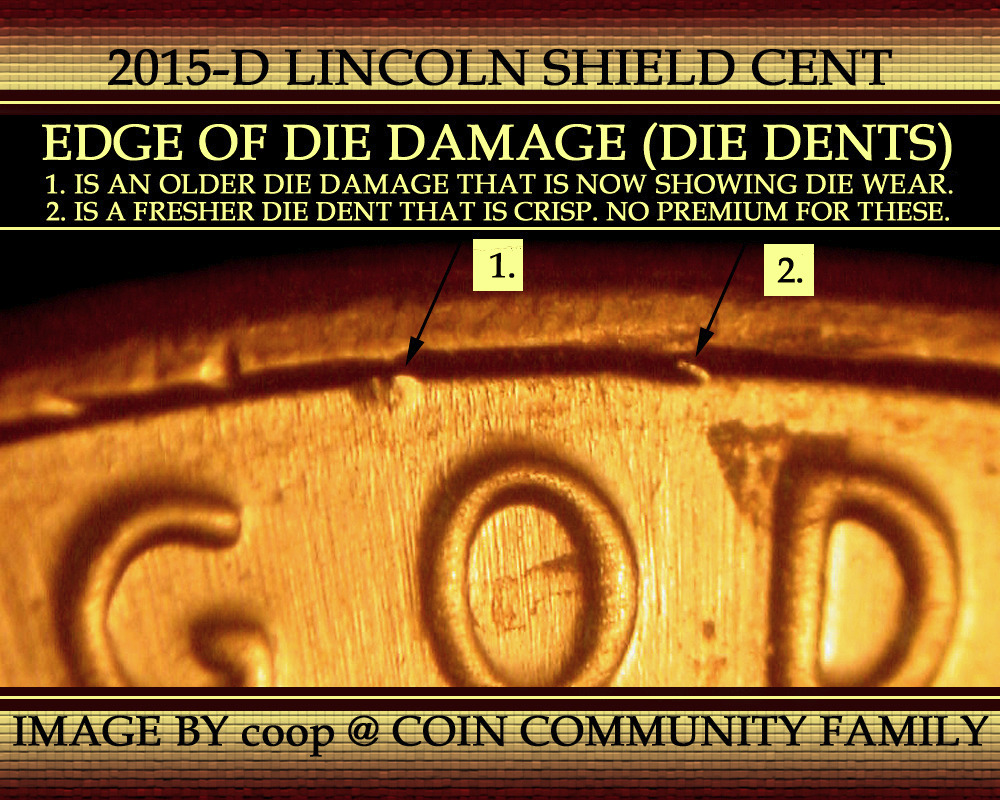 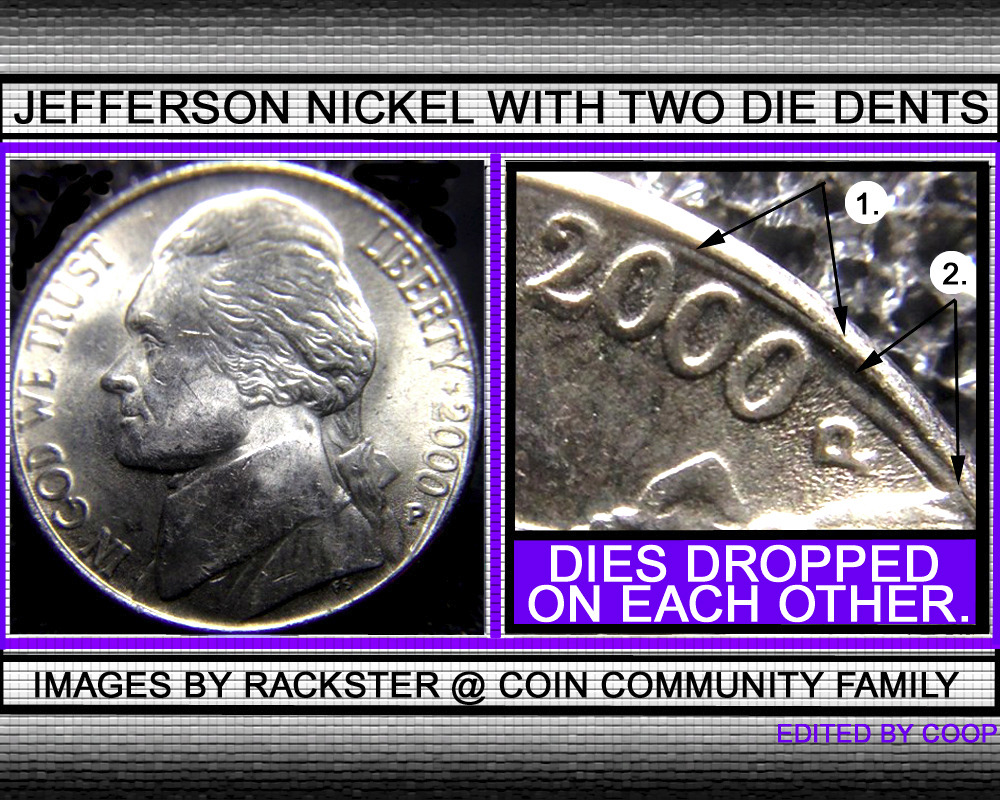 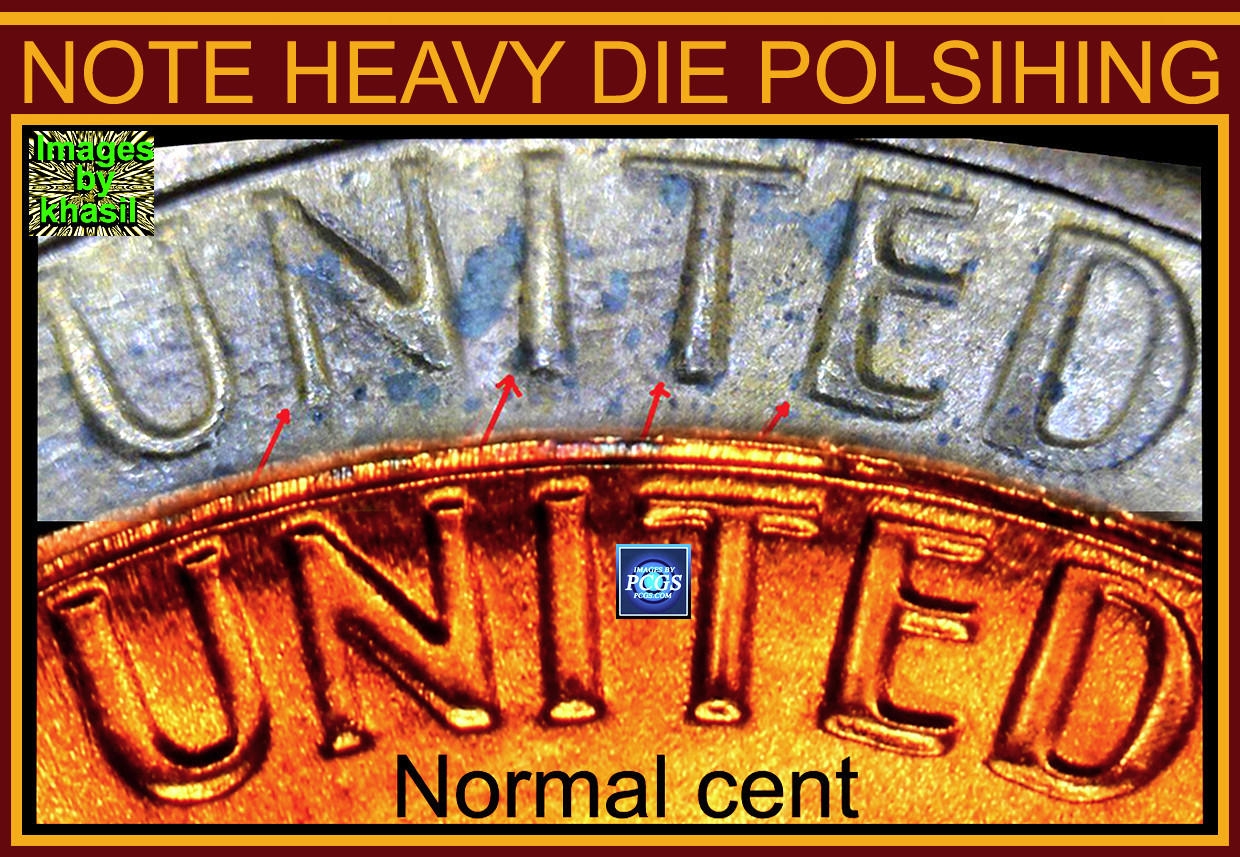 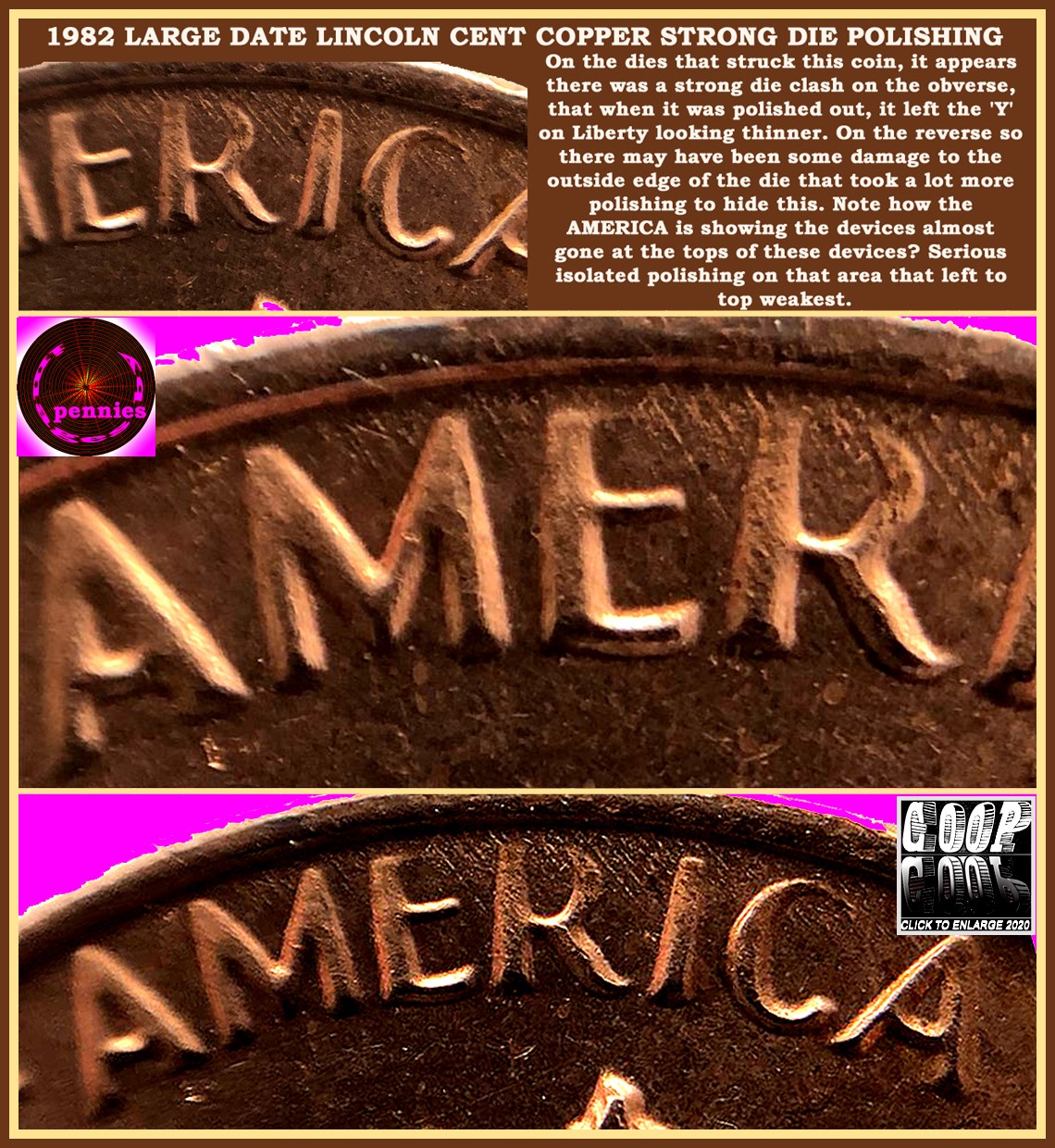 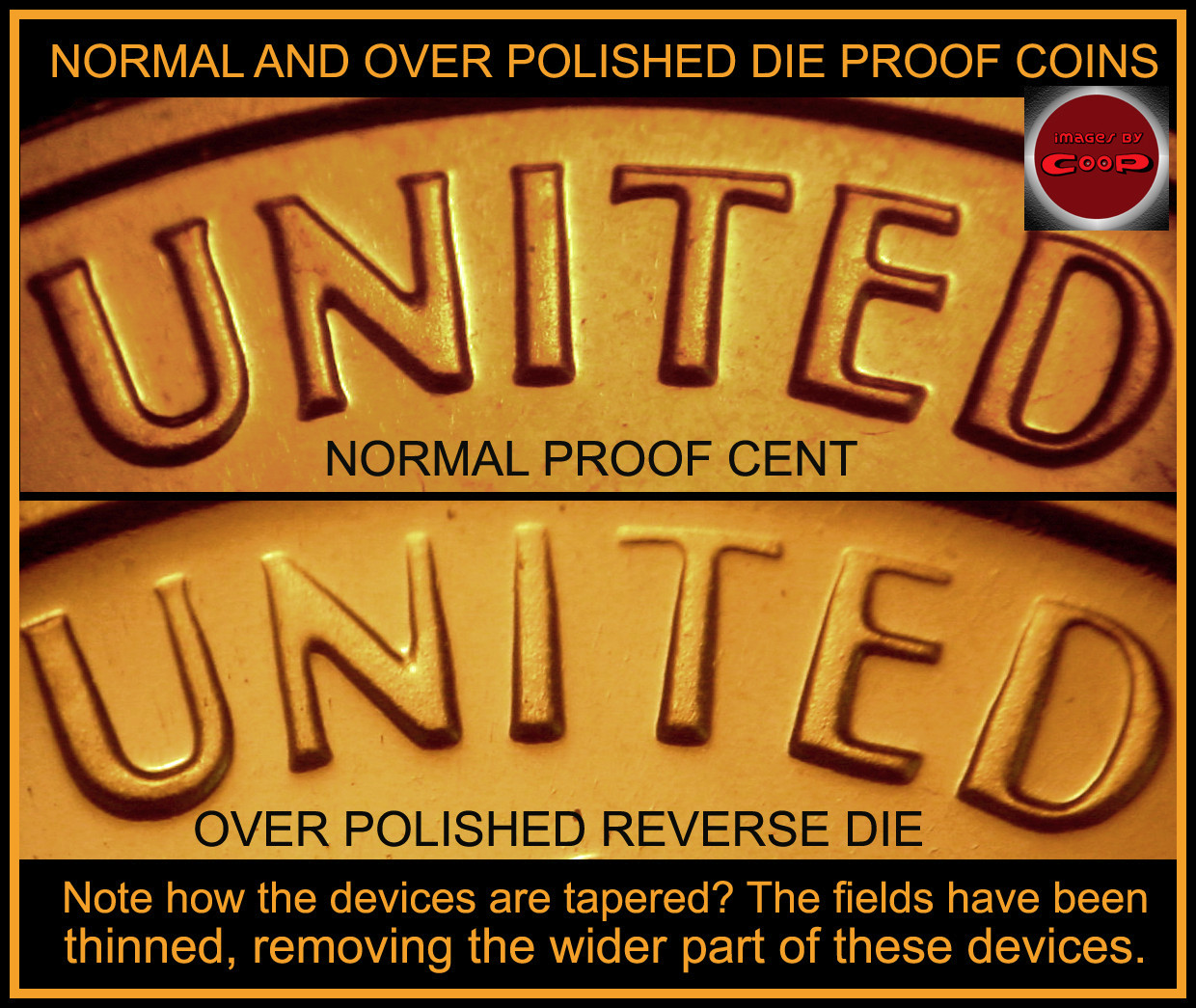 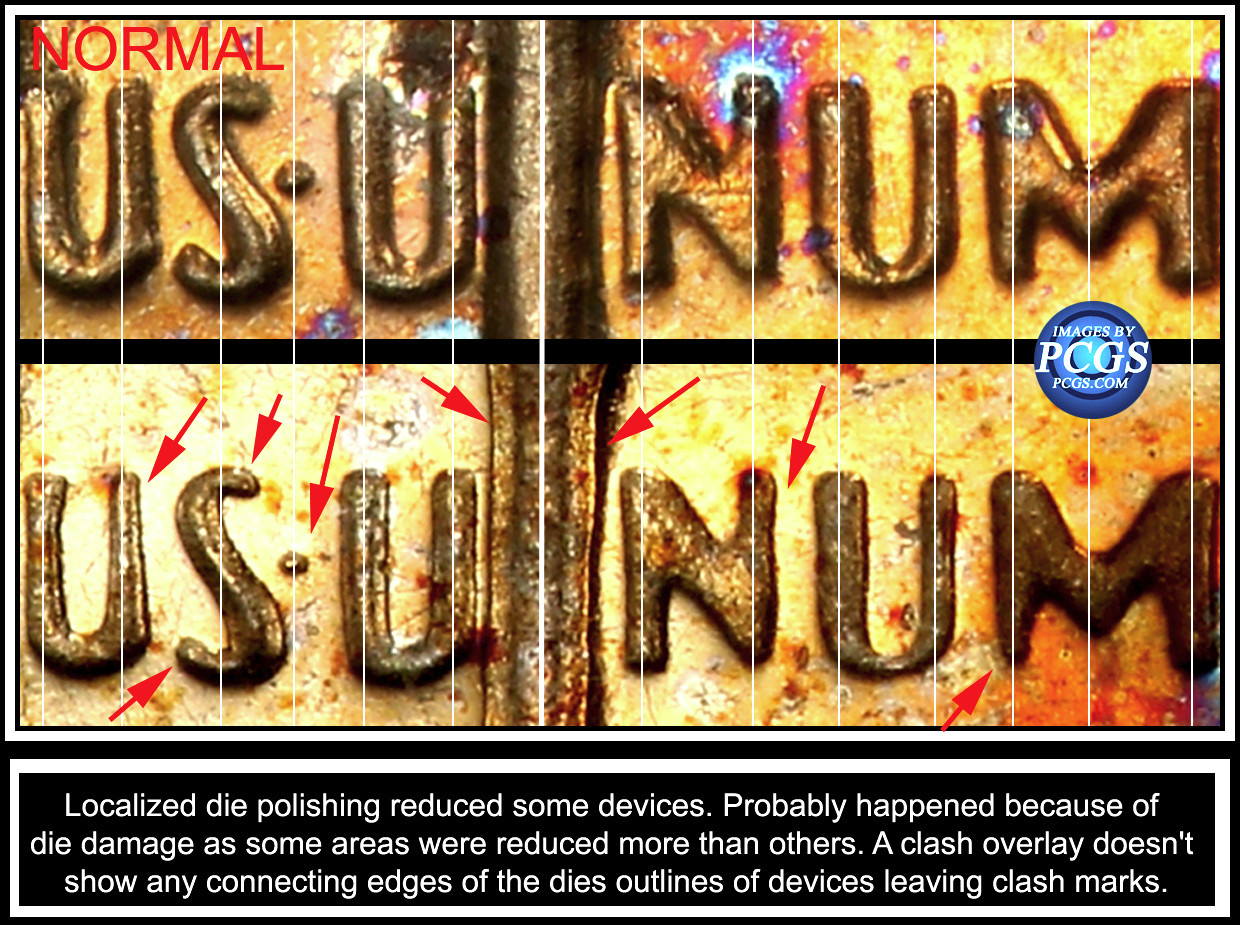 Also die gouges can be removed from the dies affecting the thinning of devices. So most of the information was correct, except with the polishing of the Master hub/die and working dies. Hope this helps a bit more. |
|
Valued Member
United States
157 Posts |
Wow... Thanks for the corrections. I still find this a mystery and I do love a mystery. I have seen one other picture of this on the internet on a dime with very little wear. Even though it probably has very little value, I will keep these in my collection.
|
|
Bedrock of the Community
United States
62064 Posts |
The second image was not the correct one, but here is what the Feeder Finger Damage on a Dime would look like: 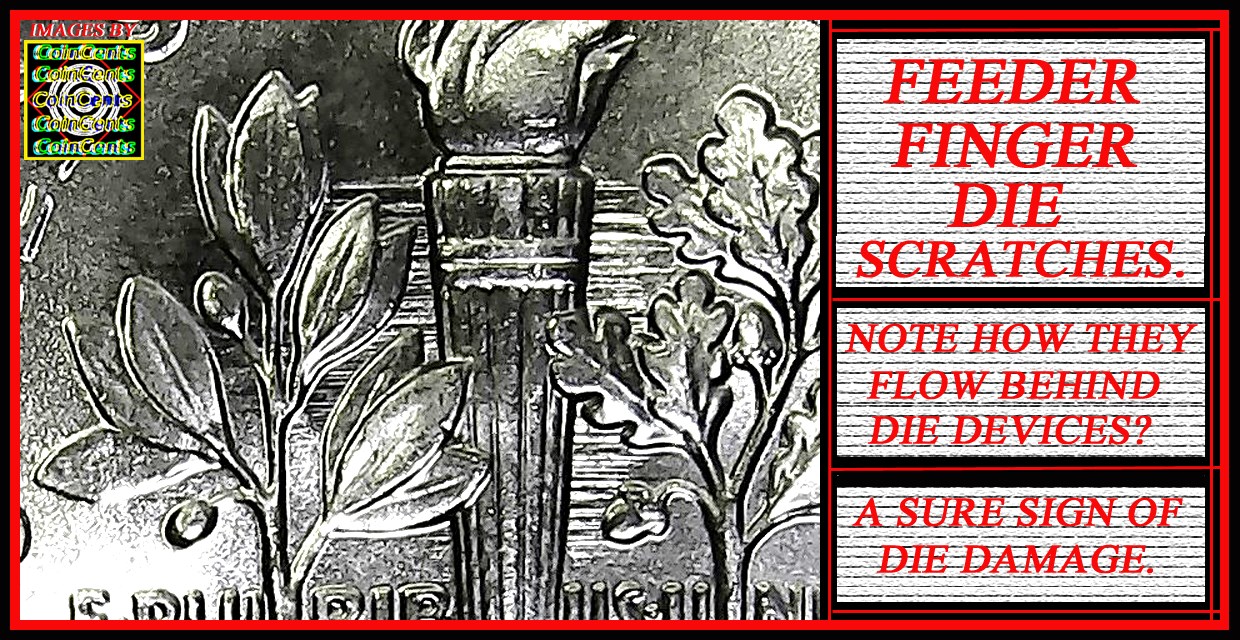 (sorry I didn't notice that it was the wrong image, tried to edit it, but it was too late. So I included it here) Thus when they polish the die, it removes part of the surface of the fields and the devices, making them smaller: 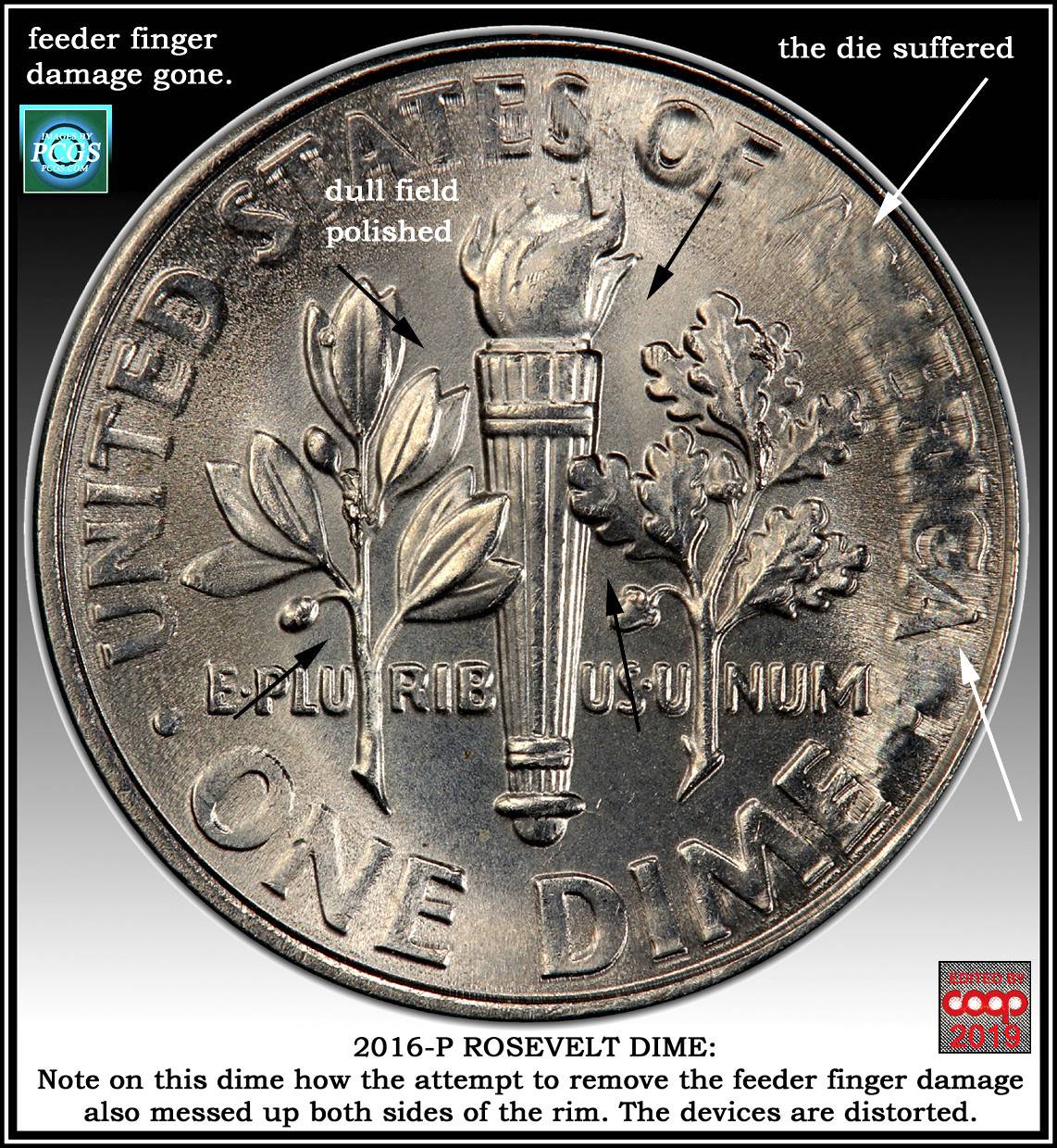 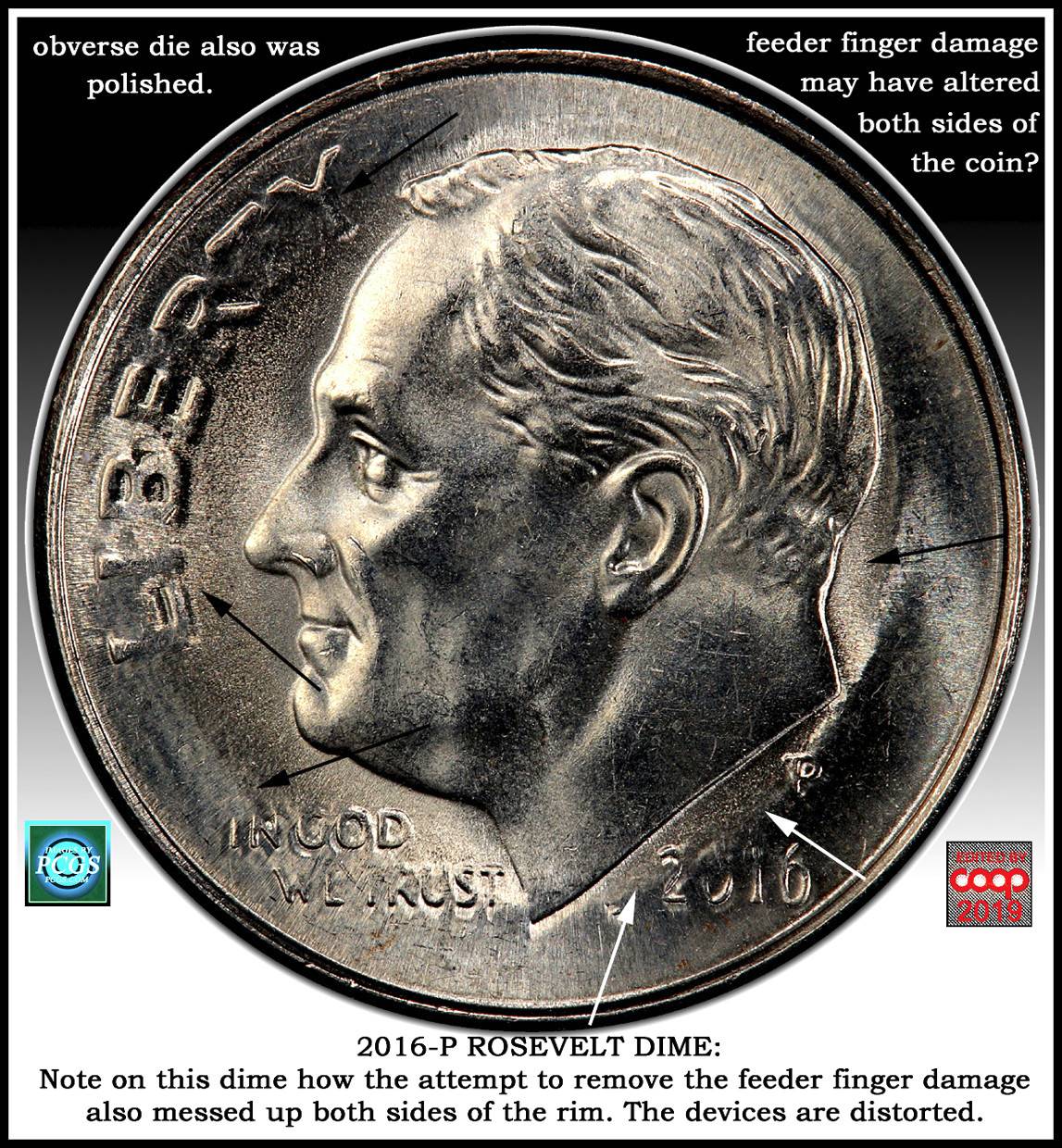 Edited by coop
05/01/2022 1:38 pm
|
|
Pillar of the Community
Canada
6244 Posts |
@Hewart. The reality was that the Mint on those years reused the previous Dies. This start in 1962 and goes till 1968. On the Mint Director it is well describe the reasons, and not only this, the also reused the Proof Dies for business strike. I can give you many examples of this: EX: 1964 has 3 different Dots, not only the position but also the dimension. Quote:
I have seen an example of this on another site but I am prohibited from showing the link or the name Sorry, only Government links to document are prohibited. The Web is free to access to all, in some cases only those who pay the fees can see hole content, and this is legal. |
|
Valued Member
United States
157 Posts |
Thanks for the info. I have noticed those dots in various sizes. I did give them a closer look and I do think it was likely a polishing issue. One of them may have suffered a strike that just sheared the dot off. However, on a couple of others, I was not able to determine what caused it.
|
| |
Replies: 14 / Views: 1,960 |
|










 Posted 04/28/2022 01:06 am


