| Author |
 Replies: 33 / Views: 5,146 Replies: 33 / Views: 5,146 |
|
Valued Member
United States
134 Posts |
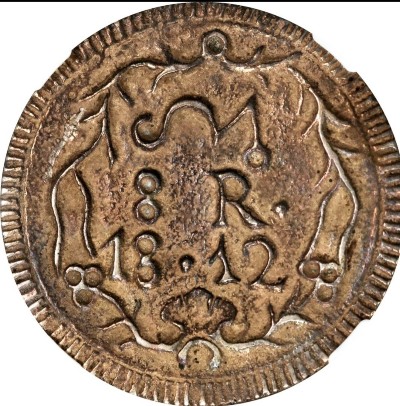
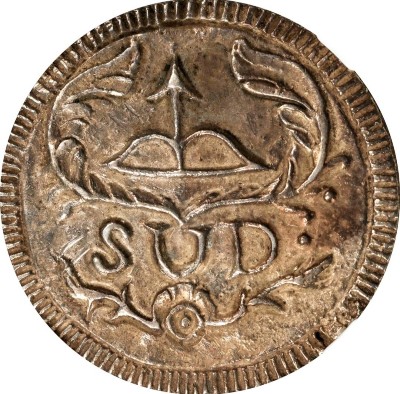
Hi all, I've seen a few of the silver SUD pieces up for sale over the past couple of years and have enjoyed reading through the old threads on here discussing them. Many of those threads discuss obvious counterfeit pieces on ebay, however, since ebay has gotten rid of old listings I haven't seen any pictures to illustrate what people were discussing. I saw this coin up for sale on ebay right now and it looks like a modern counterfeit to me. Does anyone else have any pictures of modern counterfeits of these coins? Thank you!    |
|
|
|
Moderator
 United States
34570 Posts |
Not my area of expertise, but here is a link to the numista page for a real 2 Reales from Oaxaca (insurgent coinage). My thought is that if your specimen is different from a real one, then yours is fake. Matching your fake up to one of a potential universe of fakes seems much more difficult. https://en.numista.com/catalogue/pieces28701.html"If you climb a good tree, you get a push."
-----Ghanaian proverb
"The danger we all now face is distinguishing between what is authentic and what is performed."
-----King Adz
|
|
Valued Member
 United States
134 Posts |
Thanks, Spence. To add a little more specificity to my question, here is one of the old threads where counterfeits/forgeries are referenced. http://goccf.com/t/114462&SearchTer...r,reales,sudBased on the discussion, I can see that it is difficult or even impossible to prove that a cast silver SUD was actually made in 1812 or 1813, but I have seen different people reference approximate time periods for counterfeits/forgeries. For example, this piece sold by Del Bosque, Briggs, and Bustos (in their Auction 16) is described as counterfeit, and possibly from the early 20th century. Additionally, I believe Swamperbob mentioned that cast silver SUDs were widely forged in the 50s-60s. https://www.numisbids.com/n.php?p=l...5635&lot=113I realize that the ebay fake I showed pictures of above may not match any others, but I guess I'm trying to see what level of effort the forgers are going to. Are their results looking more like the ebay fake, or like the BBB counterfeit? |
|
Pillar of the Community
United States
1962 Posts |
Quote:
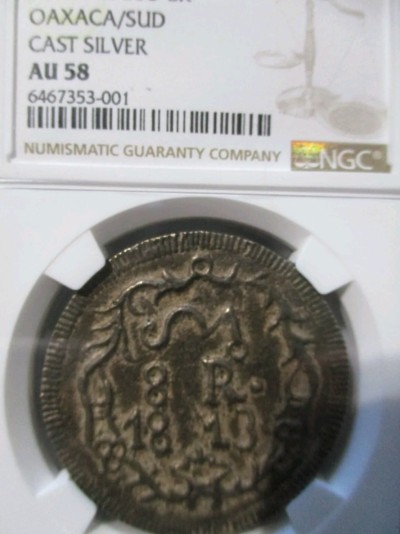
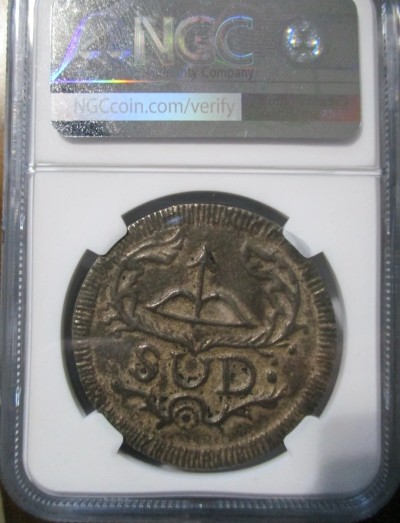
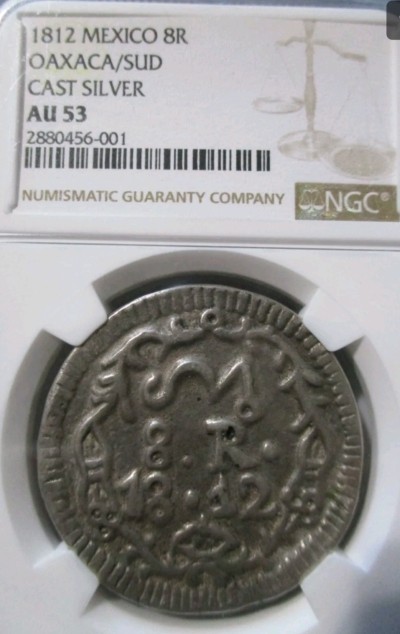
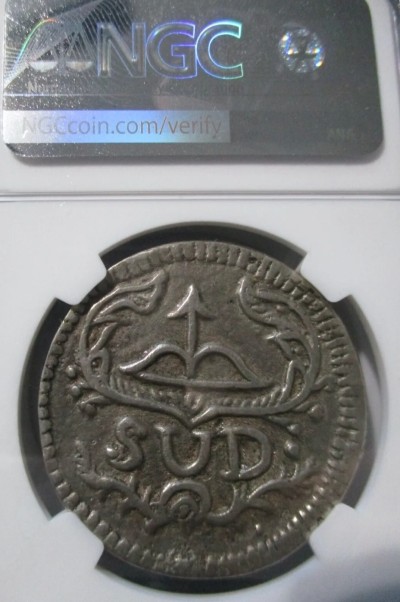
I believe Swamperbob mentioned that cast silver SUDs were widely forged in the 50s-60s. Essentially, this. The usual mid-century(?) pieces have a certain look to them... and many seem to be from the same die pair. They are quite a bit better than the very crude piece you initially posted and the BBB piece you linked to. The usual suspect is an 1813 piece with "pretty good" surfaces - though if you look at nicely toned, pedigreed pieces... you can kind of get a feel for the difference. I would also suggest looking at the minor denoms. to get a feel for the surfaces of genuine pieces should look like. Some pics I had saved from years back when we were discussing these occasionally... they don't seem to show nearly as much on ebay now. I guess collectors are holding them (often assuming they are genuine). Had marked a few spots to note back then... not going to fully refresh myself right now...      |
|
Valued Member
United States
134 Posts |
Thanks, realeswatcher - this is extremely helpful. Was looking at Aureo and Calico's upcoming Auction 893 just now and it seems Lot 845 matches your 3rd and 4th pictures, it has that flat spot on the dentils at around 11 o'clock on the side with the date (obverse?). The piece also seems very underweight - is that another "tell"? I figured the weights would probably be inconsistent like other WOI coins, but 20.34 g is extremely low.
|
|
Pillar of the Community
United States
1962 Posts |
20._g I would think is beyond any reasonable tolerance - though who knows, perhaps not impossible considering the period. And yes, that upcoming Aureo Calico piece is from the same "die" pair. I would view any one from these "dies" as likely fake until convinced otherwise. And note, I'm sure there are examples from that "die pair" where the weight is what it should be. As one data point, Riddell's 1846 Monograph... shows a piece which we can presume is "genuine". Weight was 26.45g, 88% fine:  Here's an old pedigree piece - from the Huntington collection - weighing just over 26g:  You can peruse some other examples... as you can see, a wide variety of weights and surface textures. Like with any series, the more you look at, the better a feel you'll have. https://www.acsearch.info/search.ht...=1&es=1&ot=1¤cy=usd&order=1 EDIT - Refreshing myself on these a bit here... there is an 1814-dated fake from the same die pair shown above (just with the 3 changed to 4). A number of examples are seen in Spain auction house archives. EDIT 2 - Same fake exists with the 1812 date, as well!! Edited by realeswatcher
07/06/2022 01:52 am
|
|
Valued Member
United States
134 Posts |
Thank you again, very helpful! I will take some time and sort through these pieces to see if I can pick up on some patterns.
Last thing I'll mention, I did see a Planter's Bank counterstamp on a SUD piece in Stack's archive that sold in 2008. It's a shame it's only a quarter of the coin or that could be another helpful point of reference. Would be interesting to get an XRF test on that one.
|
|
Pillar of the Community
United States
689 Posts |
Not sure what the question was, but the first coin shown is fake to the casual observer.
|
|
Valued Member
United States
134 Posts |
Did anyone see the 1811 SUD in today's Heritage auction? Sold for $10,200. Thought it was interesting it had some of the markers of the coins above.  |
|
Valued Member
United States
134 Posts |
Obverse:  |
|
Bedrock of the Community
United States
27514 Posts |
This one is for sale on ebay now. Only $2K.  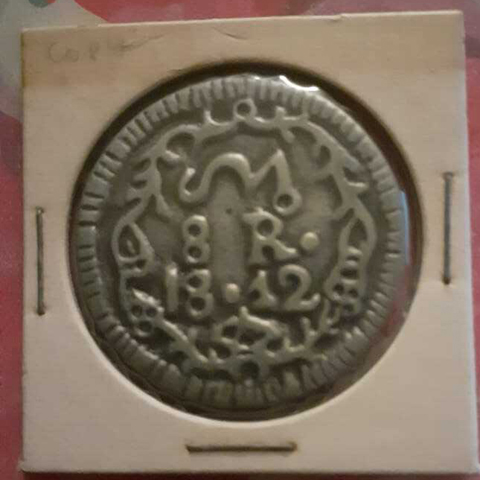 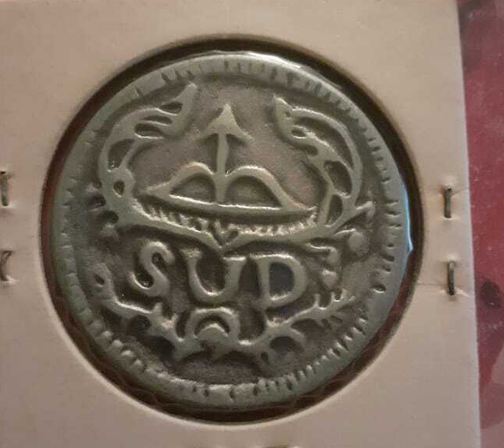 Inordinately fascinated by bits of metal with strange markings and figures
|
|
Pillar of the Community
United States
1962 Posts |
That 1812 immediately above is another of the lesser quality replicas, fakes, whatever... again, really shouldn't fool anyone. The 1811 - oooh, that indeed appears to be another specimen of the fake discussed above, last digit altered to "1". Looking through Worthpoint archives, I see one other 1811 example (matching diagnostics) explicitly stated to be a modern fake (shown below). HA has been contacted. They are usually very good about taking care of things like this... Goes to show this is a tough series to judge. Knowledge is power here - familiarity w/this fake, also in this case realizing that 1811 is a VERY tough date (NO other cast silver in searchable online auct. archives)  |
|
Valued Member
United States
134 Posts |
Realeswatcher - very interesting! Was the other 1811 counterfeit you found something that sold from an auction house? Just curious to see the basis (if any) that they stated it was counterfeit, since some auction houses seem to not agree (or perhaps not care?).
Regarding the HA piece - how have you seen situations like these resolved in the past? Would PCGS bear some responsibility for certifying it, or does HA for auctioning it?
|
|
Pillar of the Community
United States
1962 Posts |
Was an ebay listing: worthpoint.com/worthopedia/1811-mexico-reales-sud-cast-silver-1734174890 Seller is a border town Mexican guy who's been on ebay for a number of years. |
|
Pillar of the Community
United States
1784 Posts |
No real answer on this one but I recall an expert in Arizona once told me look at the third side and buying one with good reeding has more probability of being real or buying one in a slab. These tell tale signs in this post is a good source for weeding out fakes. I expect trace metal signatures will eventually help but the problem with this issue is what example are you going to use as a legitimate "STANDARD" example. A high gold (i.e., Au 0.1-1.0%) content with a reeded edge? Is the Ag value consistent with these issues? The book is still wide open on these issues - IMO. JPL
|
|
Valued Member
United States
134 Posts |
|
| |
Replies: 33 / Views: 5,146 |







 Posted 07/05/2022 12:44 pm