| Author |
 Replies: 8 / Views: 1,646 Replies: 8 / Views: 1,646 |
|
|
Moderator
 United States
34531 Posts |
Only tangentially of interest to collectors of ancient Greek coins, but I thought it might be worth posting anyways. Evidently, the previous thought extinct plant, Silphium, has been rediscovered. Here is a link to the National Geographic article: https://www.nationalgeographic.com/...ago-silphionHere is a previous discussion from @sap about Silphium: Quote:
There's one African city I don't have, but it's on my wantlist: Cyrene, in what is now Libya. This Greek colony was the source of the now-extinct silphium plant: a species of celery which not only tasted delicious but had powerful medicinal qualities, it was harvested to extinction in Roman times. The silphium plant features on many of the coins from this city. Here are a few previous threads with coins featuring this plant: http://goccf.com/t/175464http://goccf.com/t/415787http://goccf.com/t/146796"If you climb a good tree, you get a push."
-----Ghanaian proverb
"The danger we all now face is distinguishing between what is authentic and what is performed."
-----King Adz
|
|
|
|
Pillar of the Community
United States
2996 Posts |
I got to read that nat geo article myself a few days ago and thought that was kinda cool.  |
|
Pillar of the Community
United States
2323 Posts |
Wow, that's amazing if true, thanks much for posting this. I have two showing the plant, Cyrene mint, one AE the other silver didrachm. I think they are rather scarce. Mine are not high grade, fun anyway to own. About 25 years ago I decided to collect at least one coin from every mint city in the Bible, got a lot from David Hendin and Henry Lindgren, have almost all but short a few like Ashdod. The man that carried Jesus' cross was from Cyrene, Matt. 27:32 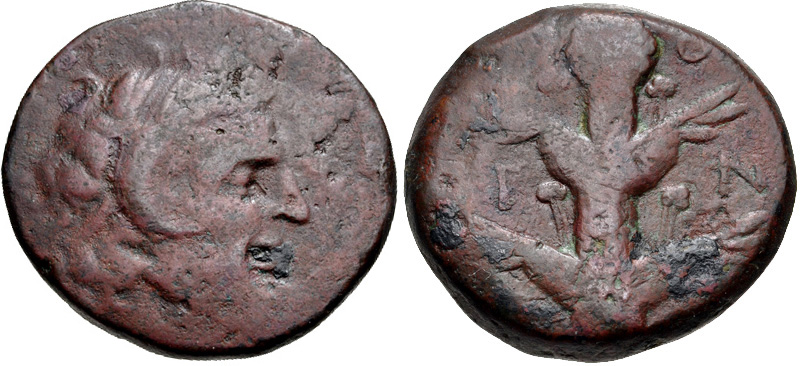 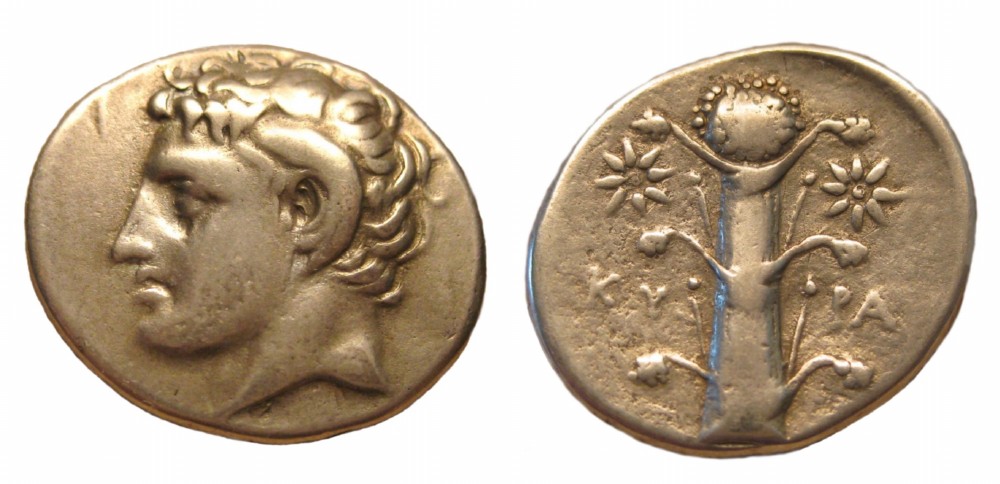 Edited by livingwater
10/10/2022 8:44 pm
|
|
Pillar of the Community
United States
790 Posts |
Bummer! When I click the link I hit a paywall. If they've found it again I'm dying to know more about it. It was speculated that it was related to the wild carrot plant, which had some similar properties. I'd love to find out if they have done some testing to figure out why it couldn't be cultivated.
|
|
Pillar of the Community
United States
2323 Posts |
The link sent me to subscription page, I used google search, was able to read part of it before a window came up wanting my email.
Edited by livingwater
10/10/2022 8:39 pm
|
|
Moderator
 United States
34531 Posts |
"If you climb a good tree, you get a push."
-----Ghanaian proverb
"The danger we all now face is distinguishing between what is authentic and what is performed."
-----King Adz
|
|
Bedrock of the Community
Australia
21789 Posts |
Something like the Wollemi Pine, thought to have gone extinct about 50 million years ago.
Since the discovery of a living specimen about 20 years ago, it has been the subject of an intensive propagation program.
Needless to say, the Silphium plant will also be the subject of an intensive propagation program.
|
|
Moderator
Australia
16961 Posts |
I doubt they'd truly found genuine silphium in Turkey. The whole point and problem with silphium was, that nobody figured out how to grow it anywhere other than Libya. It wouldn't grow from seeds, and they never found out why the seeds didn't work.
There were other plants known to the ancients that superficially resembled silphium, and had some of the similar properties, but which the ancient writers warned people against accepting as anything other than inferior substitutes. I suspect this new plant is one of those substitute-silphiums.
Don't say "infinitely" when you mean "very"; otherwise, you'll have no word left when you want to talk about something really infinite. - C. S. Lewis
|
|
Pillar of the Community
United States
790 Posts |
Thanks, Spence. It sounds like there are some good reasons to think it might be the real thing. If it does half of the miracles it supposedly did back when, it'll be wildly valuable again.
|
| |
Replies: 8 / Views: 1,646 |
|









 Posted 10/10/2022 8:12 pm


