Not long after these new copper coins were introduced, black market counterfeit versions of the 10 wen appeared and illegal mints or "private mints" (#23616;#31169;) opened all over China and started producing more coins than what the Qing government's set quotas allowed on the market. Both Chinese and foreigners soon started producing struck cash coins of inferior quality, often with traces of the Korean 5 fun coins they were overstruck on, or with characters and symbols not found on official government issued coins. Joseon began minting modern-style machine-struck copper-alloy coins in 1892, which was 8 years before the Qing dynasty did so in China. These coins were often minted by Korean businessmen and former Japanese Samurai (specifically R#333;nin) looking to make a profit on exchanging the low value copper coins into silver dollars as a single Chinese silver dollar had the purchasing power of 1000 Korean fun. The majority of the counterfeit coins bear the inscription that they were minted in either Zhejiang province or Shandong province, but they circulated all over the coastal regions of China. Because the hand-operated presses used by the counterfeiters did not exert enough pressure on the coins to sufficiently obliterate the inscriptions and symbols on the Korean 5 fun coins, the counterfeit Qing dynasty 10 wen coins made using this method would usually exhibit a combination of both the Chinese Da-Qing Tongbi and Korean 5 fun designs. For example, there can still be traces of a wreath surrounding the dragon or minor traces of the original Korean inscription.[33][3
Your coin is found here but it doesn't match any of the Government minted coins. They may be counterfeit?Didn't see the coin on any Province.
https://en.wikipedia.org/wiki/Da-Qing_TongbiEdited by SaturnD51
02/21/2023 3:54 pm







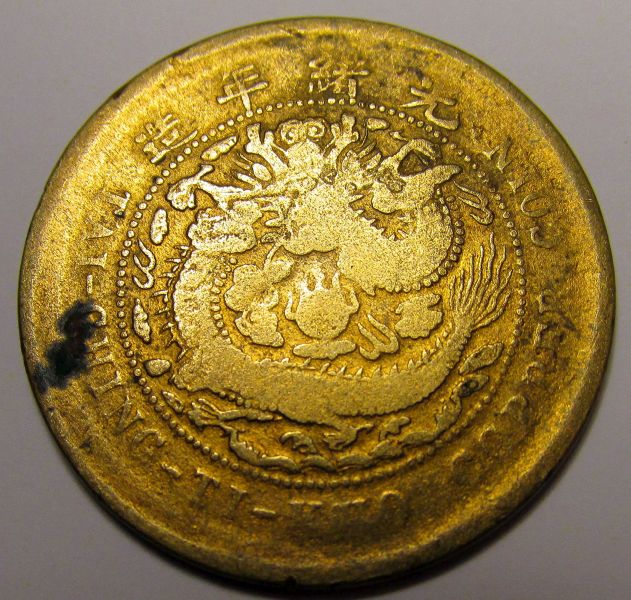
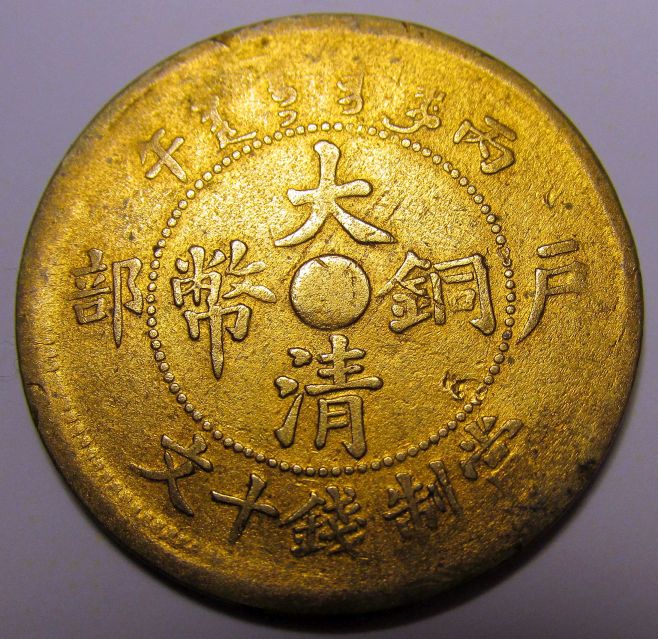
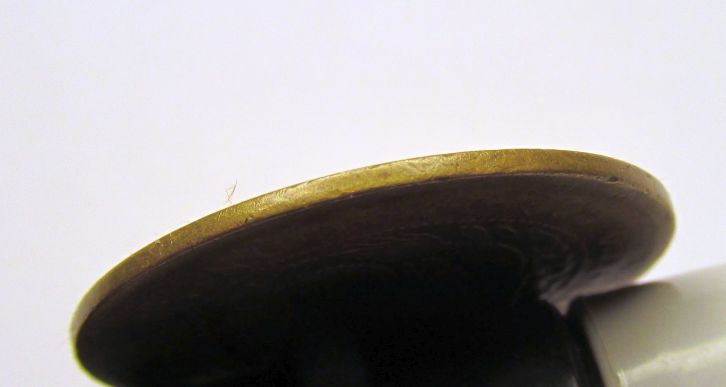


 Posted 01/22/2023 1:08 pm


