| Author |
 Replies: 13 / Views: 2,346 Replies: 13 / Views: 2,346 |
|
|
Pillar of the Community
United States
2323 Posts |
In Colonial times sometimes coins were cut in pieces to make change. I think they were called bits? I don't know much about this. However in the 1960s when I was a young boy, I lived not far from the site of Fort Atkinson, NE, north of Omaha. It was the first fort west of the Missouri river, built 1819, abandoned 1827 as forts were built further west. My father new the farmer that owned the land. In the Spring after plowing, the farmer let us walk the land looking for artifacts. The land is now a State Park, illegal to search for things. We did not have a metal detector. Here's pics of some of the finds I have. In particular is a "bit" silver I think might be from a half dollar? Unfortunately my dad drilled a hole in to hang on a display board. Also is a tool to make musket balls, soldier's uniform button, part of a metal arrowhead made to trade with the Native Americans, various metal objects. 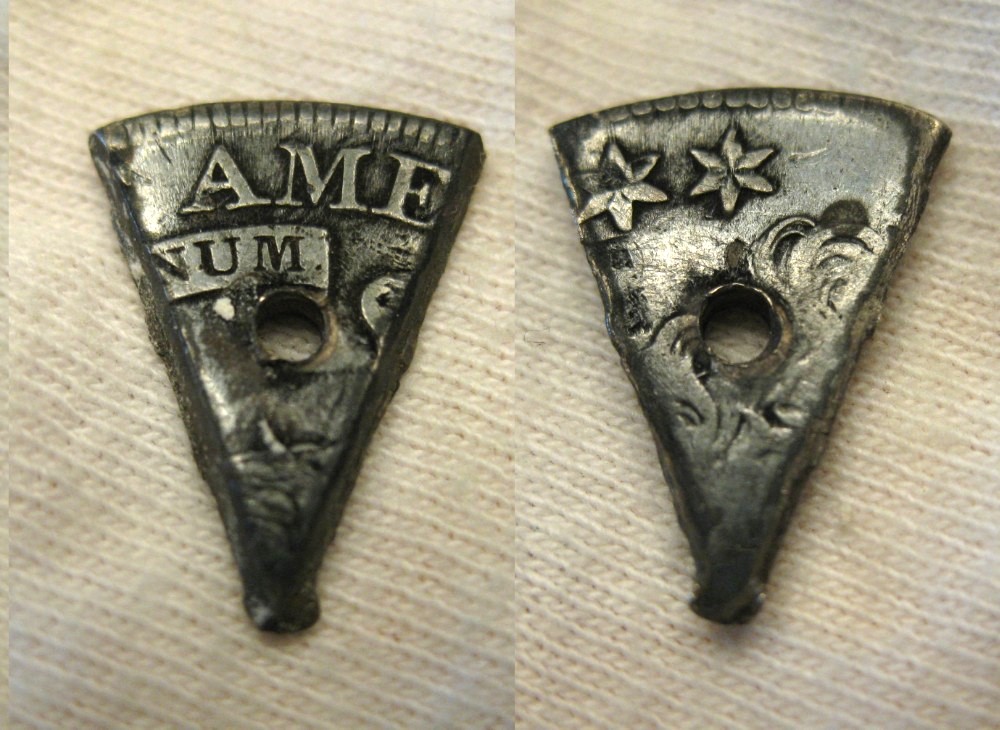 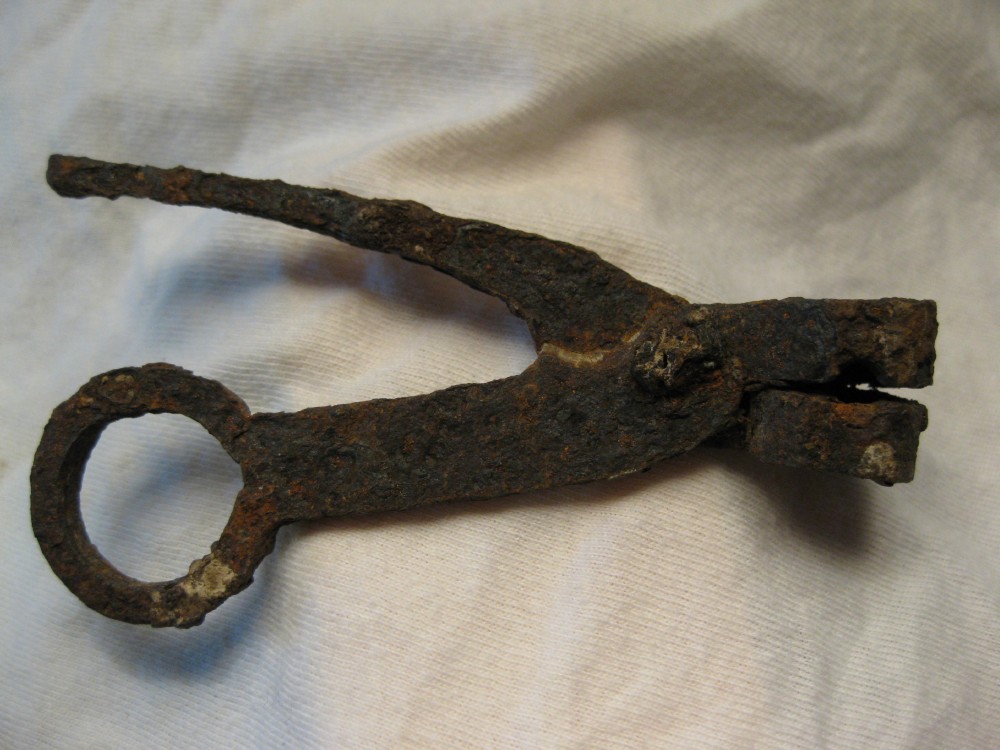 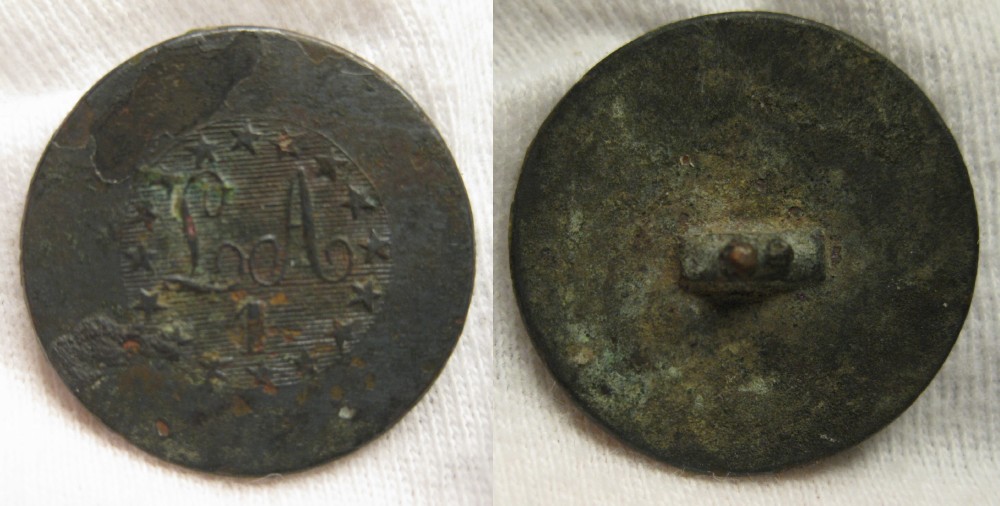 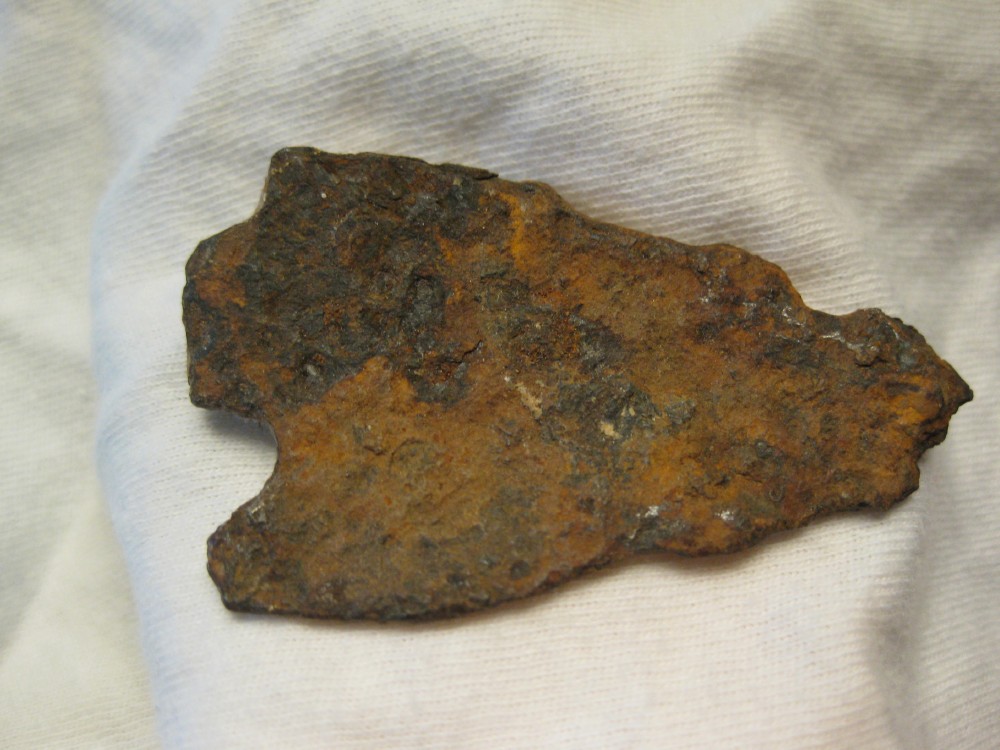 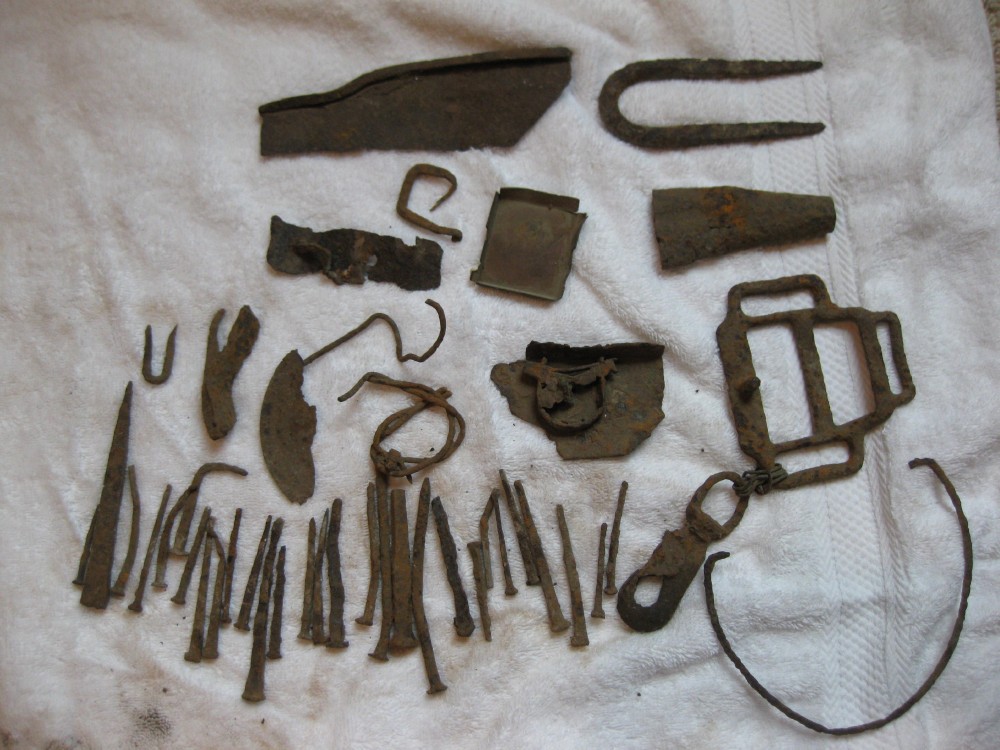 Edited by livingwater
01/22/2023 09:16 am
|
|
|
|
Bedrock of the Community
United States
11954 Posts |
Two bits was a 1/4 (quarter) dollar thus a bit is 1/8th of a dollar. But that is if you start with $1. Here it appears that the fraction began with a half dollar, so 1/8th of that would be a half bit. Should weigh ~1.68g and contain ~1.51g silver minus the weight bored out to make the hole. Netnet a half bit light. Very cool though.  IN NECESSARIIS UNITAS - IN DUBIIS LIBERTAS - IN OMNIBUS CARITAS THE MAN IN THE ARENA, Theodore Roosevelt at the Sorbonne Paris on April 23, 1910: " It is not the critic who counts; not the man who points out how the strong man stumbles or where the doer of deeds could have done better. The credit belongs to the man who is actually in the arena, whose face is marred by dust and sweat and blood, who strives valiantly, who errs and comes up short again and again, because there is no effort without error or shortcoming, but who knows the great enthusiasms, the great devotions, who spends himself in a worthy cause; who, at the best, knows, in the end, the triumph of high achievement, and who, at the worst, if he fails, at least he fails while daring greatly, so that his place shall never be with those cold and timid souls who knew neither victory nor defeat." My coin website: https://fairfaxcoins.com |
|
Pillar of the Community
United States
1295 Posts |
Very cool you hung on to that stuff a long time
|
|
Moderator
 United States
15845 Posts |
|
|
Moderator
United States
194265 Posts |
Very interesting! |
|
Pillar of the Community
United States
3848 Posts |
Took a little while but that cut piece of silver is an 1807 O-112 Capped Bust half dollar. I compared the device positions with EDS examples to attribute the Overton variety. I agree with NS, a cut half dollar would be a half bit. Unfortunate for the hole but a fantastic piece of history for your collection. Suffering from bust half fever. Want to learn how to attribute early half dollars by die variety? Click Here: http://goccf.com/t/434955Shoot me a PM if you are looking to sell bust halves. |
|
Pillar of the Community
United States
756 Posts |
Quote:Took a little while but that cut piece of silver is an 1807 O-112 Capped Bust half dollar. thats some impressive sleuthing! |
|
Pillar of the Community
 United States
2323 Posts |
Wow jacrispies, THANKS for taking the time to identify the half dollar! I'll make a note of it. My daughter is not interested in this sort of stuff, think I'll donate these to the Nebraska State Historical Society someday, since I'm a member.
Edited by livingwater
01/24/2023 07:34 am
|
|
Valued Member
Uruguay
152 Posts |
Really interesting! Thanks for sharing!
|
|
Pillar of the Community
United States
4233 Posts |
The Spanish dollar was equal to 8 reales, so one-eighth of it was one Spanish real, or one bit. Hence the Spanish dollar was also called "piece of eight." With the introduction of decimal currency, there was no longer a one-eighth equivalent, but a quarter was still called "two bits." Who remembers "shave and a haircut, two bits"? There was also a Spanish picayune, worth half a real or one-sixteenth of a dollar. So what you have here is equal to a picayune. During the era of this fort, Spanish coins were still legal tender (until the coinage act of 1857). I'm not Mr. Smartypants, I got all this from https://en.wikipedia.org/wiki/Bit_(money). Very cool find and history. I'm curious what that cleat-shaped thing is in your other image. It has a retaining clip on it which reminds me of an old ski binding - the clip is attached to your boot so you don't lose the ski if your boot comes out of the binding. However, I can't find anything that looks similar, and it appears to be too small. |
|
Pillar of the Community
United States
3848 Posts |
Quote:
Wow jacrispies, THANKS for taking the time to identify the half dollar! Anytime! I love a good attribution challenge  Suffering from bust half fever. Want to learn how to attribute early half dollars by die variety? Click Here: http://goccf.com/t/434955Shoot me a PM if you are looking to sell bust halves. |
|
Bedrock of the Community
United States
17884 Posts |
Although they continued to circulate, Spanish fractional silver coins stopped being legal tender in 1809. The Act of April 10, 1806 was the last act passed by Congress that extended legal tender status to Spanish Fractional coins and that Act expired in April of 1809.
|
|
Pillar of the Community
United States
4497 Posts |
Quote:
Unfortunate for the hole but a fantastic piece of history for your collection. Could the hole in the bit be for functionality of caring the bits in the pocket on a ring or chain? |
|
Pillar of the Community
United States
2323 Posts |
My dad drilled the hole in it to mount to a display board, wish he didn't...
Edited by livingwater
03/30/2023 12:30 pm
|
| |
Replies: 13 / Views: 2,346 |
|







 Posted 01/22/2023 3:15 pm





