| Author |
 Replies: 15 / Views: 3,548 Replies: 15 / Views: 3,548 |
|
|
Pillar of the Community
United States
952 Posts |
I'm new here, hopefully this is the correct place to post this. I just thought I would share some photos of a few coins. These have been in the family for about 160 years. Been in a safety deposit box for the last 55 years. My great great grandfather made his way to CA around 1848 to participate in the CA gold rush and kept a coin collection. Unfortunately, the collection was split 4 ways amongst my grandmother and her three siblings. Who knows what they ended up with. These coins are ridiculously tiny and I struggled to take decent pictures. The first set of pictures are of the BG-416. It measures around 10.5mm diameter and weighs approx 0.55 grams. I didn't actually identify these coins until just recently via PCGS. The PCGS graded population stands at 14, though under the rarity section it estimates 12 surviving coins. Whatever the number it's now +1. The next set of pictures are of the BG-224. This measures around 9mm in diameter and weighs about 0.30 grams. The PCGS graded population is 216 with a survival estimate of 400. You'll notice that there is no date on this coin. It took me a long while searching through every CA fractional coin until I found it. I started by looking at all of the "No Date" coins and didn't find it. So I started at the beginning of the list on PCGS and worked my way through it until I found the coin. The coin was listed as "(1854) G25C BG-224." I guess at some point someone established a date for this coin, hence the brackets around the date. After a thorough review of all of the coin details to the photos on PCGS, I was satisfied that I identified it correctly. The next picture is the security coin vest that my gggrandfather wore under his clothes during his travels. Notice the well worn and coin imprinted individual pockets that secured the coins so they didn't rattle against each other. The last picture is just a fun comparison of the two coins to a dime. 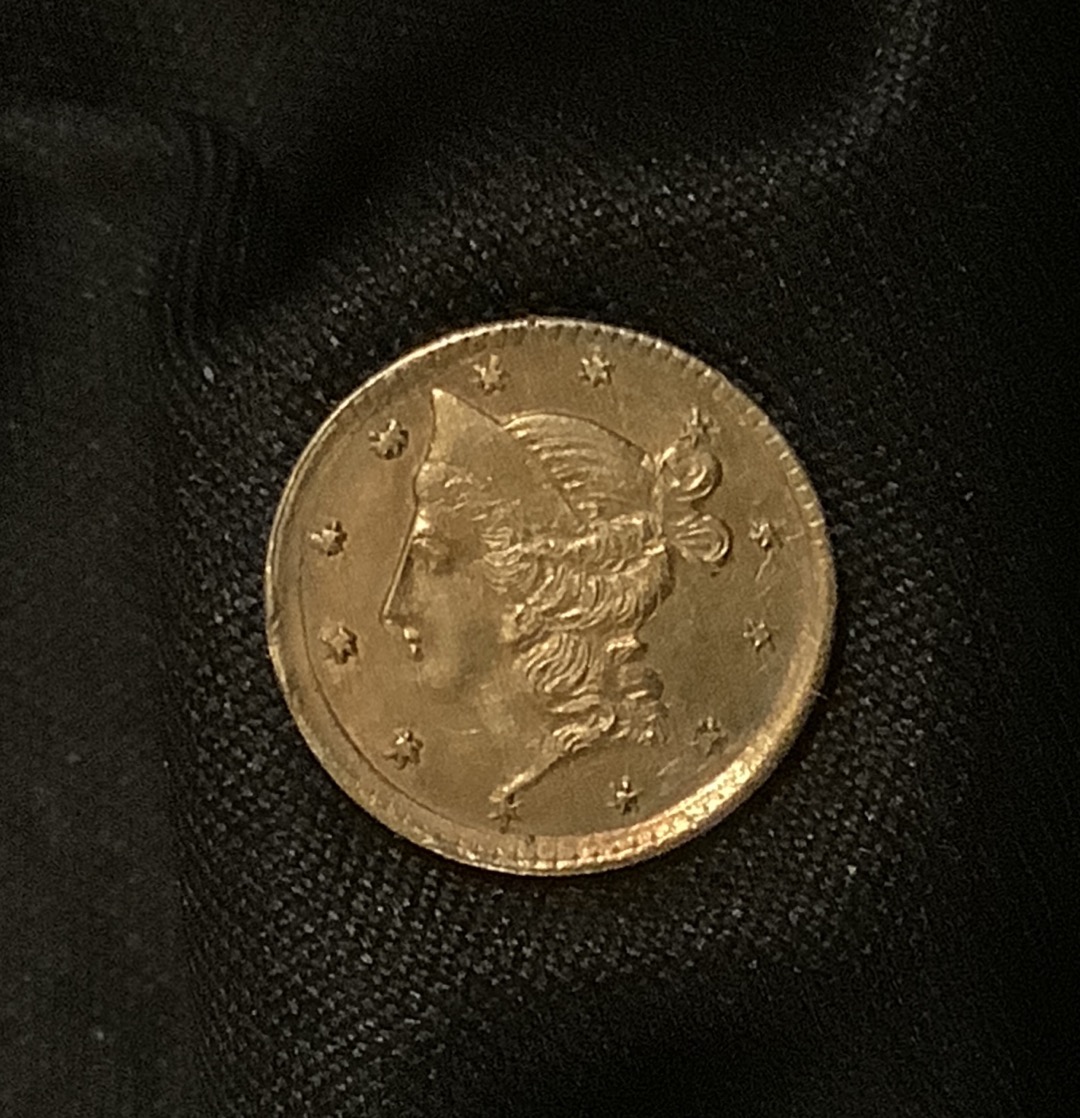 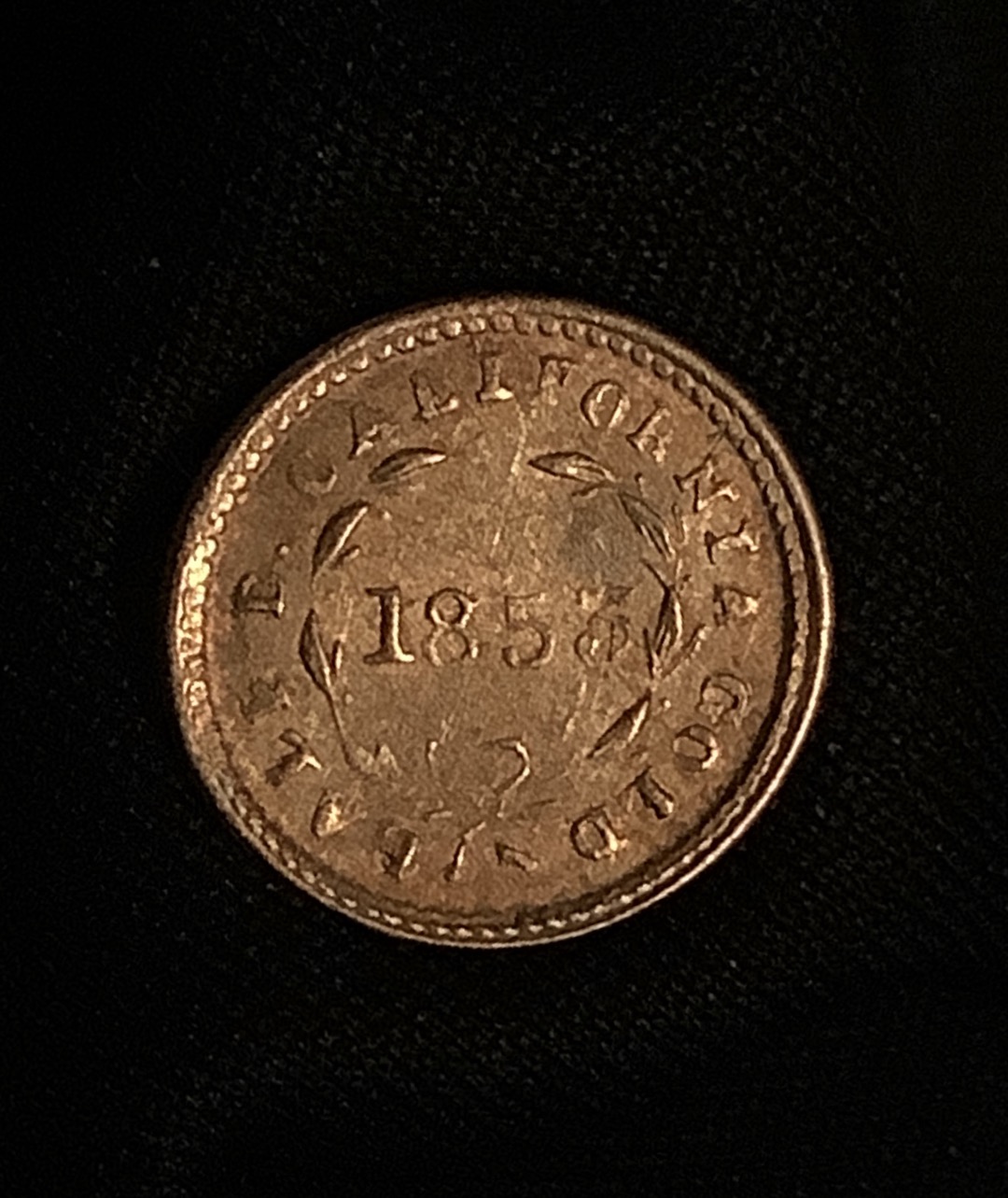 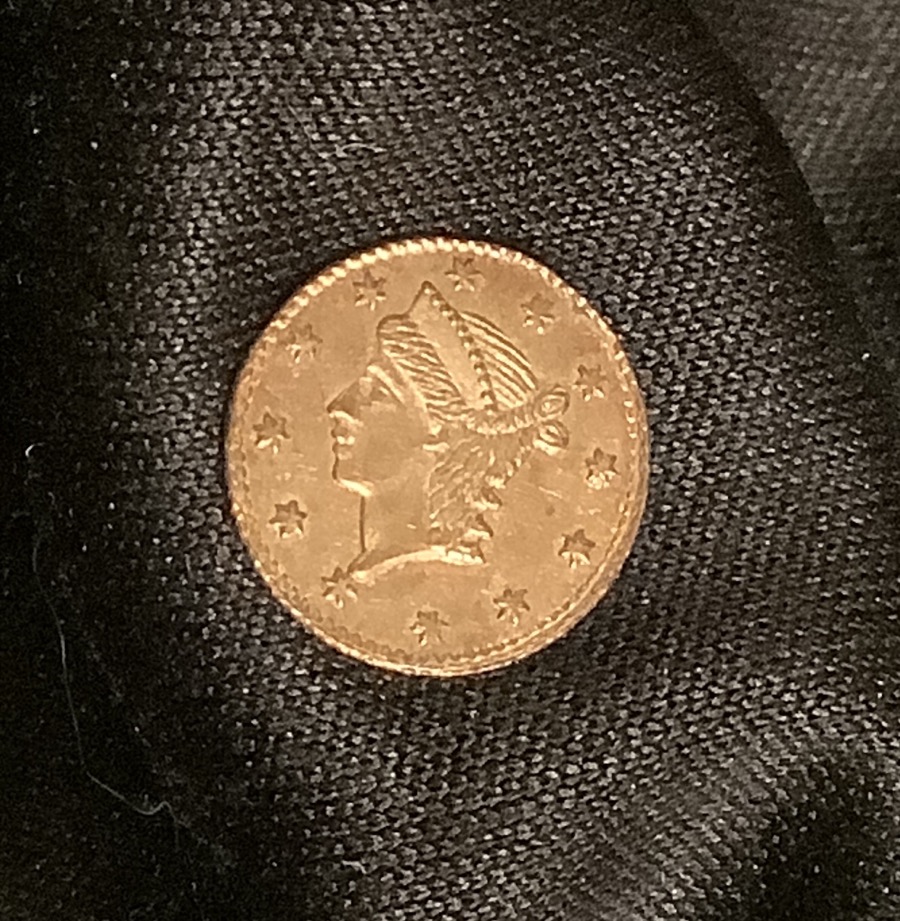 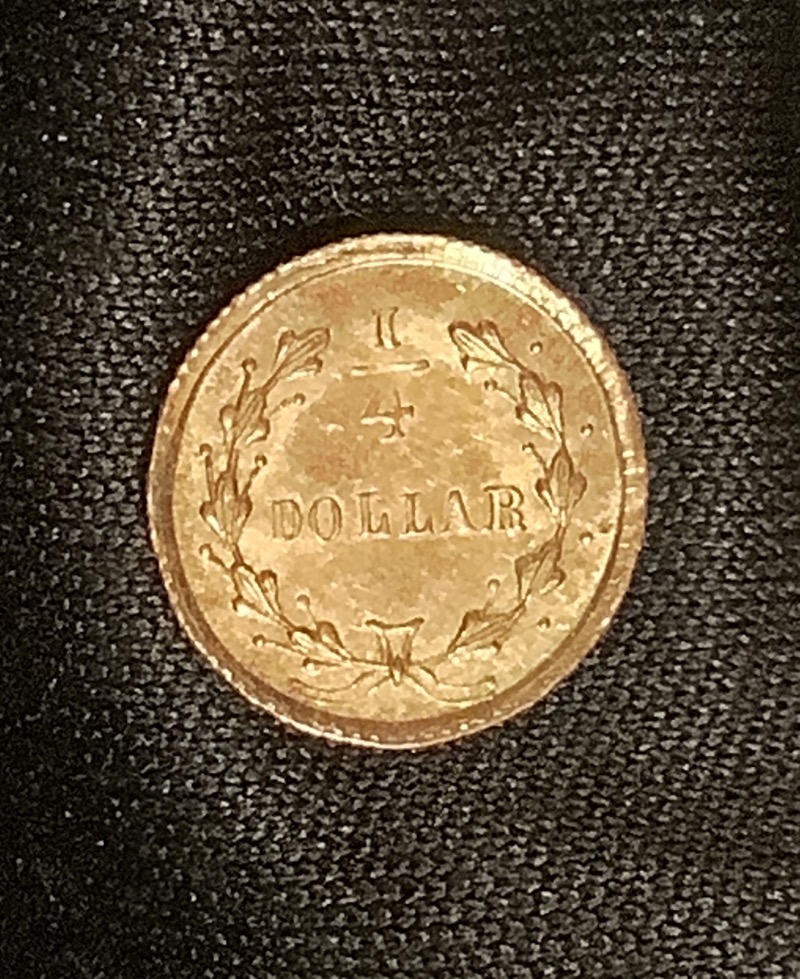 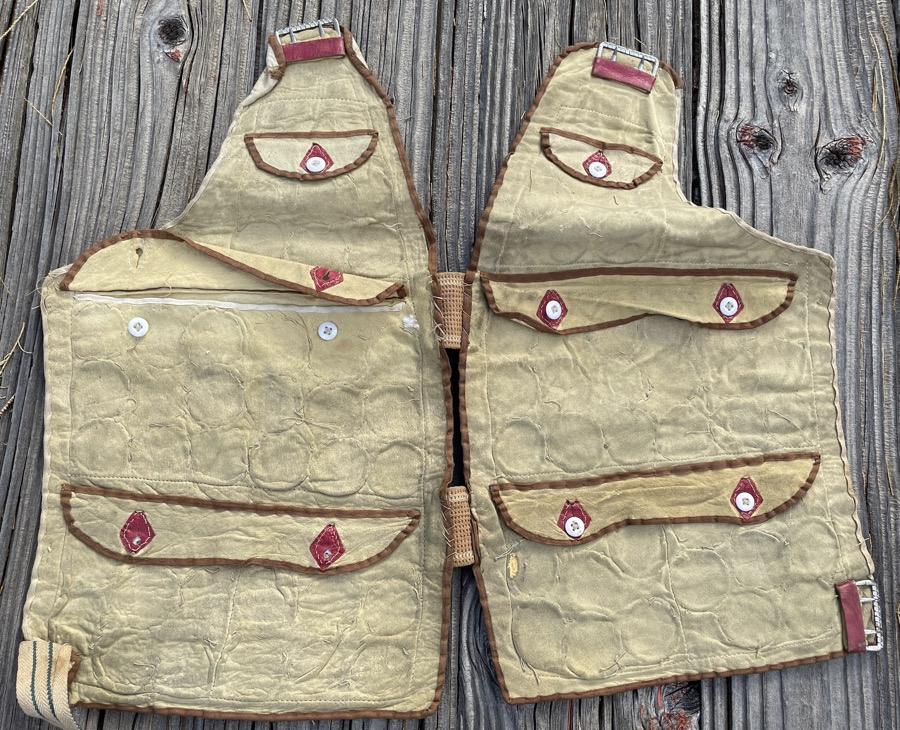 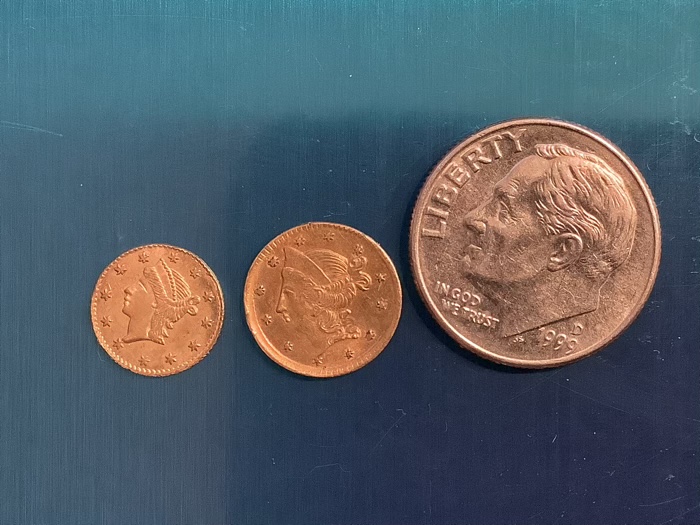 |
|
|
|
Pillar of the Community
United States
1298 Posts |
Very cool thanks for sharing
|
|
Pillar of the Community
United States
3357 Posts |
Thanks for sharing those. If you multiply your weights to get an equivalent dollar, you get 1.1 and 1.2 grams, respectively. This shortweights a 1.67 gram US Mint dollar by about 30%, and at dubious purity too. I have seen the same thing with all my California fractionals (halves and dollars). The makers never gave the customers full weight for their dollar valuation - just another frontier tool to separate the prospector from his nuggets. This put the makers under the scrutiny of the authorities, especially after the San Francisco Mint opened in 1854, and names like Frontier, Deviercy and Deriberpe disappeared by 1856. The shadiness of the early fractionals is one of the things that makes them interesting to me.
"Two minutes ago I would have sold my chances for a tired dime." Fred Astaire
Edited by thq
02/04/2023 10:13 am
|
|
Bedrock of the Community
United States
94367 Posts |
Interesting presentation, thanks.  to the CCF! |
|
Pillar of the Community
United States
4233 Posts |
That coin vest is cool! Those all look like $20 sized pockets, and if so that was a lot of money. Used by a courier maybe?
|
|
Bedrock of the Community
United States
12057 Posts |
Definitely the right place!
The vest is, to me, much more interesting than the coins. Don't get me wrong -- I love Cal gold -- but the vest is a unique historical object with an established provenance that ties it to the gold rush era.
I can't think about walking around with a vest full of gold coins these days.
50 cents seems to be the most frequently encountered denomination on Cal fractionals, followed by 25 cents, with a few rare $1.00 issues. The actual gold content steadily decreased throughout the 1850s to the 1870s.
Getting quantities of gold (or silver) coins from the other mints (Philly, New Orleans, maybe Dahlonega/Charlotte) to the west coast could not have been an easy task, and relied on combinations of riverboat, steamboat, overland stage and, eventually, rail transport + the individuals and businessmen who brought the coins with them. Still, with no west coast US mint to strike official coinage until San Fran opened, it's quite amazing that the people working in the primitive conditions of mid 19th c. California were able to strike coins at all, some of which actually look fairly close to Mint designs of the era, at least on the obverse side.
Your two examples are well-struck and centered, two things that are certainly not a given when dealing with fractional gold. Apart from the family connection and their numismatic value, they are historical objects as well.
Member ANA - EAC - TNA - SSDC - CCT #890 "Most of the things worth doing in the world had been declared impossible before they were done." -- Louis D. Brandeis |
|
Pillar of the Community
United States
2365 Posts |
|
|
Pillar of the Community
United States
5890 Posts |
Thanks for sharing the history, the jacket is definitely unknown to me and a cool museum piece.
|
|
Moderator
 United States
15865 Posts |
to the CCF Fascinating read indeed. Take a look at my other hobby ... http://www.jk-dk.art |
|
Pillar of the Community
United States
3357 Posts |
It's notable that your early fractionals are in pristine condition. Circulated specimens exist, but yours give a little more evidence that most of them weren't used as coins and were tucked away as interesting souvenirs.
"Two minutes ago I would have sold my chances for a tired dime." Fred Astaire
Edited by thq
02/04/2023 5:13 pm
|
|
Pillar of the Community
United States
2680 Posts |
what neat pieces of history you have there. the gold is awesome by itself, but that vest is a real treat. thanks for sharing pictures of those interesting goodies.
|
|
Pillar of the Community
 United States
952 Posts |
Thank you THP and Paralyse for the additional historical background. I imagine a lot of these minuscule coins were lost or damaged beyond recognition. I'm pretty sure I could fold these in half by hand without much effort. At least since my mom inherited the coin collection in the mid seventies, all of the coins including these were in pvc infected flips. For some reason the gold coins did not get grunged up with green goo like some of the silver and copper coins. At some point I may send these in for grading, but really more for preservation and authentication as I don't ever plan to part with any of these. My mom's parents and my mom all have added onto the collection and I plan to do the same. Anyway, thanks to all that left a comment or took the time to have a peek at my second topic post! Edited by adam126402
02/05/2023 12:40 am
|
|
Pillar of the Community
United States
5868 Posts |
Such a great post. Love the vest. It is a fantastic piece of visual history and brings back some good memories. My mother also had some fractional gold dollars (an octagon and a round) from Maine family members that were in the Cal. gold rush. She was going to give them to me before she passed in 2015 but couldn't locate them. Last year, my sister showed me some gold dollars in a cloth pouch that was hidden in one of the items she inherited. Yep, the same ones but family is absolutely more important. Words of encouragement are one of the major food groups.
We need to consume them regularly to thrive and grow.
Edited by Petespockets55
02/05/2023 10:01 am
|
|
Valued Member
China
141 Posts |
Thanks for sharing!
The vest looks interesting.
|
|
Moderator
United States
194816 Posts |
Very interesting and thank you for sharing!  |
|
Bedrock of the Community
Canada
24885 Posts |
To the Forum. |
| |
Replies: 15 / Views: 3,548 |
|








 Posted 02/04/2023 08:55 am


