| Author |
 Replies: 43 / Views: 4,900 Replies: 43 / Views: 4,900 |
|
|
|
Valued Member
 United States
208 Posts |
1913-D obverse that really cleaned up nice. Approximately 3 hour soak. 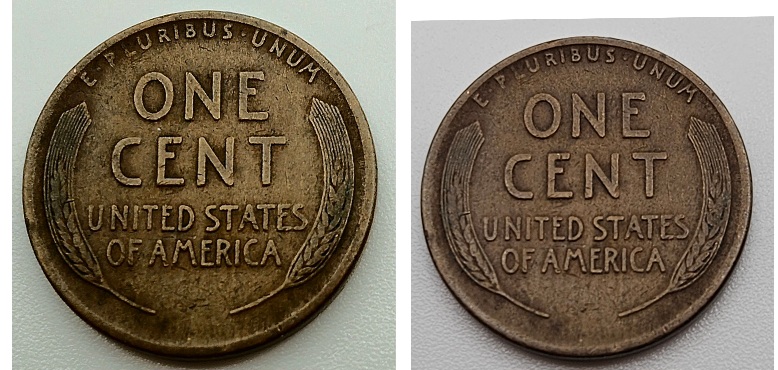 |
|
Moderator
 United States
56855 Posts |
In general, it looks like after the acetone the coins are a bit dull. I wonder if a treatment with Verdi-Care will help? John1  |
|
Bedrock of the Community
United States
20753 Posts |
Since I have thousands of coins it would be way to costly to try cleaning any of them.
|
|
Pillar of the Community
United States
6965 Posts |
I know I'm late to the thread, but I used two disposable bamboo cooking skewers to remove coins from the acetone jar. I hold them like chopsticks, and lift coins slowly to avoid scraping the wood across the surface.
|
|
New Member
Canada
41 Posts |
Reviving this thread. I have started removing hundreds of coins that I placed in flips about 30 years ago. These flips must have had PVC in them because the coins are very sticky. I decided to soak a few of the coins in acetone for a few hours and they look OK in the glass jar. However, once I remove them from the jar the stickiness is gone but all the non raised areas of the coin dry with a light blue/white film. Is this normal and I just need to soak them longer? Does the acetone need to be replaced after a certain period for the action to continue?
|
|
Bedrock of the Community
United States
19682 Posts |
Can only speak of my experience with coins and acetone. I've achieved excellent results removing dried glue and most other assorted crud, including PVC film. Never observed any residual left behind after soaking. Use of clean/fresh acetone is preferable. Heavily (re)used acetone can take on a dingy tone, which can and will leave 'stuff' on coins.
|
|
Pillar of the Community
United States
7174 Posts |
Not an expert in PVC but what I've read and seen, PVC damage is forever.
|
|
Pillar of the Community
United States
1648 Posts |
Are you using a final rinse in distilled water after cleaning with acetone? If not perhaps try that. It seems that acetone dehydrates the coin actually and therefore removes moisture so the coins sometimes don't look quite normal afterwards. This has been described as a whitish look or dull.
|
|
New Member
Canada
41 Posts |
No I did not rinse them with distilled water. I read the much longer thread about acetone and there were numerous comments about never ever rinsing the coins with distilled water after an acetone bath. I tried the recommended acetone rinse and it did not change anything. I'll just let them soak overnight and see if the bluish-white residue/film disappears.
Vinegar takes the stickiness off right away and leaves no residue, but you end up with a shiny cleaned coin which I don't want.
|
|
Moderator
United States
198004 Posts |
I have to disagree with datadragon here. Always rinse with fresh acetone, not water. These are coins, not clothes; they do not retain moisture.
If acetone does not remove it, then it cannot and should not be removed. The damage is done. Anything you use, like the vinegar example, will result in a cleaned coin.
|
|
Moderator
Australia
17031 Posts |
Quote:
Reviving this thread. I have started removing hundreds of coins that I placed in flips about 30 years ago. These flips must have had PVC in them because the coins are very sticky. I decided to soak a few of the coins in acetone for a few hours and they look OK in the glass jar. However, once I remove them from the jar the stickiness is gone but all the non raised areas of the coin dry with a light blue/white film. Is this normal and I just need to soak them longer? Does the acetone need to be replaced after a certain period for the action to continue? Which metal are these coins made of? Having just finished acetone-washing a huge pile of world coins that have been left in PVC albums in a hot humid climate for decades, I can attest that acetone treats all coins the same, but PVC reacts to different coins in different ways. Copper, nickel and their alloys (bronze, brass, cupronickel), all tend to become mildly corroded, producing "green goo". Fine silver doesn't react much at all (coins might still be sticky but won't be corroded), while debased-silver acts much like copper, due to the presence of copper in the alloy. Iron and steels are very hit and miss, some corrode some don't; the Italian "acmonital" alloy seems quite resistant, while iron and mild steel will corrode and rust severely. And aluminium seems to be completely unaffected, not even getting sticky, which is surprising given how vulnerable to acid attack aluminium usually is; aluminium must have some kind of goo-repellant property. If the coin is corroded, acetone will remove the goo but reveal the underlying corrosion. The corrosion is irreversible. But in my experience, if anything seems to be "left behind" after an acetone soak evaporates away, it's just because the acetone wasn't rinsed off with fresh clean acetone. Acetone is very good at dissolving organic goo - including many plastics, and including the oil from the pores in your fingerprints. If this acetone-with-dissolved-goo-in-it isn't rinsed off, the goo stays behind on the coin once the acetone evaporates. Don't say "infinitely" when you mean "very"; otherwise, you'll have no word left when you want to talk about something really infinite. - C. S. Lewis
|
|
Pillar of the Community
United States
6965 Posts |
I've had that exact experience. After dissolving a bunch of crud off coins using acetone, everything I soaked in that jar eventually dried with a thin layer of film. Soaking in clean acetone removed the film.
|
|
New Member
Canada
41 Posts |
The coins mostly affected are copper and bronze. Silver coins appear to clean well in the acetone. As mentioned above I too have found that aluminum coins do not seem to be affected at all.
So I soaked the first coins overnight and it removed some of the bluish-green residue but not all of it. I then placed them in a fresh acetone rinse and it had no effect. To me it looked like the PVC stickiness either caused or covered a form of verdigris. So as an experiment I soaked those coins in a 2.5% solution of sodium sesquicarbonate (one recommended method of removing verdigris) and the green was removed within 2hrs. The coins look great and have had no colour change.
|
| |
Replies: 43 / Views: 4,900 |




 First Page
 Previous Page


 Posted 06/01/2023 06:55 am





