| Author |
 Replies: 14 / Views: 3,429 Replies: 14 / Views: 3,429 |
|
|
New Member
United States
12 Posts |
|
|
|
|
Moderator
 United States
197600 Posts |
 to the Community! |
|
Bedrock of the Community
United States
80268 Posts |
|
|
Bedrock of the Community
United States
19677 Posts |
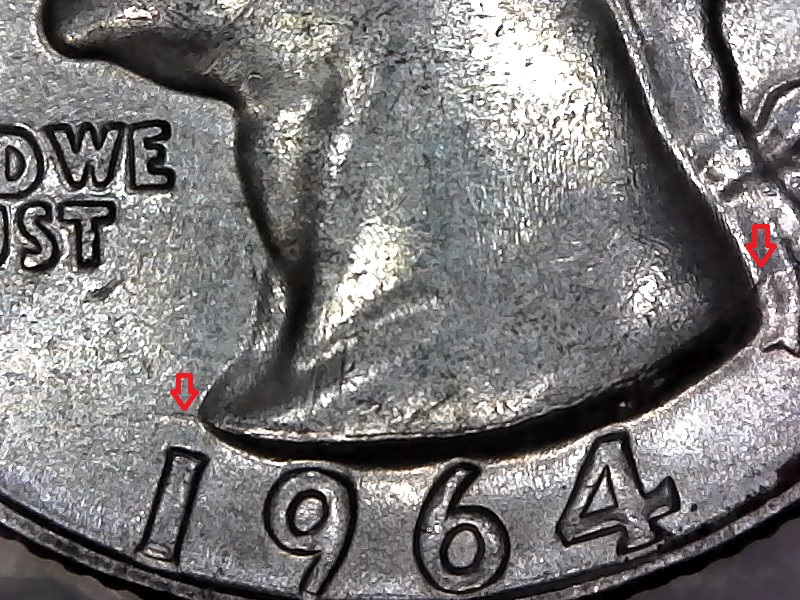
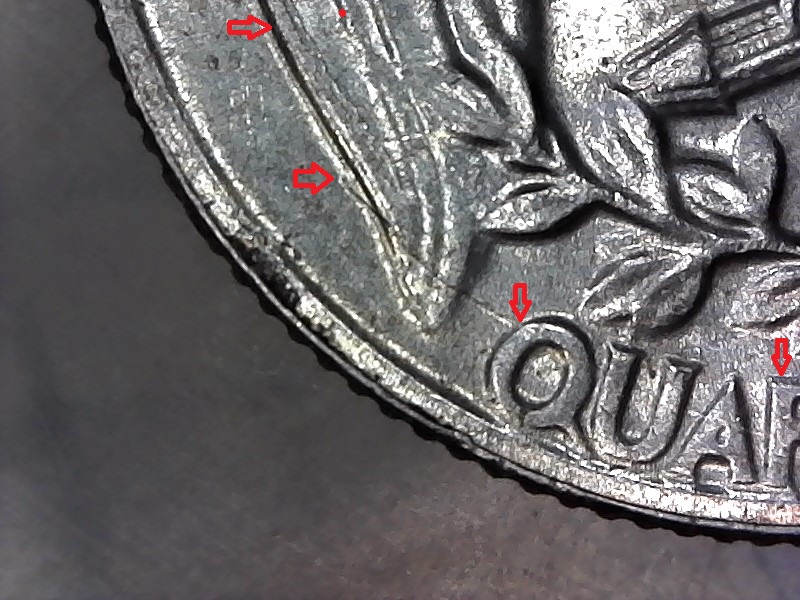
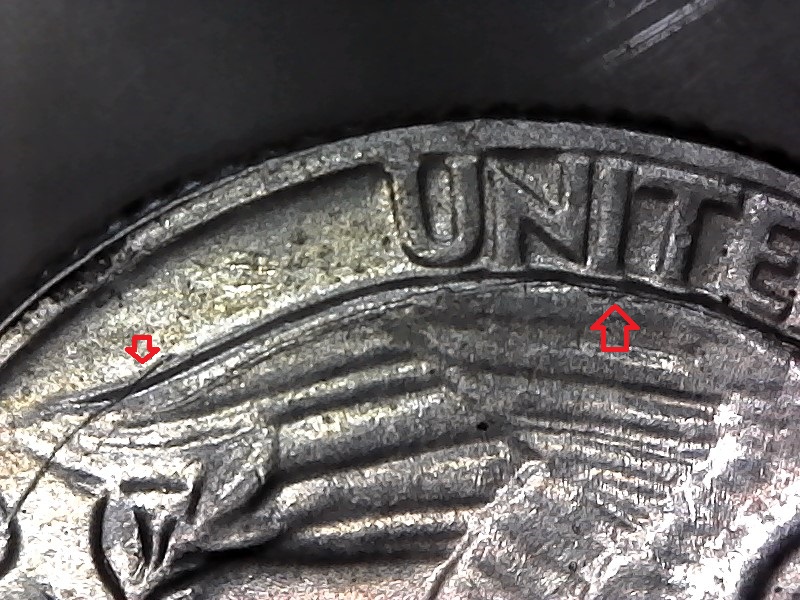
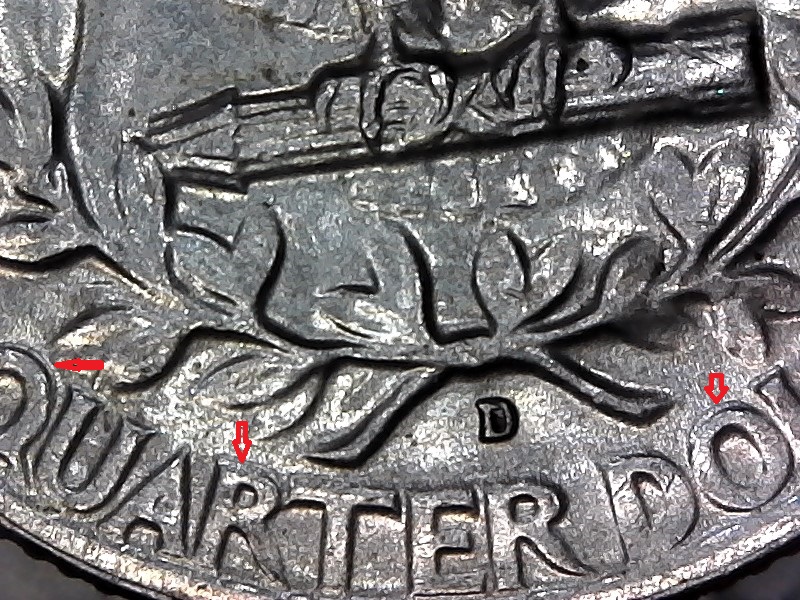
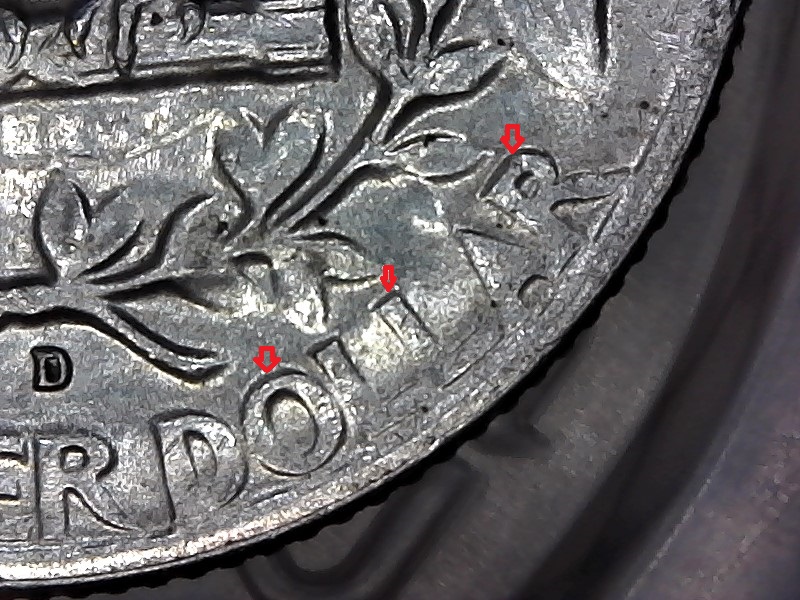
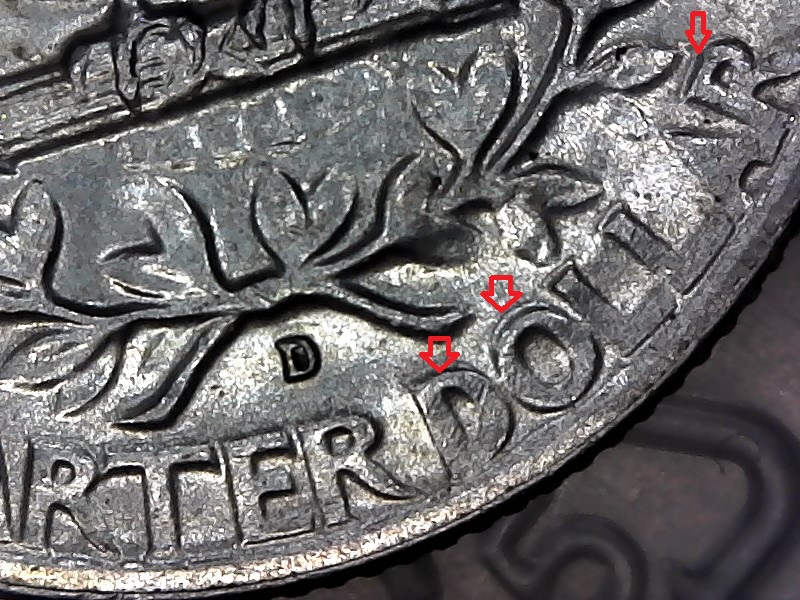
Yes, I'm seeing die cracks. The doubling appears to be Die Deterioration doubling--given the pics posted. |
|
Bedrock of the Community
United States
94367 Posts |
to the CCF! |
|
Pillar of the Community
United States
7174 Posts |
to the CCF and  MD DDD, and die chips. All are very common on coins. |
|
Pillar of the Community
Canada
6244 Posts |
Ok I will explain this.
Observe: bottom of the bust it is a crack all the bottom starting before the bust and go further till ribbon. Origins it is a hub doubling and accentuate as in this case stage C and D
Reverse: 80 % of the coins has this crack on the eagle wing. Your coin it is stage D as you can see the crack is prolonged till the letters. The crack is go from United till end of the wing and a second was develop angle to this till letters. This show the stage C or D. Been an old Die the rest is a use Die stage and not part of the Design. Why I ssay part of the Design because the origns go back to
the working Hub.
Nice example to see the RDV-001 stage C and D
In 1964 all the Dies was produce in Philadelphia.
Edited by silviosi
06/26/2023 4:08 pm
|
|
Pillar of the Community
United States
2408 Posts |
Silvio.
Did Philadelphia send the dies with the D mint mark on them?
|
|
Pillar of the Community
Canada
6244 Posts |
Rob I have no data about. I know in 1964 was 12 engraver in Phil and 4 in Denver. Where the MM was perform is not specified in any of the Mint reports. Silvio
|
|
Pillar of the Community
United States
2408 Posts |
Thanks Silvio.
I would hope that Denver did their own. They'd have to be able because who would've created the RPM's.
When the Mint Marks are redone then and now.
Do they have to heat the dies?
|
|
Pillar of the Community
Canada
6244 Posts |
In that time was hand made MM before hardener the Die. To day the MM it is on the Hub and after squeeze the Die, the die will be hardener.
|
|
Moderator
United States
109600 Posts |
All dies were made in Philadelphia, then sent out to the other mints where they added their own MM's to them. Then they were tempered for proper hardness.
But on the OP's coin, they are very nice die cracks in the usual locations, and some MD is also noted.
|
|
New Member
 United States
12 Posts |
Thank you everyone for the welcome, I appreciate a the information that you provided. I finally finished going through and looking at all the coins with the magnifier. 19 of the 1964 Washington's have the same die crack on the obverse as the one pictured. I can almost identify the progression of the crack worsening from one coin to another. About half have the Die Deterioration Doubling on the reverse. I also found a couple 1963 with Die Deterioration Doubling on the reverse, one of them doubling clearly all the way around. Evidently all the coins have been in circulation. That being said, is it worth the cost of having circulated coins graded? |
|
Bedrock of the Community
United States
80268 Posts |
Quote:
That being said, is it worth the cost of having circulated coins graded? Definitely not. Third party grading costs a lot of money. It would cost more to have them graded than what the coin is worth. Errers and Varietys.
|
|
Pillar of the Community
United States
5910 Posts |
Quote:
All dies were made in Philadelphia, then sent out to the other mints where they added their own MM's to them.... That's what I believed until last year when I read a post saying the mint marks were added at the Philly mint before being sent out. (I believe it was a thread about S/D and D/S Over Mint Marks ) Now I'm having trouble finding corroborating information for either. Does anyone have definitive information on which mint(s) placed the MM on the dies? Words of encouragement are one of the major food groups.
We need to consume them regularly to thrive and grow.
|
| |
Replies: 14 / Views: 3,429 |
|




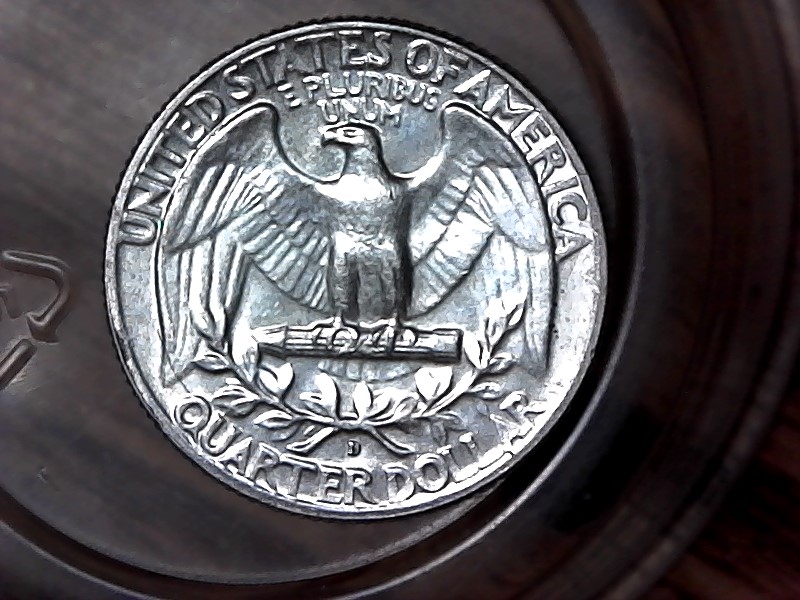


 Posted 06/26/2023 3:30 pm





