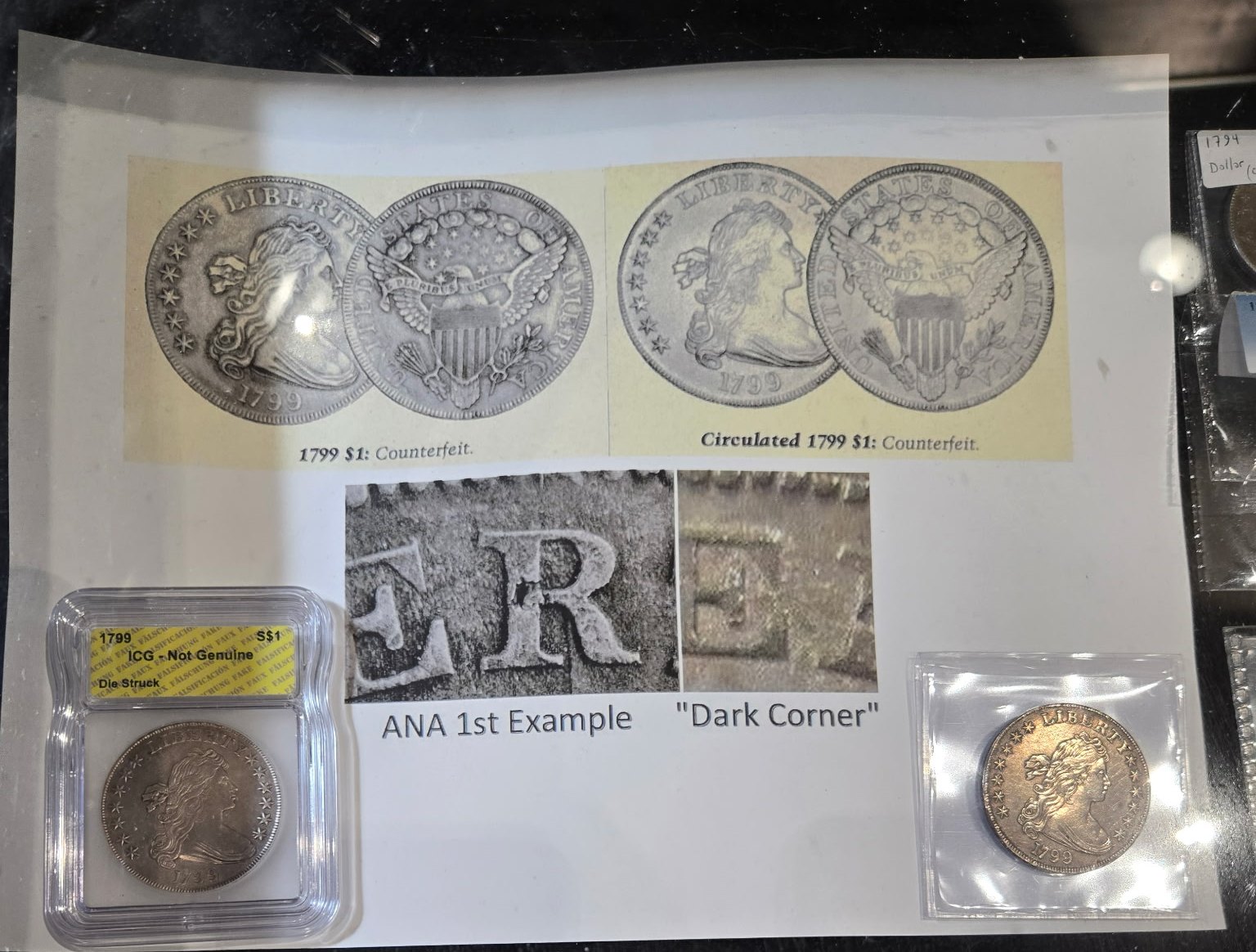
Jack Young - In my previous article, I discussed examples that include matching "attribution" marks - circulation marks like scratches, nicks, and dents that are specific to one coin and should not be seen in other examples. Such is the case for the subject of this installment, documented in a
Counterfeit Detection summary by the
ANA from 1977-1982 articles in The Numismatist. "Counterfeit 1799 Bust Dollars" starts on page 93 of the collective summary.
As always, I will start with images of the "Dark Corner" example for this installment.
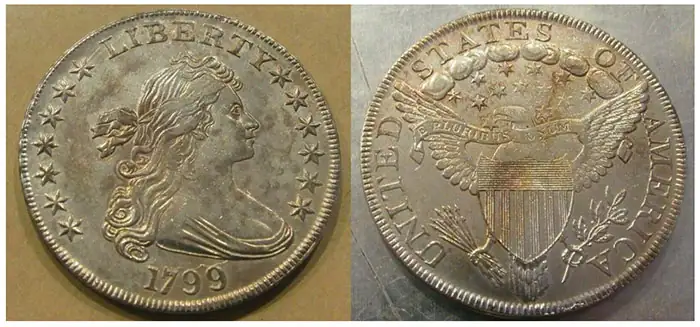
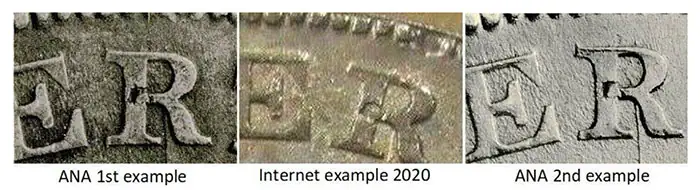
This example was listed for sale in a popular internet selling venue and reported to the counterfeit review Facebook group, the "Dark Side". The concern was the result of an obvious matching defect/mark in the "R" of LIBERTY to an ANACS-documented pair of counterfeits.
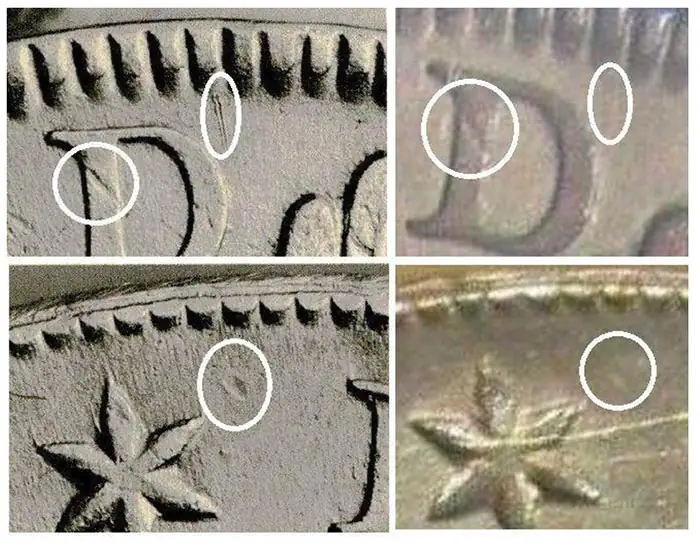 The other attributable common marks from the ANA summary (Internet example on the right)
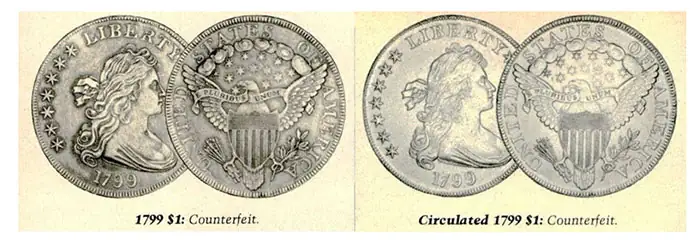 Images of the 2 ANA documented counterfeits
The seller was notified of the concerns with his item, and the listing was ended; in conversation, the seller stated the coin would be sent to a
TPG for authentication/certification.
These are based on a genuine 1799 B-16, BB-158 Large Eagle Bust Dollar; comparison images below:
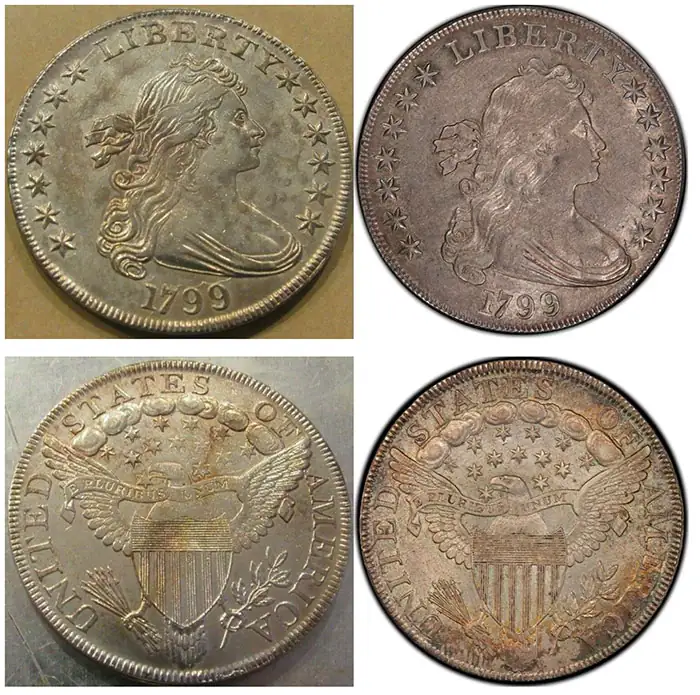 Subject example on the left, known genuine example (courtesy PCGS CoinFacts) on the right
Although the subject example displays the characteristics of a genuine die state III coin with the clash marks over the date and through OF on the reverse, the obvious mark on the "R" is not a die state of a genuine BB-158.
Time passed before the seller's relist, this time with the coin in a
TPG holder as authentic!
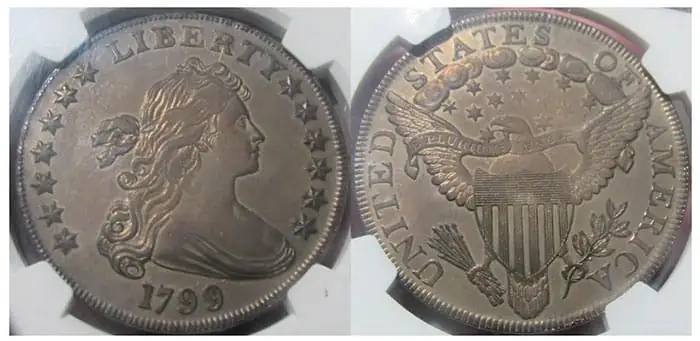 Slab images (Certified and graded AU DETAILS WHIZZED)
Another note to the seller resulted in an agreement to send it back to the
TPG for review. As I stated in my previous installment, the use of common circulation marks for identifying struck fakes has been practiced for some time and was instrumental in identifying these. What we don't know is if there is a genuine example "out there" or if the main identifying feature was the result of the process of making the false dies to strike the counterfeits.
After review at the
TPG, I received a note from the seller that the coin was determined to be a "struck counterfeit" and the online cert of the 1799 dollar updated to "NOT GENUINE".
Best as always,
-Jack D. Young, EAC 5050
Read More: Counterfeit Detection Series Check out 1799 Draped Bust Dollars on ebay
.







 Posted 12/05/2025 08:15 am


 Uncirculated American Silver Eagles