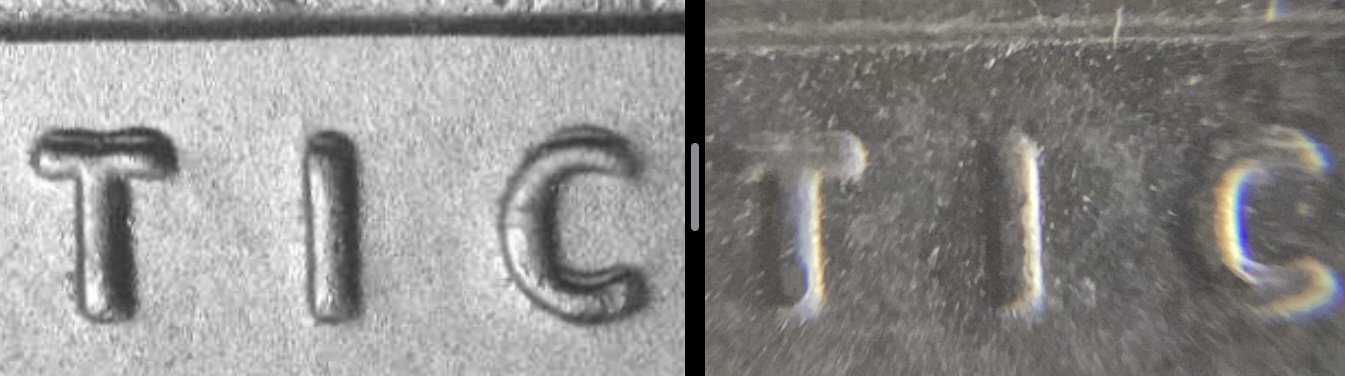
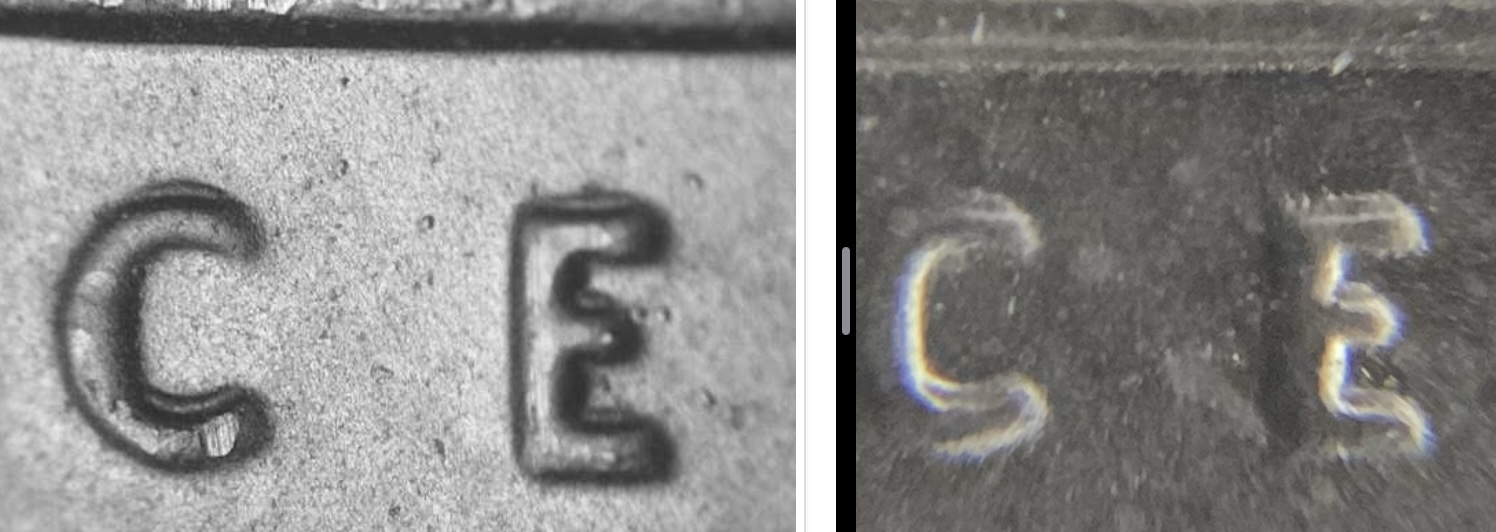
| Author |
 Replies: 31 / Views: 2,256 Replies: 31 / Views: 2,256 |
|
|
|
Pillar of the Community
United States
4429 Posts |
Quote:
I suggest that they could be die damage from striking. A chattering or vibrating die struck the exact same place on the newly minted coins for tens of thousands of strikes. What you're describing here is Machine Doubling. Quote:
not if the planchet rotates, or some sections of the planchet move (stretch) relative to the die before others do This isn't what rotational Machine Doubling looks like and I'm pretty sure it's not possible for a planchet to "stretch". That's why I seriously doubt these are MD. Edited by Tanman2001
07/14/2023 10:34 pm
|
|
Pillar of the Community
 United States
6913 Posts |
What I was trying to describe was not the die damaging the coins, but the coins damaging the die. Once the die is damaged with those ghost imprints, even if you tune the machine again, the ghosts will remain because the die is damaged. I believe you can fix chattering and push doubling immediately by correctly retuning the equipment. However, I think DDD makes more sense because that is also a permanent form of die damage that can produce a directional imprint. It would be repeatable across coins, which we have seen in examples. DDD is additive, not subtractive, which matches the sample. I think the big question to me is how one decides DDD vs. Class VIII, given the visual similarity. |
|
Pillar of the Community
United States
4429 Posts |
Quote: I think the big question to me is how one decides DDD vs. Class VIII, given the visual similarity. It is difficult. Especially on some of the newer coins. It's easy when you have multiple examples struck from the same die. You can put together a progression to see if the the doubling expanded or grew as the die was used, which would indicate DDD. But typically you won't have multiple examples from the one die to do this kind of study. Two key things I look for are shape and die flow. If the shape of the doubling does not perfectly match the shape of the original element perfectly and/or it's even slightly larger than the original element, I lean towards DDD. On your coin I think the best way to demonstrate this is to look at the upper left side of the N in MONTICELLO. Make an outline of the doubled N, then make an outline of the original N. The doubling is thicker than the original design, this wouldn't be possible with a doubled die or even with normal Machine Doubling. Those microscopic radial lines you see all over this coin is die flow, this indicates that the die has begun to erode even if only to an extremely small extent. Die flow will always accompany DDD, it'll be around it and will overlap it. This usually, though not necessarily, will give the DDD a slightly jagged appearance. Sometimes it's noticeable but sometimes it takes some strong magnification to see it. I think it's fairly noticeable on the inner curve of the 2 in the date on your coin. Though, of course, doubling from a doubled die isn't immune from deterioration so it can have die flow on and around it. This plus my previous point and no other evidence of a doubled die (split serifs, rounded doubling, other examples showing constant doubling over the life of the die) usually indicates DDD. Not sure if that's the best way to describe what I look for, but that's the best way I can come up with now. |
|
Moderator
 United States
56855 Posts |
Mike where are you? John1  |
|
Pillar of the Community
United States
6913 Posts |
I think that's an outstanding explanation, thanks for taking the time to write it! One of the things that really threw me on this coin were the E's is Five and Cents. The way the ghosts are shaped like the original devices has the illusion of being precise. Most DDD examples I have seen are smeared or tapered. Here the ghosts were crisp, and the shelf looks uniform right up to the parent device. The ghosts even strongly carry the shape of the serifs. 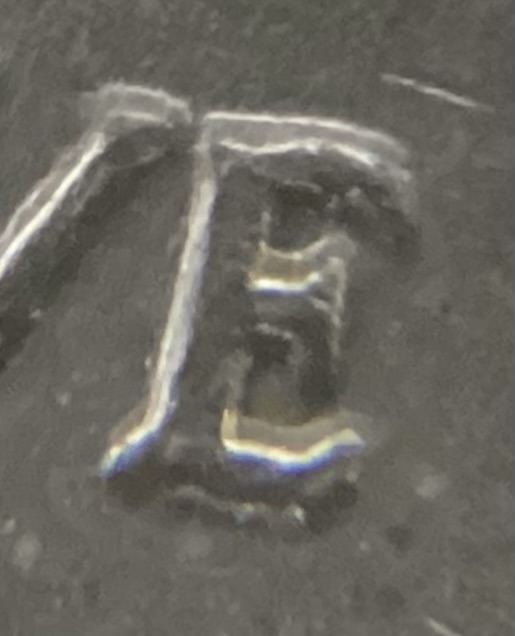 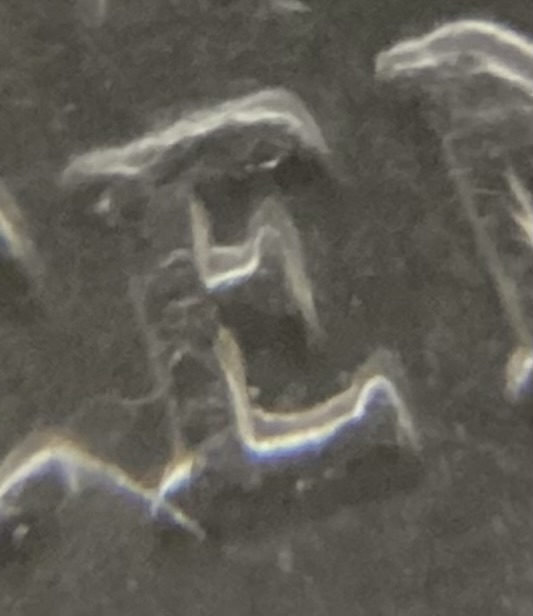 If you draw an outline of the doubling, at some point you end up using your imagination, right? After all, much of the doubling is under or inside the parent device. But I do understand what you mean that the ghost shape has to precisely conform to the parent device shape (at least for VIII). Here the shapes are quite similar—obviously they must be, since the DDD is dragging them out of the parent device die cavity—but they do not conform 1:1. On another thread, I did post an example of two nickels that appear to have the exact same phenomenon, suggesting they were stuck from the same die. I have them labeled and tucked away in a little cardboard box. This current example will join them, as will a several others. Once I have enough examples, I will compile all the knowledge from these threads and try to write a condensed article on the learnings, complete with a fresh set of quality photos of the coins. These discussions are very educational. This is truly an excellent online community for both expertise and patience! |
|
Pillar of the Community
United States
6913 Posts |
|
|
Pillar of the Community
United States
3207 Posts |
could be a DDD and MD mixture on this coin Tanman2001, during a strike, planchet metsl briefly acts more like a plastic or rubber. A planchet has to stretch otherwise it would break. |
|
Pillar of the Community
United States
7600 Posts |
|
|
Pillar of the Community
United States
4429 Posts |
Quote:
during a strike, planchet metsl briefly acts more like a plastic or rubber. A planchet has to stretch otherwise it would break. I should have been more precise with my wording. It wouldn't "stretch" to this extent or in this location. During the strike, yes the metal can be forced outwards from the pressure of striking, but this would show as doubling towards the rim and typically on elements of the die closest to the rim. I can't find a photo of this right now, but iirc this is relatively common on the 90s-00s cents on IGWT. |
|
Valued Member
Canada
219 Posts |
As I have indicated in other topics, this is not MD but I was not sure if it was due to DDD or a doubled die. Quote:You can put together a progression to see if the the doubling expanded or grew as the die was used, which would indicate DDD. Doing a quick search on this web site, there are enough 2011D examples to show that this is probably DDD as long as all the nickels were produced from the same die, which I can not confirm. The following montage shows the progression of the deterioration from an earlier die state to a later dies state.  The only question remaining is what changes were made by the mint to have such a difference in how working dies deteriorate when comparing nickels before 2005 and after 2005. Edited by numidan
07/15/2023 1:44 pm
|
|
Pillar of the Community
United States
3207 Posts |
My point is that the striking process is too complex to expect all device shifting to be uniform (to go one direction) on a given coin. There are many factors: the dies are not flat but convex, they are unlikely to be perfectly parallel to each other during the strike, all planchets do not feed into and sit in the striking chamber in exactly the same way, internal stresses remaining in the planchet from production will vary, etc. It's like putting a clump of Play-doh into one palm and pressing it flat with your other palm. The dough, like the planchet, will shift and stretch in unpredictable ways because the forces from your palms will not be exactly the same over its whole surface. The resulting impression of your palm lines in the dough will be non-uniformly distorted.
|
|
Pillar of the Community
 United States
1034 Posts |
In my mind, the die press machine that controls the hydraulic rods/pistons, has its own sleeve/bushing. When that sleeve/bushing gets worn out, the rods/pistons get sloppy. As soon as it makes contact with the planchet. The die sleeve/bushing that is worn out or has just enough slop in it, it will slide under pressure. The amount of movement, depends on the amount of wear of the sleeve/bushing.
I could be wrong, and I am not going to pretend that I know the die process. I don't. I haven't really read up on it to be honest. But I do have some knowledge of how hydraulic cylinders work. I have a dump truck business, and work with heavy equipment, which all use hydraulic and air cylinders.
Edited by kurdlezuit
07/15/2023 4:40 pm
|
|
Pillar of the Community
United States
1034 Posts |
I wouldn't really say it's a die issue, but a die machine issue. It is ready for some replacement parts. The die itself could be perfectly fine. Hope all of that made sense.
|
|
Pillar of the Community
United States
6913 Posts |
Well, in going through some prior study images, I believe I actually snapped a picture of something that very closely resembles WDDR-001. Unfortunately, I need to retrieve that box next week (I forgot it while dog-sitting for my sister). Looks like someone is already selling a WDDR-001 on ebay, too! https://www2.briansvarietycoins.com...gs/view/1868https://www.ebay.com/itm/2023-P-Wdd...irect=mobile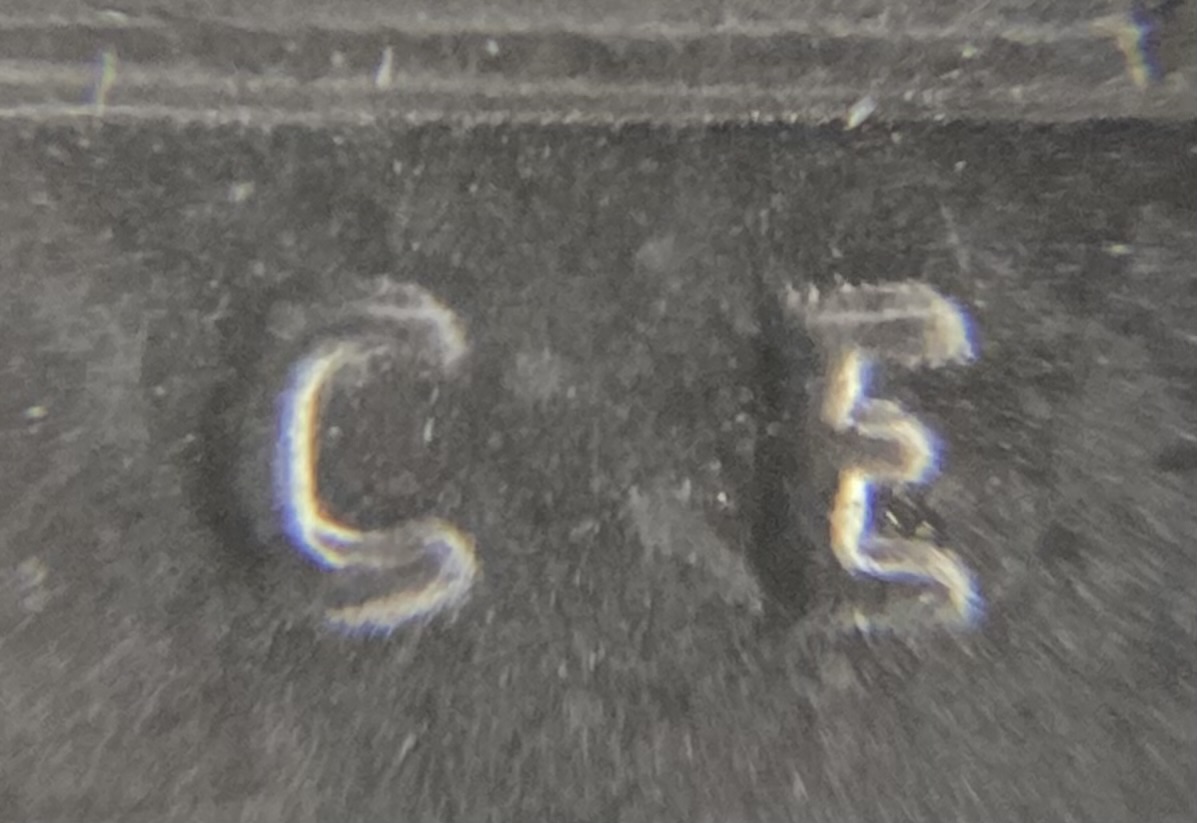 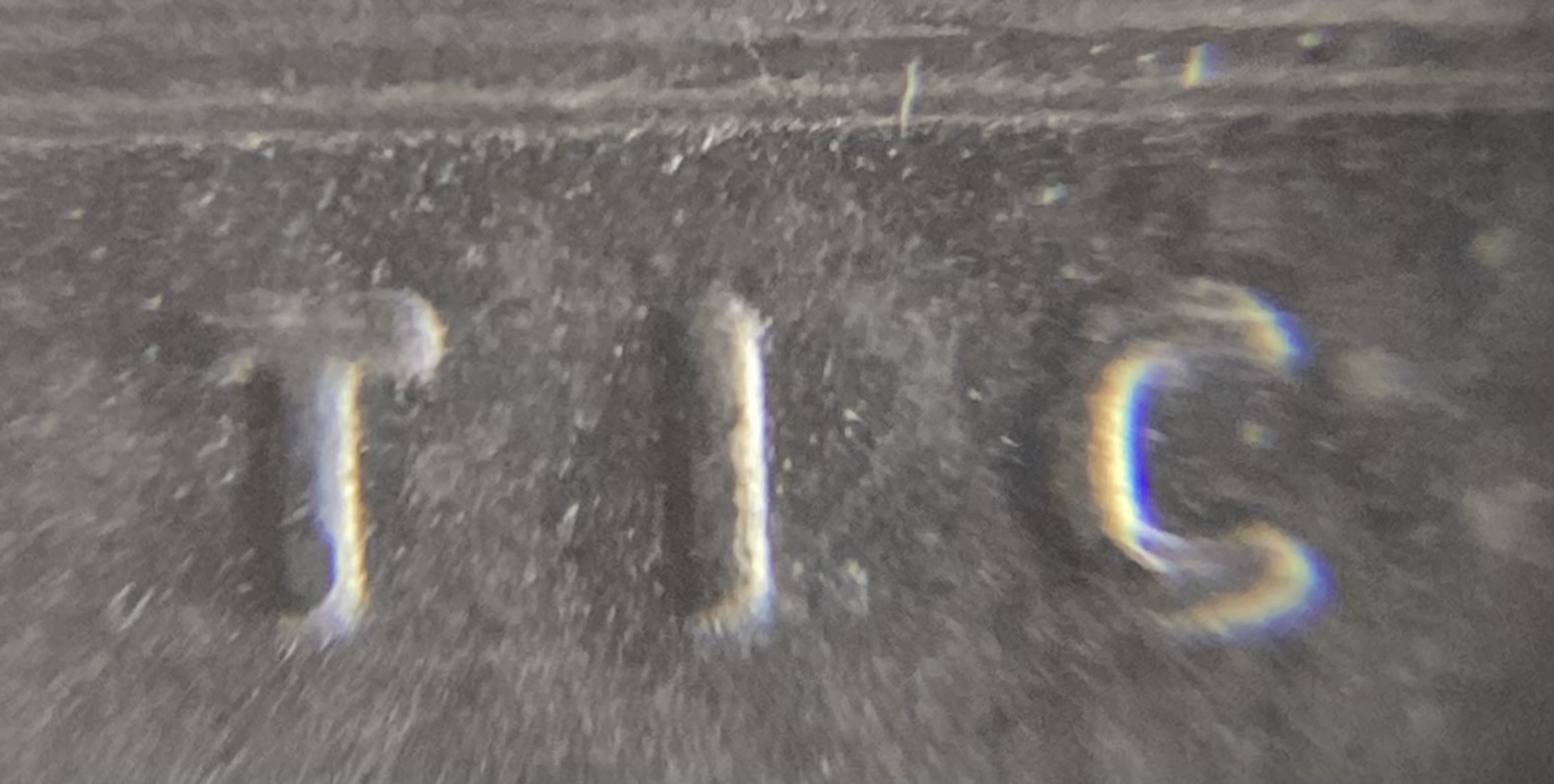 When I have the nickel again, I will do a much better job with images. The pics I snap while CRH tend to be shoddy, because my assumption is that I will return to interesting coins after sorting everything out. |
|
Pillar of the Community
United States
6913 Posts |
|
| |
Replies: 31 / Views: 2,256 |





 First Page


 Posted 07/14/2023 11:02 pm