| Author |
 Replies: 9 / Views: 2,603 Replies: 9 / Views: 2,603 |
|
|
Valued Member
United States
62 Posts |
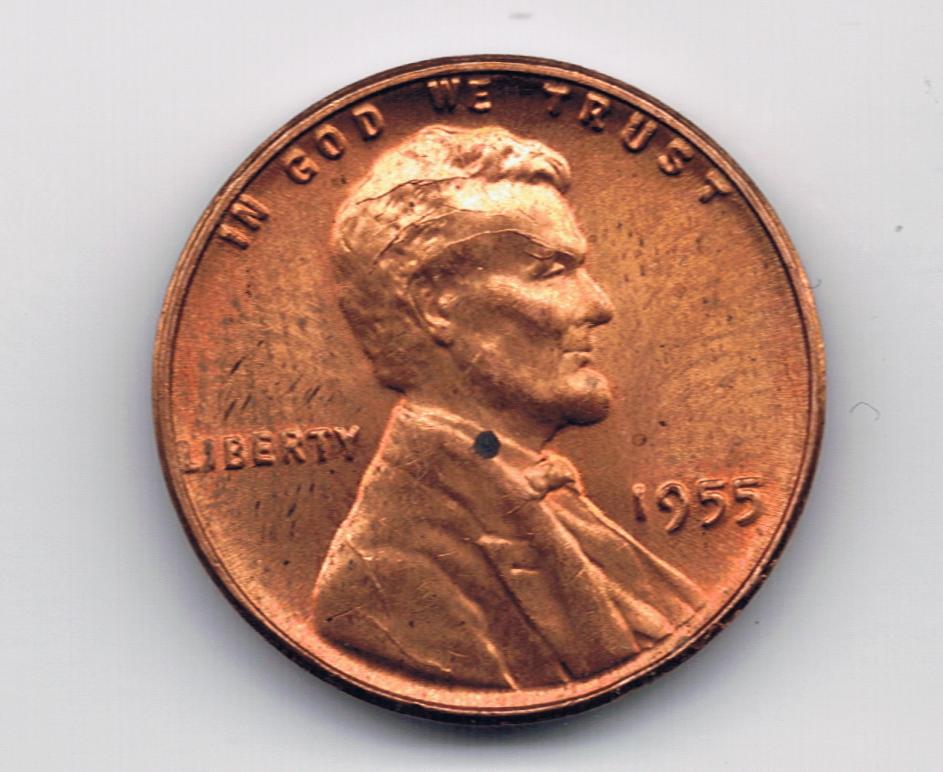
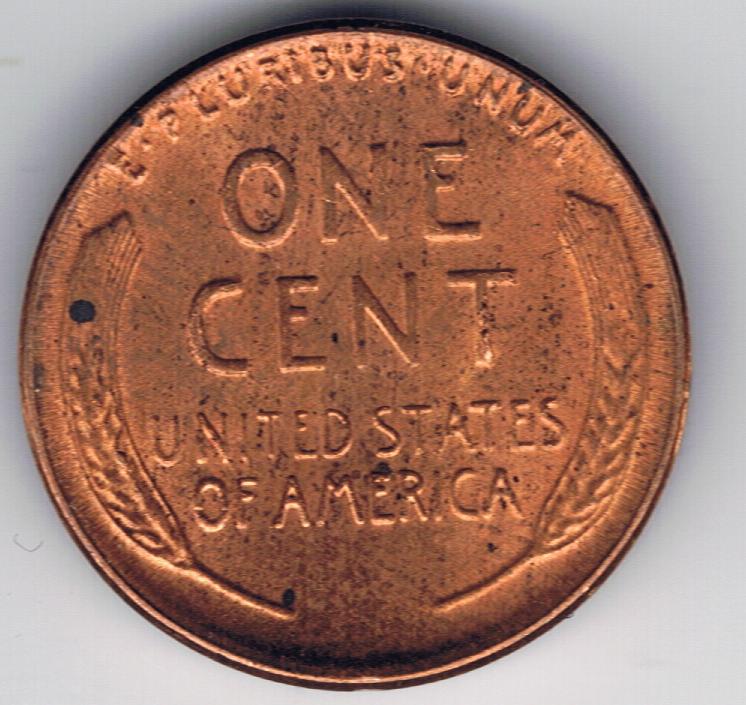
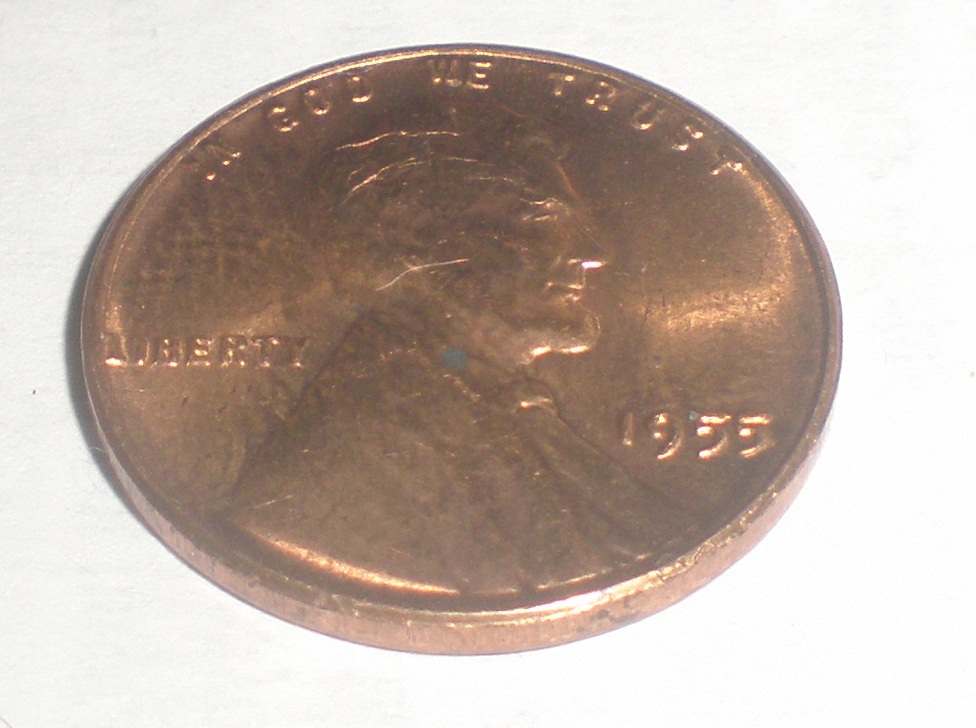 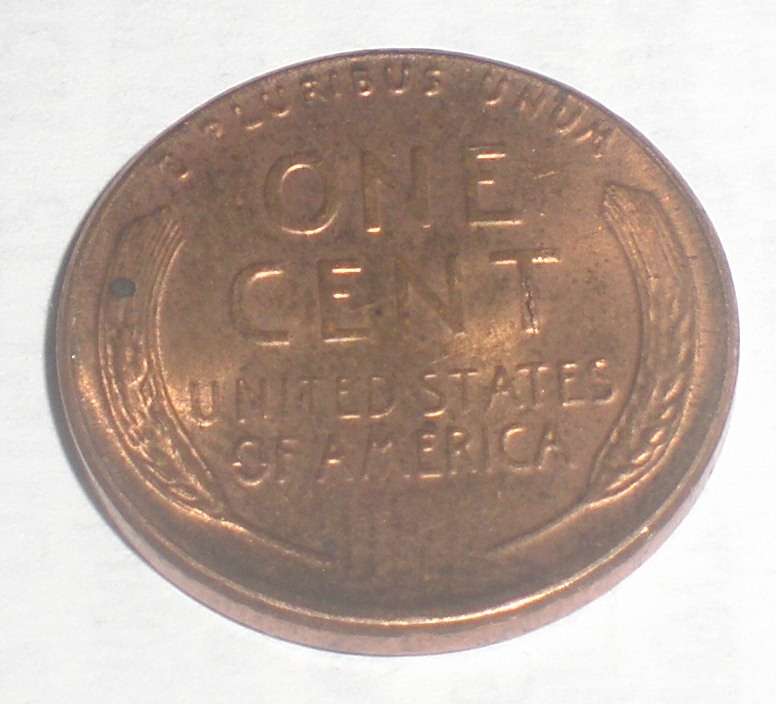 Hi, I am new here and figured its a good place to get some info on a coin. There are 2 things that interest me. On the obverse there are lines in the hair and on the reverse, there is something in the T in cent. Are these errors or just damage. This is the best picture I could get with my camera. Thanks in advance
|
|
|
|
Moderator
 United States
6563 Posts |
Both are possible lamination errors. It's when the metal separates and peels off.
Would need a few more clearer pictures to be sure
|
|
Pillar of the Community
United States
1807 Posts |
The cracks on the obverse I think are called a 'cracked skull' and the crack on the reverse is also a typical area for a die crack. If I'm wrong be easy on me.
|
|
Bedrock of the Community
United States
62064 Posts |
The reverse marks are chips/die breaks. After a die crack, there is a time where the die is continued to make many more coins. Eventually, a chip appears when a part of the die starts flaking off and more coins continue to be made. Even after many more coins are struck the area continues to crumble forming a die break that get wider with continued use. Eventually, it crumbles deeper into the die and it no longer shapes the devices and becomes a huge bump in that area. 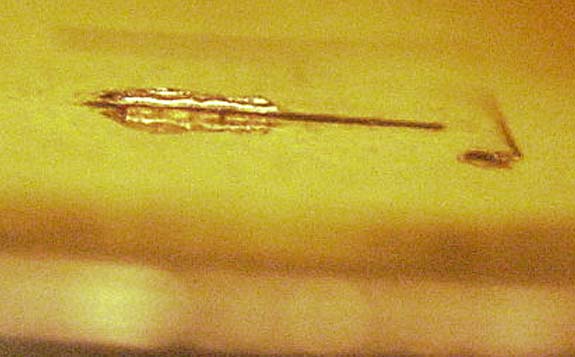 During the 1950's the dies for wheat Cents were over used into the VLDS (Very-Late-Die-State) Thus the appearance of the "So Called" Poor man's Doubled die. Which is nothing but an overused die that shows die wear toward the rim which appears as an extra digit. 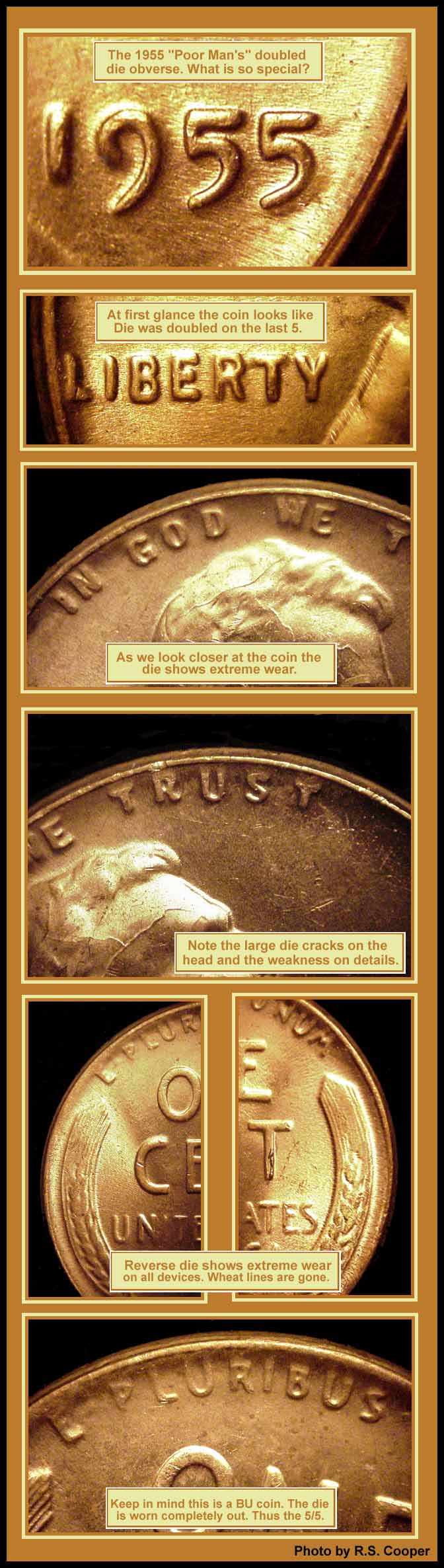 You will not the die cracks on the head. also the result of using the dies part their normal use. The worn dates are found mostly on 1953-55 Cents. In a roll of 1955 plain Cents I found 19 of the poor man's doubled dies in it. When comparing markers I found they were from as many as 6-10 different dies. So they are not rare, but common. Not worth a premium in my book. But Newbies get caught on ebay buying them for their collections. So I guess that is where the term "Poor Man" comes into place. Cause if you bought a hundred of them they would still be worth the value of the coin and not an extra premium, making them the "Poor Man." Welcome to the forum. Good to see a new face. |
|
Bedrock of the Community
Canada
10743 Posts |
Great info, Richard.  |
|
Valued Member
 United States
62 Posts |
Thanks, a lot more info then expected.
|
|
Pillar of the Community
United States
1219 Posts |
Close up of smartelfs coin. Just happen to have the same coin, obverse & reverse match perfectly. Not sure what it is, die crack with developing die break ? 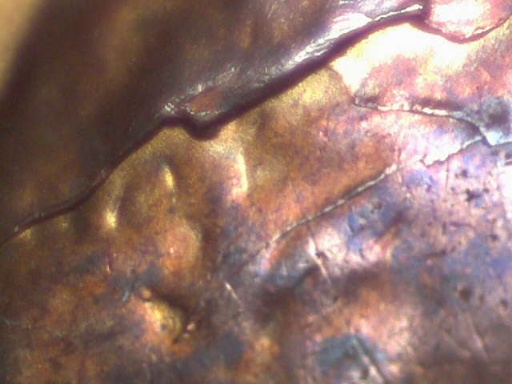 |
|
Valued Member
United States
62 Posts |
Image:  1955front.jpg 1955front.jpg81.29 KB Image: 1955back.jpg82.09 KB Here is a better picture from a scanner, any suggestions on how to get good pictures. all I have is a regular digital camera and a scanner.
|
|
Bedrock of the Community
United States
62064 Posts |
Elf: Did you note on the reverse the weakness in the wheat ears? The lines are weaker in the later die states. So grading coins from the wheat ears doesn't always hold true for all coins. If they were BU and weak some may think the coin has been altered or not BU. But in VLDS (Very Late Die State coins the area between the fields and the devices show heavy wear and thus make the devices mushy. But I think I can top you die cracked head. 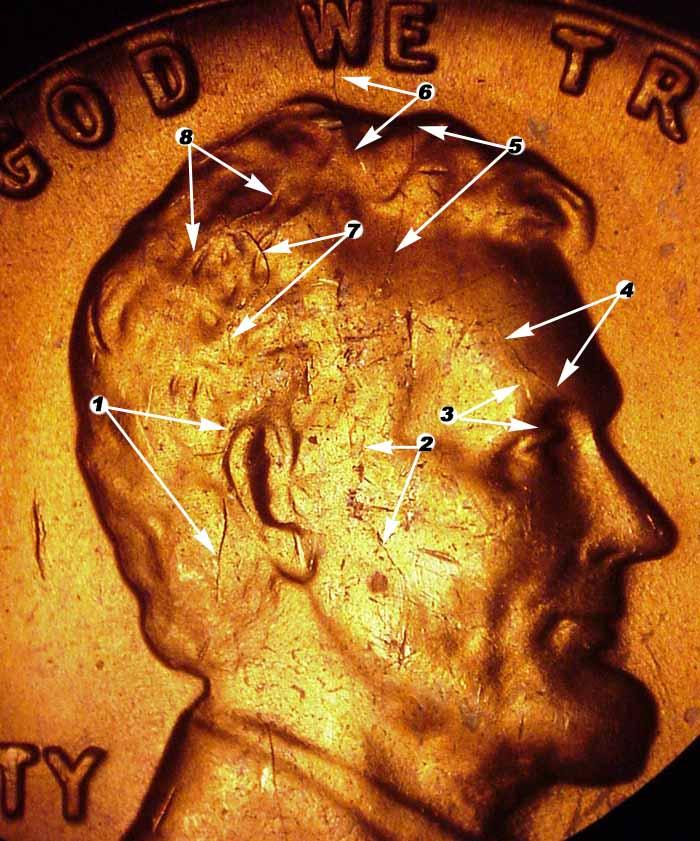 Mine has more die cracks on yours. Yours is starting to show die break also. Doesn't make it worth more, but knowing what causes it is something you can share with other new collectors you meet. |
|
Bedrock of the Community
United States
62064 Posts |
Yours is one of the "So Called" Poor man's doubled dies. Look at the last 5. You can see the wear after the last 5. I found another example of heavy die wear. Looks real different than any I've found before. 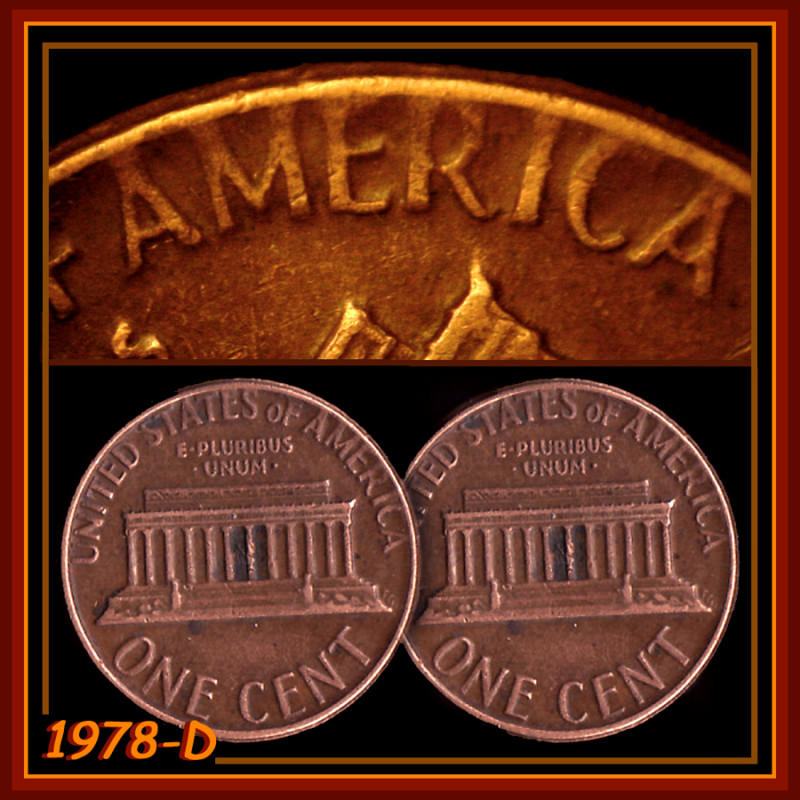  NOT! Edited by coop
03/31/2009 6:38 pm
|
| |
Replies: 9 / Views: 2,603 |
|







 Posted 03/30/2009 01:45 am





 1955front.jpg
 1955back.jpg


