| Author |
 Replies: 17 / Views: 2,633 Replies: 17 / Views: 2,633 |
|
Valued Member
United States
357 Posts |
My wife has a bottle of Acetone she uses on her fingernails. Is it the same potency as the product you might buy at a coin shop? I'm using it on some misfit coins that are particularly ugly. Soaked overnight with little improvement. See my other post: http://goccf.com/t/452256 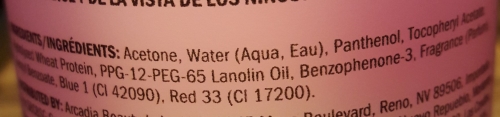 *** Moved by Staff to a more appropriate forum. *** *** Moved by Staff to a more appropriate forum. *** |
|
|
|
Moderator
 United States
56855 Posts |
|
|
Moderator
United States
198288 Posts |
Quote:
Is All Acetone The Same? No, it is not. You want 100% pure acetone, usually from a hardware store. If the ingredients does not stop after listing only acetone, do not use it for coins. |
|
Pillar of the Community
 United States
5727 Posts |
No way to know what long term effect all those trace additives will have on coins, but it's likely to be as effective as 100% acetone. And with those coins you're trying it on, you can't really hurt them.
|
|
Bedrock of the Community
United States
19696 Posts |
Agree with Jbuck (above).
|
|
Moderator
United States
56855 Posts |
Just a note;hardware store acetone will have one other ingredient and that's fine. totally pure acetone is lab grade and not cheap and I am not sure if it doesn't have something else in it. John1  |
|
Pillar of the Community
United States
4623 Posts |
Nail Polish remover is not recommended for coin use. It has water, bitterants, and fragrance as additives.
-----Burton 50+ year / Life / Emeritus ANA member (joined 12/1/1973) Life member: Numismatics International, CONECA Member: TNA, FtWCC, NETCC, EveryCountry (online) coin club Owned by three cats and a wife of 40+ years (joined 1983) Author: 3rd Edition of the Sample Slabs book, https://www.sampleslabs.info/ |
|
Pillar of the Community
United States
4233 Posts |
Quote:
Just a note;hardware store acetone will have one other ingredient and that's fine. totally pure acetone is lab grade and not cheap and I am not sure if it doesn't have something else in it. Hmm, my hardware store acetone (Sunnyside brand) does not list any ingredients anywhere on the can, it just says acetone on it, but their website has a product data sheet which under "hazardous ingredients" says 100% acetone. I'm not sure if that means 100% of the hazardous ingredients are acetone, or if that means there's nothing else in there but acetone. Curious. |
|
Moderator
United States
198288 Posts |
|
|
Moderator
United States
110505 Posts |
That stuff you posted in the photo has lots of undesirable ingredients in it such as 'Lanolin OIL' Oil is not good for coins. Get your acetone from a hardware store where the ingredients listed is like one item. (acetone)
|
|
Moderator
Australia
17035 Posts |
As you can see by the label, commercial acetone-based nail polish remover contains a bunch of other stuff besides acetone. These things either (a) smell pretty, or otherwise mask the "chemical smell" of the acetone, or (b) are skin moisturizers, to help counter the ability of acetone to wash the skin oil straight out of your pores, leaving your hands feeling dry. Then there's (c) water, which simply dilutes the acetone, bulking up the solution and making each bottle cheaper to manufacture, thus increasing the profits of the manufacturer, and (d) colouring agents, which just make it look pretty. The things that smell pretty (in this case, that would be the "fragrance" and benozphenone) aren't likely to cause a problem; they are designed to evaporate away along with the acetone, so won't stay behind on the coin for very long. The moisturizers (panthenol, lanolin, tocopheryl acetate, and whatever "wheat protein" is supposed to be - gluten, I'm guessing) are more problematic; they're deliberately designed not to evaporate away, but stay behind on your hands once the acetone evaporates. They will stay behind on your coin too, forming a thin greasy layer that won't wash off in water. This is the most undesirable side-effect of using such a product on coins. You'd basically need to wash the coin in 100% acetone to get this layer of goo off. The water does not affect the coin directly, but does indirectly, in the sense that it makes the acetone more dilute, and thus less effective at goo removal.. The MSDS for this product declares that the acetone concentration is "less than 75%". So yes, 100% pure acetone will be much more effective than this diluted stuff. The colours are much like the moisturizers: they're not designed to evaporate. They may change colour or even become transparent if they dry out, but they'll still be there. And, since denatonium is a mandatory additive to acetone products in some USA jurisdictions, there's probably some denatonium in it too. None of these minor components are directly and acutely harmful to a coin (there's nothing acidic, and nothing containing sulfur). However, it's just not good practice to deliberately put gunk onto the surface of your coin - especially given that the whole point of an acetone soak is to remove gunk, not to replace the old gunk with fresh gunk. Finally, in relation to the coins appearing in the thread linked in the OP: corroded coins like these are not going to be helped by acetone, either this stuff or 100%. Acetone removes "organic goo" - things like ink, paint, varnish, lacquer, and the green goo that forms on coins when left in plastic coin album pages for too long. To clean a corroded coin, you'd need something much stronger - vinegar, ammonia, sodium hydroxide, or chemicals like that. The end result is going to be a "cleaned coin", but these coins aren't "collectable" to begin with. Don't say "infinitely" when you mean "very"; otherwise, you'll have no word left when you want to talk about something really infinite. - C. S. Lewis
|
|
Valued Member
United States
117 Posts |
So instead of me starting a new topic and all this good information is here,, My question is about goof off versus acetone, more or less did I get hooked on the wrong stuff :) I read it online in the locked PCGS forums where I actually got lucky with an organic search, they were taking about which ones they liked the best. Well everything worked out just seemed like it performed magic or my whole scenario is, for I dipped one coin in and received the one I was looking for. Well ok ok more not magic for the responses I got, more or less it made me a liar instantly for how it looked afterwards. I'm actually curious how and the reverse never changed? Beginning 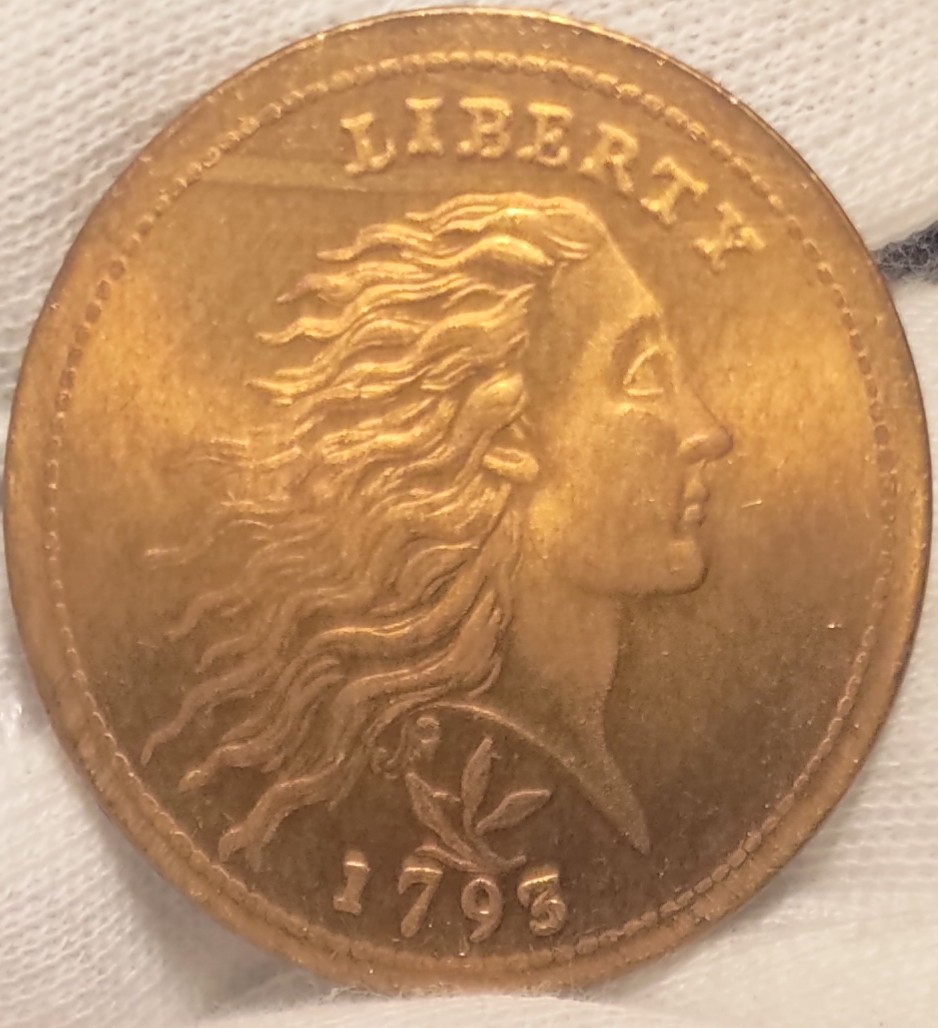 Afterwards 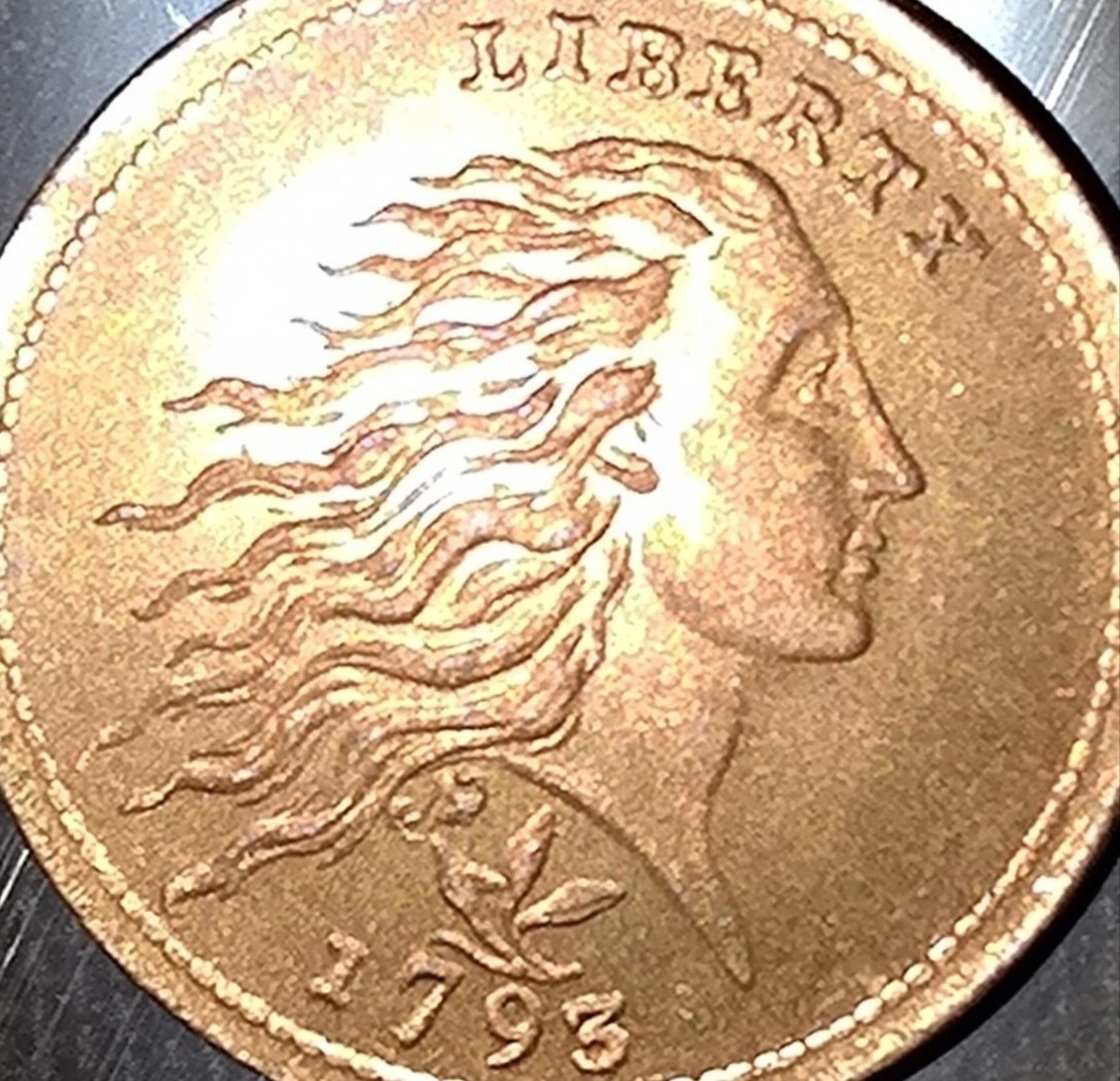 |
|
Bedrock of the Community
United States
94367 Posts |
You don't show us the reverse, so it's hard to say. Goof-off is a brand name for an (overpriced) product containing a combination of aceton and xylene, so it shouldn't have a detrimental effect on your coin.
|
|
Pillar of the Community
United States
5727 Posts |
Doesn't matter what you soak that in since it's fake anyway.
|
|
Moderator
Australia
17035 Posts |
I've never heard of "Goof Off", so I Googled it. The MSDS is here, if curious. Turns out the primary ingredient (about 50%) is methyl acetate. Methyl acetate is a polar solvent, similar to acetone, slightly more expensive and not as soluble in water. Other ingredients are acetone, xylene (a non-polar solvent insoluble in water), "Stoddard solvent" (a petroleum fraction slightly heavier than gasoline), methanol, and a handful of trace components like ethylbenzene and cumene (which are perhaps present as contaminants from the raw chemical feedstock, rather than deliberate additives). I'm not entirely sure why the complex mixture is required, perhaps to impart a broad spectrum of polarities to the mixture so that it can be effective against a broader spectrum of "goo". I also don't see anything there that's harmful to coins. One thing for sure, that stuff isn't going to be readily soluble in water, so cleanup and disposal is going to be more problematic. It's also more toxic and more carcinogenic than acetone, but less flammable. So, trade-off. Don't say "infinitely" when you mean "very"; otherwise, you'll have no word left when you want to talk about something really infinite. - C. S. Lewis
|
|
Valued Member
United States
117 Posts |
Here I'll post the reverse, oh it didn't wreck the coin :) Also I'll include the xrf analysis which AI has been loaded with info that said this piece of metal was made around the year 1787-1800. I'm not saying either or because people get mad for what? Am I saying it's real or fake,,, I'm not sure yet I'm leaning towards real simply because they have proven they can't make it again and I've been studying it for two years,,, I'm not saying anyone is wrong and shoot I'm the new guy in the industry so probably in wrong 40% of the time or I mean if I'm saying something I got it from somewhere :) I have no idea it's a piece of metal= Yeah condor101 helped with the chemistry aspect and he said it was safe,,, just what the heck happened, I do have a scenario for this coin has anti counterfeit protection engraved in the obverse die,,I think, Again history and studying led me to think this for America was almost defeated from counterfeiting. Therefore in my opinion and well the books, whoever was engraving back then was told to do something for after Henry Voigt, Robert Scott did it in the 1794 something about stars and it was too costly and discontinued. 64.20% copper 35.70% zinc Lead 1.40% Aluminum 0.28% Silicon 0.15% A coin fitting the crumbled edge has been written about by John Adam Eckfeldt in his notes. Back to the topic again,,I'm asking how? Because since then I've dipped hundreds of coins with no results of turning it completely black from just one coin. Well and I wanted to know which one everyone thought was best? Also the reason I only posted the obverse, is because I'm a camera guy and I know optimizing pictures is a form of manipulation of the image so instead I keep cropping the image smaller, therefore I try and recycle the images but I have gotten better and everyone deserves my best :) aka a task that requires _1_1_1_1_1_1 behind my pictures Thanks all 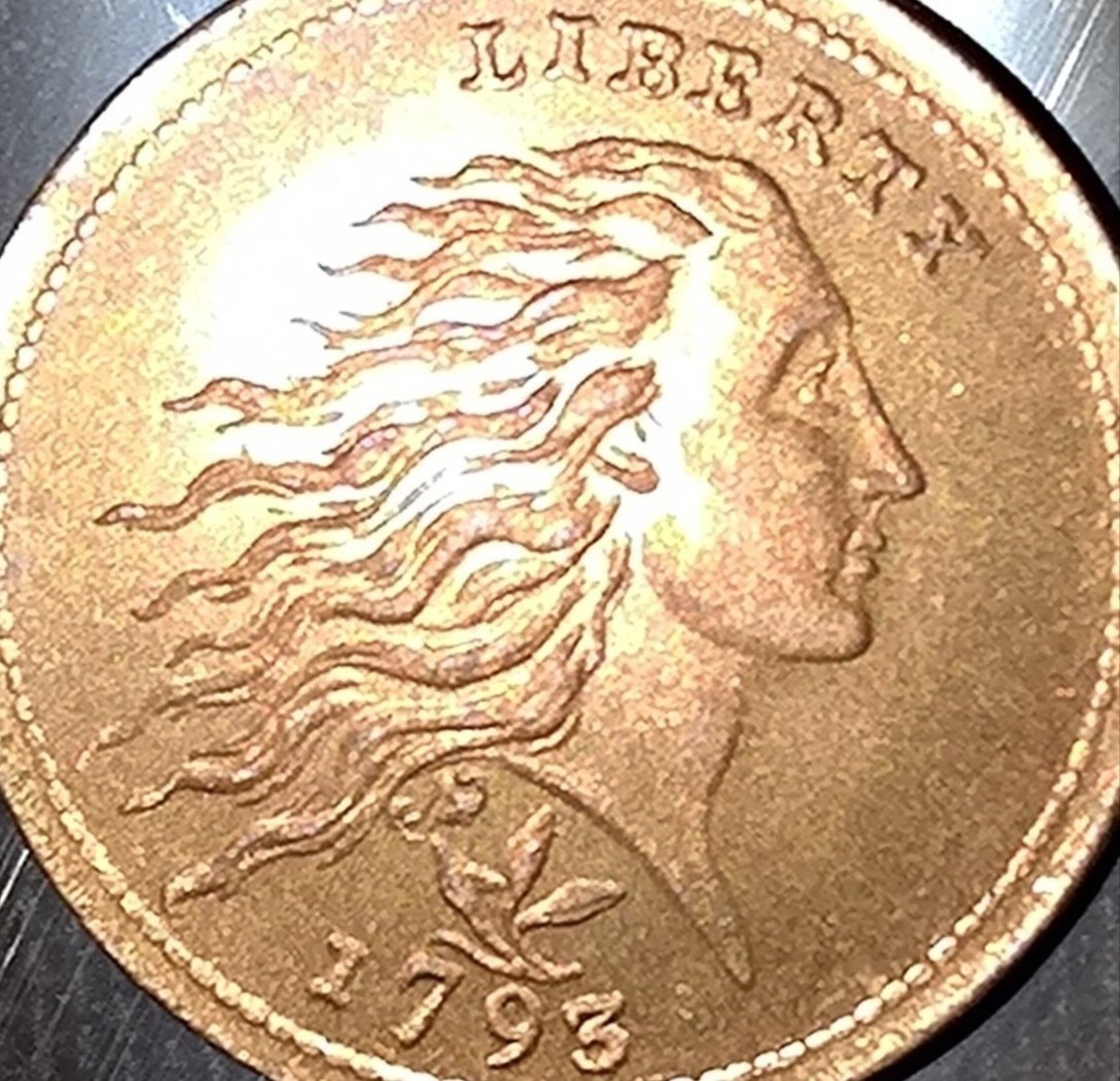  Edited by SlickCoin
11/11/2023 1:43 pm
|
| |
Replies: 17 / Views: 2,633 |







 Posted 08/31/2023 11:49 am


