| Author |
 Replies: 18 / Views: 2,435 Replies: 18 / Views: 2,435 |
|
Valued Member
United States
98 Posts |
So, I've researched the 1943 Nickels that it seems turn out mostly to be plated with the exception of the rare few that were minted on steel planchets from that time. I was told in another group that this was just a normal Nickel that has been harshly cleaned. Since then I had the coin scanned for metal content because the coin is magnetic, and weighs exactly 5g. Scan reveals the following (I'm rounding up, see photo for exact percentages): 48% Nickel 32% Copper 18% Silver 1% Manganese .4% Iron A normal 1943-S (1942-1945) composition should be: 56% Copper 35% Silver 9% Manganese Every other year Nickel composition: 75% Copper 25% Nickel This composition is not within Mint Specs I would not assume. The 48% Nickel content and the .4% Iron explains why it is magnetic since Nickel should retain this quality in an alloy as long as it is the highest percentage I believe. However the hardness of the high Nickel content resulted in a weak strike, most notably on the reverse. Could this have been a planchet left over from earlier testing by the mint looking for a suitable composition for the wartime efforts? What should I do with this coin, I cannot afford submission fees, much less subscription fees, to have this authenticated by one of the 3rd party authenticator. Was there another coin minted during that time with this composition that accidentally ended up somehow pressed as this instead? Worst case, is it possibly a counterfeit? Any help and/or advise is appreciated. Last Photo is just the coin lifted on side by a magnet. 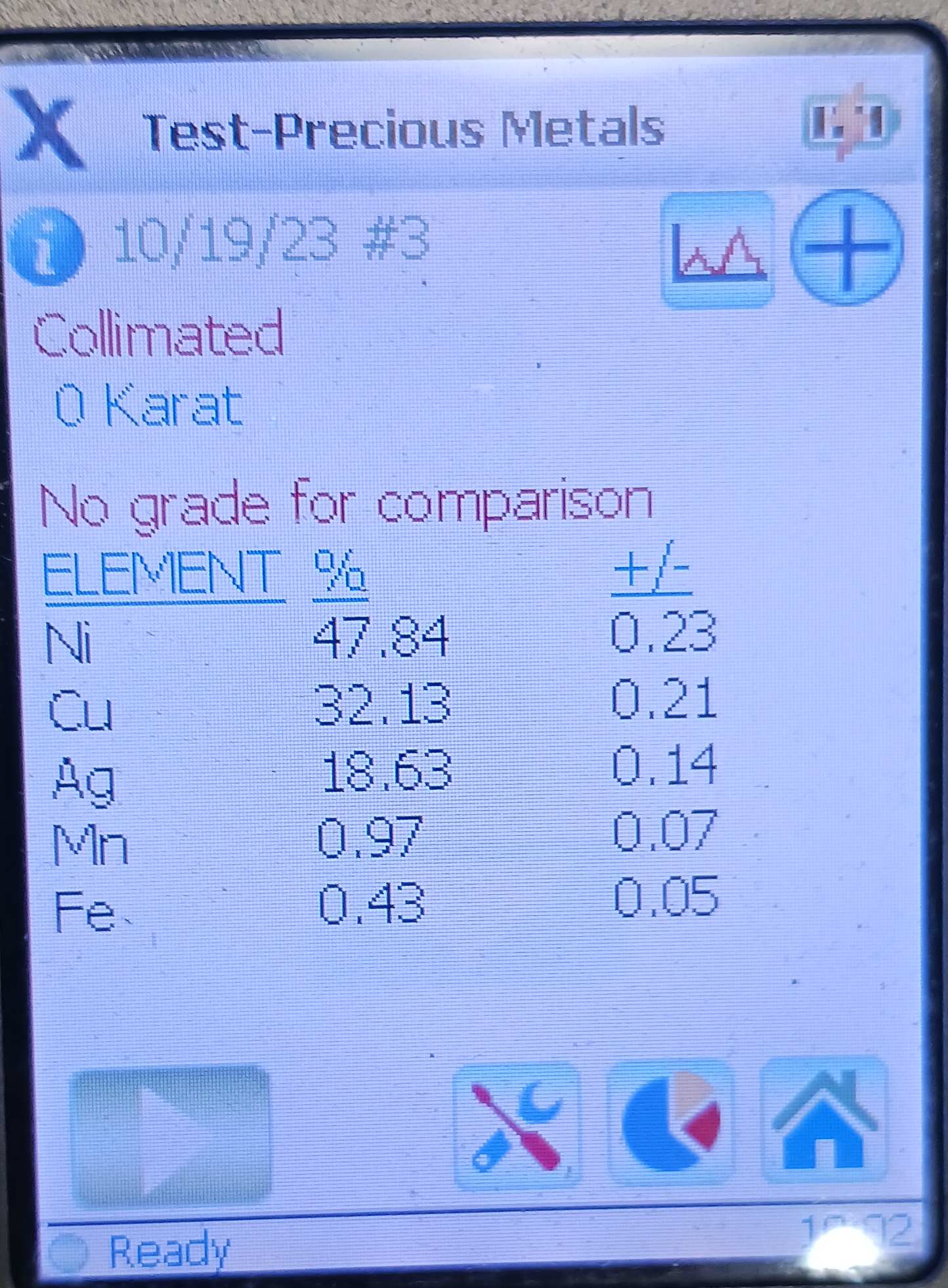 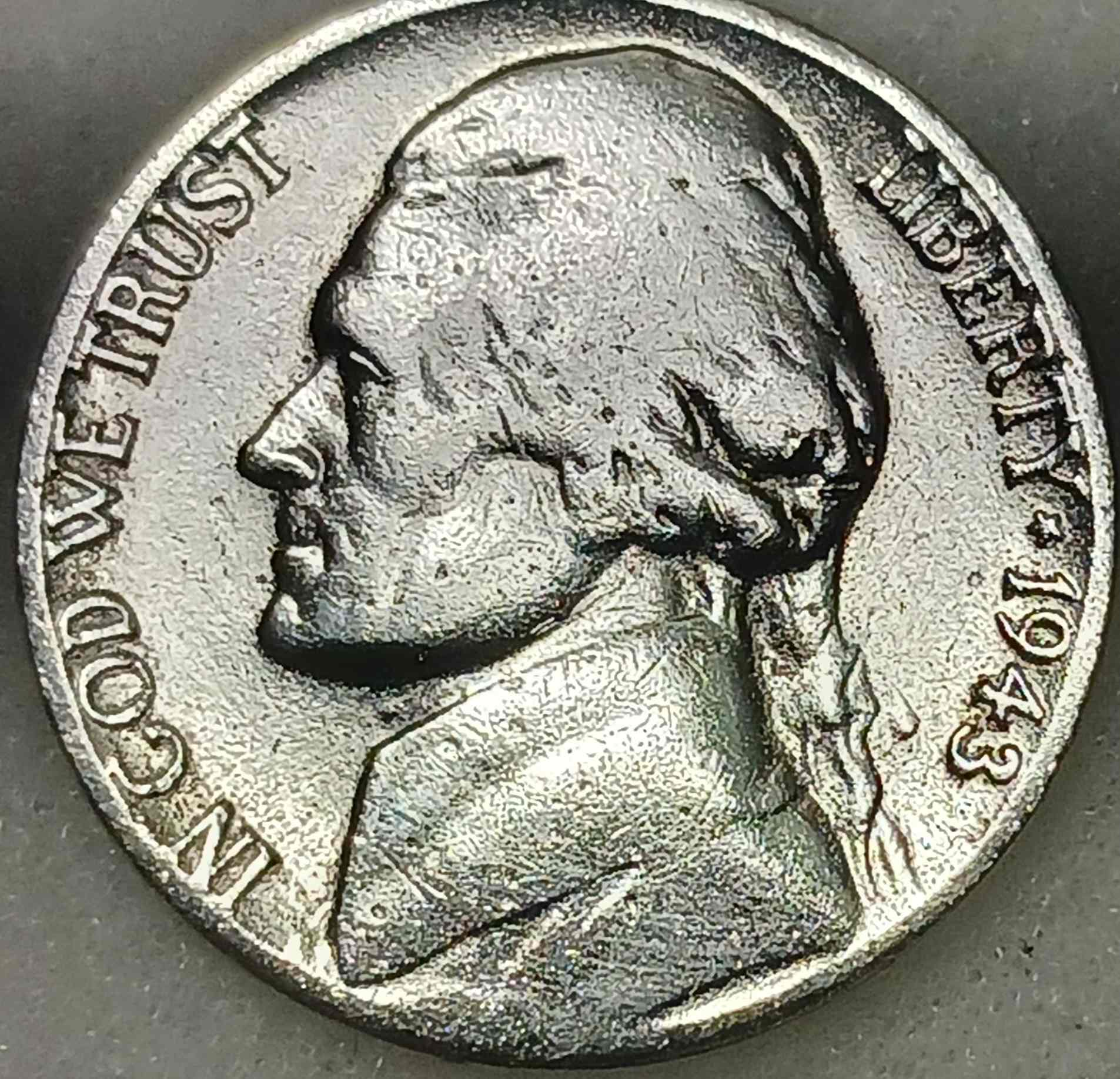 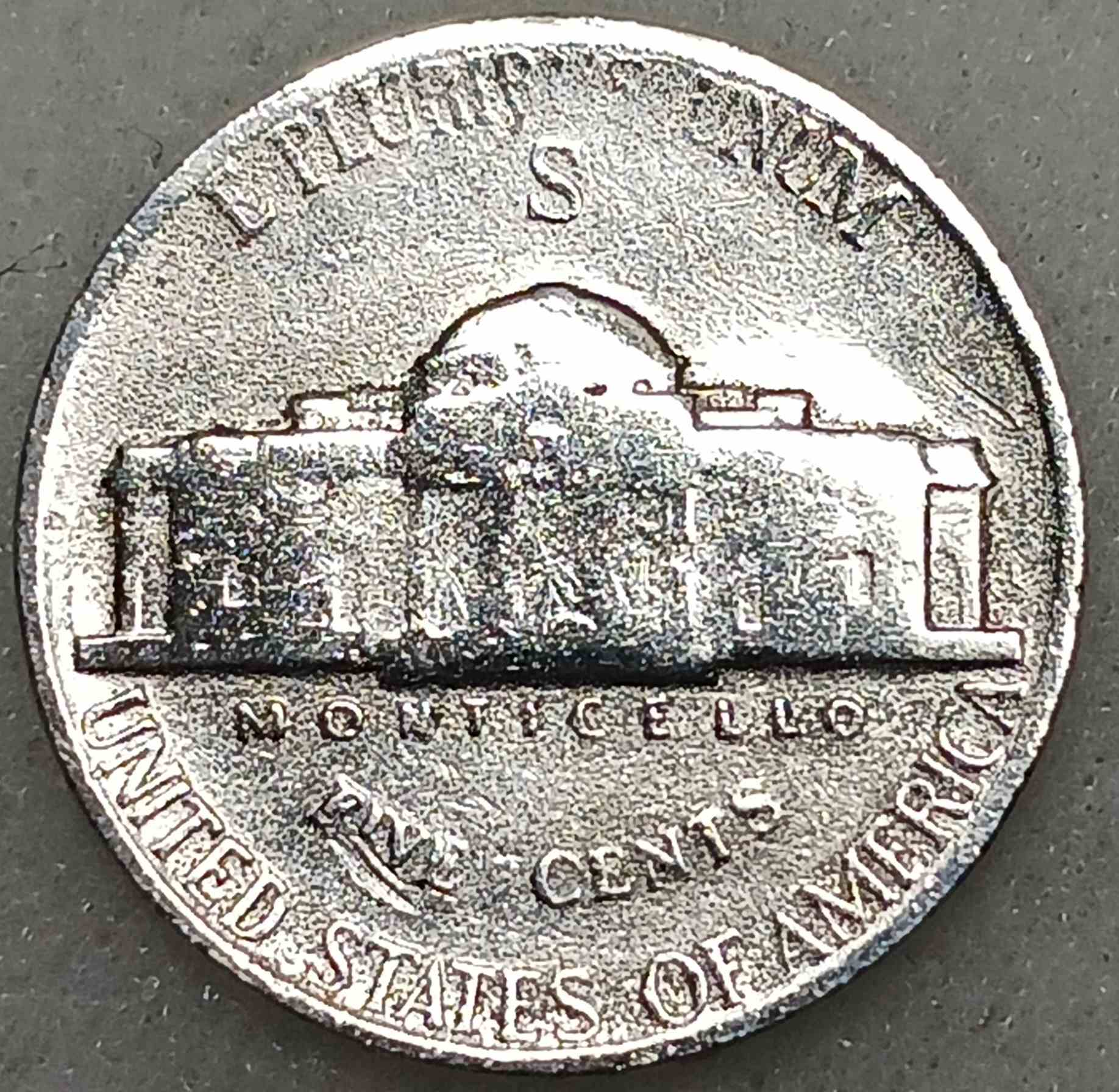 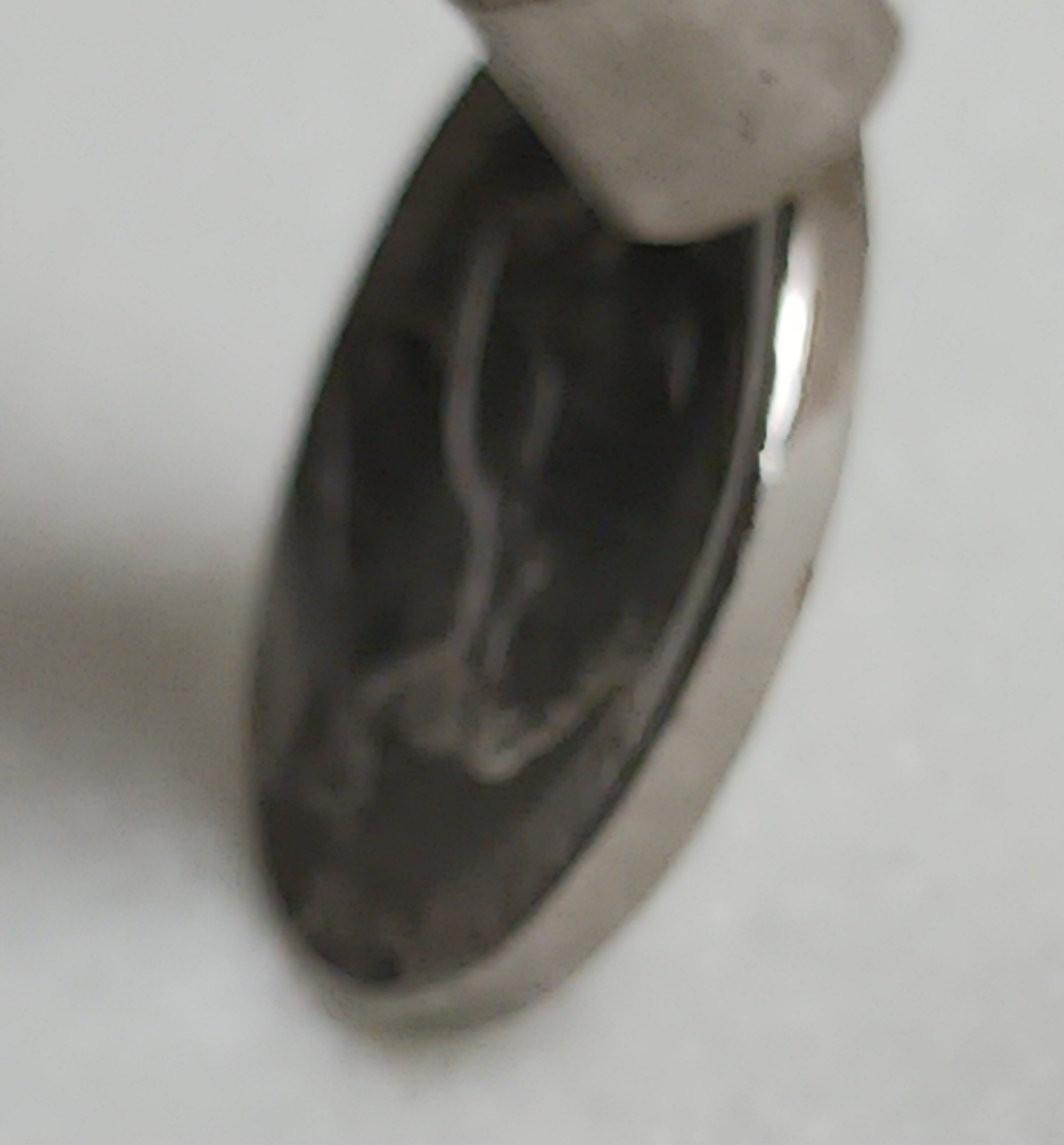 |
|
|
|
Pillar of the Community
United States
3535 Posts |
|
|
Valued Member
 United States
98 Posts |
Plated would not explain the 48% Nickel composition for a year that typically had 0% Nickel...and almost double the Nickel comp of any other year. And if Nickel plated, how is there only 18% Silver when there should be nearly double? The trace Manganese and iron lead me to believe this WAS struck at the U.S. Mint in 1943. Since the Mint struck Nickels in Manganese that year and struck Pennies in steel for 1943, those percentage amounts make sense to me. Plus this nickel weighs in at exactly 5 grams as it should. Even light plating would increase that weight.
|
|
Bedrock of the Community
 United States
26209 Posts |
Did you test any other coins with that XRF device?
Inordinately fascinated by bits of metal with strange markings and figures
|
|
Valued Member
United States
98 Posts |
Yes actually, tested 7 Mercury dimes after testing the Nickel, each tested between 90-91% silver with the remainders all being copper, which I sold to the shop for $1 each |
|
Bedrock of the Community
United States
94367 Posts |
Sorry, what exactly did you sell for $1 each?
|
|
Pillar of the Community
United States
3207 Posts |
plating looks possible, and XRF is only an estimate
|
|
Moderator
United States
100610 Posts |
It looks plated to me as well
|
|
Pillar of the Community
United States
2824 Posts |
Make me think of the Henning counterfeits but it's not one wrong year and way to crisp and I remember there was supposedly a transitional non silver War Nickel as well it might of been this year. |
|
Bedrock of the Community
United States
76091 Posts |
Something looks off. It might be plated.
Errers and Varietys.
|
|
Pillar of the Community
 United States
6661 Posts |
Can you post a picture of the edge? It looks like a different color peeking through in the magnet image.
The overall blurry and super shiny quality of the surface does make it look plated. If it were, the XRF machine would probably read the surface composition plus a depth of metal underneath.
|
|
Pillar of the Community
United States
1502 Posts |
Most likely plated if it is magnetic. The XRF readout is a good indicator of plating given the high Nickel levels. Most XRFs can only penetrate a few micrometers.
|
|
Valued Member
United States
98 Posts |
I am open to all responses and answers offered and appreciate all who take time to do so. In the instance of plating, how would this show the high concentration of nickel content, and why would anyone plate a wartime nickels with nickel in the first place knowing that wartime nickels had 0% Nickel content? If the XRF scan is not adequate, what are my options to determine true composition? If f such a thick plating of nickel were added, would that not have any effect on the weight of the coin? People keep saying the same things but without any explanations based on facts presented.
|
|
Pillar of the Community
United States
1502 Posts |
A circulated coin's weight over time obviously drops and with standard Nickel plating only somewhere around 15 microns thick, I would not focus on weight. As plating occurs on the surface, magnetism if Nickel. Is it only slightly magetic (like a magnet can pick it up) or does the coin jump onto the magnet? I believe a Nickel/Copper alloy has to have around 70% Nickel to show true ferromagnetic properties. As XRF only penetrates so far - depending on strength of beam and density of metal - your results are skewed towards what is on the surface. Research the model of XRF used, they should publish depth specs. If it is plated there is only one person that can tell you why. Maybe someone trying to alter the coin to fit the Copper/Nickel Transitional Planchet error? I just went thru a very similar scenario with a 1943-P that is magnetic with a non-spec XRF readout. In my case there is no plausible explanation for the coin to be magnetic. At least yours has Nickel content - http://goccf.com/t/452152#3907675Edited by DOCC
10/21/2023 06:53 am
|
|
Valued Member
United States
98 Posts |
@DOCC thank you very much, this is greatly appreciated and I will do exactly as recommended! And thank you to all that took the time to read and/or comment. @CoinFrog I had sold 7 Mercury dimes to this shop that was all. |
|
Valued Member
United States
98 Posts |
@DOCC Very interesting post, and you were correct on the original composition passed by Congress. Yours does still have trace iron content which may explain the magnetism.
Yours I could be led to believe to be an early test planchet from between March 1942 and whenever the 56Cu/35Ag/9Mn was decided, have you checked for 1943/2?
Mine bothers me most because the entire point was 0% Nickel which forces me to accept plating as the most likely though disappointing answer.
|
| |
Replies: 18 / Views: 2,435 |










 Posted 10/20/2023 4:17 pm


