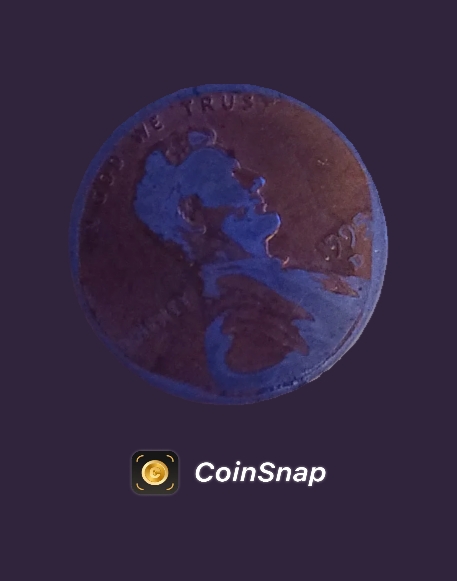
You don't have to completely ditch apps, just know their capabilities better. CoinSnap as you tried might be ok to give a general idea of grade, but seems to work better with typical low wear, AU or mint state coin that most would use it for. When some tried with really bad condition coins or coins with a brown stain it really was inaccurate. Also low light appears to throw off the app so good lighting is important. Another, Coinoscope just should find a matching coin helping to id foreign coins for example but only sometimes hits for me.
For general info: Off-metals most often occur when the planchet from one coin series is accidentally fed into the press of another coin series and struck. Common examples of this include quarters on nickel planchets, halves struck on quarter planchets, or nickels struck on cent planchets. In such examples, the planchet will be both the weight and metal content of a "normal" example for the respective planchet it is struck on. For example, if it is a nickel on a cent planchet, the coin will be the correct weight for a cent at 3.1 grams and contain the copper alloy for a cent.
usually the rim would be cut off actually if a cent were put on a dime planchet because a dime planchet is smaller than a penny planchet and the coin would weigh less as well. Silver dime planchets (made before 1965) weigh 2.5 grams, and copper-nickel dime clad planchets (made since 1965) weigh 2.27 grams so we sometimes will use a scale to help confirm.
There are a number of off-metal types, with some including transitional off-metals (struck in the correct series but on the prior year's planchet that is of a different metal or weight) such as the 1943 cent; reverse transitionals (struck on the next year's planchet, which is of a different metal or weight); struck on a foreign planchet (struck on the planchet for a foreign coin); or struck on an unknown planchet (this simply means the planchet cannot be identified). Off-metals are known for most series of U.S. coins and with many world coins. A good example of a transitional is the 1943
Lincoln Cent struck on a copper planchet (likely from 1942), instead of the normal zinc-coated steel planchet for that year. It also is the incorrect planchet for a 1943 cent, with a weight of 3.1 grams instead of the weight of a steel planchet - 2.7 grams. Both the metal and weight are off in that case, although the "denomination" of planchet it is struck on (a cent) is the same. Coin experts speculate that they were struck by accident when copper-alloy 1-cent blanks remained in the press hopper when production began on the new steel pennies.
Struck on a foreign planchet can happen when a planchet intended for a foreign nation's coinage is struck by dies for a United States coin. This type of error was more common before 1984, when the U. S. Mint cut back its production of coins for other countries.
I also have mentioned a case where a strip of copper (for cent planchets) was mistakenly run through the planchet cutting machine when it was set for dime planchets. Thus copper dime-sized planchets were made
https://coins.ha.com/itm/a/1271-5871.sEdited by datadragon
12/14/2023 11:17 pm







 Posted 12/13/2023 08:56 am


 to the forum! It would appear to just be damage. The copper plating has been worn off, exposing the zinc you can now see under the plating.



