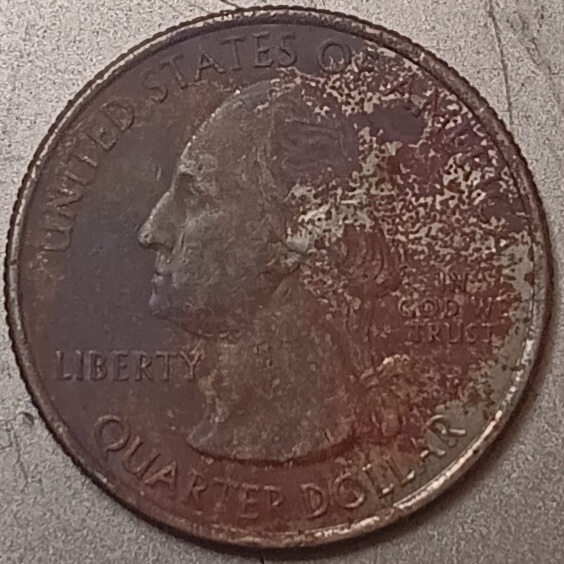
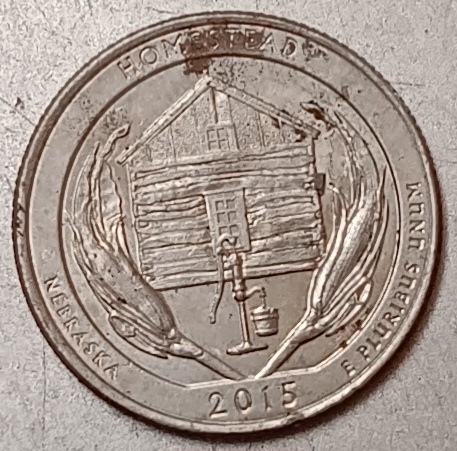
Agree. Environmental damaged. When a clad layer is missing, the coloring will be much more like copper so you can better see the difference in coloring which may help you (and others) in the future when looking. A missing clad layer is a coin that has one of its outer nickel layers missing from the copper core. As a result, the typical missing clad layer coin will be copper on one side and nickel on the other. It also will weigh roughly 15% less than a normal coin so thats why its a good thing to check but not always going to be different in certain cases.
There are full, partial, or dual missing clad layers, with each type representing how much of the clad layer(s) is missing and happens on dimes, quarters, halfs, and dollars since 1964 but not nickels. One other type of missing clad layer is called a "dual missing clad layer," which is a coin missing both the obverse and reverse clad layers, with only the copper core remaining. Such a coin will be copper on both sides and will weigh approximately 30% less than a normal coin of its type. The dual missing clad layers are incredibly rare, with less than 10 known for
Roosevelt dimes, five to 10 for
Washington quarters, and only one for
Kennedy half dollars, and none are known for the dollar coin series so its not discussed often.
https://www.pcgs.com/news/missing-c...-error-coinsThere are also for example Nickels struck accidentally on one cent planchets that can look copper so not always environmental toning in those cases when its not a missing clad like in a nickels case. In such examples, the planchet will be both the weight and metal content of a "normal" example for the respective planchet it is struck on. For example, if it is a nickel on a cent planchet, the coin will be the correct weight for a cent at 3.1 grams and contain the copper alloy for a cent rather than the expected 5g for a nickel planchet.
Copper color. If you look closer at your images in comparison, it looks more like layers over the quarter from the environment.








 Posted 01/09/2024 6:02 pm





 Enviornmental damage.


