| Author |
 Replies: 14 / Views: 1,163 Replies: 14 / Views: 1,163 |
|
|
New Member
United States
18 Posts |
Anyone know why the coin it's stamped or what it means. Can't find anything on internet. Did it ruin the collector value or help. Thank you 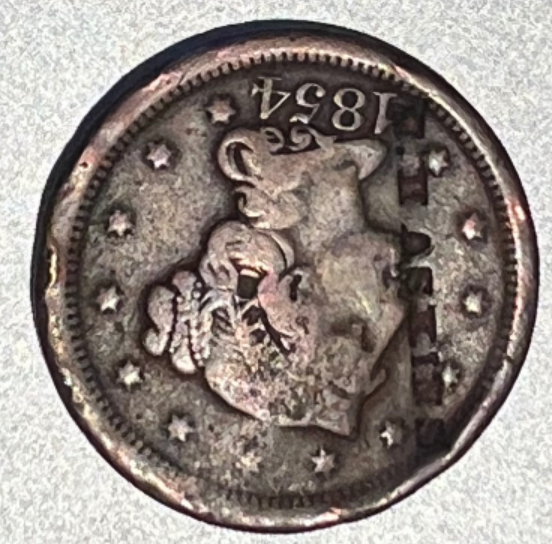 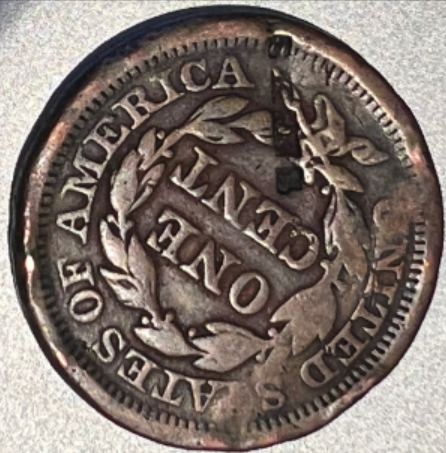 |
|
|
|
Pillar of the Community
 United States
6655 Posts |
Looks like a counter stamp. I can't quite read what it says from your pictures. Others here will know more about the value.
|
|
New Member
 United States
18 Posts |
I can make ASKINS. I think the other two letter are H H or II II
|
|
New Member
United States
18 Posts |
Maybe this will help. 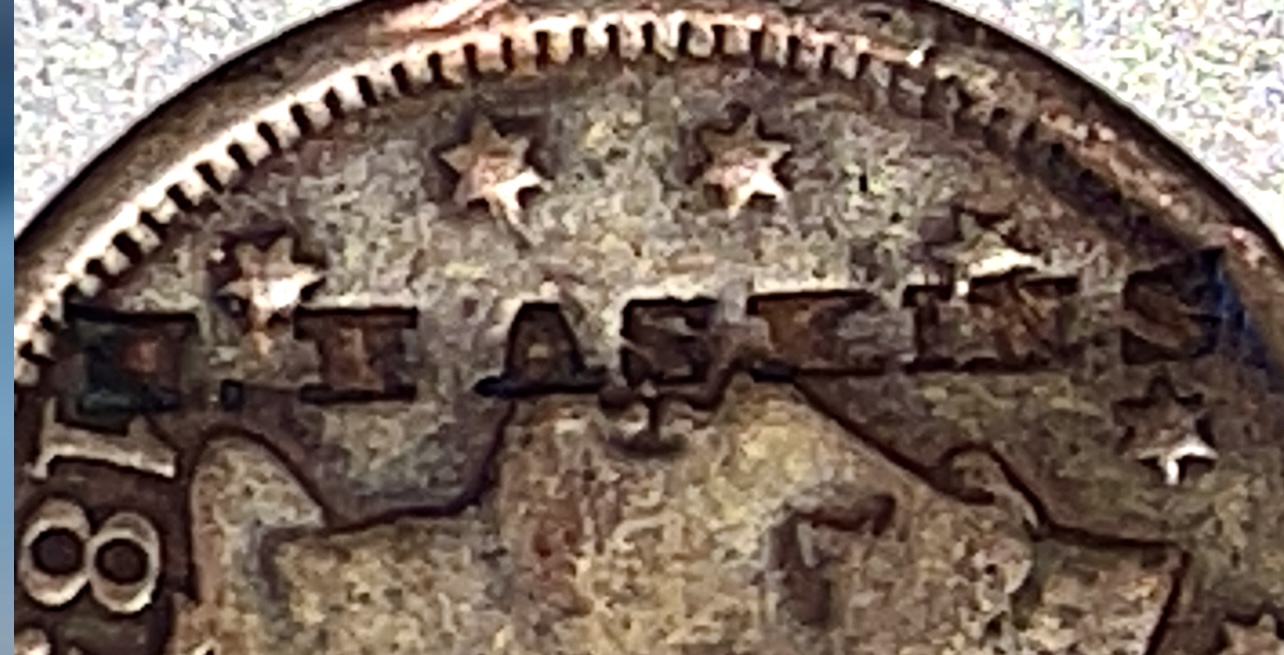 |
|
Bedrock of the Community
United States
94367 Posts |
 to the CCF! |
|
Pillar of the Community
Canada
1780 Posts |
@MrBub Counter stamped. Some people collect them and pay a premium. |
|
Pillar of the Community
United States
6655 Posts |
A little surprised that chafemasterj hasn't made a visit to this thread yet. His collection of counter stamped cents is very impressive.
|
|
Bedrock of the Community
United States
75954 Posts |
It's a counterstamp.
Errers and Varietys.
|
|
Moderator
 United States
54286 Posts |
They really put the sledgehammer to it!
Show your financial support of the Coin Community Family (click here)See my topic on Mexican Numismatic Medals (click here) |
|
Pillar of the Community
United States
2285 Posts |
Coins are counter-stamped for various reasons, for fun, for advertising, to verify a coin's authenticity, etc. Masonic, Shriners have counter-stamped cents with their symbols. The ancient Romans counter-stamped coins also, I have several of them.
Edited by livingwater
02/18/2024 10:12 am
|
|
New Member
United States
18 Posts |
It's the first I've ever heard of that term, counter stamp. Yes they certainly put a deep name/marking into it. Would like to know what meant. Did it help a business, promotion, family etc.
|
|
Moderator
Australia
16898 Posts |
In terms of value, the presence of a counterstamp largely depends on whether or not the counterstamped name or symbol is known and traceable to a specific person, business, or organization. If it is, then counterstamp collectors will want it, and be prepared to pay extra for it - though probably not exceeding the value of an un-counterstamped coin in comparable condition, unless the counterstamp is exceptionally famous - for example, Ephraim Brasher's "EB" counterstamp always adds value when it appears on a coin, even if that coin isn't a Brasher doubloon.
If no-one knows who "H.Haskins" (or whatever it says) is, then I'm afraid all anyone will consider it to be is a "damaged coin".
There are people who like to try to track down the origins of unknown counterstamps, but it's rarely an easy task - you would, after all, have to search through the historical records of the entire country, from the time the coin was made until the time the coin became obsolete and would no longer have been in circulation.
Don't say "infinitely" when you mean "very"; otherwise, you'll have no word left when you want to talk about something really infinite. - C. S. Lewis
|
|
Pillar of the Community
United States
4422 Posts |
to the CCF This counterstamp looks to me like H.HASKINS. Checking some of my reference books, I found a few listings for guys named Haskins, but none have the "H" initial. This one appears to be an unlisted maverick. I'll check out some other resources I use and do a follow-up post if I find anything. Having been researching counterstamps for over forty years now, I've found that surnames, preceded by but a single initial or none at all, tend to be more difficult to attribute. Henry and Hiram were two of the more prevalent first names that commenced with the letter H. The small size of the font, being under 2mm, suggests to me that this Haskins quite possibly produced and perhaps stamped small products. Blacksmiths and many toolmakers tended to use much larger and oftentimes crude stamps in their work. This Haskins, whoever he was, likely worked on small metal products .... my take, for what it's worth. The 1850's decade was the heyday of this counterstamp fad. It's been estimated that perhaps 10% of the coins then in circulation were counterstamped. I've found some contemporary newspaper articles wherein folks complained about receiving these damaged coins in trade. The advent of the Civil War, what with the hoarding of money and issuance of emergency currency (tokens, scrip, encased postage, etc.) brought the counterstamping frenzy to a virtual standstill. While the fad resurfaced after the war, it never approached the level attained in the 1850's. On the plus side, for collectors like me, the issuers of these early coins can often be traced, resulting in surprising history lessons during the process. Anyone interested can check out some of my posts to learn more about this little known and little explored numismatic avenue. IMHO, every coin collection should contain at least one early counterstamp that tells this numismatic story.  Quote:
Did it ruin the collector value or help? IMHO, given the low grade of this common date cent, the c/s helps. There ate collectors out there, possibly some even named Haskins, who like the challenge of solving numismatic mysteries. I'm seeing maverick c/s's like this one, selling for $20-$30 in today's market. Edited by ExoGuy
02/20/2024 12:11 am
|
|
Pillar of the Community
United States
4233 Posts |
There are 1834 W.P. Haskins merchant tokens out of Troy NY. Perhaps this is a son or relative?
|
|
Pillar of the Community
United States
4422 Posts |
Quote:
There are 1834 W.P. Haskins merchant tokens out of Troy NY. Perhaps this is a son or relative? This is certainly possible, and our OP might perhaps to research this angle. To me, doing the research is what makes counterstamps fun to collect. In today's world, we have the benefit of new information coming online, daily. Back in the 1980-90's, I would travel to distant libraries in order to access their research tools. Nowadays, my trip is simply to a keyboard. |
| |
Replies: 14 / Views: 1,163 |
|






 Posted 02/17/2024 10:38 am





