Quote:
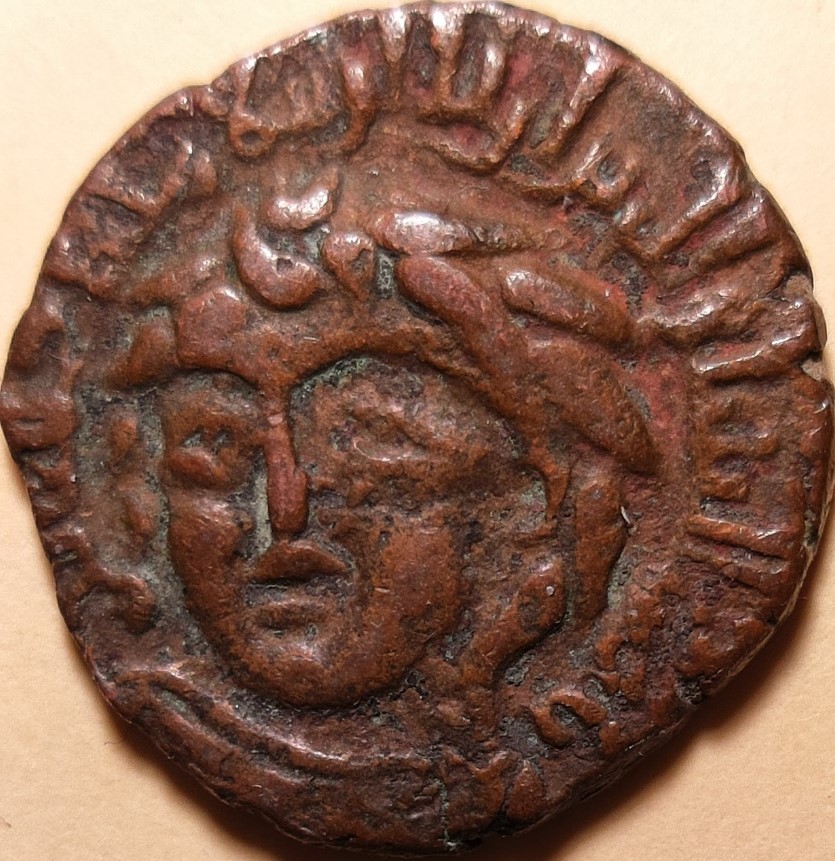
The portrait should certainly narrow down the possibilities
Indeed it does. Islamic coinage is notorious for being text-only, due to the Islamic prohibition on "graven images" and the usual interpretation that this extends to images on coins.
In the "mediaeval Islamic" period - roughly contemporary with the Crusades - certain Islamic dynasties took a more liberal attitude to this interpretation. Specifically, they determined that, while the dies used to make coins were indeed literally "graven images", the coins themselves were not (since they were stamped, not carved). Thus, to get around the no-images proscription, all they needed to do was to hire some non-Muslim artists to make the dies for them.
The fact that a great many of these "pictorial bronzes" from this period have designs that imitate ancient coins, is a clear indication that ancient coins were occasionally dug up and used as artistic models for new coins. Your coin, with the very classical-Greek-style portrait slightly turned left, is clearly modeled on the coinage of Rhodes (like the one used as my avatar photo). The denomination is usually called a "bronze dirham".
The dynasties in question were the Ayyubids, Zangids, Lu'lu'ids and Artuqids, who reigned mostly in what we now call Iraq, Syria and south-eastern Turkey. I can find at least three different rulers used this off-to-the-left portrait style:
Nasir al-Din Artuq Arslan, the Artuqid ruler of Mardin, reigned AD 1200-1239 but mostly used this design in a short window, around AD 1214. The second option is
Fakhr al-Din Qara Arslan, Artuqid ruler of Amid & Kayfa, struck circa AD 1164. The third option is the
Zangid rulers of Mosul, who intermittently used this design throughout the late 1100s.
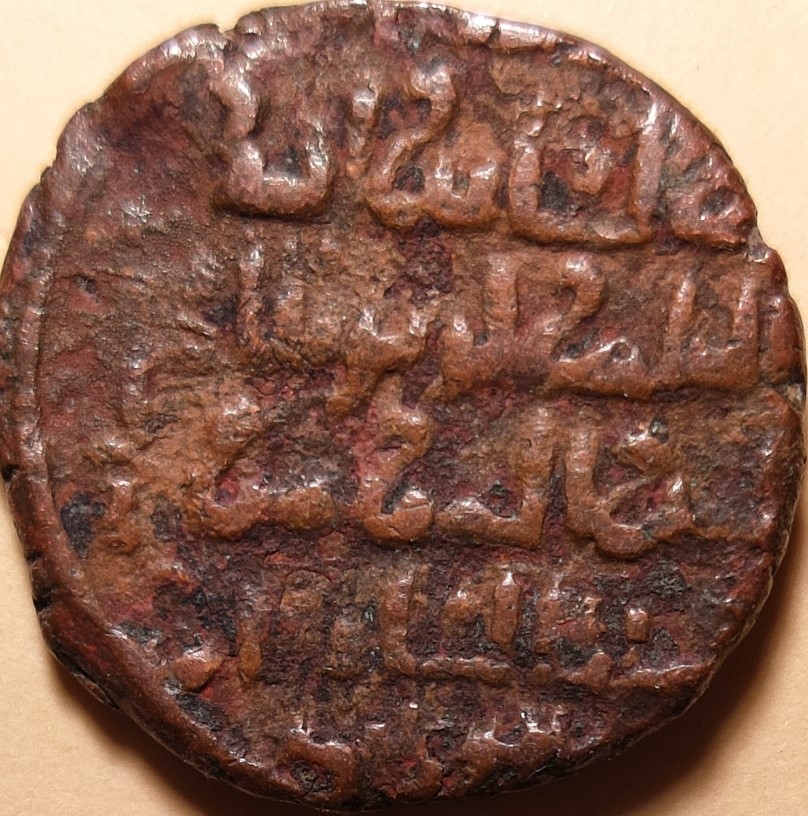
I'm stuck which option to choose, mainly because the reverse inscription pattern, of a central inscription surrounded by a ring of dots, doesn't seem to show up in any of these three options. Looks like we'll have to actually translate some inscriptions to narrow things down.
Don't say "infinitely" when you mean "very"; otherwise, you'll have no word left when you want to talk about something really infinite. - C. S. Lewis









 Posted 04/19/2024 07:12 am


