| Author |
 Replies: 14 / Views: 844 Replies: 14 / Views: 844 |
|
|
Valued Member
United States
282 Posts |
Edited by elliottite
04/20/2024 07:33 am
|
|
|
|
Bedrock of the Community
United States
94367 Posts |
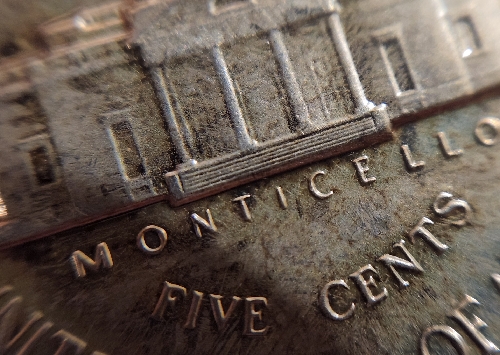
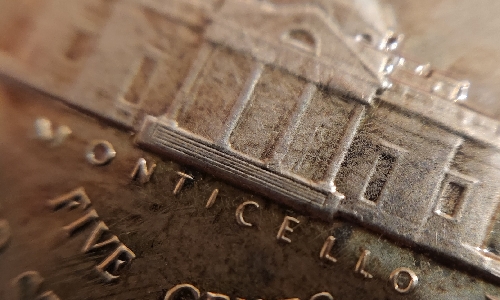
That bottom step seems to disappear...
|
|
Bedrock of the Community
 United States
18924 Posts |
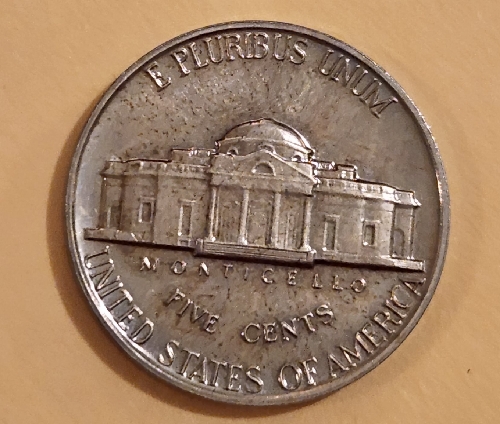
there is not enough light on the bottom of the steps to assess the last one. TPG's are all over the place with this designation and its pretty much a dice roll as what they would say. they do not go by their own guidelines. in order for a 62(P) to cover the cost of slabbing it would have to grade MS66FS or better. don't think this one is at that level. my bet is the coin is AU58. FS designation only applies to MS coins. nice find though just for your knowledge base two reasons to slab 1. its a rare coin that needs authenticated and preserved 2. you are planning on selling the coin and the cost of acquisition plus the grading fee's would warrant it without chewing up all your profit PCGS charges a minimum of $69 for a subscription other subscription levels include grading vouchers though so you could reduce these costs. add to the subscription cost, per coin grading cost which I think for this one might be $22, shipping & ins both ways (1-4 coins is $27 if the total value is under $1000) NGC - economy grading tier is $23, plus $10 handling fee, plus $28 for shipping (1-5 coins). ANACS grading would be $16 but there's a 5 coin minimum. Shipping would be $29-35. i don't slab coins for these reasons especially the cost involved. I don't know why this is so popular today. just making the grading companies wealthy imo |
|
Valued Member
 United States
282 Posts |
Thank you panzaldi. What a great breakdown. I think your right. Seems that the coin graders have a corner. Grading a coin for reasons of authentication instead of monetary reasons seems in line. But I guess tthey go hand in hand. Thank you for your quick and informative response. This forum rocks  |
|
Bedrock of the Community
United States
19583 Posts |
Very nice example. Would make a strong album hole filler until better comes along.
|
|
Pillar of the Community
United States
6901 Posts |
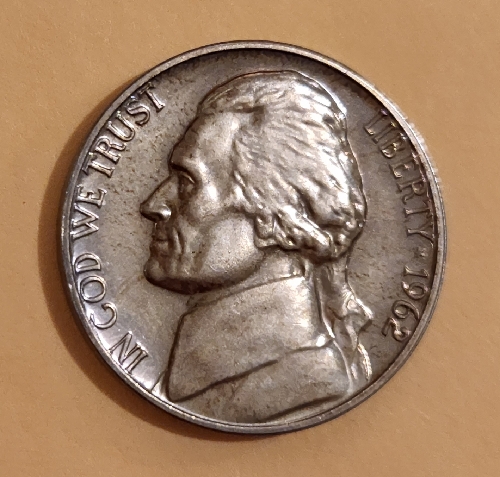
Normally, I would not even consider going against the pros on a coin evaluation, but I've looked at over 20000 Jefferson nickels in the past year. I think that's a circulated proof. Mid-1960s nickels do not have five laser sharp lines across the steps, plus a crisply defined box on both sides. There are only like 300 graded 1962 5c FS examples at PCGS with 5FS, let alone 6FS. Compare this coin's step definition to the finest TrueView examples in the catalog: https://www.pcgs.com/coinfacts/coin...images/84071If you had a 1962 nickel with that kind of 6FS step definition, it's not a hole filler until something better comes along, it's a pop-the-cork kind of moment. The Bowers book lists 6FS as Unknown for 1962 due to master die weakness on the steps. Those steep, uniform rims, lack of any radial Die Deterioration, the way Jefferson's bust stands off the field, the thin and crisp lettering on the reverse—it all looks more like this: https://www.pcgs.com/cert/45424576That's a PF58 circulated proof nickel. I think if you soaked the OP coin in acetone, that haze would dissolve and reveal proof fields. Maybe scuffed from circulation, but proof nonetheless. Always remember that if you want a nickel evaluated by an expert, you don't need to pay PCGS an obscene fee. Brian Ribar at Brian's Variety Coins will evaluated nickels for $5 plus $5 shipping, and he literally wrote a book on nickels. |
|
Bedrock of the Community
United States
37154 Posts |
Looks like a Proof, so yes to full steps.
|
|
Bedrock of the Community
United States
18924 Posts |
quite interesting assessment Brandmeister. for most collectors Jeffersons are not really at the top of the list to acquire therefore knowledge about them is less than other series. I can see what your saying about the coin and now when I look at it, I see it in a different light. the strike is much sharper than one typically sees. the rims, lettering and steps all stand out. I can't dispute the coin being an impaired proof. I do appreciate your assessment here.
the question for the poster then is this worth sending in. I can't find any values for a 62 proof other than the typical proof which really doesn't have much value
|
|
Valued Member
United States
282 Posts |
So should I soak it in some acetone?
|
|
Bedrock of the Community
United States
94367 Posts |
I don't think it would matter. Seems to be just a mishandled proof, with little value.
Edited by Coinfrog
04/20/2024 4:25 pm
|
|
Pillar of the Community
United States
6901 Posts |
You can buy a 1962 proof nickel for $1 on ebay with free shipping. In rolls of 40, I think they sell for maybe 25¢ each. Probably there are a lot of leftovers from cutting up mint sets because collectors seem more interested in the silver proof halves, quarters, and dimes. I happen to know that because I have been working on a 1956-2005 proof nickel folder. The vast majority of them cost me about a buck apiece. Acetone shouldn't hurt that coin. It will strip the patina, but my subjective opinion is that the current toning is unflattering. If by some miracle it's an actual 6FS 1962 nickel circulation strike, then I apologize in advance. |
|
Bedrock of the Community
United States
94367 Posts |
Guessing the coin is just worth face value.  |
|
Pillar of the Community
United States
6901 Posts |
Quote:
for most collectors Jeffersons are not really at the top of the list to acquire therefore knowledge about them is less than other series. Happy to be of service. I have learned way, waaaay more from you guys in the past year than you've learned from me! =) |
|
Valued Member
United States
282 Posts |
So, I have a question. But first I must say, thank you for putting up with me. What a great place this is. Ok question. Proof Coins now a days will have a S mint mark. Being San Fransico does proof coins. Where there proof coins correctly minted with no mint mark? Like proofs done at the Philadelphia mint. How could one determine if it is indeed a proof and not just one the first few coins stamped out with new dies from a business strike with no mint mark?  |
|
Pillar of the Community
United States
6901 Posts |
Correct, before 1968 the Jefferson proof nickels had no mint mark because they were made at the main U.S. Mint facility in Philadelphia. Proof Jefferson nickels were made in Philadelphia from 1938-1942, halted during WWII, struck again from 1950-1964. In 1965-1967 the Mint struck no proofs, but instead made Special Mint Set coins which are sort of a proof-business strike hybrid. Then in 1968, proof Jefferson nickel production began at the San Francisco mint, which is where it has remained ever since. If you examine a proof nickel in hand, there is little doubt as to what it is. The fields are deep and super flat, the lettering is thin and sharp, and the devices stand way up from the field. You shouldn't see hardly any die deterioration—very common on business strikes of that era—because the dies are repeatedly re-polished for the perfect mirrored fields. Even if you circulate a proof nickel, it is usually recognizable for what it is. Unlike copper cents and silver coins, the Jefferson cupronickel coin is extremely durable. After you circulate a 1965-1967 SMS nickel, it gets much harder to distinguish from a normal nickel. The steps are the biggest giveaway, since 1965-1967 nickels had notoriously poor step definition. Assuming your nickel doesn't have actual surface corrosion, after a long soak in pure acetone, you will pull it out and immediately know that it's a proof. |
| |
Replies: 14 / Views: 844 |
|











 Posted 04/20/2024 09:11 am


