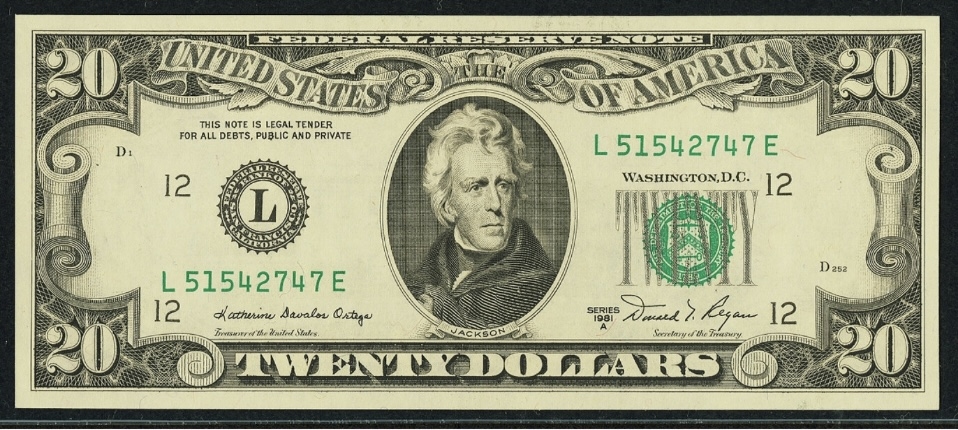
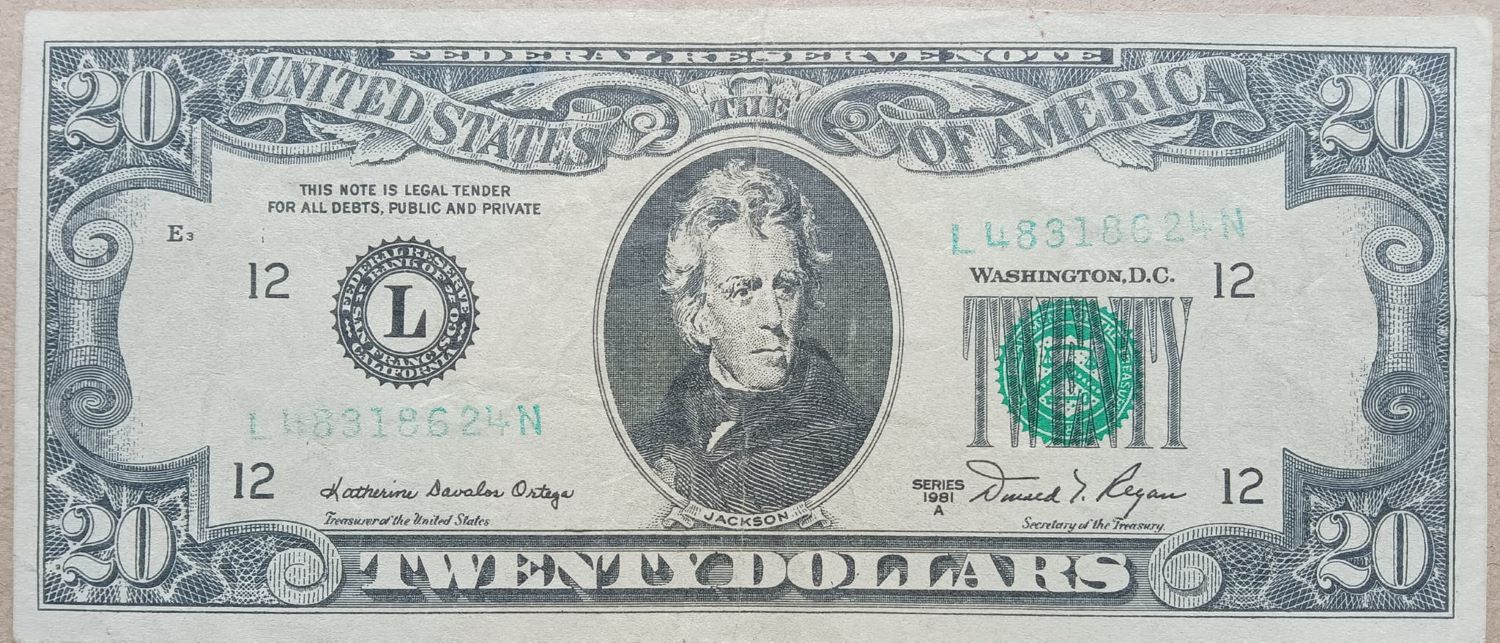
My assumption, on seeing a note where one serial number is crooked and the other isn't, would be "that has to be a counterfeit". Either that, or it's a note where the original serial numbers were removed and new ones printed on. The serial numbers are printed on genuine notes at the same time, and the number-printing blocks are fixed in place. To get them all crooked like this on a genuine note, the printing press would need to catastrophically fail, and this note would have had to somehow be printed mid-explosion.
Quote:
Is counterfeiting still a big problem in the US?
At some stage I want to get some US currency for when I'm traveling. Would currency changers be aware of what to look for?
I can't imagine I'd have much come back if given dodgy notes from a currency exchange.
If you'll allow a fellow Aussie to answer your question...

Yes, counterfeiting is still a big problem for US paper money. The reduction in cash usage is counterbalanced by the increasing ease with which criminal gangs can smuggle in quantities of cash printed in China or elsewhere. The US dollar suffers from it more than, say, the Australian dollar or Canadian dollar because of it's universal popularity and because of it's comparative lack of security features. Of course, the OP's note is from an older series, with even fewer anti-counterfeiting features than a modern twenty.
As for foreign moneychangers being fooled, I think you'd find that people who look at banknotes professionally for a living and rely on their skill at
Counterfeit Detection, would be less likely to give you a fake note than a random shopkeeper in the US. I don't think the OP's note would have fooled a moneychanger. One of the things you're theoretically paying for when you pay exchange fees is the use of that skill in determining that the notes they're giving you are genuine. These companies rely on public goodwill and reputation and someone going on Facebook or to the media announcing "they gave me fake notes" is the last thing they want. So as long as you stick to the legit moneychangers and not some street market booth being run by a criminal gang, you should be OK.
Quote:
Counterfeiters are notorious for not doing their homework . Even on simple stuff like series, serial numbers, plate numbers and position letters.
They don't have to. A counterfeiter isn't trying to fool banknote collectors, or the Secret Service, or even (usually) the banks. They're trying to fool just one person, once, and it's mission accomplished. The OP's note seems to have fooled at least one person, so the counterfeiter seems to have gotten away with it this time.
Don't say "infinitely" when you mean "very"; otherwise, you'll have no word left when you want to talk about something really infinite. - C. S. Lewis









 Posted 04/24/2024 11:55 pm