| Author |
 Replies: 1,099 / Views: 54,665 Replies: 1,099 / Views: 54,665 |
|
|
|
Moderator
 United States
197800 Posts |
Quote:
1440 CE - AH 844 1/2 Gani Bahmani Sultans Very nice!  |
|
Pillar of the Community
 Russian Federation
5186 Posts |
Very nice indeed! Lots of excellent Indian (and occasional European) coins all around.
We're now through the whole decade of the 1440s with only one new missing year (1446).
Full listing of missing years so far: 1464, 1463, 1462, 1461, 1457, 1454, 1446. I believe 1461 is supposed to be on the way.
Looking forward to the 1430s!
|
|
Moderator
United States
197800 Posts |
Indeed. A good run so far.  |
|
Pillar of the Community
Australia
2583 Posts |
1439 CE - AH 843 Jaunper Sultanate 1 Falus 14.35mm 4.25g Cu Shams al din Ibrahim Shah DR# 2701, GG# J8 , N#47865 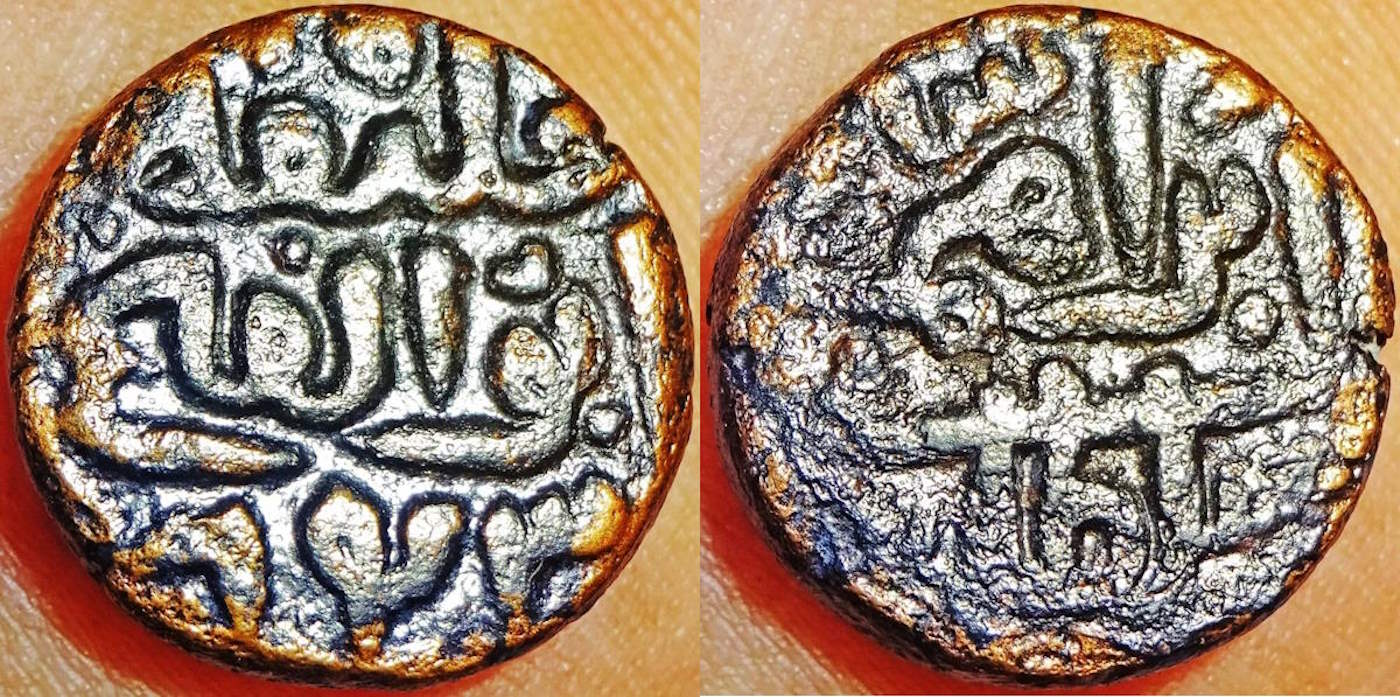 The Ox moves slowly, but the Earth is patient.
Edited by ttkoo
12/11/2024 8:37 pm
|
|
Pillar of the Community
Australia
2583 Posts |
1438 CE AH841 Gujarat Sultanate - Ahmad Shah I 1 Falus 19mm 9.29g Cu Ahmadnagar mint G&G# G031 I'm out until 1434 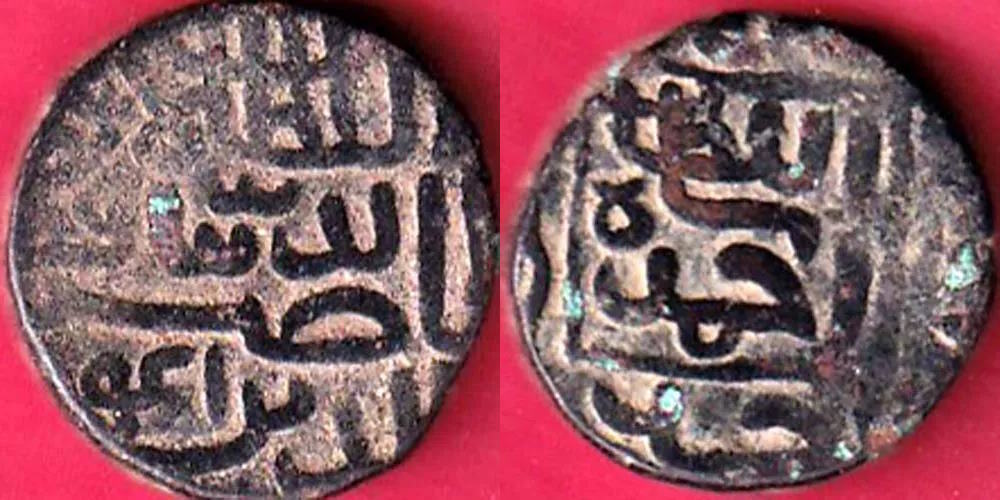 The Ox moves slowly, but the Earth is patient.
Edited by ttkoo
12/12/2024 01:32 am
|
|
Pillar of the Community
Russian Federation
5186 Posts |
Quote:
1438 CE AH841 ...that's an interesting case; the assignment of AH 841 seems to depend on whether it's being converted to Julian or Gregorian. In my original notes, 842 AH corresponded to 1438 AD, 840 AH corresponded to 1437 AD, and (IIRC) 841 AH was tentatively assigned to 1438 but I wasn't very sure. I'm not yet very certain how we're going to work with that. Edited by january1may
12/12/2024 06:27 am
|
|
Pillar of the Community
Australia
2583 Posts |
I'm not at my desktop, but from memory I thought that AH 842 was the problem child, with less than 50% of it falling into either 1438 or 1439. I'll need to look at this more in the morning (down under)...Different conversion calendars give slightly different results.
As I'm working with the one conversion calendar, that's all I've got. Anyway, you should adjudicate on it.
Perhaps if we all used the same one?
The Ox moves slowly, but the Earth is patient.
|
|
Moderator
United States
34570 Posts |
1438 Cologne Groschen 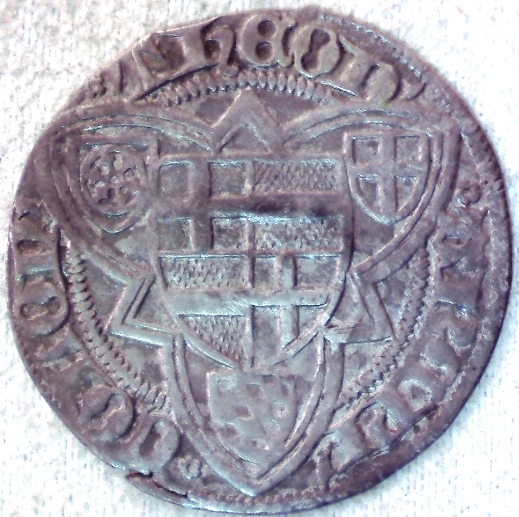 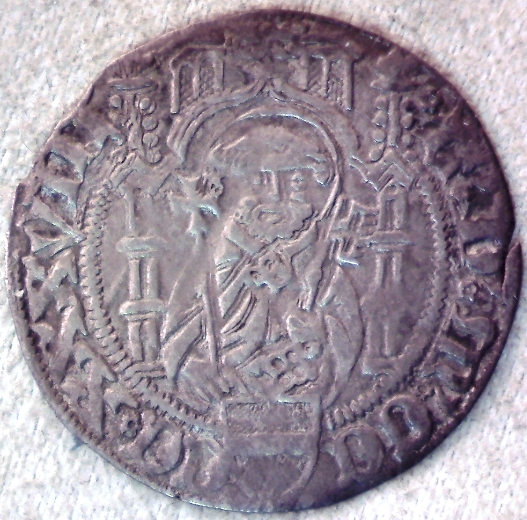 "If you climb a good tree, you get a push."
-----Ghanaian proverb
"The danger we all now face is distinguishing between what is authentic and what is performed."
-----King Adz
|
|
Pillar of the Community
Australia
2583 Posts |
Great coin, Spence. That takes some pressure away from my offering.
Just how far back do dated AD coins go?
The Ox moves slowly, but the Earth is patient.
|
|
Pillar of the Community
Russian Federation
5186 Posts |
Quote:
Just how far back do dated AD coins go? 1374, not counting the one-off 1234 commemorative [EDIT: and a few 1250s issues from Antioch]. Oldest we've seen on CCF was 1375, AFAIK [EDIT: again, ignoring the somewhat confusing Antioch types]; the 1374 is fairly rare. Edited by january1may
12/12/2024 07:22 am
|
|
Moderator
United States
197800 Posts |
Nice examples, ttkoo and Spence! |
|
Pillar of the Community
United States
1871 Posts |
I recently found this calendar converter that will specifically convert to Julian or Gregorian https://www.muqawwim.com/Using 1 Rajab 841, it converts to 29 December 1437 (Julian) and 7 January 1438 (Gregorian). So AH 841 would fall mostly in 1438 for the purposes of this thread. I also discovered that the other converter I was using used both Julian and Gregorian depending on the date. It converts Gregorian dates after 4 October 1582, and Julian dates before that. |
|
Pillar of the Community
United States
1871 Posts |
Jaunpur Sultanate AE falus Shams-al-Din Ibrahim Shah AH 843 (1439 CE) 15.1 x 15.9 mm, 4.58 g GG# J8 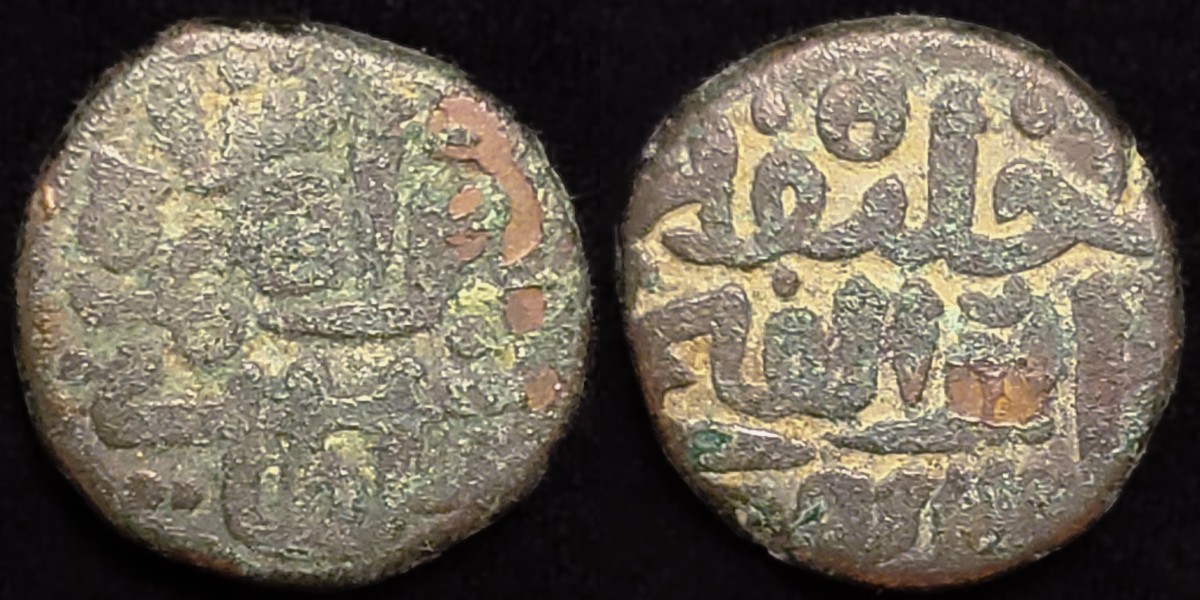 |
|
Moderator
United States
34570 Posts |
Quote:
Oldest we've seen on CCF was 1375, AFAIK [EDIT: again, ignoring the somewhat confusing Antioch types]; the 1374 is fairly rare. Yes exactly. I scored a 1375-dated Groschen in 2021, although I do note that both the 1374 and 1375 are listed by Levinson as R2 (between 11 and 20 collectable pieces remaining). There is an error date "MCG:LXXIII", otherwise corresponding to 1274, which is R5 (two or three collectable pieces remaining). I'd love to pick up a 1374, but doubt that I'll find one at all, much less at a price I can afford. "If you climb a good tree, you get a push."
-----Ghanaian proverb
"The danger we all now face is distinguishing between what is authentic and what is performed."
-----King Adz
|
|
Moderator
United States
34570 Posts |
Quote:
Was that particular type of subtractive Roman numerals accepted earlier than the others? Sorry that it has take so long to investigate this question @j1m, but below is a thorough analysis of this question. For the early dated coins of Germany, 1444 uses subtractive roman numerals as you noted, but there are earlier examples throughout the 1440s and before. The earliest use in this region seems to be 1419: MILESIMO:CCC:XIX". For the region of the Southern Netherlands, the oldest use of subtraction in the date is 1392: M:CCC:XCII. For the Northern Netherlands, the oldest use of subtraction in the date is 1439: "M:CCCC:XXXIX". For the Habsburg, Swiss, Scandanavian, and French regions, no Roman Numerals were used to date any coins. Finally, in Italy there were eight coin types with Roman Numerals, but none used subtraction, with the result that there are several coins from 1494 with the maximally unwieldy date of: "MCCCC-LXXXX-IIII". Perhaps the Italian die cutters were paid by the letter.  "If you climb a good tree, you get a push."
-----Ghanaian proverb
"The danger we all now face is distinguishing between what is authentic and what is performed."
-----King Adz
|
| |
Replies: 1,099 / Views: 54,665 |





 First Page
 Previous Page


 Posted 12/11/2024 5:00 pm


