| Author |
 Replies: 19 / Views: 3,851 Replies: 19 / Views: 3,851 |
|
New Member
Canada
21 Posts |
|
|
|
|
Pillar of the Community
 Canada
5669 Posts |
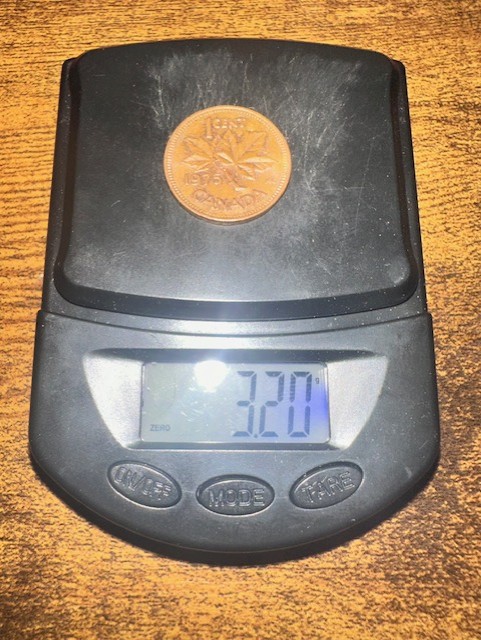
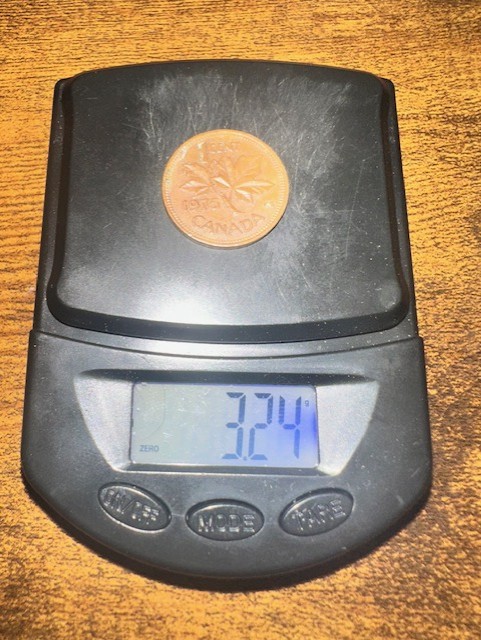
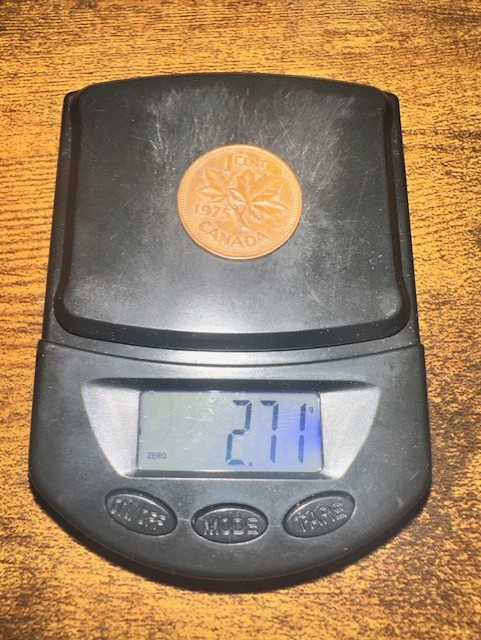
How accurate is your scale?
|
|
Pillar of the Community
Canada
1984 Posts |
I have to agree with Okie here. The odds of finding two off weight planchets like this are very low, especially when both appear to be properly struck in all respects. Maybe your scale is inaccurate.
|
|
New Member
 Canada
21 Posts |
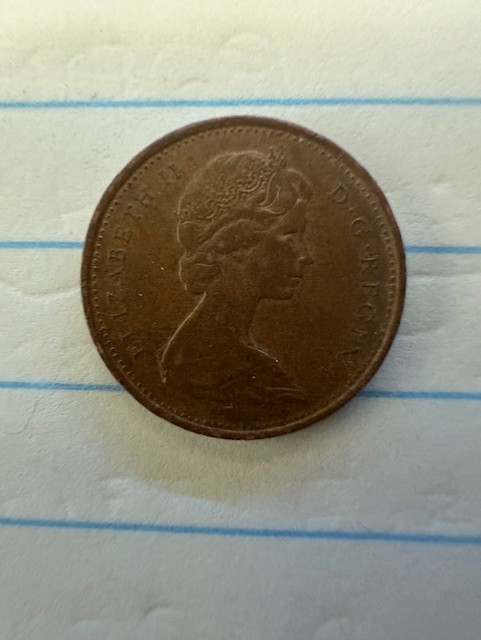
My scale is accurate to 2/10 of a gram. I have checked multiple of the 1975 Canadian pennies for reference weights to ensure the scale is reading correctly. See below pictures of the penny in question compared to two others. You can visually see this coin is thinner than the rest, that's how it caught my eye amongst the various other 1975 coins and why I weighed it. 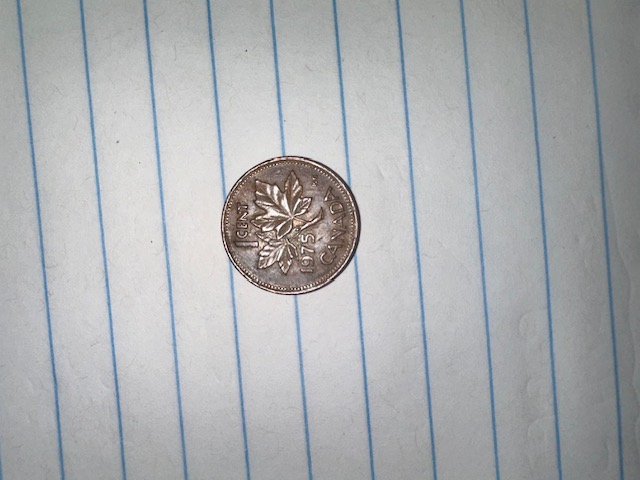 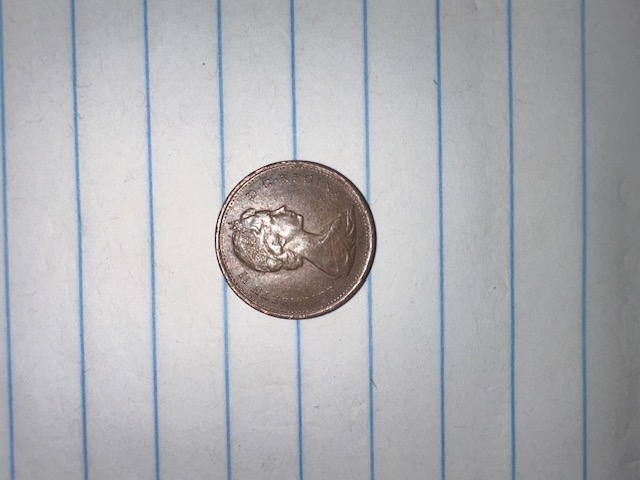 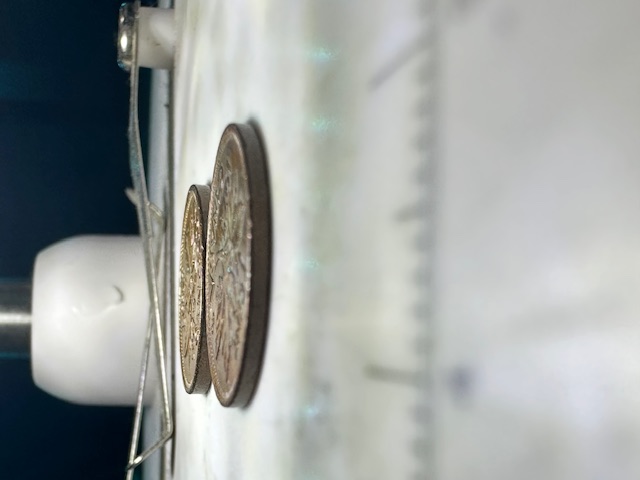 |
|
Pillar of the Community
Canada
1636 Posts |
No other coins minted by the RCM in 1975 match the weight or the diameter. Perhaps a rolled-thin planchet? |
|
Pillar of the Community
Canada
1984 Posts |
Now that I see the reverse I am wondering if detail is missing. The photo is not great. This may be a coin that was put in acid on one side. Acid will remove metal pretty evenly and leave the details legible but irregular.
|
|
New Member
Canada
21 Posts |
|
|
Moderator
 United States
198174 Posts |
Very interesting.  |
|
New Member
Canada
21 Posts |
|
|
Pillar of the Community
Canada
1984 Posts |
|
|
New Member
Canada
21 Posts |
See attached for better pictures, I tried to use my microscope light to show the definition of either side. 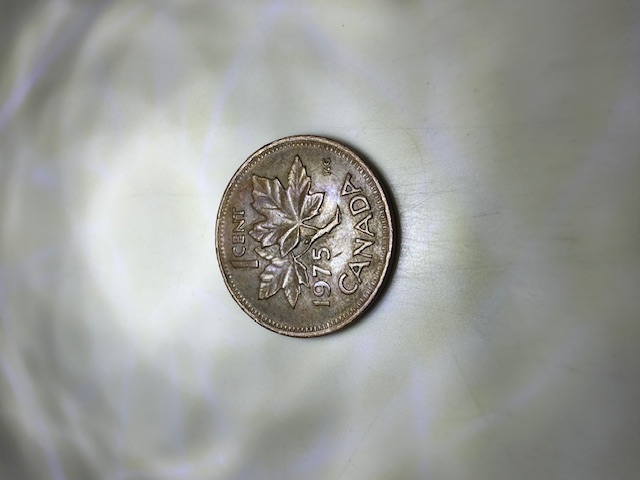 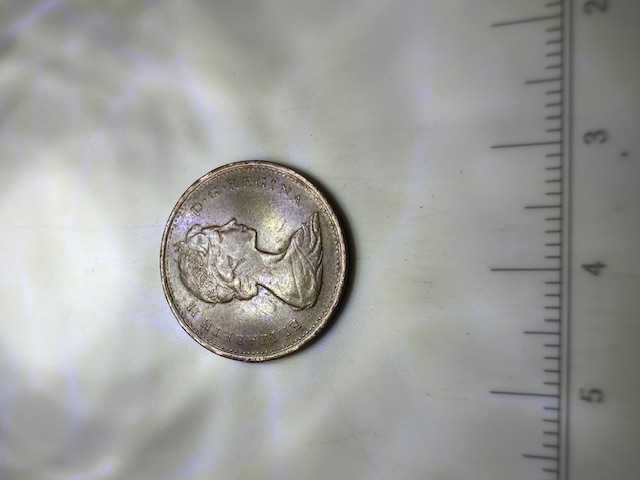 |
|
Moderator
United States
56855 Posts |
LindalCoins, Please no more photos. Also,please properly crop photos before posting them,we only need to see the coin,thanks. John1  |
|
Bedrock of the Community
United States
94367 Posts |
  to the CCF! |
|
Pillar of the Community
Canada
1189 Posts |
I agree with Johnnysprawl on the rolled-thin planchet suggestion, from the information I have on hand, the Canadian Mint did not strike foreign coinage for any countries with that specific weight in 1975.
Finding and discovering modern Canadian doubled die varieties since 2018. 2023 Recent Publications: Modern Canadian Doubled Die Varieties - First Edition PDF & Paperback https://www.mcddv.ca - (New Site, Second Edition, Registry & Services coming fall 2026) |
|
Moderator
Australia
17032 Posts |
Given the "foreign planchet" hypothesis can be discounted, the two most plausible explanations for a much-lighter-weight coin are (a) thin-rolled planchet, and (b) acid attack. Acid would be my usual go-to explanation, simply because it's more probable. However, to lose this much mass, the acid would need to attack all surfaces tot he same degree - so the coin ought to therefore be noticeably smaller in diameter as well as thinner. Further, this much acid attack ought to create a "sharpening" effect and some degree of pitting or un-even-ness , and if anything this coin is too smooth, too flat - which certainly pushes towards a weak strike, and a weak strike would be an expected side-effect of a thinner-than-specification planchet.
Don't say "infinitely" when you mean "very"; otherwise, you'll have no word left when you want to talk about something really infinite. - C. S. Lewis
|
|
Pillar of the Community
Canada
1275 Posts |
Quote:
Given the "foreign planchet" hypothesis can be discounted I'm not sure exactly how you determined this hypothesis can be discounted. (Please explain) Reading this post it would indicate to the reader that this is not a foreign planchet because the RCM didn't mint any coins on planchets this size or weight in 1975. However would you not have to look back to all previous years before 1975 also? What if a planchet fell into or under some machinery in 1940 or 1966 (pick any year) but wasn't discovered until they moved the machinery years later. At this time it was tossed back into the hopper now holding the blanks for coins that were being minted in 1975. All we know with certainty is the coin was minted in 1975 but the blank planchet could have been from any year Prior. let's say the blank planchet has no match for anything minted by the RCM past or present, if it was sent into PCGS it could come back as minted on unknown foreign planchet. I have a coin from 1942 on a unknown foreign planchet. With that being said looking at the pictures supplied I'm not convinced it's minted on a foreign planchet either. I would say this is a coin that looks suspect of being subjected to some form of acid. Cheers Bill |
| |
Replies: 19 / Views: 3,851 |





 Posted 08/27/2024 09:17 am