| Author |
 Replies: 15 / Views: 974 Replies: 15 / Views: 974 |
|
|
Pillar of the Community
United States
986 Posts |
Over the years I've seen a handful of copper coins with this cracking or shattering feature. There is an indication of an impact on the obverse of the coin. However, almost all impacts I've seen do not have this shattering feature on the opposite side of the coin. Do any of the experts know what conditions need to exist for this to be present? Is it temperature related? Thanks. NYI 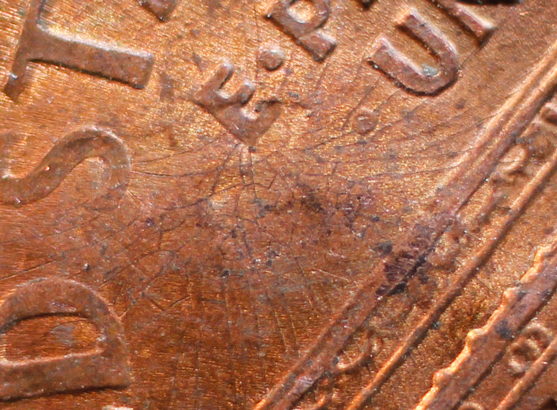 "We are all flawed, some MD and some PMD." NYI |
|
|
|
Moderator
 United States
197387 Posts |
Very interesting.  |
|
Pillar of the Community
United States
1826 Posts |
I would think that is more from the die than any impact on a coin. If the annealing process left a hard spot on a coin, I would expect the coin to chip out shortly after being struck and not have hairline cracks
|
|
Pillar of the Community
United States
1826 Posts |
I did come across a quarter with a web-like surface. I was cool looking but washed away with acetone.
|
|
Bedrock of the Community
United States
94367 Posts |
Never noticed anything like this before.
|
|
Bedrock of the Community
United States
27514 Posts |
Is this a bronze Lincoln Cent or a zincoln, NY Islander? The thermal coefficient of expansion (CTE) for zinc is much higher than for copper, so it's conceivable that rapid cooling or heating of a zincoln could lead to fracturing of the plating. See "freeze the balls off a brass monkey". Inordinately fascinated by bits of metal with strange markings and figures
|
|
Pillar of the Community
United States
782 Posts |
|
|
Bedrock of the Community
United States
80183 Posts |
Very interesting. Errers and Varietys.
|
|
Bedrock of the Community
United States
10065 Posts |
I would suggest there is a light coating of a foreign substance on the coin that has fractured over time. Try an acetone soak for a minute (overkill likely) and it will probably be gone. Copper is a malleable and ductile metal having relatively soft and pliable bonds. It does not fracture like this under normal conditions.
How much squash could a Sasquatch squash if a Sasquatch would squash squash? Download and read: Grading the graders Costly TPG ineptitude and No FG Kennedy halveshttps://ln5.sync.com/dl/7ca91bdd0/w...i3b-rbj9fir2 |
|
Pillar of the Community
United States
3535 Posts |
Quote:
a quarter with a web-like surface. I was cool looking but washed away with acetone. Never seen this on a coin, but have seen it on other things like antique furniture and it is associated with old finishes cracking. I'm curious as to what the final answer on this one might be. |
|
Pillar of the Community
 United States
986 Posts |
This is the obverse. There is clearly an impact opposite the cracking feature on the reverse. The coin has no glue or other foreign substance on the reverse. 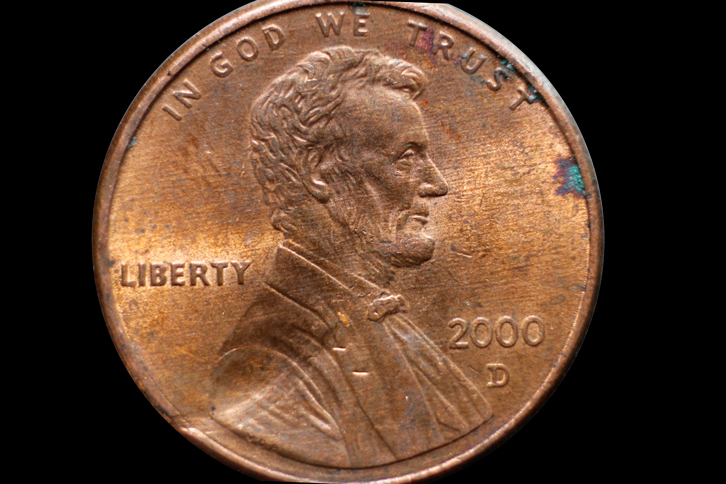 "We are all flawed, some MD and some PMD." NYI |
|
Pillar of the Community
United States
986 Posts |
Hondo B,
I believe you've got it by the brass balls with the thermal CTE theory. Notice, the shattering feature appears mostly in the thinnest portions of the coin on the reverse and does not penetrate the thicker portions of the reverse. If this were a foreign substance on the surface of the coin the shattering feature would appear over the entire affected area, and not just the lowest areas of the reverse.
"We are all flawed, some MD and some PMD." NYI |
|
Pillar of the Community
United States
819 Posts |
Poor Abe has spider veins.
|
|
Pillar of the Community
 United States
9047 Posts |
My opinion is just stress cracks in the copper plating from the opposing impression/damage to the coin. This reminded me of a thread I started on another site, where I and stoneman227, who is on this site too, both sent coins to Mike Diamond and stonemans made to CoinWorld, where Mike did a write up on it. Cool find though and good eye, NY. LINK https://www.lincolncentforum.com/fo...ight=cracked-makecents-
|
|
Moderator
United States
109318 Posts |
|
|
Bedrock of the Community
United States
10601 Posts |
|
| |
Replies: 15 / Views: 974 |
|







 Posted 12/18/2024 2:39 pm


