








 Posted 07/23/2025 11:55 am


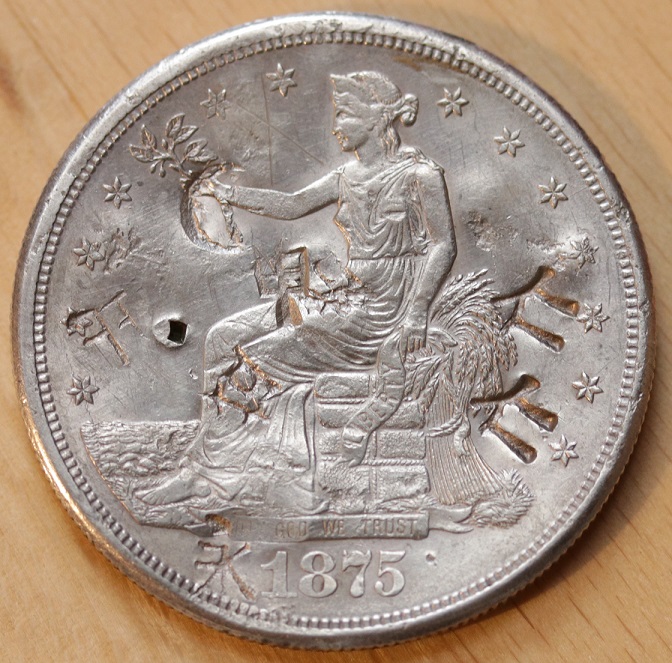
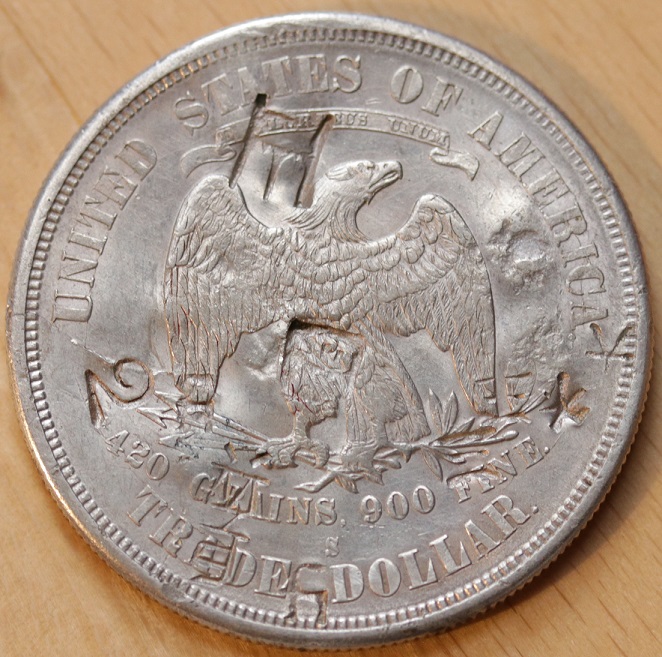
The chopmarks on the Trade dollar were done by Asian merchants and the vast majority are Chinese chop marks. The chopmark was used mainly to authenticate the silver content by hitting a punch to test metal hardness and expose the silver. Some of the chopmark characters are words and some are just symbols used by the merchant. I am not aware of any timeline that can be determined from the chopmark. The timeline that can be determined is the majority of Trade dollars were sent to China and chopmarked between 1873 and 1878. The US Government in 1887 did a redemption on the Trade dollar and 7.7 million were turned in and melted. The US Government would not accept Trade dollars for redemption that had chopmarks. We can thank the US Government for unknowing preserving the Trade dollar with chopmarks.
See more information below by PCGS.
The Meaning of Chopmarks by PCGS:
Chopmarks are an integral part of the history of the Trade dollar, and for that reason I take a few more paragraphs to go into the subject more deeply.' Very little original, useful information on these has appeared in print, an exception being F.M. Rose's 1987 study appropriately titled Chopmarks. Rose relates that the term chopmark is said to have been first used by the English in connection with India, where the term was chappa or choppa, meaning an official stamp or seal. From that point it was a short path to chop and chopmark.
Chopmarks, which consist of Chinese characters and/ or designs, were imprinted (with ink) or stamped with punches on the surfaces of various silver (primarily) and gold coins to indicate that the stamper considered them to be genuine and of full weight. F.M. Rose lists the following basic types of chopmarks:
1 and 2. Test marks on a coin's surface and cuts on the edges of coins. These are usually in the form of file marks or cuts which removed metal, either to expose the raw metal below or, less frequently, to provide metal for assay elsewhere. For the collector of Trade dollars, a test mark on the edge of a coin is a negative situation not currently of numismatic interest.
3. Small chopmarks, often tiny symbols such as stars, crescents, circles, swastikas (an old-time emblem; not related to the later Nazi use of it), lines, etc., as well as Chinese words and pseudo characters.
4. Large chopmarks such as Chinese characters, pseudo characters, and symbols. Larger than the preceding.
5. Chop marks in relief. This type of chopmark has letters raised in relief against a plain background, like a hallmark. Such chop marks are rarely seen on Trade dollars.
6. Assay chopmarks. A special chopmark of the No.5 type, in raised relief, made by a banker or assayer. These are usually rectangular in shape and have two or more characters in relief. Seldom seen on Trade dollars. F.M. Rose writes that these chop marks often come in pairs or other multiples on a coin (coins in general; not specifically Trade dollars), and that coins with assay chopmarks rarely have additional chopmarks of other types.
7. Letter chopmarks using letters of the Latin alphabet (sometimes appearing backward), with the letter S being the most common. If other chopmarks are found on a coin in addition to a letter chop, they will often be large chopmarks or a mixture of large and small.
8. Number chopmarks usually consisting of one Arabic number, with 5 being the most common and 8 next.
9. Manchu chopmarks have characters in Manchu script and are very rare.
10. Banker's ink chopmarks applied in black, blue, red, and purple ink, a style not particularly relevant to Trade dollars and, apparently, not used before the 1880s. (Other types of marks include applied paper and presentation chop marks , the latter consisting of elaborate ink drawings; neither is relevant to Trade dollars.)
See more information below by PCGS.
The Meaning of Chopmarks by PCGS:
Chopmarks are an integral part of the history of the Trade dollar, and for that reason I take a few more paragraphs to go into the subject more deeply.' Very little original, useful information on these has appeared in print, an exception being F.M. Rose's 1987 study appropriately titled Chopmarks. Rose relates that the term chopmark is said to have been first used by the English in connection with India, where the term was chappa or choppa, meaning an official stamp or seal. From that point it was a short path to chop and chopmark.
Chopmarks, which consist of Chinese characters and/ or designs, were imprinted (with ink) or stamped with punches on the surfaces of various silver (primarily) and gold coins to indicate that the stamper considered them to be genuine and of full weight. F.M. Rose lists the following basic types of chopmarks:
1 and 2. Test marks on a coin's surface and cuts on the edges of coins. These are usually in the form of file marks or cuts which removed metal, either to expose the raw metal below or, less frequently, to provide metal for assay elsewhere. For the collector of Trade dollars, a test mark on the edge of a coin is a negative situation not currently of numismatic interest.
3. Small chopmarks, often tiny symbols such as stars, crescents, circles, swastikas (an old-time emblem; not related to the later Nazi use of it), lines, etc., as well as Chinese words and pseudo characters.
4. Large chopmarks such as Chinese characters, pseudo characters, and symbols. Larger than the preceding.
5. Chop marks in relief. This type of chopmark has letters raised in relief against a plain background, like a hallmark. Such chop marks are rarely seen on Trade dollars.
6. Assay chopmarks. A special chopmark of the No.5 type, in raised relief, made by a banker or assayer. These are usually rectangular in shape and have two or more characters in relief. Seldom seen on Trade dollars. F.M. Rose writes that these chop marks often come in pairs or other multiples on a coin (coins in general; not specifically Trade dollars), and that coins with assay chopmarks rarely have additional chopmarks of other types.
7. Letter chopmarks using letters of the Latin alphabet (sometimes appearing backward), with the letter S being the most common. If other chopmarks are found on a coin in addition to a letter chop, they will often be large chopmarks or a mixture of large and small.
8. Number chopmarks usually consisting of one Arabic number, with 5 being the most common and 8 next.
9. Manchu chopmarks have characters in Manchu script and are very rare.
10. Banker's ink chopmarks applied in black, blue, red, and purple ink, a style not particularly relevant to Trade dollars and, apparently, not used before the 1880s. (Other types of marks include applied paper and presentation chop marks , the latter consisting of elaborate ink drawings; neither is relevant to Trade dollars.)
Edited by Slider23
07/23/2025 12:38 pm
07/23/2025 12:38 pm


 - Very educational Slider23, thanks for your post. .


