| Author |
 Replies: 26 / Views: 2,371 Replies: 26 / Views: 2,371 |
|
Pillar of the Community
United States
2790 Posts |
Ok, for those who've seen my two previous examples of this date doubling, here is a third example. These are all different dies. I believe the explanation here is a Doubled Die Class VII Modified Hub Doubling. I'm not sure why more examples of this haven't been noted but maybe the faint doubling disappears quickly after brief die use. Opinions welcome, thanks for looking. https://www.error-ref.com/doubled-dies/My first posted example: https://goccf.com/t/484444Second example: https://goccf.com/t/484511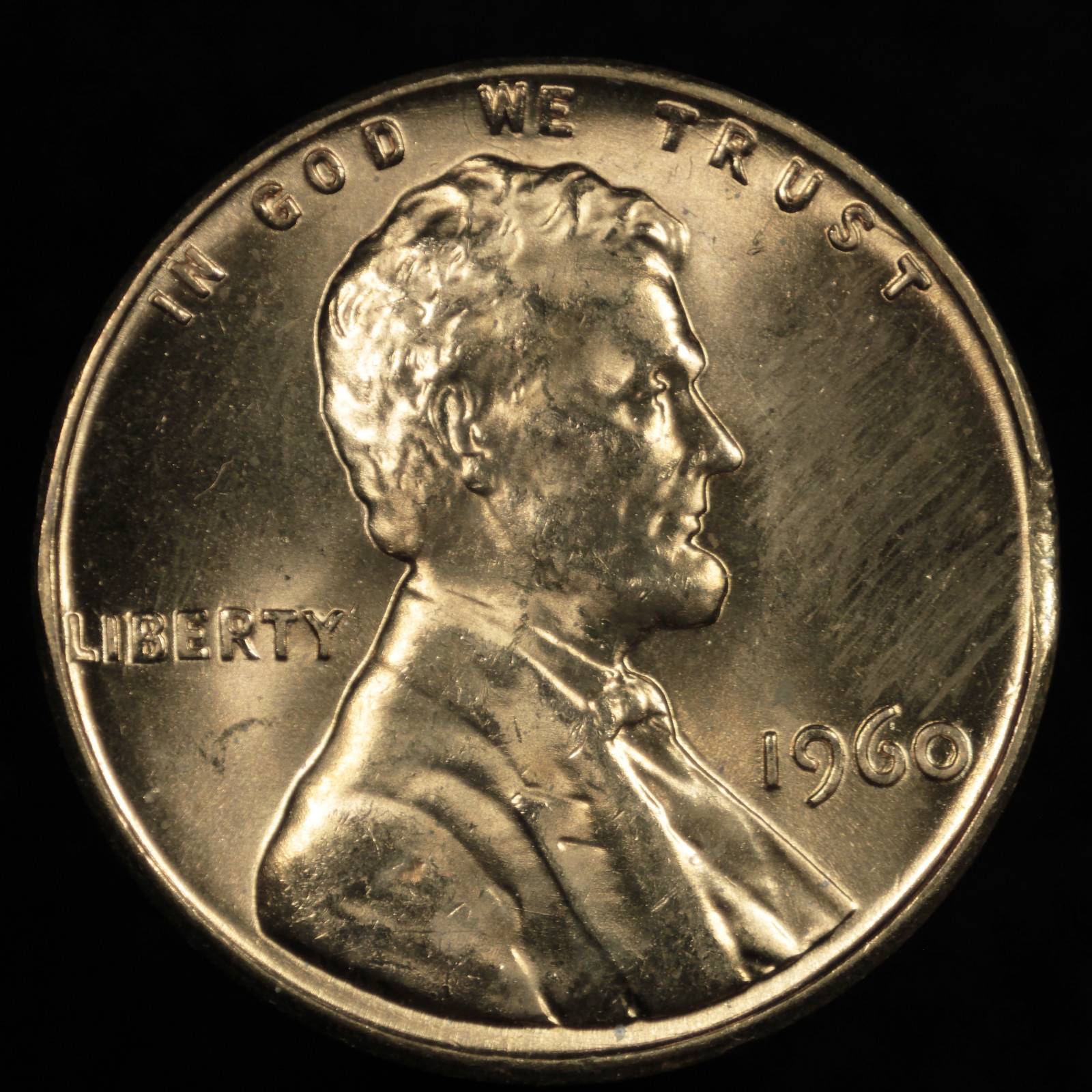 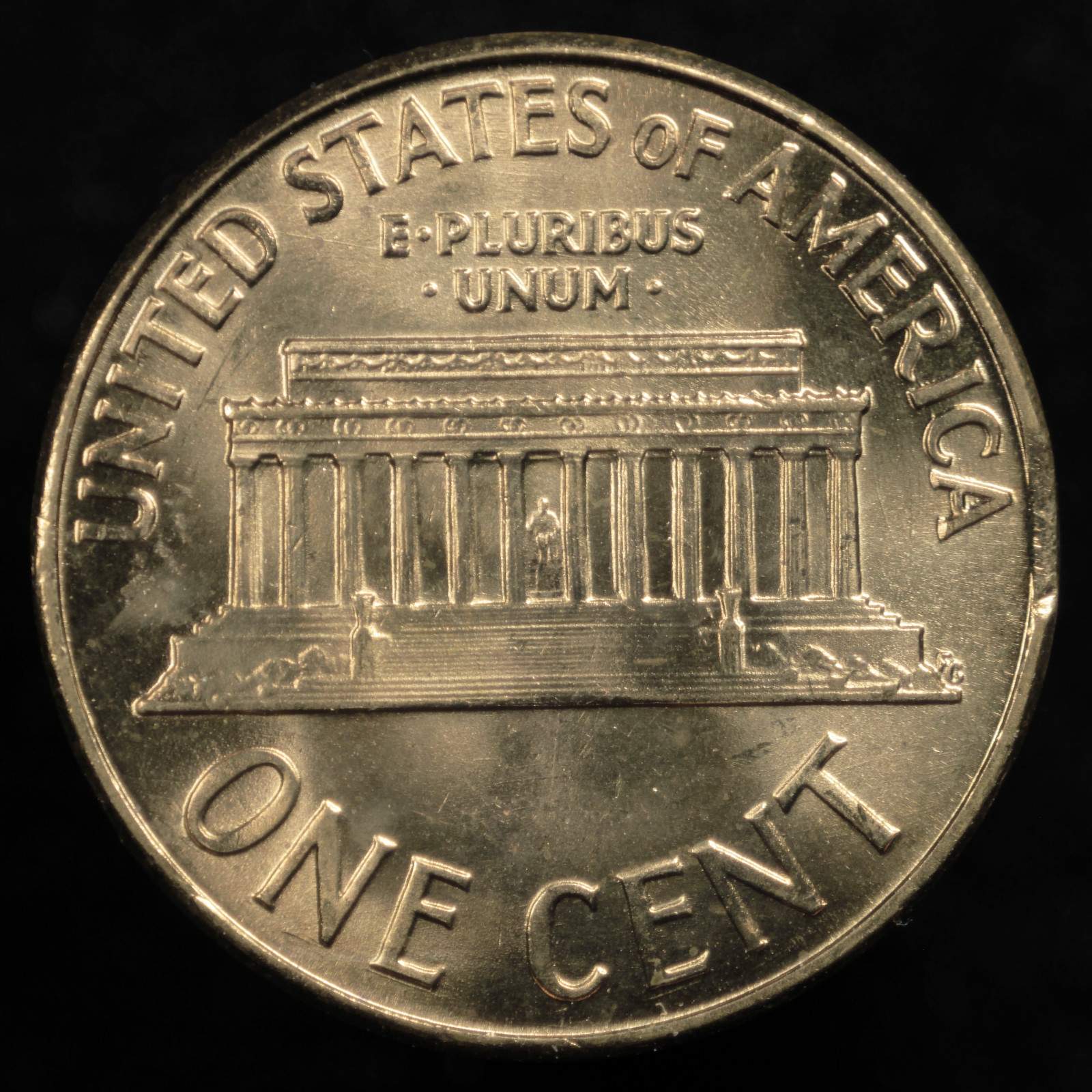 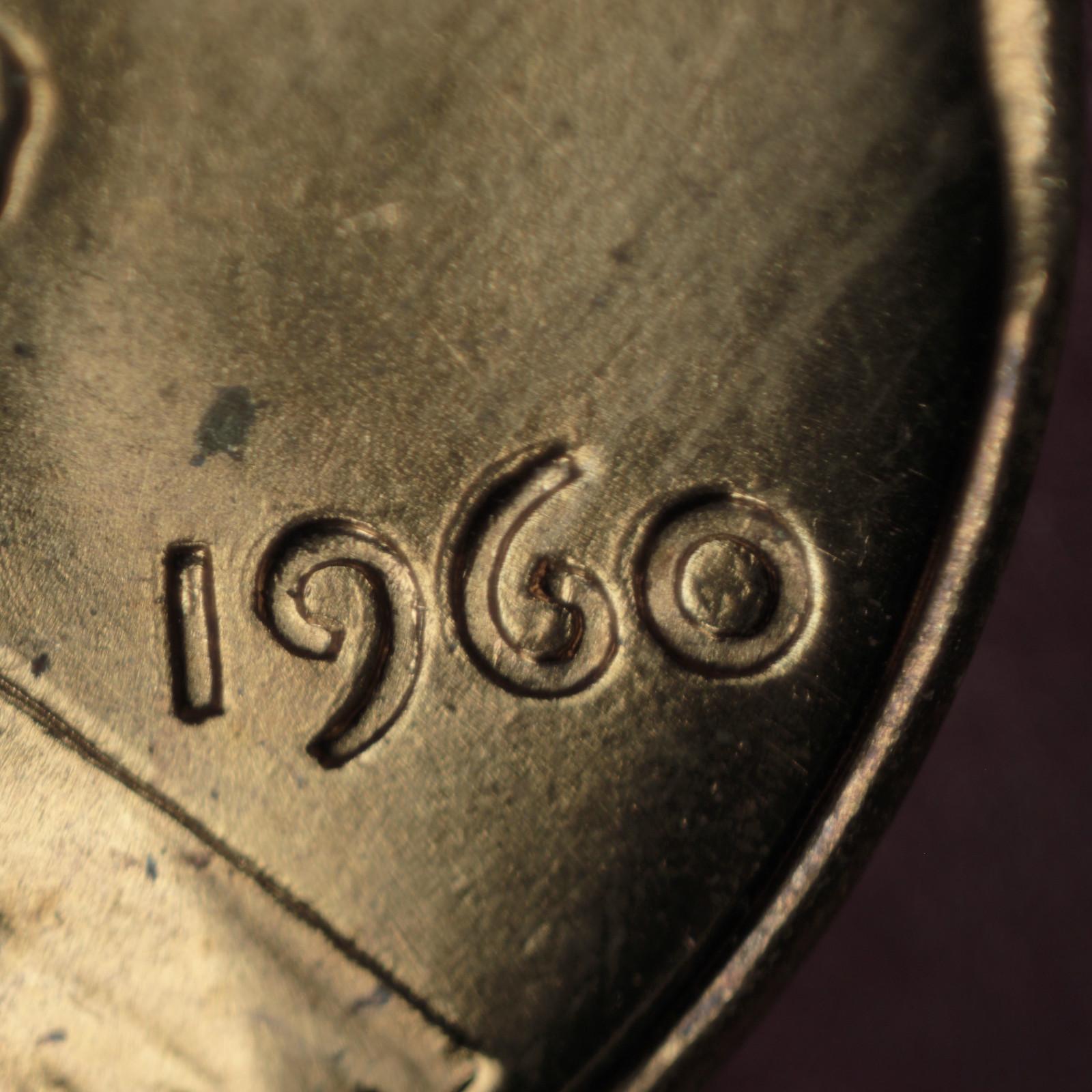 |
|
|
|
Bedrock of the Community
United States
78077 Posts |
Very cool find!  Errers and Varietys.
|
|
Bedrock of the Community
 United States
10601 Posts |
Nice find - great pictures to show it too!
|
|
Moderator
United States
194256 Posts |
Very nice! |
|
Pillar of the Community
 United States
8947 Posts |
Greg, I have been following these threads and it's very cool that you caught this. So, it would pretty much have to be an issue with a working die, given you have found different coins that came from what would appear to be different working hubs. The very first thing that came to mind for me was "abrasion doubling", which was debunked by Mike Diamond and determined to be from die wear. That being said, I would lean that direction too for this. I noticed something that showed on all three of your examples and would think it to be leaning more towards die wear than a doubled die, as you suggest. There are three areas on each example that extend inward that seem to mimic the last but lessening each time and only on the 9. I suppose it could be both, doubling and then deterioration doubling. See what you think. LINK https://www.error-ref.com/abrasion-doubling/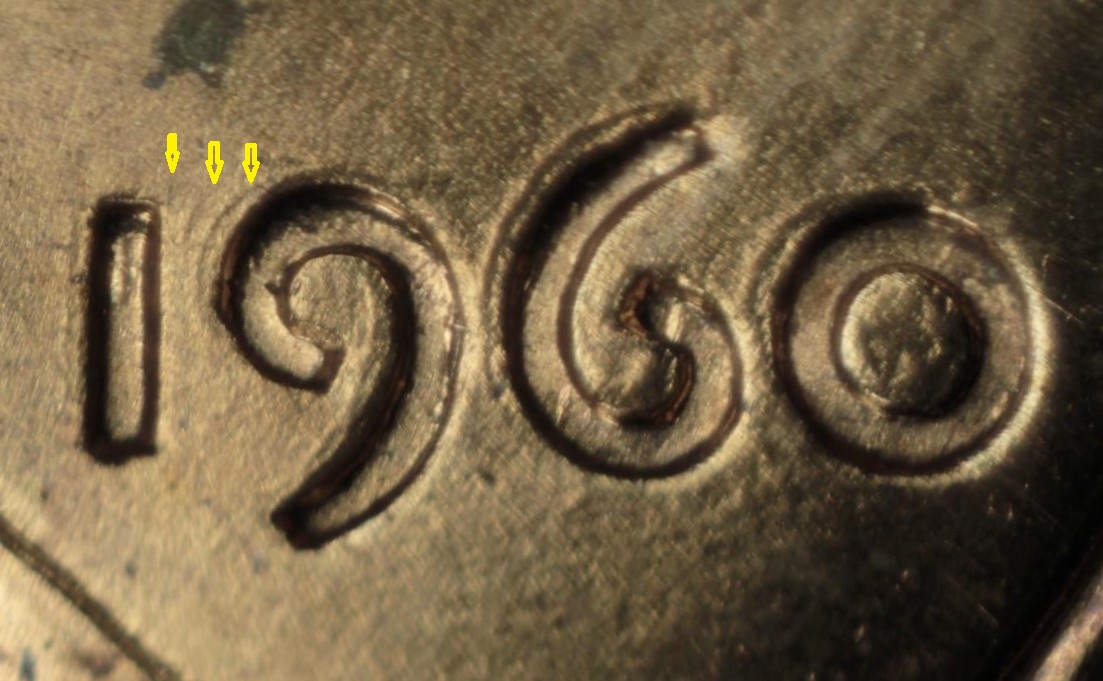 -makecents-
|
|
Moderator
United States
104890 Posts |
This is quite interesting. Thanks for pointing this out to your other 2 coins, I would not have associated together otherwise.
|
|
Pillar of the Community
 United States
2790 Posts |
Makecents- Thanks for your thoughts on this. I believe the working hub used to make multiple dies had a flawed design that the mint tried to remove evidence of. They mostly succeeded I guess, since this is just now being noticed. I think some of these dies further removed this flaw intentionally or not, through die polishing to remove clash marks. I don't see deterioration as a cause since these seem like fairly early die states. Deterioration doubling wouldn't travel inward from the rim either. I see two extra curves above the 9 not three, so maybe that 9 was doubled, or it was a small/large date issue they caught before more dies were hubbed? Just guesses really. I'm hoping to get some more expert opinions on this so we'll wait and see.
"Pride is yoked with callous behavior, as humility is with compassion." St. Gregory Palamas Top Finds - 1969-S 1c FS-101 http://goccf.com/t/477681 1976 D WQ FS-101 http://goccf.com/t/382777 - 1968 D 1c FS-801 http://goccf.com/t/422254Cool clashed dies - 1972 D 1c http://goccf.com/t/429855&SearchTerms=CCLStruck-In Rim Burr - 1969 S 1c http://goccf.com/t/425587&SearchTerms=burrFloating (Type II) Counterclash - 1978 D 1c http://goccf.com/t/434991&SearchTerms=1978 |
|
Pillar of the Community
United States
8947 Posts |
Quote:
Deterioration doubling wouldn't travel inward from the rim either. I have always believed that earlier in my coin travels, but Tanner has said different on a few occasions. I most definitely consider you both my betters and will learn from what is said. Maybe reach out to Tanner and see what his thoughts are in this case. For the most part, I just watch and learn. As you very well know, this hobby and its parts and pieces are forever changing and I try to keep up, it's tough sometimes.... You have been a very nice part in my recent learning experience and do appreciate what you bring to light.  -makecents-
|
|
Bedrock of the Community
United States
10601 Posts |
Quote:
Deterioration doubling wouldn't travel inward from the rim The metal around Lincoln's Bust will travel "backwards" towards/into the bust area as the metal is drawn up into the large void on the die during the strike. Otherwise yes, it usually flows radially towards the rims. |
|
Pillar of the Community
United States
8947 Posts |
Quote:
The metal around Lincoln's Bust will travel "backwards" towards/into the bust area as the metal is drawn up into the large void on the die during the strike. Otherwise yes, it usually flows radially towards the rims. That makecents, Marve, thanks for the brief and very informative explanation, you da Man! -makecents-
|
|
Pillar of the Community
United States
2790 Posts |
"Pride is yoked with callous behavior, as humility is with compassion." St. Gregory Palamas Top Finds - 1969-S 1c FS-101 http://goccf.com/t/477681 1976 D WQ FS-101 http://goccf.com/t/382777 - 1968 D 1c FS-801 http://goccf.com/t/422254Cool clashed dies - 1972 D 1c http://goccf.com/t/429855&SearchTerms=CCLStruck-In Rim Burr - 1969 S 1c http://goccf.com/t/425587&SearchTerms=burrFloating (Type II) Counterclash - 1978 D 1c http://goccf.com/t/434991&SearchTerms=1978 |
|
Pillar of the Community
United States
8947 Posts |
That would be incorrect on that side of the date.
-makecents-
|
|
Pillar of the Community
United States
8947 Posts |
But so be it. Very nice catching this particular oddity on more than one working die. As always, Greg, nice job!
-makecents-
|
|
Pillar of the Community
United States
2790 Posts |
I guess DDD can spread away from the rim. Here is an example from error-ref.com. This doesn't look like what is happening on this 1960 1c though especially since multiple dies are involved. 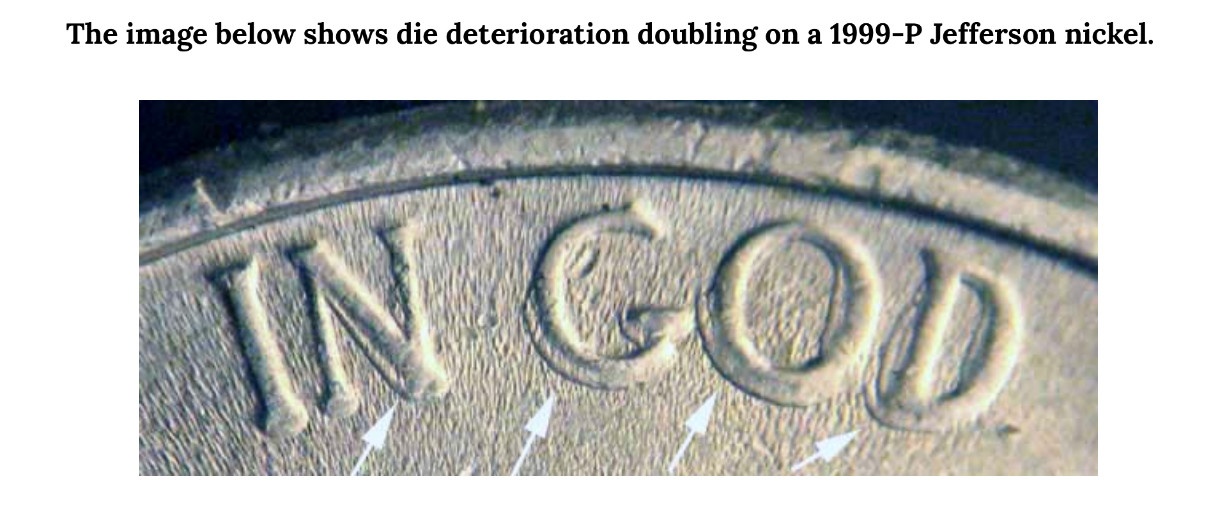 It's been difficult getting the attribution experts to respond to this but I will update if I hear anything. |
|
Pillar of the Community
United States
3357 Posts |
|
|
Pillar of the Community
United States
2790 Posts |
It looks like DDD except it didn't occur on a working die. So how do we explain DDD on a working hub that only produces less than a thousand working dies? Here's a couple more photos from Ray Parkhurst. The flat linear bar above the 9 is present on all examples and could represent a tool mark. Also the outer double crescent loop on the upper 9 looks like it could be from abrasion passes. If so, would the mint try and polish out DDD on a working hub? Another feature I'm looking at is the upper secondary curve point of the 6. It looks like it may be completely isolated from the primary 6 which wouldn't happen with DDD. Question: Can polishing out raised digits produce incuse digits? All of the examples of Die Deterioration incuse doubling on error-ref.com show movement towards the rim. https://www.error-ref.com/?s=die+de...ion+doublingThanks for the conversation with this oddity. 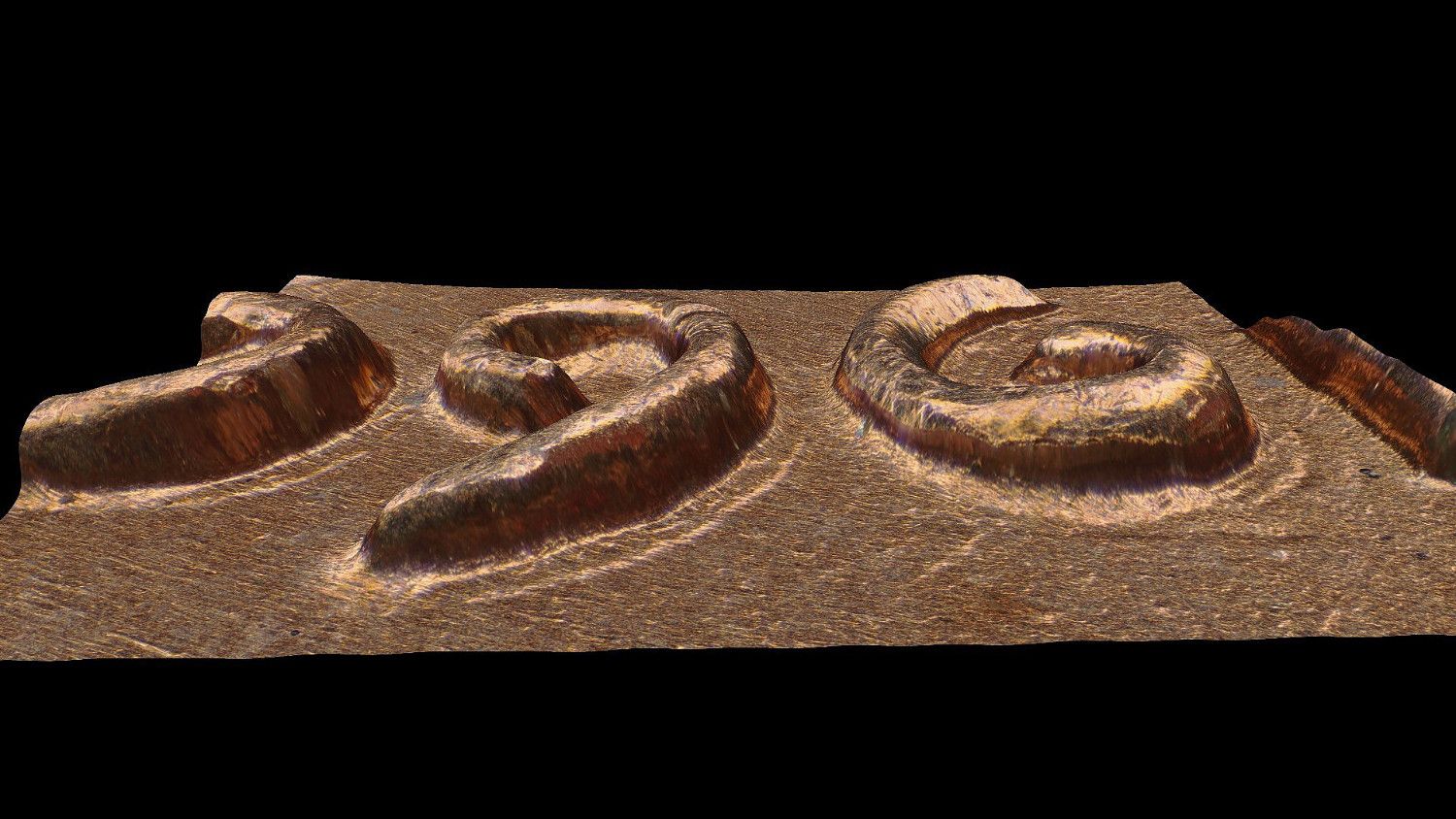 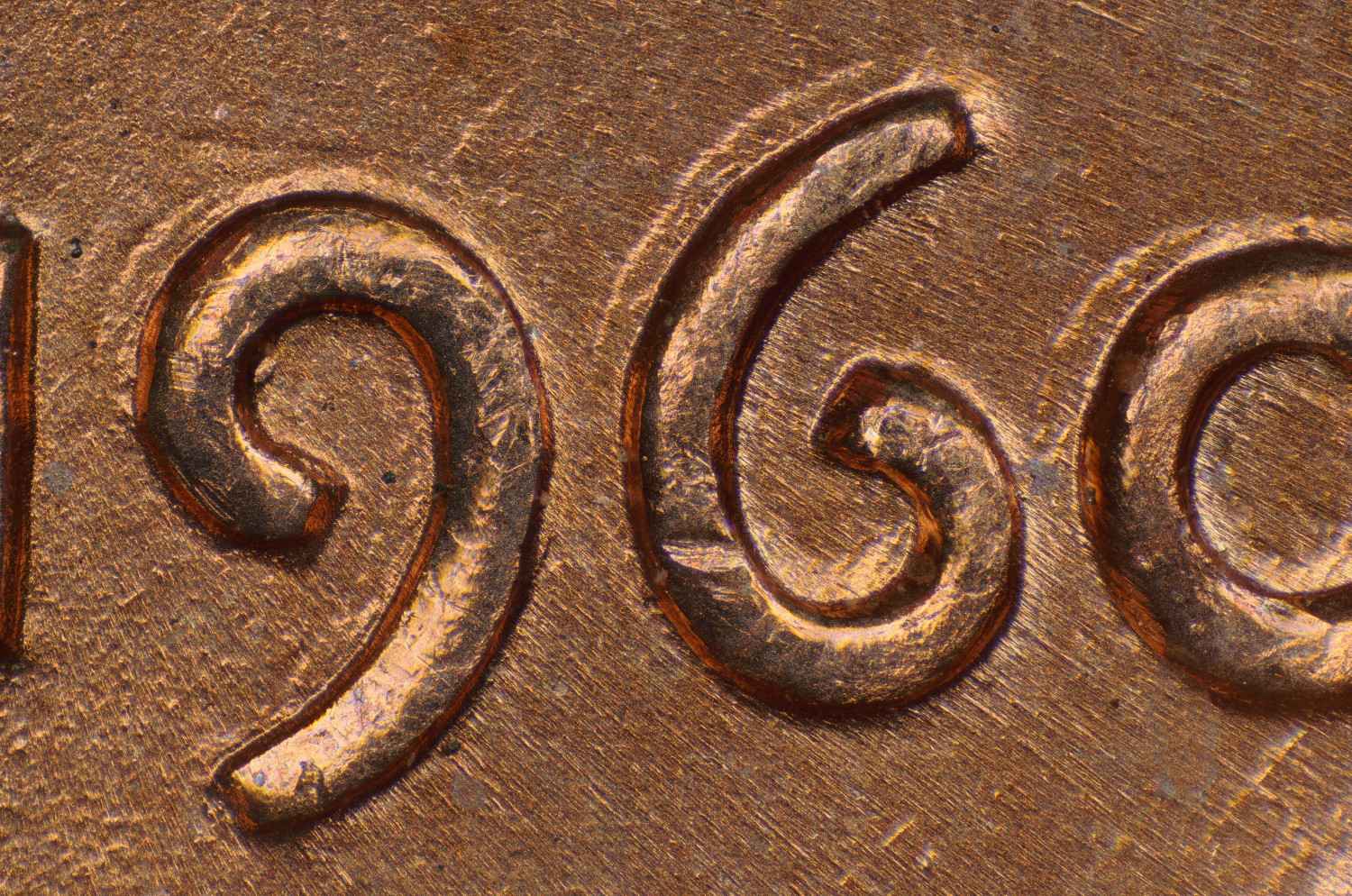 |
| |
Replies: 26 / Views: 2,371 |







 Posted 10/20/2025 02:13 am





