| Author |
 Replies: 13 / Views: 458 Replies: 13 / Views: 458 |
|
|
Valued Member
United States
258 Posts |
Any thoughts on the grade of this coin? I think that's a lamination on the obverse but not sure. Thank you. 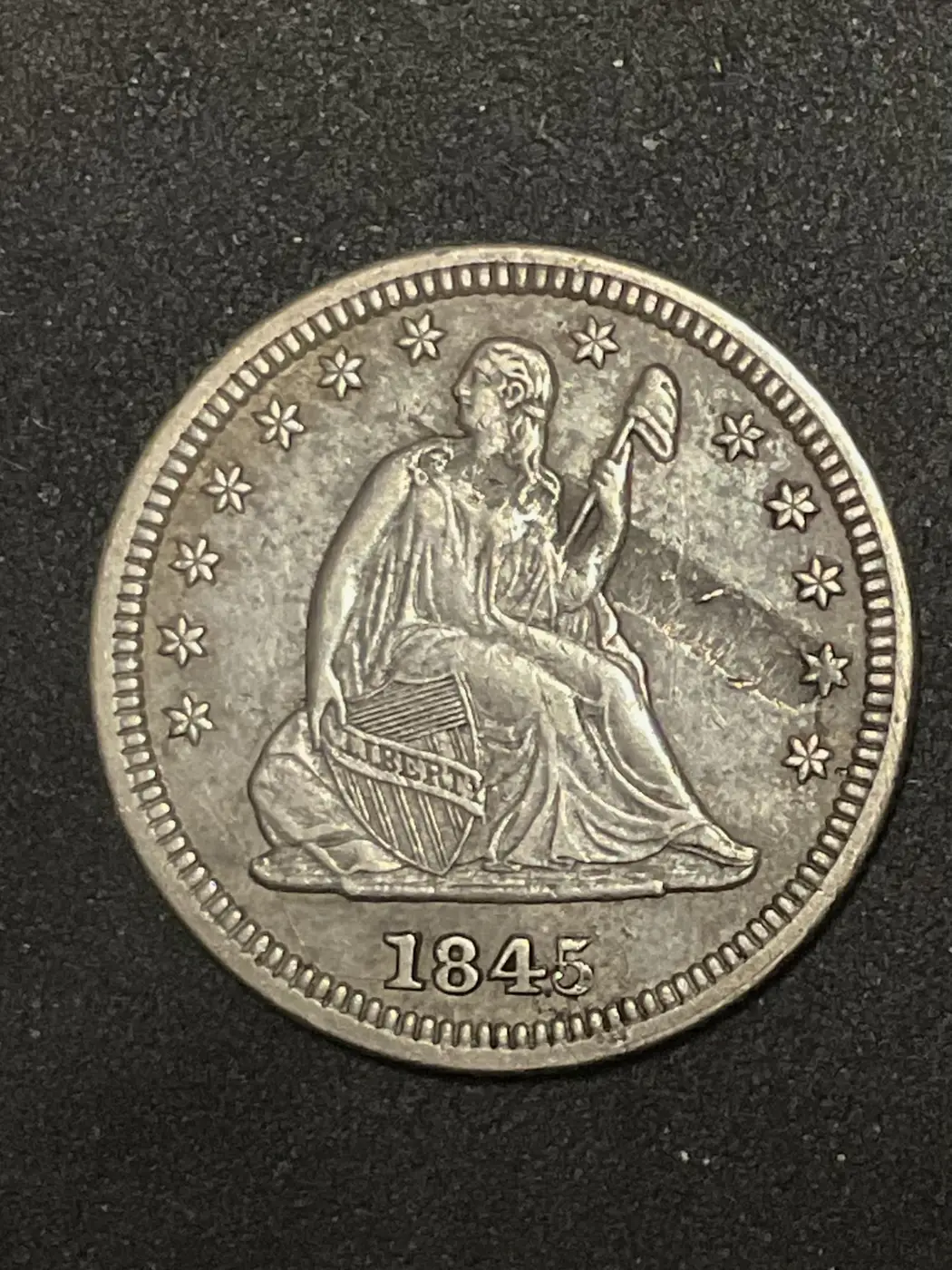 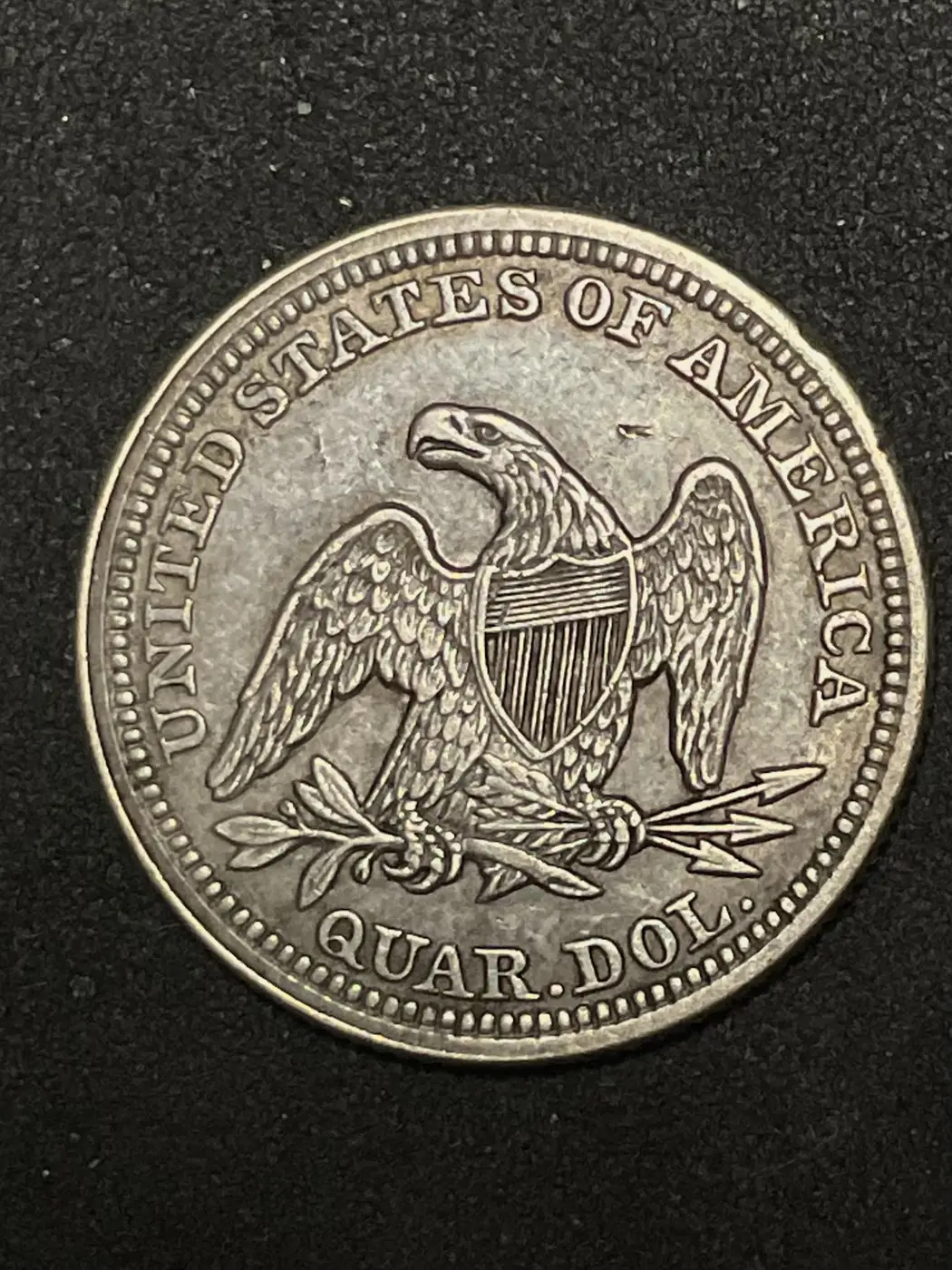 |
|
|
|
Pillar of the Community
United States
1674 Posts |
|
|
Pillar of the Community
United States
927 Posts |
Interesting and not a clue. I would say that if it was caused by a PMD strike, you'd expect evidence of it on the reverse, but there is none. |
|
Pillar of the Community
 United States
5693 Posts |
I'd say XF-40. Doesn't look like damage because the staff, arm, and star are unaffected. Possibly a large strike through.
|
|
Pillar of the Community
United States
6405 Posts |
Solid XF-40 detail. I agree the obverse defect doesn't look like PMD. Maybe a defective planchet; if a strike-thru error I'd expect soft or missing detail for the arm and staff. Is this the variety with the repunched 5 in the date? The photo isn't clear enough to confirm. |
|
Bedrock of the Community
Australia
21789 Posts |
|
|
Bedrock of the Community
 United States
10601 Posts |
Right - not damage. Either a strike through or a lamination error.
|
|
Bedrock of the Community
United States
76006 Posts |
I agree. It's not damage. It's either a Lamination issue or a Struck Through.
Errers and Varietys.
|
|
Pillar of the Community
United States
8526 Posts |
Looks like a strike through. Even at that, it's a beautiful coin.
Oregon coin geek.....*** GO BEAVS ! ! ! ***
|
|
Bedrock of the Community
United States
11932 Posts |
I don't think it's strike through, like Jaobler said, because Liberty's arm and pole are unaffected and star 12 is intact. Laminations to me are more like slag from an improper alloying process that cause chunks of metal to flake away, so I rule that out. To me this looks like someone took a tool like a small rounded chisel and dug out some of the silver from the obverse. Most people would go the route of filing the rims, but the person who did this seems to have been inspired to dig some silver out of the face of this coin, carefully working around the arm, pole and star 12. Looks like post-mint damage ( PMD) to me. IN NECESSARIIS UNITAS - IN DUBIIS LIBERTAS - IN OMNIBUS CARITAS THE MAN IN THE ARENA, Theodore Roosevelt at the Sorbonne Paris on April 23, 1910: " It is not the critic who counts; not the man who points out how the strong man stumbles or where the doer of deeds could have done better. The credit belongs to the man who is actually in the arena, whose face is marred by dust and sweat and blood, who strives valiantly, who errs and comes up short again and again, because there is no effort without error or shortcoming, but who knows the great enthusiasms, the great devotions, who spends himself in a worthy cause; who, at the best, knows, in the end, the triumph of high achievement, and who, at the worst, if he fails, at least he fails while daring greatly, so that his place shall never be with those cold and timid souls who knew neither victory nor defeat." My coin website: https://fairfaxcoins.com |
|
Pillar of the Community
United States
5693 Posts |
Quote:
To me this looks like someone took a tool like a small rounded chisel and dug out some of the silver from the obverse. This seems far-fetched to me. If someone wanted to extract some silver from the coin, why would they meticulously carve around the devices rather than just take another hunk out somewhere. I agree having the arm and pole be so unaffected by a strike through is unusual, but it still seems like the most plausible explanation. You could try getting an accurate weight, since a strike through should have a normal weight, while digging out a chunk of silver would result in a slightly lower weight. |
|
Bedrock of the Community
United States
10601 Posts |
Quote:
If someone wanted to extract some silver from the coin, why would they meticulously carve around the devices rather than just take another hunk out somewhere. I agree having the arm and pole be so unaffected by a strike through is unusual, but it still seems like the most plausible explanation. Here's another "hypothetical" theory. When struck, could the metal have flown into the obverse die cavity and filled the top of the flag & pole and top of her hand & arm - along with filling the bottom pole and bottom of her arm then the metal was pushed into the remaining void meeting in the middle to fill the cavities while not effecting the planchet damage? EDIT: Forgot the picture. I tried to make a little more clear...... 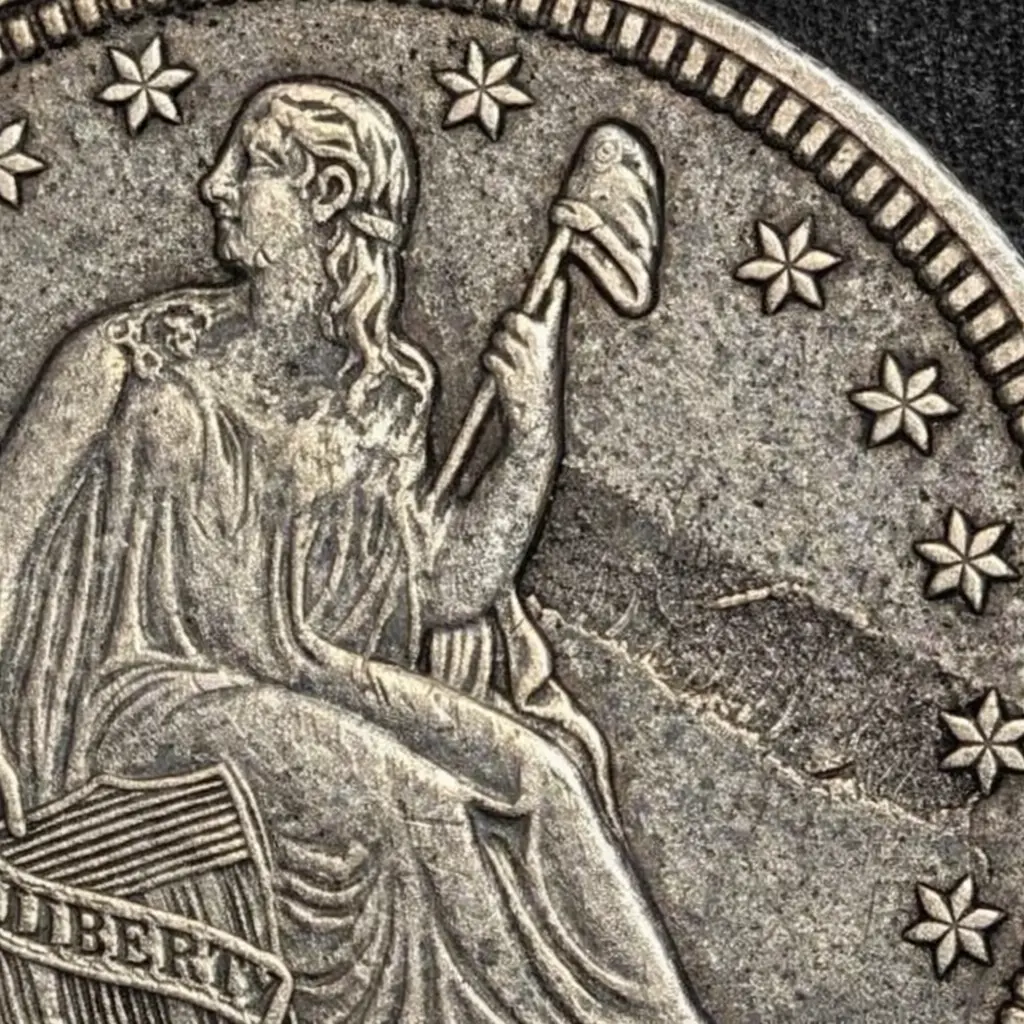 Edited by Marv65
01/24/2026 03:00 am
|
|
Bedrock of the Community
United States
36916 Posts |
|
|
Valued Member
 United States
258 Posts |
Thank you for the feedback.
|
| |
Replies: 13 / Views: 458 |
|







 Posted 01/23/2026 3:17 pm





