| Author |
 Replies: 9 / Views: 532 Replies: 9 / Views: 532 |
|
|
Valued Member
Philippines
65 Posts |
|
|
|
|
Pillar of the Community
 United States
995 Posts |
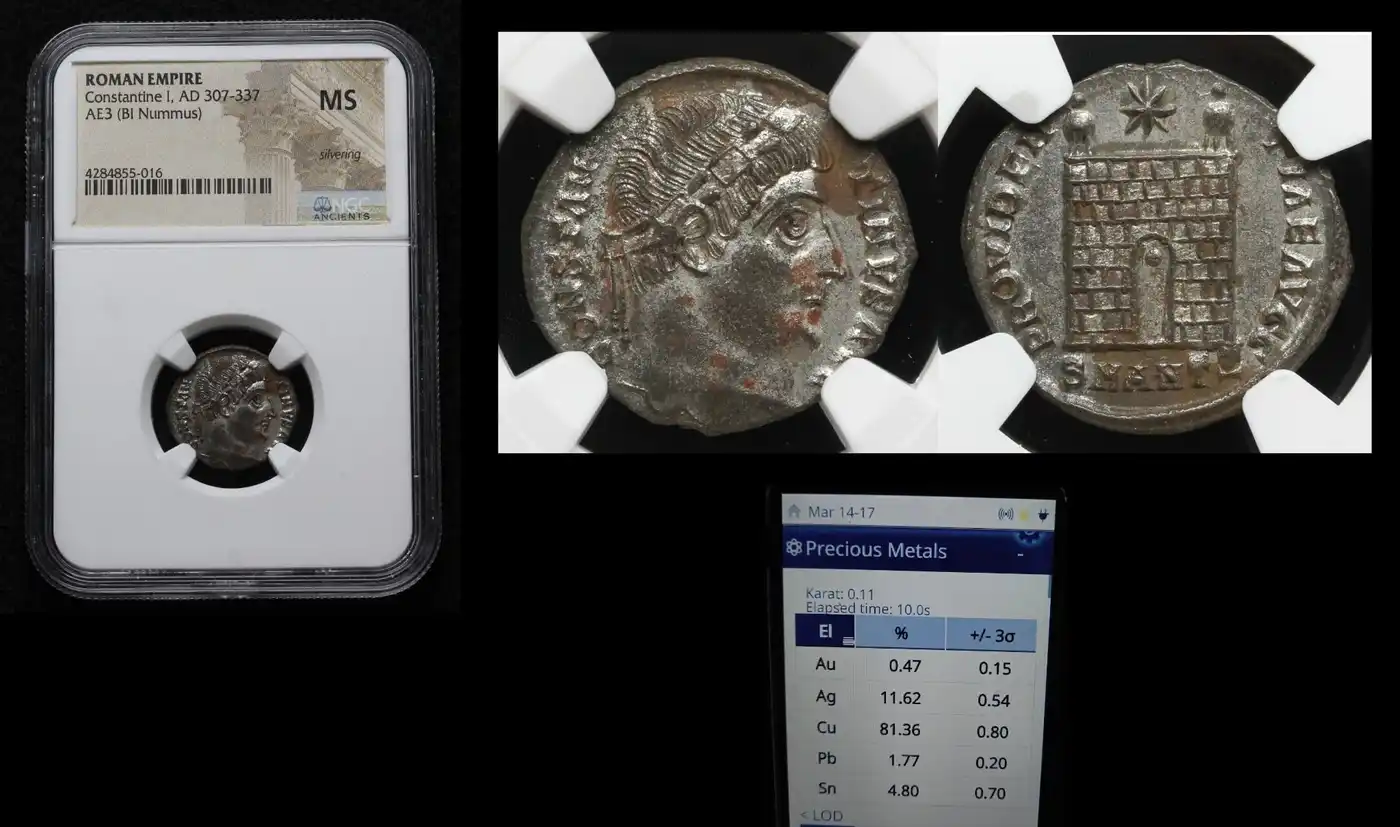
Just speaking about the Constantine coin, the reading is wrong. Campgates from Antioch have circa 2% percent silver. I also doubt the AU reading. Although gold is a possibility, it was almost never present in these coins. I have a page with some info-- https://constantinethegreatcoins.com/metallurgy/There have been lots of studies on metal content of coins of this period. The best is Cope, L. H., C. E. King, J. P. Northover, and T. Clay. Metal Analyses of Roman Coins Minted Under the Empire. British Museum Occasional Paper 120 (1997) : 8. |
|
Valued Member
United States
227 Posts |
I've always wanted to get a portable XRF. What brand/model was used?
|
|
Pillar of the Community
 United States
8070 Posts |
Very interesting an thanks for sharing here! Quote:
Just speaking about the Constantine coin, the reading is wrong. Campgates from Antioch have circa 2% percent silver. I also doubt the AU reading. Although gold is a possibility, it was almost never present in these coins. I'm not at all knowledgeable on these coins (maybe I shouldn't even comment, but here goes). Has this one been silvered? And, if so, would that tiny bit of gold coming along with the silver be consistent? (also realizing the gold is not much above the detection limits with the sigma reported in the results). |
|
Moderator
Australia
17021 Posts |
The silver reading might also depend on the point of the coin being pointed at. These coins have "silver-enriched" surfaces, usually done by pickling the blanks in vinegar before striking; this makes a coin that looks much more "silvery" than its metal content would normally allow. But as you can see, this coin is worn - if the XRF beam was aimed at a point where the silvering is strong and thick, then a higher silver level would have been recorded than if the beam were pointed at a part of the coin that looks worn and coppery.
Don't say "infinitely" when you mean "very"; otherwise, you'll have no word left when you want to talk about something really infinite. - C. S. Lewis
|
|
Moderator
United States
197248 Posts |
Thank you for sharing.  |
|
Pillar of the Community
United States
3365 Posts |
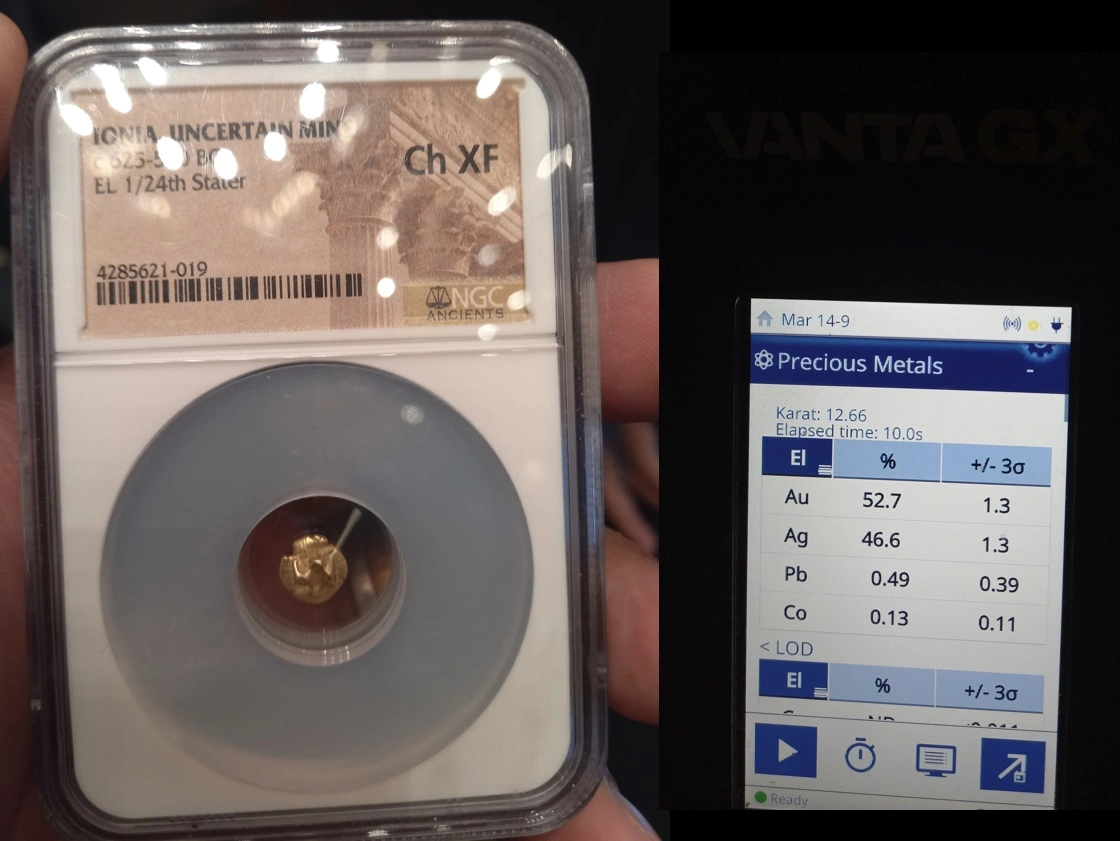
I've had a few xrf's done on electrum coins in hand. Nice to see that they can be done in a slab.
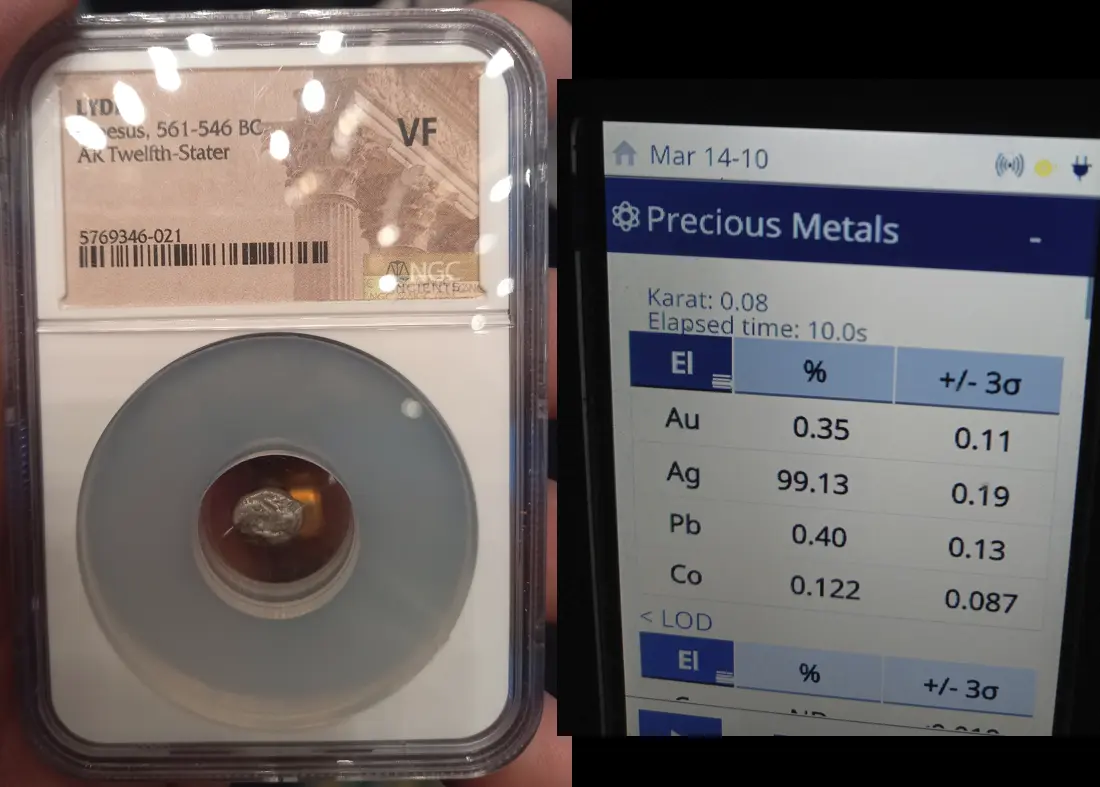
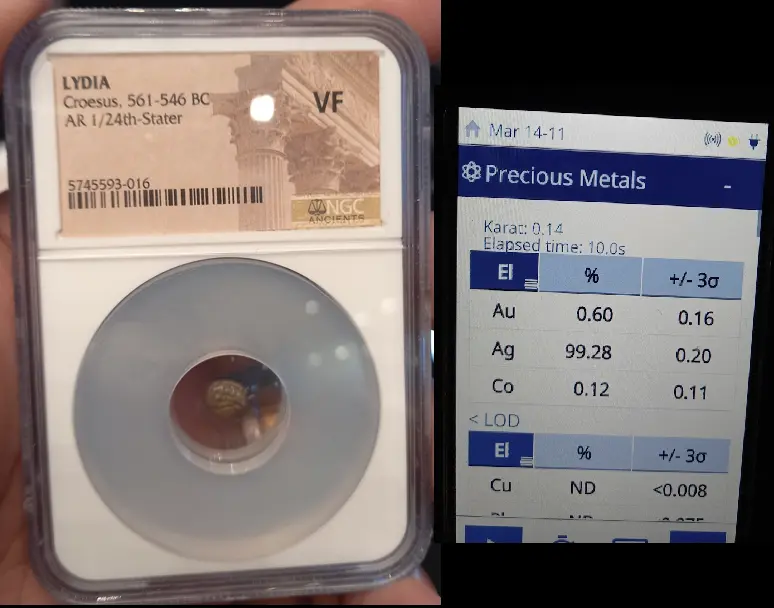
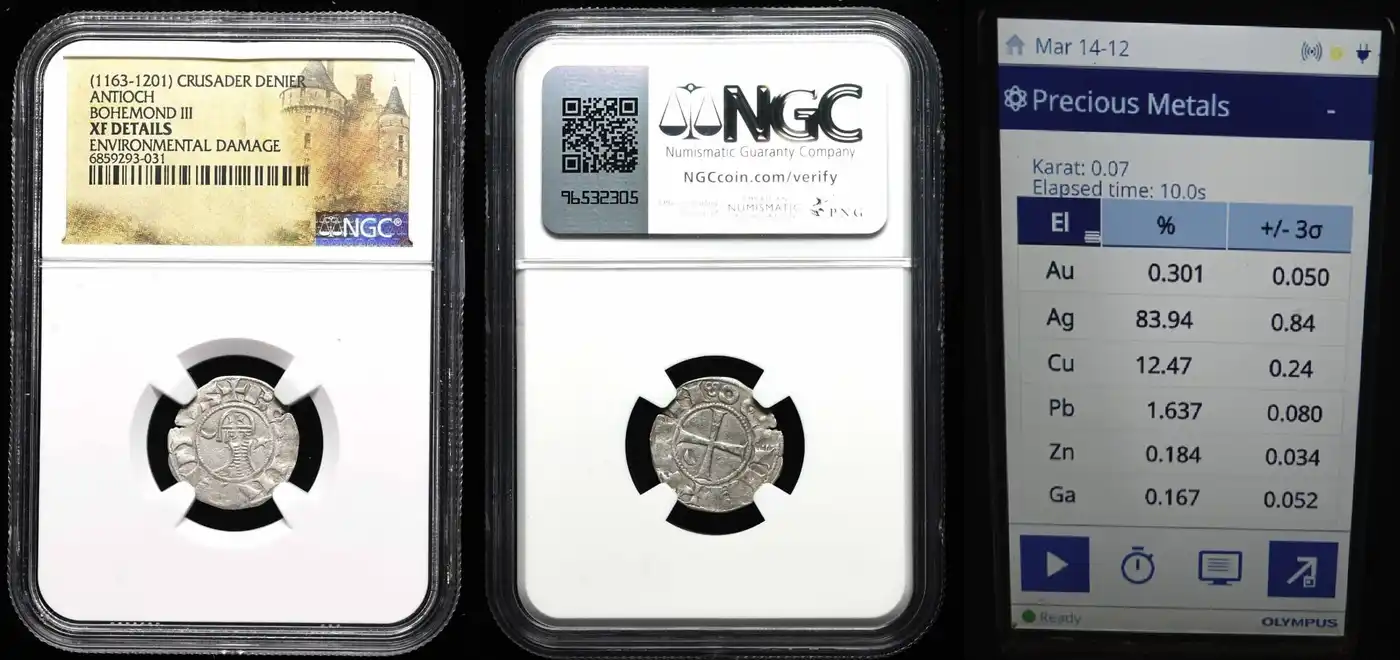
Like your Ionia fractional, the gold content of electrum is disappointingly low. My expectation was about 70% for the natural alluvial gold in the region. Outside Asia Minor, my Celtic pieces are under 30% and contain a lot of copper.
"Two minutes ago I would have sold my chances for a tired dime." Fred Astaire
Edited by thq
03/16/2026 10:33 am
|
|
Moderator
Australia
17021 Posts |
XRF analysis of early electrum coins always shows a gold content considerably lower than natural electrum - electrum coins are rarely over 60% gold, whereas natural Sardis electrum nuggets recovered from the river today are usually over 80%. Which only disproves the myth that the earliest coins were simply natural electrum nuggets stamped with the king''s seal, but proves that the invention of coinage debasement is as old as the invention of coinage itself.
It was of course the (now known to be well-founded) suspicion that the powers-that-be might be diluting their electrum coinage that caused the shift away from electrum coins towards a bimetallic currency system, with separate gold and silver coinages. Pure gold was more easily tested, and thus more readily trusted. That, plus the electrum had reached it's natural debasement limit: any more dilute and it would stop looking like gold.
Don't say "infinitely" when you mean "very"; otherwise, you'll have no word left when you want to talk about something really infinite. - C. S. Lewis
|
|
Moderator
United States
197248 Posts |
Quote:
Which only disproves the myth that the earliest coins were simply natural electrum nuggets stamped with the king''s seal, but proves that the invention of coinage debasement is as old as the invention of coinage itself.  |
|
Pillar of the Community
United States
3365 Posts |
The Celtic electrum (Pictones) looks sort of like red gold, but mainly looks coppery. If they had used more silver and less copper it would have been more deceptive.
"Two minutes ago I would have sold my chances for a tired dime." Fred Astaire
|
| |
Replies: 9 / Views: 532 |
|






 Posted 03/15/2026 2:40 pm





