| Author |
 Replies: 71 / Views: 11,202 Replies: 71 / Views: 11,202 |
|
|
|
Pillar of the Community
 United States
1285 Posts |
Seated, what does "it depends" mean? And what is it depended on? Any example such as a particular VAM would be great (other than the E as I do not think I will ever find one as too many eyes are on it). I am personally interested in things like the 1904 O - rusty fish hook as an example. Thanks Gene, on one of your posts you speak of a radical cracks. Can you post 2 pictures of cracks where you would consider one of them to be radical and the other a regular? Pictorials are easier to deal with for me. Thanks. Peace |
|
Pillar of the Community
United States
2797 Posts |
Quote:Seated, what does "it depends" mean? And what is it depended on? Any example such as a particular VAM would be great (other than the E as I do not think I will ever find one as too many eyes are on it). Ceylon62, Rarity and interest drive price in numismatics. It's no different for Vams. There are examples where interest overshadows rarity, i.e., the 1888-O VAM 4 Hotlips. There are way too many examples to justify the selling price. But folks keep paying a premium just to "have one". This is a case where interest exceeds supply. For many Vams it's just the opposite and no premium applies. In the realm of clashes, the King is the 1889-P VAM 23A which can fetch a cool $12K for an EF example. But good luck finding one. No other obverse clash carries this kind of premium. There are several reverse 'E' clashes that remain pricey. The 87-P VAM 1B "weak E" being the best example. They are hard to spot and can still be found online and at shows ($6K in AU). |
|
Pillar of the Community
United States
3076 Posts |
here are some photo's of die cracks and die breaks, and radial cracks die crack 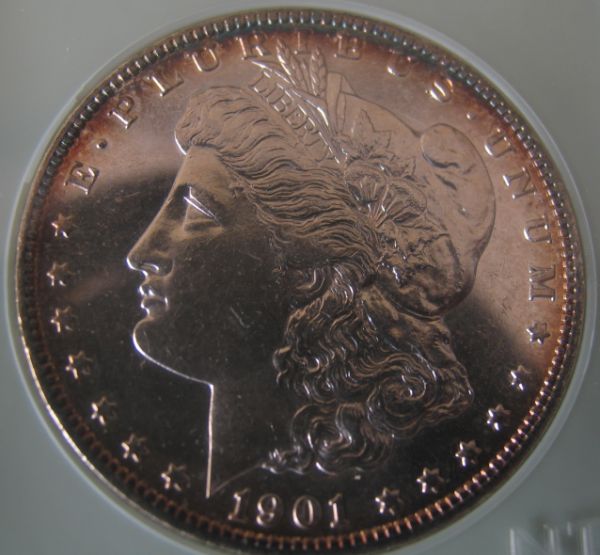 die break, where the metal is now above the surface 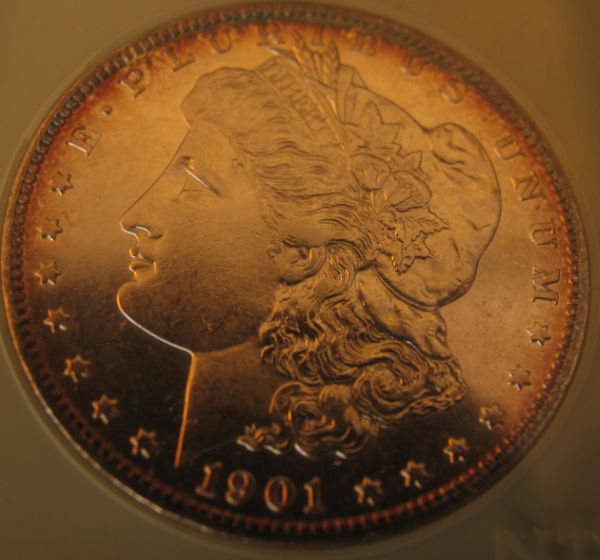 radial cracks..where the crack is from the rim extending to the interior fields 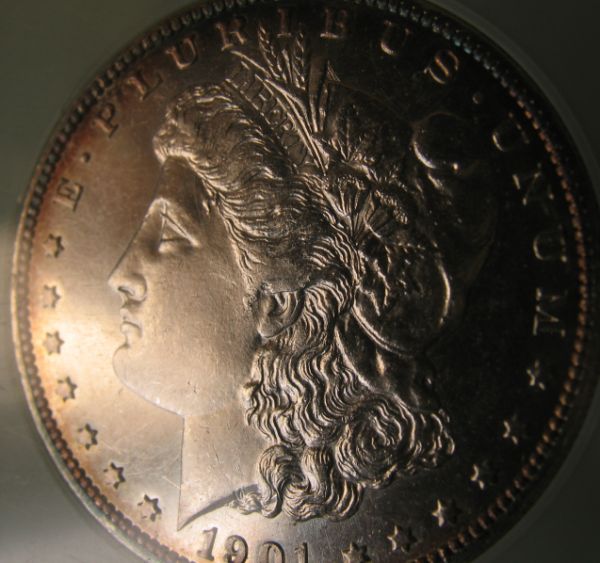 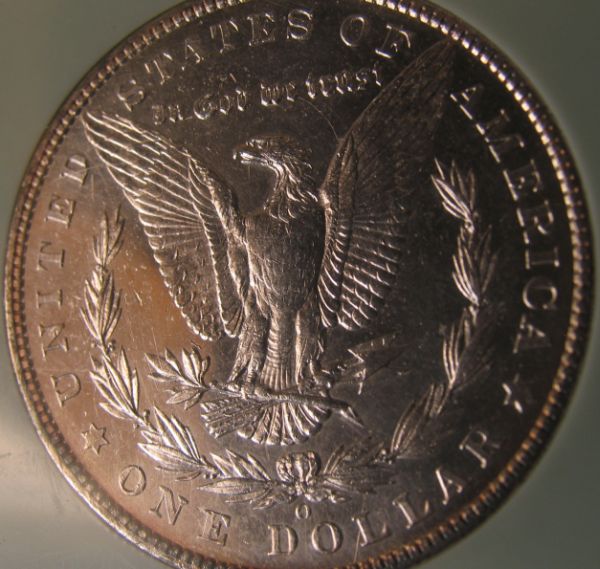 |
|
Pillar of the Community
3660 Posts |
Is 'that' what you call radical Gene? What about something like a scarface? Now 'that' is radical. Maybe you meant radial and Ceylon took it as radical? Big difference....Tires are "radial", referring to 'perimeter to center via radius'...... while "radical" refers to 'me'.  |
|
Pillar of the Community
United States
3076 Posts |
yes Zee, you have it pin pointed,, my typo..but then with my typng skillls, I probably won't make a very good sexatary...
|
|
Pillar of the Community
United States
1285 Posts |
Gene, Well I took it as "radical" instead of radial. My mistake as well.
Any way - The pics that were up late yesterday are diff than this morning.
Seated, I like that 89 P - never seen that one.
Thank you 2 as always.
Peace
|
|
Pillar of the Community
United States
3076 Posts |
yes my pic files were over written, those shown now are for another post. however. you post of die clashes, I have one for you.. the G clash..one must remember that most of the doubling is caused by how they made the dies and the hubs. later on that point.. but after that was the clashing of the dies. the most known and commom is the N clash. Also followed by other letter transfers I will not post tonight. But also there is a G clash due to die rotation..another chapter in the VAM knowledge.. here is the picture 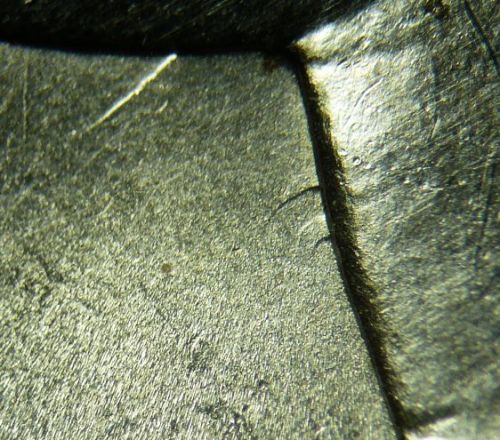 |
|
Pillar of the Community
United States
1285 Posts |
Gene,
I have been spending a lot time looking at the clashes and ended up with un attributed 84-O 37A / 5C and 1900-O 15A where the clash of the lips on the wreath is just awesome (full bold transfer). The obverse die split on the 84-O is rather neat as well.
However, I still cannot figure the reverse clashes (designer initial and the "u" s t clashes) and the corresponding (u s t) on the obverse with some other coins. It's just weak, but there is something in that area and I need confirmation (what else to look for).
Any help would be appreciated by you or anyone else who sees this.
Peace
Edited by Ceylon62
07/30/2010 07:45 am
|
|
Pillar of the Community
United States
3076 Posts |
Many times the obverse letter transfers may be weak with partial outlines the N clash by the neck can be quite bold in some vams here are some examples 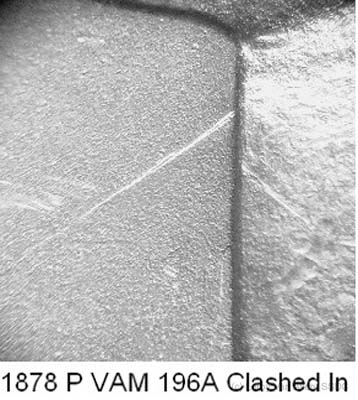 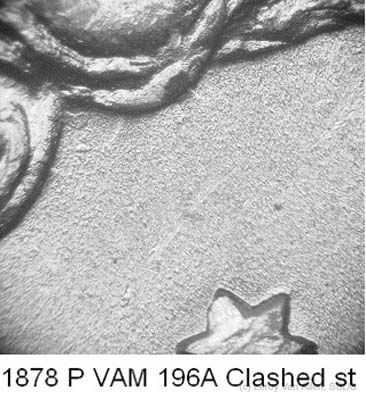 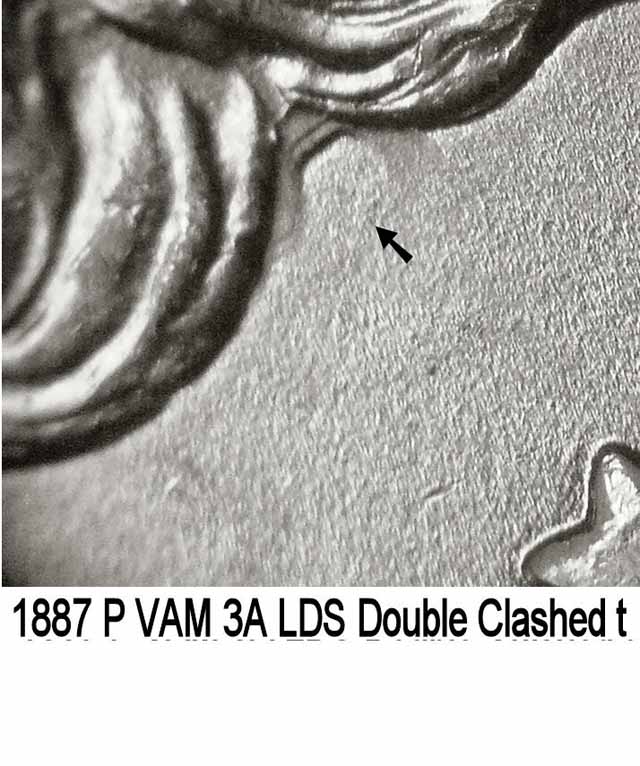 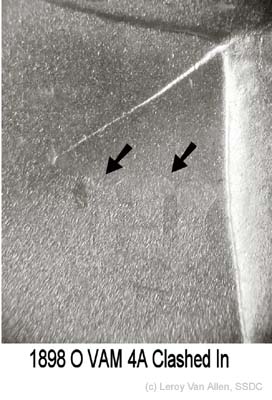 these are some of the examples, I suggest you make a folder and collect as many examples as you can for reference.... |
|
Pillar of the Community
United States
1285 Posts |
Gene et al, I Please use your imagination here as I have no pics. Got a 1904 O awhile back and I am at a stopping point on this one at VAM 33A. Should I be looking at any others VAM's as there is a clash / spike connected to the chin (1/4 of the way in (draw a line down from nostril area) towards the neck line) and strong clashing on the reverse as well? Left wreath area 2nd set of leaves from top of the leaf has a big chunk almost like an extra twig (more than the other one I have of the clashed lip). Also the area between the 2nd and 3rd set of leaves has strong clash marks closer towards the wreath in 3 broken formations. I know the die cracks do not count, but this has die cracks started in various spots both the obverse and reverse as well. Thanks http://www.vamworld.com/1904-O+VAM-33APeace Edited by Ceylon62
08/01/2010 10:32 am
|
|
Moderator
 United States
23522 Posts |
Quote:Got a 1904 O awhile back and I am at a stopping point on this one at VAM 33A. Should I be looking at any others VAM's as there is a clash / spike connected to the chin (1/4 of the way in (draw a line down from nostril area) towards the neck line) and strong clashing on the reverse as well? Here's where we run into the problem of insufficient information being available for a given die. Your coin could be *any* of the 1904-O's which have listed clashes. Maybe an earlier state of one, on which the clashing is stronger than whataver coin happened to be studied for the listing at VAMworld. Or, it could be a variety for which clashing hasn't been recorded yet. Basic die information such as date/mintmark placement hasn't been recorded for most of them. The presence or lack of clashing isn't necessarily "smoking gun" evidence of a given VAM. |
|
Pillar of the Community
3660 Posts |
Ceylon, I understand that you ask the exclusive assistance of Gene here, and Gene knows vams far better than I do, but I do understand a few basic principles about coining that may preclude either you or Gene from brain strain on this one. If I may suggest; no VAM can be identified based on clashing. Clashing is an effect of the press, and is not inherent in the die. Any clash that appears on any given Morgan is subject to appear on any other Morgan of any year, mint mark and variiety in exactly the same location. This is a precondition of the hubbing of the dies, causing all obverse dies to be of 'nearly' identical topography to all other obverse dies. (Same principle with reverse dies). Refer to the overlay that SeatedNut provided early on page 1 of this thread. Notice that the red circles that he added have the similarity of all being approximately 1/3 of the way from the denticles to the center of the die. A person could (instead of drawing little red circles here and there at this distance from denticles to die center) draw one large red circle encompassing the center of the die at the same distance to denticles. Consider this big red circle the clash ring. Just as tectonic plates outline the 'ring of fire' on the surface of the Earth, This large red circle is where clashes will manifest themselves on a Morgan. Clashes ( letter clashing for instance) will normally occur in 'almost' the exact same place on all Morgans (due to proper alignment of upper to lower die prior to striking), but die rotation can occur, causing the clash to move around on the big red circle (even in the case of the same VAM). OZ could testify to this (I believe) as in the case of the various die states of 1882CC vam-2 in which case different degrees of rotation come into play on the same VAM. I don't recall if the either die of this VAM was clashed, but if so, the clash would 'move' indicating different states of this die pairing. Edited to add: as usual, my replies are so lengthy that I am a day late and a dollar short by the time I hit the "post reply" button. Edited by zeewool
08/01/2010 1:03 pm
|
|
Pillar of the Community
United States
709 Posts |
Ceylon, the 1904-O series data on VAMworld is incomplete and in some cases factually wrong. As the series is studied with multiple examples to compare to especially in regards to different die states, new data is emerging. The 1904-O series is being researched by Alan Scott and he will have the 1904-O attribution guide available in the near future. Look for Alan's new moniker to be VAM killer. |
|
Pillar of the Community
 United States
1551 Posts |
Gene, You do have too love the (G) clash :)
|
|
Pillar of the Community
United States
3076 Posts |
Oz and Zee make a very important fact!when one starts to look at VAM's they tend to immediately jump to the superficial clashes to pin point any VAM of any given year...those can only narrow it down to how ever many known clashed examples are listed for that year. on must go back to the basics to discover which one it really is..the lip clash is shown on VW but the die markers that finalize its designation are the die gouges at the REV A in Dollar, 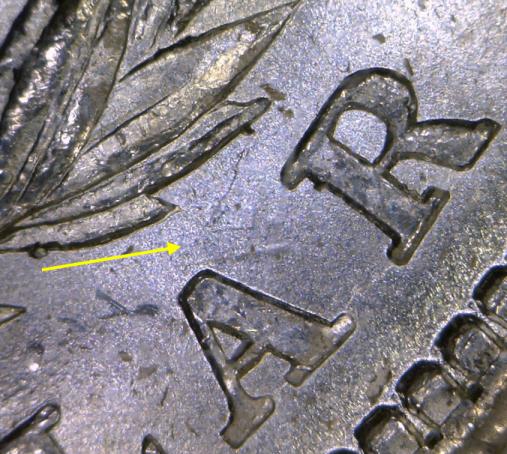 Die cracks can sometimes used as secondary diagnosis such as this 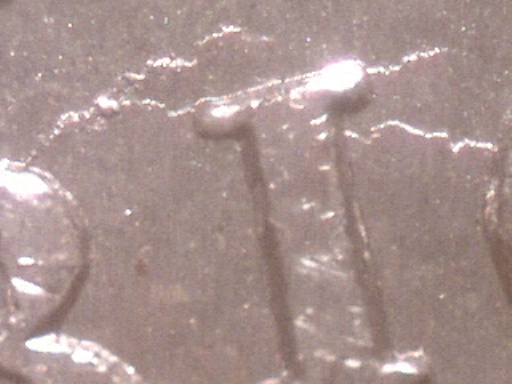 I have the 1904 33B with the rim cudd...but I couldn't got to 33B until I started from scratch to verify the basics. Alans working on the 04-O book, his last one was nothing but spectacular!! |
| |
Replies: 71 / Views: 11,202 |








 First Page


 Posted 07/27/2010 08:25 am


