| Author |
 Replies: 27 / Views: 3,439 Replies: 27 / Views: 3,439 |
|
Valued Member
Canada
287 Posts |
I am about as new as you can get in th world of VAM's. I have been to VAMworld and I have also read most of the posts here regarding Morgan dollars. I must be missing something because I cannot seem to find even the most basic legends for identification. There are descriptions of the differences of the dies but no visual aid for comparison. Thick and thin (in regards to the lettering of the word Liberty) are relative terms and without a point of reference they are useless to anyone. I have taken a picture of my coin and would like to know if someone could tell me if these are thin or thick letters. 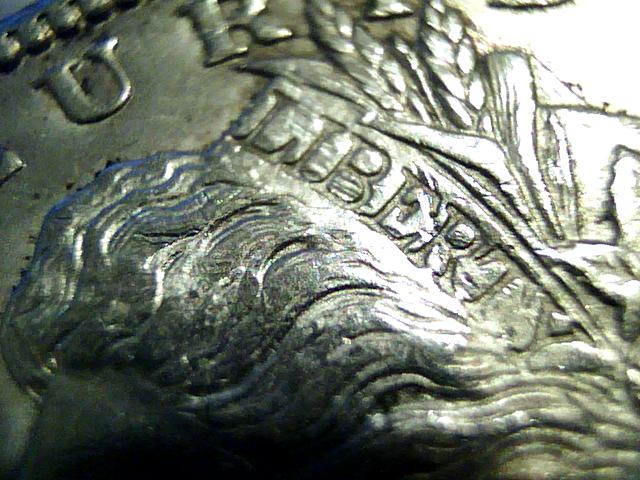 I have also posted a picture of a portion of the reverse which shows (I believe) seven tail feathers with parallel feathers on the arrows. I do of course have the same issue with the term flat and round in regards to the eagle's chest. The photo is not that clear but I am guessing that someone will know right away when they see it. 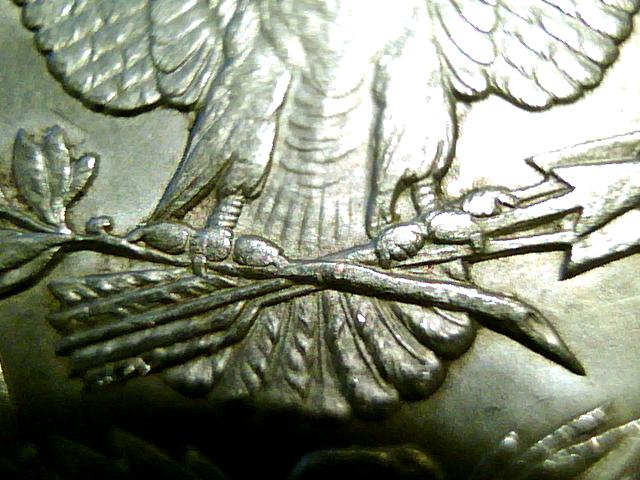 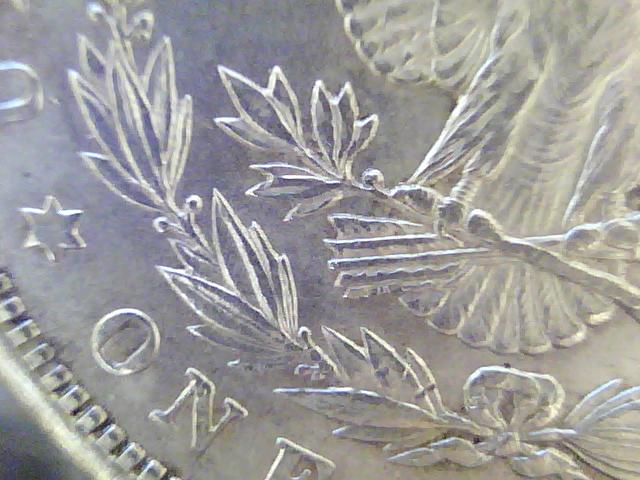 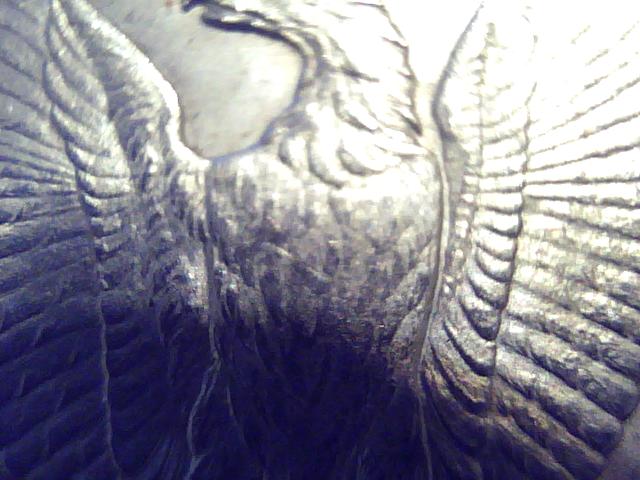 I am not asking for someone to attribute a VAM number to my coin but more so to help me to understand what it is that I am looking at. Any and all information will be greatly appreciated. |
|
|
|
Pillar of the Community
United States
7123 Posts |
Can we get good pics of the whole obverse and reverse?
|
|
Moderator
 United States
23522 Posts |
VAMworld is, as you've noticed, not for the beginner. With that said, all of the questions you've asked can be answered starting at this page: http://www.vamworld.com/Attribution+101Pay particular attention to "Understanding Major Hub Types," and how to read the VAM descriptions. Every_single_coin listed there is identified by hub type, and having done that you will know that none of the terms you've used here - "thick and thin LIBERTY," "7 tailfeathers," "parallel arrow feathers" - are relevant to your 1900. Only the very first Morgans minted in 1878 had more than 7 tailfeathers. All the rest had 7. The thickness of the letters in LIBERTY is a hub feature, not relevant to identifying any individual variety. For that reason, you are quite correct in that they're useless to anyone. Parallel arrow feathers are unique to Reverse B hubtypes - 1878, 1879-S and (if I recall correctly) 1880-CC only. I do wish they'd identify the years in which each hub were used on that page - that would probably have kept you from needing to make this post. This is an 1878 Morgan, with parallel arrow feathers and the "flat" chest: 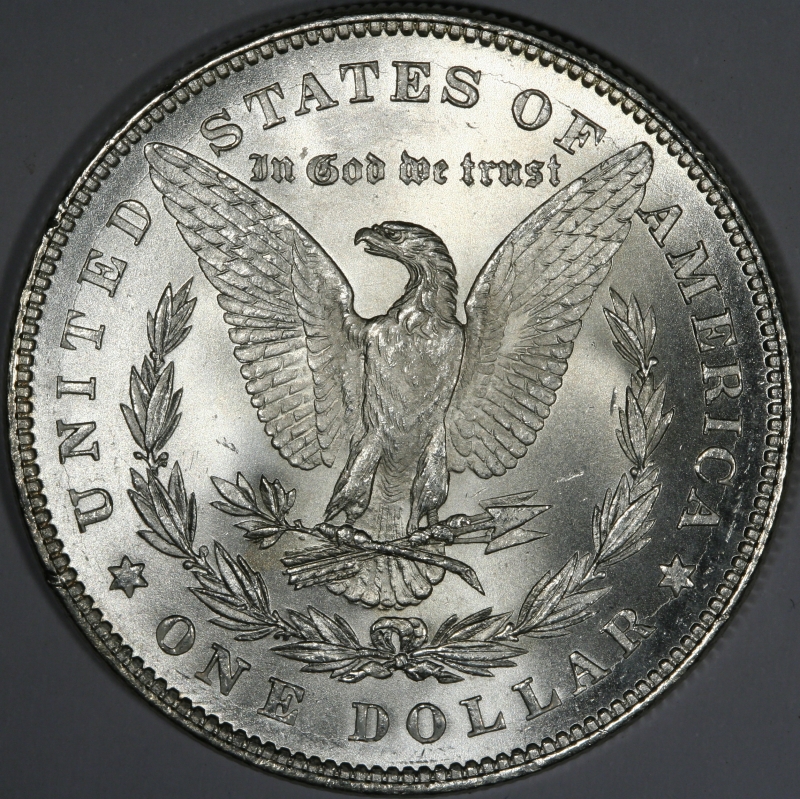 ...and an 1878-S, with the rounded chest and non-parallel arrow feathers, similar to your 1900: 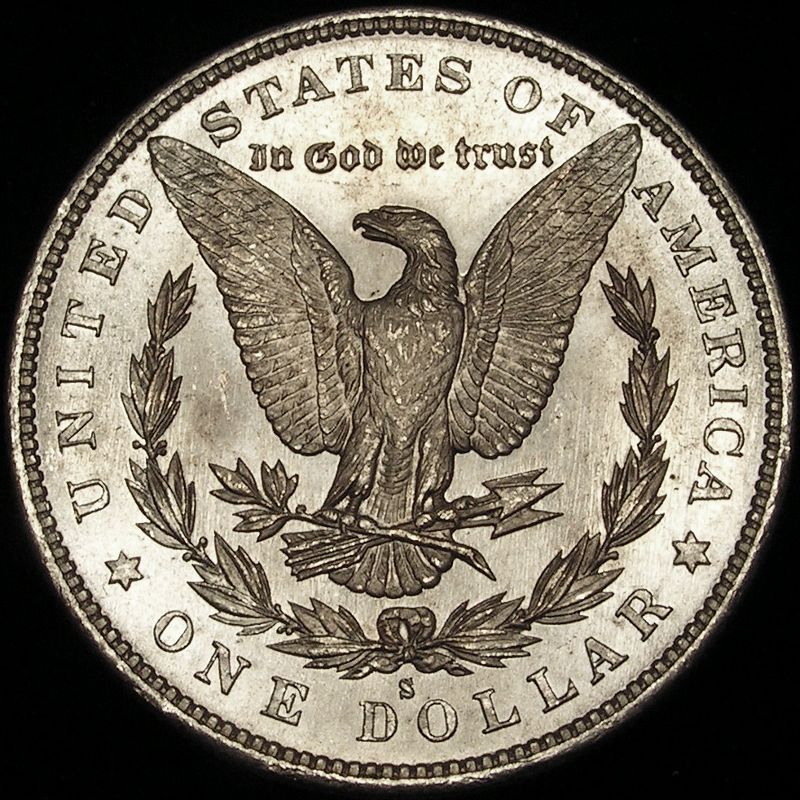 |
|
Valued Member
 Canada
287 Posts |
Firstly I would like to thank you for posting the pictures for my comparison. Looking at the coins that you have displayed I can see the differences between the arrows now but the chest of the eagle is a little harder to discern from a photograph. I think I can see the difference. I did visit the VW Attribution 101 site and I apologize for my obvious oversights. I have just revisited there and still cannot find where it tells me that my 1900 could not have been made with any particular hub, but I will read it again and again as I must be missing something. This page that you mentioned is where I got the terms 'thick and thin' lettering of the word Liberty. I also did not find any mention that the obverse hub was irrelevant in determining which VAM I have, therefore my question regarding this lettering. I also have limited camera skills and equipment, and I am still trying to get used to my new laptop so I will try to post pictures of the entire coin, but can make no guarantee. |
|
Pillar of the Community
United States
4000 Posts |
I'm in the same boat as you rikcando. Struggling with a 1900, that is. So far, I have been able to ID most of my Morgans on my own (or with little help), but I have 4 1900's that I have struggled with.
I keep coming back to them and trying to figure them out only to get frustrated and set them aside. The others were easy compared to these.
I think we picked a tough year to try to ID.
|
|
Valued Member
Canada
287 Posts |
Here is the entire obverse and reverse of the coin. 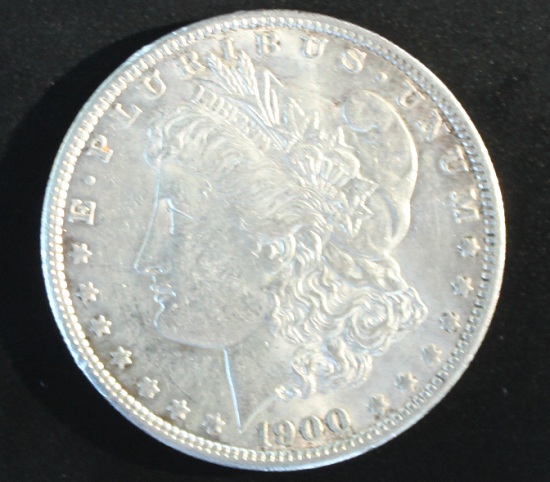 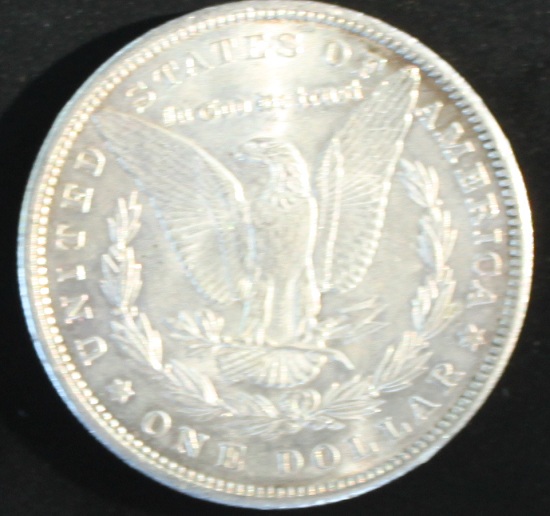 |
|
Pillar of the Community
United States
4000 Posts |
I was just sitting here looking at the pic you e-mailed. Start with the slanted date VAM's, like 8, 15, 29, 31, and 33. Some of them will have 8A, 15A, but they are usually the same coin but a different die state, like clashes, etc. I hope I'm telling you this right. |
|
Pillar of the Community
United States
4000 Posts |
LOL! Just realized you posted new pics. I have been looking at this since my earlier post. I believe you have a normal (not near) date, but slanted. So that should help to narrow the field a little.
Edited by Scooby Due
07/11/2010 09:27 am
|
|
Valued Member
Canada
287 Posts |
Quote:
I do wish they'd identify the years in which each hub were used on that page Do you know if this information is included in their book ? |
|
Valued Member
Canada
287 Posts |
Quote:
I do wish they'd identify the years in which each hub were used on that page Do you know if this information is included in their book ? |
|
Pillar of the Community
United States
7123 Posts |
I was looking around this morning, check your coin against VAM 16 or a couple of the other two olive Vams. From your pics the olive by the eagles foot looks doubled? but I can't tell for sure. |
|
Valued Member
Canada
287 Posts |
The date appeared to be near to me from these pictures until I drew a line on it. You are correct, it is a normal date alignment. Can't say that I noticed it to be slanted until you mentioned it. Thanks for your assistance. 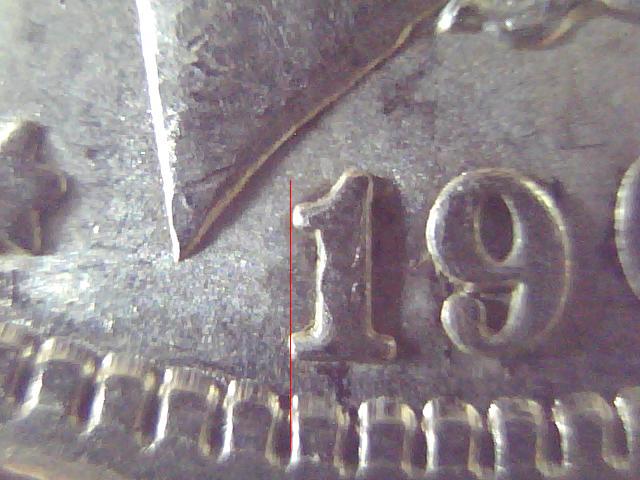 |
|
Valued Member
Canada
287 Posts |
Quote:
Vam 16 or a couple of the other two olive Vams. From looking at pictures of VAMs that do NOT attribute 2 olives, I believe a closer picture of my coin reveals that is is also not of this variety. Thank you for your input. I am learning with each post. 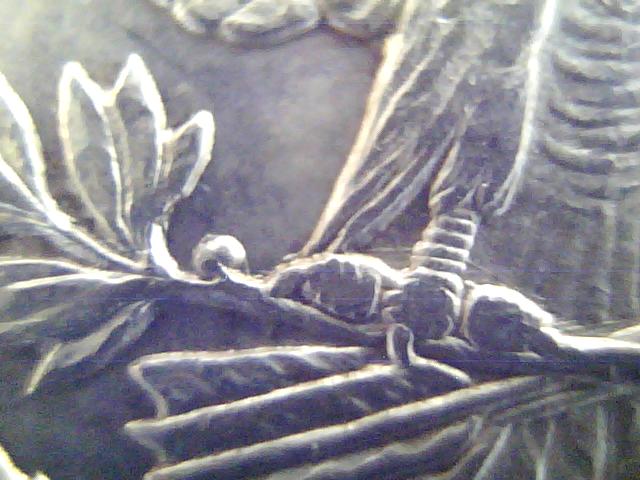 Here is a couple other close ups to eliminate the VAM16, and to further the date information. 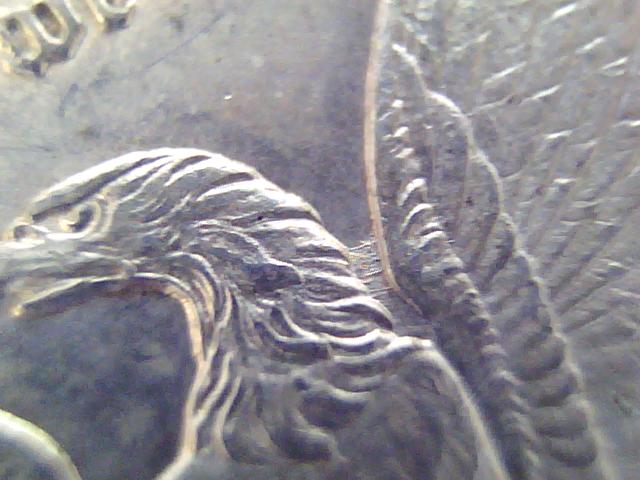 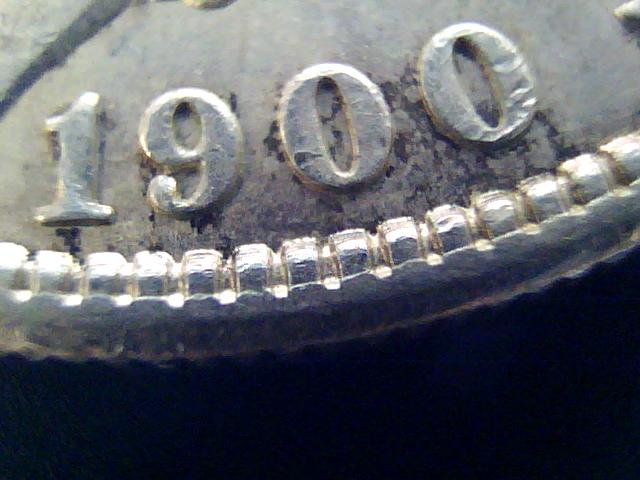 |
|
Valued Member
Canada
287 Posts |
Quote:
SuperDave:
Every_single_coin listed there is identified by hub type, and having done that you will know that none of the terms you've used here - "thick and thin LIBERTY," "7 tailfeathers," "parallel arrow feathers" - are relevant to your 1900.
&
The thickness of the letters in LIBERTY is a hub feature I must apologize again for my ignorance, but I find this very confusing. If I need to know the hub type to identify my coin, then why is a major hub feature irrelevant ? |
|
Pillar of the Community
United States
7123 Posts |
Awe, much better pics ! Those will help.
|
|
Pillar of the Community
 United States
1551 Posts |
Looks too be a Vam-9 Near Date set low from your photo. I just compard it to the plate photo from the book. The book helps out alot as you have many shots of the date on a stright up-down angle. Your photo is not at a true 90 degrees check the top out side of the first zero for light doubling
Russ
|
| |
Replies: 27 / Views: 3,439 |










 Posted 07/10/2010 11:35 pm


