| Author |
 Replies: 75 / Views: 6,426 Replies: 75 / Views: 6,426 |
|
Pillar of the Community
3660 Posts |
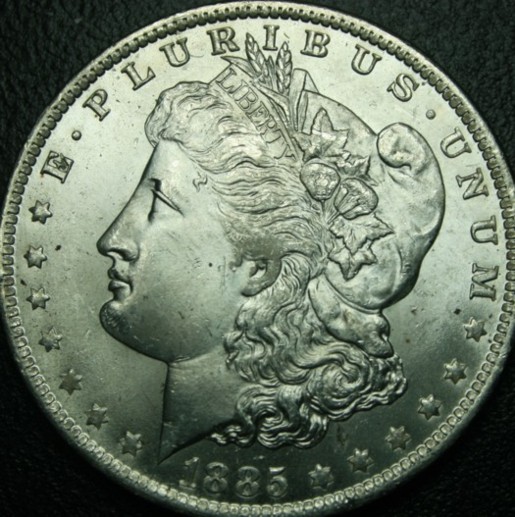
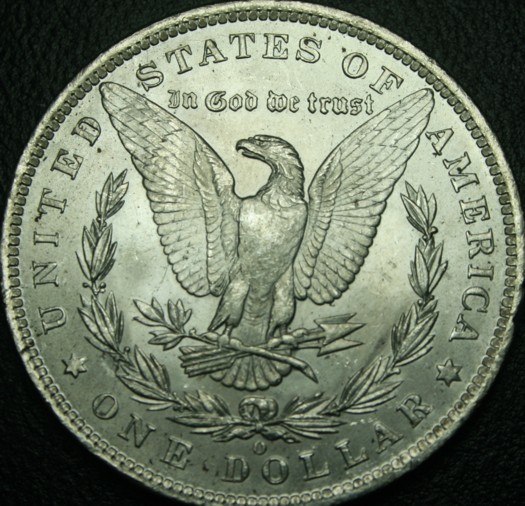
I have heard many times people speak of inconsistencies or abnormalities associated with the New Orleans Mint.
Since I don't look at coins, and don't own any, I don't really know what these things are that make the coins appear different from the other mints.
I'll bet that I know some things however, that will enable you to pinpoint just why the Orleans mint was different (if you don't already know why).
Could someone please enlighten me first on what these Orleans coin discrepancies consist of?
|
|
|
|
Pillar of the Community
United States
709 Posts |
The New Orleans mint had older equipment compared to the San Francisco mint.
The New Orleans mint had a much higher percentage of weak strikes compared to San Francisco and Philadelphia.
The New Orleans mint had a higher percentage of clashed coins compared to the other mints.
The New Orleans mint had a higher percentage of rotated coins (extant) compared to the other mints.
|
|
Pillar of the Community
 United States
1551 Posts |
Many of the O minted coins are known to have a weak strike. Based on your assessment that the workers at that mint used some type of feeler gauge to space the dies apart during set up. That makes alot of sense too me.
|
|
Pillar of the Community
 3660 Posts |
Thanks guys, that is exactly the type of stuff I was looking for. Quote:
Based on your assessment that the workers at that mint used some type of feeler gauge to space the dies apart during set up. Nope, I don't recall saying that Russ. I only said that this was 'possible', and it could be done easily at 'any' of the mints. I never did believe that die placement was the cause of what many feel is evidence of a 'weak strike', and I still don't. I had believed previously, (and at least partially in error), that the management of the N.O. mint was responsible for the illusion of weak strikes. I have discussed the N.O. mint with my buddy Roger, and he has clued me in on a few revelations that should have been perfectly obvious to me before (especially since I fancy myself as a bit of a history buff). I'll share with you later, if you would please share with me more (maybe with a photo of a weak strike). I already know what clashes and rotation looks like, and these things are definitely press related. The weak strike thing however, I believe to be not a press issue. |
|
Pillar of the Community
United States
709 Posts |
The New Orleans mint had a much higher incidence of pitting observed on their Morgan dollars. |
|
Pillar of the Community
3660 Posts |
Pitting, clashing, rotation and weak strikes........I am fairly sure about the weak strike thing, but the others I can only guess at. You know Terry, if we could all cooperate (especially me), I really do think we could come up with some very plausible rationale for a lot of things. You guys know the 'whats', and I do not think twice about our conclusions in that regard. I trust myself as to the 'hows', and I believe explicitly in my researcher friend for the 'whys'. Together, we could do great things, but alone, we are basically lost (in my estimation).
|
|
Pillar of the Community
United States
709 Posts |
The New Orleans mint also has the five dies that came from the closed Carson City mint that were over stamped with the "O" mint mark givng us the O/CC varieties. Also, some of the most spectacular die breaks on Morgan dollars occured from this mint as well. The New Orleans mint also has the distiction of having minted the only known two sided concave Morgan dollar, the 1883-O VAM 52, the only such VAM in the entire Morgan series. |
|
Pillar of the Community
United States
1551 Posts |
Edited by twohawks
09/25/2010 01:02 am
|
|
Pillar of the Community
3660 Posts |
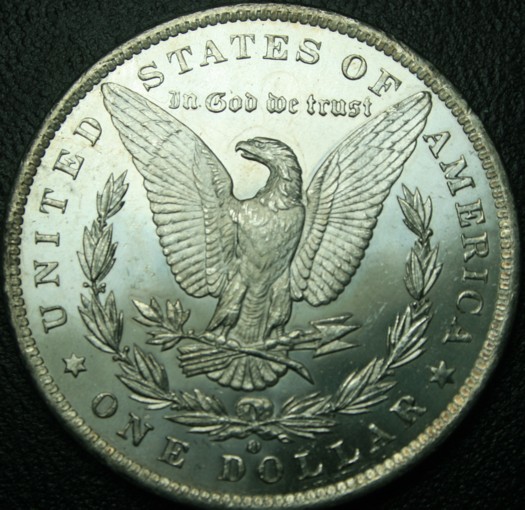
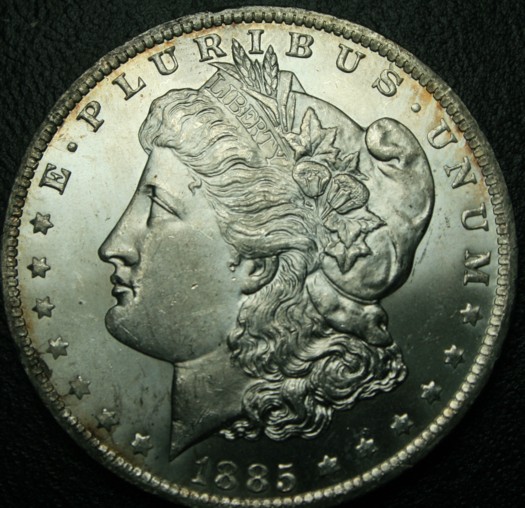
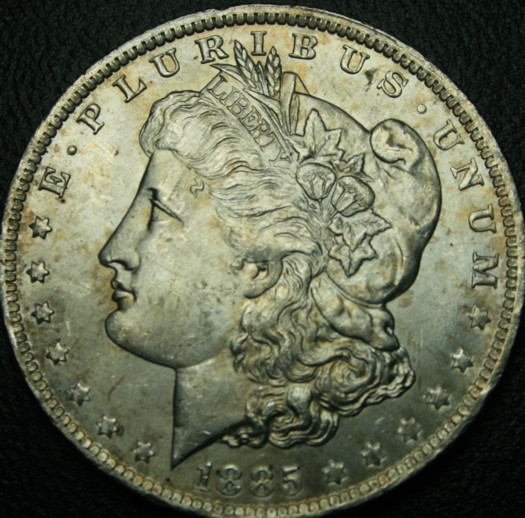
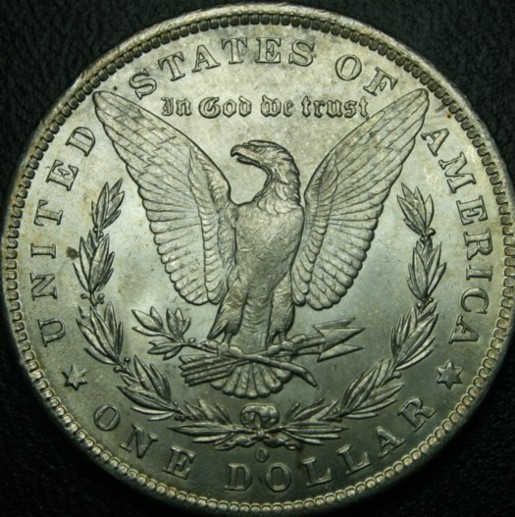
Yes, I definitely see a difference Russ.....You feel that they are all roughly the same grade ?
|
|
Pillar of the Community
3660 Posts |
Quote:The New Orleans mint also has the five dies that came from the closed Carson City mint that were over stamped with the "O" mint mark givng us the O/CC varieties. Also, some of the most spectacular die breaks on Morgan dollars occured from this mint as well. The New Orleans mint also has the distiction of having minted the only known two sided concave Morgan dollar, the 1883-O VAM 52, the only such VAM in the entire Morgan series. Then these five former CC dies show the same effects of the weak strikes as well? I think that the die breaks may be able to be explained. We already concluded the definitive cause of that most spectacular double concave V-52 didn't we? Let us start this weekend. I think that we might find that the causes for some things are more of a historical, political, personal, and logistical nature than merely press related. |
|
Pillar of the Community
United States
1551 Posts |
If they where graded I think they would grade out from top to bottom 62 maybe 63 / 62 and 62. Some of the O minted coins are graded on a different scale, the weak strike is discounted
|
|
Pillar of the Community
United States
5700 Posts |
|
|
Pillar of the Community
3660 Posts |
We have pitting, clashing, rotation and weak strikes......What about short die life (relative to the other mints), was this a problem that you may be aware of?
|
|
Pillar of the Community
3660 Posts |
Where is my bestest buddy Gene?
|
|
Pillar of the Community
United States
1551 Posts |
Zee, not that I know of. I have never even heard it mentioned, it will be interesting to know if someone chimes in.
|
|
Pillar of the Community
3660 Posts |
Yes, thanks for the reply Russ.
Premature die wear out was 'THE' major problem at the New Orleans mint. While CC and SF regularly did not use all dies issued, N.O. often did. New Orleans went through more dies (1878-1904) than did Philly, yet struck fewer coins. I feel that the weak strikes, and clashing are both direct and indirect results of this premature die wear.
What are the possibilities that could cause increased die wear? An engineer was assigned to New Orleans by the Mint Director in Philly to find out.
|
| |
Replies: 75 / Views: 6,426 |









 Posted 09/24/2010 10:19 pm