

 Posted 12/05/2010 5:19 pm


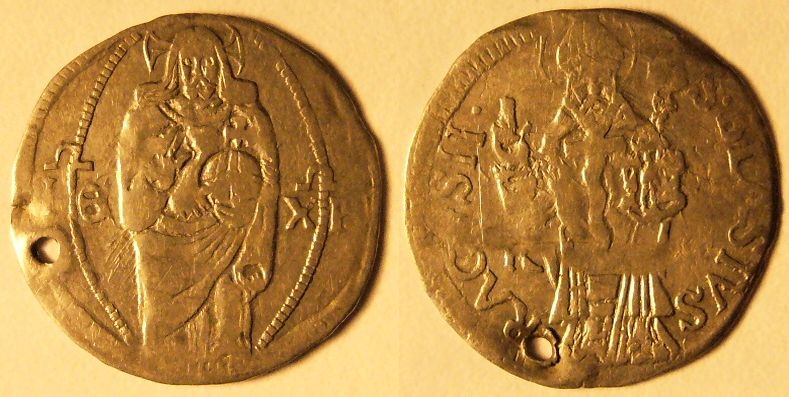
#2 is a "local" piece for you, nikola: it's from the city-state of Ragusa, now known as Dubrovnik, Croatia. It has a portrait of Christ on one side, and of the local patron saint, St Blasius, on the other. Being holed and turned into a religious charm was a not uncommon fate for these coins; finding one unholed is challenging.
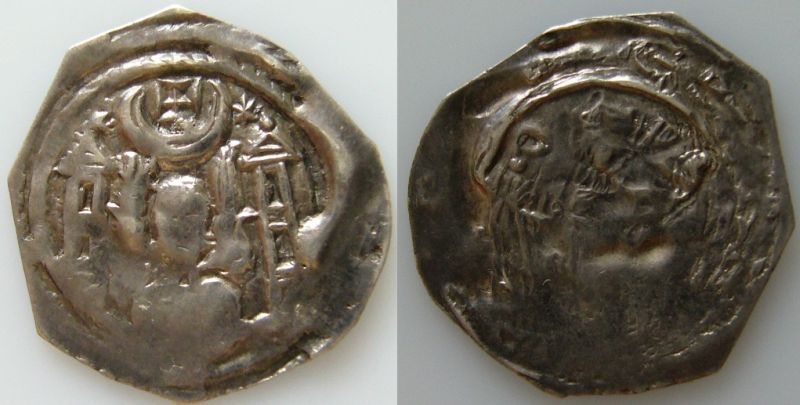
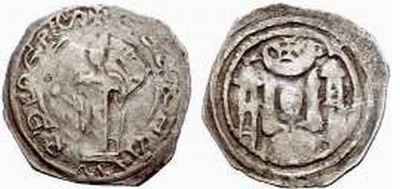
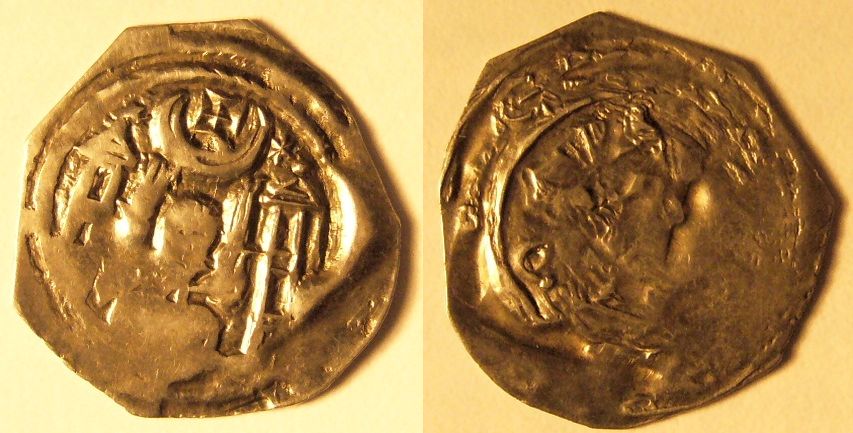
Not sure what #1 is yet, but it's not Ottoman Turkish; they never made pictorial pennies like that, and definitely not with little crosses on them. It appears to be bracteate - having the same design from the obverse stamped in incuse on the reverse. This is common for early Germanic pennies (or pfennigs).
Not sure what #1 is yet, but it's not Ottoman Turkish; they never made pictorial pennies like that, and definitely not with little crosses on them. It appears to be bracteate - having the same design from the obverse stamped in incuse on the reverse. This is common for early Germanic pennies (or pfennigs).
Don't say "infinitely" when you mean "very"; otherwise, you'll have no word left when you want to talk about something really infinite. - C. S. Lewis