To participate in the forum you must log in or register. | Author |
 Replies: 38 / Views: 11,188 Replies: 38 / Views: 11,188 |
|
Pillar of the Community
United States
2764 Posts |
I've intended to run this contest in April to commemorating the "Black April" month (the fall of Saigon on April 30, 1975). However, too many things happened to me and my family lately that prevented me from doing it in April. This contest will have five parts/rounds: 1) Head of State, important political leaders. 2) Generals / Commanders. 3) Facts/Figures. 4) Post war. 5) Personal Each parts will run for 1 week, from the date/time I posted the question(s). Elimination round: I will select the top 3 winners for each of the 5 parts (they will each win a prize).
===> 1st Prizes: 1975 Proof Set
===> 2nd Prizes: 1975 Mint Set
===> 3rd Prizes: Coins/Currency(ies) during the Vietnam War era (from one of those countries that participated in the war) with the current value of about 5USD. Final: At the end of the 5 parts/rounds, I will select the top 3 winners. Each winners will receive: ONE Vietnamese Coin/Currency during the Vietnam War era AND:
===> 1st Prize: MS/BU Morgan dollar (date/mm is my choice)
===> 2nd Prize: MS/BU ASE Dollar (date is my choice)
===> 3rd Prize: MS/BU Franklin half dollar (date/mm is my choice
***There will be some bonus prizes (and points) for Vietnam Vet - To Be Determine.*** 1) Basic Forum rules applied 2) One (1) final answer per participant (you can post/modify as much as you want, but I need your final/concrete answer). 3) First completed answer get the point (each part will have multiple questions, your answer need to address each questions - in simple & completed English sentence - spelling count (English spelling of Vietnamese words is acceptable). 4) Forum time stamp count. 5) I will make the final call and/or decide on the tie breaking method. 6) Always be Polite & Courteous to other members. 7) HAVE FUN! Let share some history lessons. Lastly, I reserve the right to modify the contest and its rules for clarity or simplicity. Thank you for participating. Edited by SA4H
05/19/2011 4:44 pm
|
|
|
|
Pillar of the Community
United States
900 Posts |
I don't know what to do. Could you provide more details please?
|
|
Pillar of the Community
 United States
2764 Posts |
Part 1:
For each questions: Ten points for each correct and complete answer.
For each BONUS questions: Two points for each correct and completed answer.
Answer as much as you can to get the most points.
1) Who was the originator and what was the theory (US's interest) that lead to the involvement of the US in the Vietnam War? Who was the US President that proposed that theory to Congress and US public? BONUS: What happened to them after the war (Vietnam War)?
2) Who was the First Head-of-State of North Vietnam (Democratic Republic of Vietnam)? BONUS: What happened to him/her after the war (Vietnam War)?
3) Who was the First Head-of-State of South Vietnam (Republic of Viet Nam)? BONUS: What happened to him/her after the war (Vietnam War)?
4) Who was the Last Head-of-State of North Vietnam (Democratic Republic of Vietnam)? BONUS: What happened to him/her after the war (Vietnam War)?
5) Who was the Last Head-of-State of South Vietnam (Republic of Viet Nam)? BONUS: What happened to him/her after the war (Vietnam War)?
6) What was the origin of North Vietnam and South Vietnam (ie: Major/international events (since WWII) that lead to their creation and all the parties that involved)? BONUS: Describe each State's flag and meanings.
In 1972, the US ended its military involvement in Vietnam and withdrawing its troops.
7) What are the major/international events leading up to the US withdrawal agreement? BONUS: What's the name and signing location of the agreement?
8) List all parties and key representatives that participated in the agreement. BONUS: Name of two leading negotiators.
9) List the name and duration (days/years) of all South Vietnam's Head-of-State. BONUS: Name those died/killed prior to the end of the war (April 30, 1975).
10) List the name and duration (days/years) of all North Vietnam's Head-of-State. Name those died/killed prior to the end of the war (April 30, 1975).
Vietnam Veteran Question: Please give a brief description of your deployment(s) in the war. The Vietnam Veteran with the longest deployment(s) will win one (1) South Vietnam currency/note. THANK YOU for YOUR SERVICES.
|
|
Pillar of the Community
United States
2764 Posts |
Part/Round 1 had been posted. Everyone have a week (from posted date/time) to answer those questions. Please refer to my first post for instruction and clarification. Thanks.
Edited by SA4H
05/19/2011 5:02 pm
|
|
Pillar of the Community
United States
3294 Posts |
1) Who was the originator and what was the theory (US's interest) that lead to the involvement of the US in the Vietnam War? Who was the US President that proposed that theory to Congress and US public? BONUS: What happened to them after the war (Vietnam War)?
No idea,
2) Who was the First Head-of-State of North Vietnam (Democratic Republic of Vietnam)? BONUS: What happened to him/her after the war (Vietnam War)?
Ho Chi Minh, and he died before the war was over.
3) Who was the First Head-of-State of South Vietnam (Republic of Viet Nam)? BONUS: What happened to him/her after the war (Vietnam War)?
Ngo Dinh Diem, he also died before the end of the war.
4) Who was the Last Head-of-State of North Vietnam (Democratic Republic of Vietnam)? BONUS: What happened to him/her after the war (Vietnam War)?
Lee Duan, and he stayed the head of state after the war until he died in the 80s.
5) Who was the Last Head-of-State of South Vietnam (Republic of Viet Nam)? BONUS: What happened to him/her after the war (Vietnam War)?
Nguyen Van Thieu. He fled to Europe.
6) What was the origin of North Vietnam and South Vietnam (ie: Major/international events (since WWII) that lead to their creation and all the parties that involved)? BONUS: Describe each State's flag and meanings.
7) What are the major/international events leading up to the US withdrawal agreement? BONUS: What's the name and signing location of the agreement?
8) List all parties and key representatives that participated in the agreement. BONUS: Name of two leading negotiators.
9) List the name and duration (days/years) of all South Vietnam's Head-of-State. BONUS: Name those died/killed prior to the end of the war (April 30, 1975).
10) List the name and duration (days/years) of all North Vietnam's Head-of-State. Name those died/killed prior to the end of the war (April 30, 1975).
|
|
Pillar of the Community
United States
2661 Posts |
1. George F. Kennan, Domino theory, Dwight D. Eisenhower........George Kennan continued to be a leading thinker in international affairs as a faculty member of the Institute for Advanced Study from 1956 until his death at age 101 in March 2005.
Dwight D. Eisenhower died before the wars end on March 28 1969.
2. Ho Chi Minh.........Minh also died before wars end on September 2, 1969
3. Ngo Dinh Diem .........Diem was assasinated on November 2, 1963 by Nguyen Van Nhung.
4. Ton Duc Thang......He remained President of North Vietnam and served as the first President of the Socialist Republic of Vietnam until his death at age 91 on March 30, 1980.
5.Nguyen Van Thieu.......Thieu resigned and left the country aboard an American helicopter with millions of dollars in gold, just before the the fall of Siagon. He eventually settled in Massachusetts and lived in seclusion until his death on September 29, 2001.
6. In 1941, the Viet Minh, a communist and nationalist liberation movement, emerged under Ho Chi Minh to seek independence for Vietnam from France as well as to oppose the Japanese occupation. Japanese occupation during World War II caused the Vietnamese Famine of 1945, which caused 2 million deaths, or 10% of the population then. Following the military defeat of Japan and the fall of its Empire of Vietnam in August 1945, Viet Minh occupied Hanoi and proclaimed a provisional government, which asserted independence on 2 September.
In the same year the Provisional French Republic sent the French Far East Expeditionary Corps, which was originally created to fight the Japanese occupation forces, in order to pacify the liberation movement and to restore French rule. On November 20, 1946, triggered by the Haiphong Incident, the First Indochina War between Viet Minh and the French forces ensued, lasting until July 20, 1954.
Despite fewer losses -- Expeditionary Corps suffered one-third of the casualties of the Chinese and Soviet-backed Viet Minh -- during the course of the war, the French and Vietnamese loyalists eventually suffered a major strategic setback at the Siege of Dien Bien Phu, which allowed Ho Chi Minh to negotiate a ceasefire with a favorable position at the ongoing Geneva conference of 1954. Colonial administration ended as French Indochina was dissolved. According to the Geneva Accords of 1954 the forces of former French supporters and communist nationalists were separated south and north, respectively, with the Vietnamese Demilitarized Zone, at the 17th parallel north, between. A 300-day period of free movement was given, during which almost a million northerners, mainly Catholic, moved south, fearing persecution by the communists.
A partition of Vietnam, with Ho Chi Minh's Democratic Republic of Vietnam in North Vietnam, and Emperor Bảo Đại's State of Vietnam in the South Vietnam, was not intended to be permanent by the Geneva Accords, and they expressly forbade the interference of third powers. The State of Vietnam's Prime Minister Ngo Dinh Diem toppled Bảo Đại in a fraudulent referendum organised by his brother Ngo Dinh Nhu, and proclaimed himself president of the Republic of Vietnam. The Accords mandated nationwide elections by 1956, which Diem refused to hold, despite repeated calls from the North for talks to discuss elections.
The pro-Hanoi Vietcong began a guerrilla campaign in the late 1950s to overthrow Diem's government, which an official Vietcong statement described as a disguised colonial regime. In the North, thousands of landowners were murdered by the communists and famine broke out in the 1950s. In the South, Diem went about crushing all opposition and tens of thousands were jailed or killed; dissidents were routinely labelled as communists even if they were anti-communist. Both Vietnams were police states with totalitarian security systems.
In 1963, Buddhist discontent with Diem's pro-Catholic discrimination erupted following the banning of the Buddhist flag and the Hue Vesak shootings. This resulted in a series of mass demonstrations during what is known as the Buddhist crisis. With Diem unwilling to bend, Nhu orchestrated the Xa Loi Pagoda raids; estimates of the death toll range into the hundreds. As a result, America's relationship with Diem broke down and resulted in the 1963 coup that saw Diem killed.
Diem was followed by a series of military regimes that often lasted only months before being toppled by another. With this instability, the communists began to gain ground. There were more than a dozen governments before the pairing of Air Marshal Nguyen Cao Ky and General Nguyen Van Thieu took control of a junta in mid-1965. Thieu gradually outmaneuvered Ky and cemented his grip on power in fraudulent elections in 1967 and 1971.To support South Vietnam's struggle against the communist insurgency, the United States began increasing its contribution of military advisers. US forces became embroiled in ground combat operations in 1965 and at their peak they numbered more than 500,000. Communist forces attacked most major targets in South Vietnam during the 1968 Tet Offensive, and although their campaign failed militarily, it shocked the American establishment, and caused them to think that the communists could not be defeated. Communist forces supplying the Vietcong carried supplies along the Ho Chi Minh trail, which passed through Laos and Cambodia. US president Richard Nixon authorized Operation Menu, an SAC bombing campaign in Laos and Cambodia, which he kept secret from the US Congress.
Its own casualties mounting, and facing opposition to the war at home and condemnation abroad, the U.S. began withdrawing from ground combat roles according to the Nixon Doctrine; the process was subsequently called Vietnamization. The effort had mixed results. The Paris Peace Accords of 27 January 1973 formally recognized the sovereignty of Vietnam "as recognized by the 1954 Geneva Agreements." Under the terms of the accords all American combat troops were withdrawn by 29 March 1973. Limited fighting continued, before the north captured the province of Phuoc Long in December 1974 and started a full-scale offensive, culminating in the Fall of Saigon on 30 April 1975. South Vietnam briefly came under the nominal rule of a Provisional Revolutionary Government while under military occupation by North Vietnam. On 2 July 1976, North and South were merged to form the Socialist Republic of Vietnam........North Veitnameese flag is a Red back ground with a Yellow star and it symbolizes revolution and blood. The South Vietnameese flag has a Yellow background with three horizontal Red stripes and
either symbolises the unifying blood running through northern, central, and southern Vietnam.
7. Sihanouk Ousted in Cambodia: Prince Sihanouk's attempt to maintain Cambodia's neutrality while war waged in neighboring Vietnam forced him to strike opportunistic alliances with China, and then the United States. Such vacillating weakened his government, leading to a coup orchestrated by his defense minister, Lon Nol.
Kent State Incident: National Guardsmen open fire on a crowd of student antiwar protesters at Ohio's Kent State University, resulting in the death of four students and the wounding of eight others. President Nixon publicly deplores the actions of the Guardsmen, but cautions: "...when dissent turns to violence it invites tragedy." Several of the protesters had been hurling rocks and empty tear gas canisters at the Guardsmen.
Kissinger and Le Duc Begin Secret Talks
Number of US Troops Falls to 280K
1971
Lt. Calley Convicted of Murder
Pentagon Papers Published: A legacy of deception, concerning US policy in Vietnam, on the part of the military and the executive branch is revealed as the New York Times publishes the Pentagon Papers. The Nixon administration, eager to stop leaks of what they consider sensitive information, appeals to the Supreme Court to halt the publication. The Court decides in favor the Times and allows continued publication.
Nixon Announces Plans to Visit China: In a move that troubles the North Vietnamese, President Nixon announces his intention to visit The People's Republic of China. Nixon's gesture toward China is seen by the North Vietnamese as an effort to create discord between themselves and their Chinese allies.
Thieu Re-elected in South Vietnam
1972
Nixon Cuts Troop Levels by 70K: Responding to charges by Democratic presidential candidates that he is not moving fast enough to end US involvement in Vietnam, President Nixon orders troop strength reduced by seventy thousand.
Secret Peace Talks Revealed
B-52s Bomb Hanoi and Haiphong: In an attempt to force North Vietnam to make concessions in the ongoing peace talks, the Nixon administration orders heavy bombing of supply dumps and petroleum storage sites in and around Hanoi and Haiphong. The administration makes it clear to the North Vietnamese that no section of Vietnam is off-limits to bombing raids.
Break-In at Watergate Hotel
Kissinger Says "Peace Is At Hand": Henry Kissinger and Le Duc Tho reach agreement in principle on several key measures leading to a cease-fire in Vietnam. Kissinger's view that "peace is at hand," is dimmed somewhat by South Vietnamese President Thieu's opposition to the agreement.
Nixon Wins Reelection
1973
Cease-fire Signed in Paris: A cease-fire agreement that, in the words of Richard Nixon, "brings peace with honor in Vietnam and Southeast Asia," is signed in Paris by Henry Kissinger and Le Duc Tho. The agreement is to go into effect on January 28........ The Paris Peace Accords, signed in Paris, france
8. Henry Cabot Lodge, Jr., former United States Ambassador to South Vietnam.
William P. Rogers, United States Secretary of State
Tran Van Lam, Minister for Foreign Affairs for the Republic of Vietnam
Nguyen Duy Trinh, Minister for Foreign Affairs for The Democratic Republic of Vietnam
Nguyen Thi Binh, Minister for Foreign Affairs for The Provisional Revolutionary Government of the Republic of South Vietnam
Other key negotiators were Henry Kissinger, Le Duc Tho, and Thich Nhat Hanh.
9.From Wikipedia, the free encyclopedia
Jump to: navigation, search
The Quẻ Càn flag was used by South Vietnam in 1948-75. It was originally the flag of Emperor Thành Thái (1890-1920).This is a list of leaders of South Vietnam, since the establishment of the Autonomous Republic of Cochinchina in 1946 until the fall of the Republic of Vietnam in 1975.
Contents [hide]
1 Autonomous Republic of Cochinchina (1946--1947)
1.1 Presidents of the Provisional Government
2 Republic of South Vietnam (1947--1948)
2.1 President of the Provisional Government
3 Provisional Central Government of Vietnam (1948--1949)
3.1 President of the Provisional Government
4 State of Vietnam (1949-1955)
4.1 Chiefs of State
4.2 Prime Ministers
5 Republic of Vietnam (1955--1975)
5.1 Presidents
5.2 Prime Ministers
6 See also
7 External links
Autonomous Republic of Cochinchina (1946--1947)Presidents of the Provisional Government# Name Born-Died Term start Term end Political Party Notes
1 Nguyá».n Văn Thinh 1888-1946 1 June 1946 10 November 1946 Cochinchinese Democratic Party Committed suicide in office
2 Nguyá».n Văn Xuân, 1st time 1892-1989 15 November 1946 7 December 1946 Military
3 Lê Văn Hoach 1896-1978 7 December 1946 8 October 1947 ?
Republic of South Vietnam (1947--1948)President of the Provisional Government# Name Born-Died Term start Term end Political Party Notes
1 Nguyá».n Văn Xuân, 2nd time 1892-1989 8 October 1947 27 May 1948 Military Name of the government was changed to "Republic of South Vietnam" on October 8, 1947.[1] Also called "Provisional Government of South Vietnam."
Provisional Central Government of Vietnam (1948--1949)President of the Provisional Government# Name Born-Died Term start Term end Political Party Note
Nguyá».n Văn Xuân 1892-1989 27 May 1948 14 June 1949 Military The name "Central Government of Vietnam" reflects an expectation of merger with the North. The French promised a merger, but delayed due to war with Vietminh.
State of Vietnam (1949-1955)Chiefs of State# Name Born-Died Term start Term end Political Party Notes
1 Bảo Đại 1913-1997 13 June 1949 30 April 1955 Non-party Title was "Chief of State" (Quoc Truong) as Bảo Đại had abdicated as emperor in 1945.
2 Ngô Đình Diệm 1901-1963 30 April 1955 26 Oct 1955 Front of National Salvation Acting
Prime Ministers# Name Born-Died Term start Term end Political Party Notes
1 Bảo Đại 1913-1997 14 June 1949 21 January 1950 Non-party
2 Nguyá».n Phan Long 1889-1960 21 January 1950 26 April 1950 ?
3 Trần Văn Hữu 1896-1984 27 April 1950 6 June 1952 Non-party
4 Nguyá».n Văn Tâm 1893-1990 6 June 1952 17 December 1953 Vietnamese Nationalist Party
5 Nguyá».n Phúc Bửu Lộc 1914-1990 12 January 1954 16 June 1954 Non-party
Phan Huy Quat, 1st time 1908-1979 16 June 1954 26 June 1954 Dai Viet Party Acting
6 Ngô Đình Diệm 1901-1963 26 June 1954 26 October 1955 Front of National Salvation Prime Minister until October 26, 1955 when he deposed Chief of State Bảo Đại and proclaimed himself President of the Republic of Vietnam.
Republic of Vietnam (1955--1975)Presidents# Name Born-Died Term start Term end Political Party Notes
1 Ngô Đình Diệm 1901-1963 26 October 1955 2 November 1963 Can Lao Party Died in coup d'état
2 Dương Văn Minh, 1st time 1916-2001 2 November 1963 30 January 1964 Military Chairman of the Military Revolutionary Council
3 Nguyá».n Khánh, 1st time 1927- 30 January 1964 8 February 1964 Military
4 Dương Văn Minh, 2nd time 1916-2001 8 February 1964 16 August 1964 Military
5 Nguyá».n Khánh, 2nd time 1927- 16 August 1964 27 August 1964 Military
6 Provisional Leadership Committee 27 August 1964 8 September 1964 Military Committee Members:
Duong Van Minh,
Nguyen Khanh,
Tran Thien Khiem
7 Dương Văn Minh, 3rd time 1916-2001 8 September 1964 26 October 1964 Military Chairman of the Provisional Leadership Committee
8 Phan Khắc Sửu 1893-1970 26 October 1964 14 June 1965 Military
9 Nguyá».n Văn Thiệu 1923-2001 14 June 1965 21 April 1975 Military
(1965-1968)
â†"
National Social Democratic Front
(1968-1975) Chairman of the National Leadership Committee to 31 October 1967
10 Trần Văn Hương 1902-1982 21 April 1975 28 April 1975 ? Acting
11 Dương Văn Minh, 4th time 1916-2001 28 April 1975 30 April 1975 Military Acting. The last President of the Republic of Vietnam, deposed after the fall of Saigon.
Prime Ministers# Name Born-Died Term start Term end Political Party Notes
1 Nguyen Ngoc Tho 1908- 4 November 1963 30 January 1964 Military
2 Nguyen Khanh, 1st time 1927- 8 February 1964 29 August 1964 Military
3 Nguyen Xuan Oanh, 1st time 1921-2003 29 August 1964 3 September 1964 Military Acting
4 Nguyen Khanh, 2nd time 1927- 3 September 1964 4 November 1964 Military
5 Tran Van Huong, 1st time 1902-1982 4 November 1964 28 January 1965 Military
6 Nguyen Xuan Oanh, 2nd time 1921-2003 28 January 1965 15 February 1965 Military Acting
7 Phan Huy Quat 1908-1979 16 February 1965 8 June 1965 Dai Viet Party
8 Nguyá».n Cao Kỳ 1930- 19 June 1965 31 October 1967 Military
9 Nguyen Van Loc 1922- 31 October 1967 17 May 1968 Military
10 Tran Van Huong, 2nd time 1908-1982 28 May 1968 1 September 1969 ?
11 Tran Thien Khiem 1925- 1 September 1969 4 April 1975 Military
12 Nguyá».n Bá Cẩn 1930-2009 4 April 1975 24 April 1975 Democracy Party
13 Vũ Văn Mẫu 1914-1998 28 April 1975 30 April 1975 Forces for National Reconciliation The last Prime Minister of the Republic of Vietnam, deposed after the fall of Saigon.
10.
Ho Chi Minh, died bofore end of war and served 24 years.
Ton Duc Thang served seven years until becomming president of the Socialist Republic of Vietnam.
|
|
Bedrock of the Community
United States
10065 Posts |
1. Dwight D. Eisenhower was the one who talked of a "falling domino principal." He was, most likely, basing the concept on the Truman Doctrine of 1947 and the Marshal plan (the US aiding Greece and Turkey and other Western European countries b/c communism spreading was a threat to national security and other countries would follow). The theory was named the Domino Theory -- sometimes called the Domino Effect.
Senator (then) John F. Kennedy presented the idea at a 1956 Conference in Washington D.C.
SNIP
BONUS: What happened to them after the war (Vietnam War)?
SNIP
If "them" refers to the people involved -- Eisenhower died of congestive heart failure in 1969. JFK was assassinated in 1963.
If "them" refers to the theory -- it actually has been applied in 2010-2011 to radical Islam taking over countries in the Middle East.
The evidence of its effects being true are witnessed today, even in the US, by Obama hiring the self-proclaimed "outspoken communist" Van Jones as a czar. (extra at no charge!)
2. First North (Democratic Republic of) Vietnam Head of State -- Ho Chi Minh
BONUS: He died of heart failure before the end of the war.
3. First South (Rep. of )Vietnam) Head of State -- Bao Dai was supposed to when the split was made in Geneva (1954), but the first official was Ngo Dinh Diem
BONUS: Diem was assassinated in a coup in 1963.
4. Last North Head of State -- Ton Duc Thang
BONUS: He took control of all Vietnam at end of war.
5. Last South Head of State of South Vietnam - Duong Van Minh or "Big Minh" (overthrew Kahn but only for 2 days before surrender to the communists
BONUS: After the war he was not put in reeducation camps as most leaders, spent time in his private villa, emigrated to France in 1983, moved to California, died at age 85 (in 2001) died after falling while at home.
6. Origins: Before WWII VN was under the French Empire. The Japanese overran the country during WWII. During the war, the Japanese retreated and Ho Chi Minh established a VN government. After the war the allies gave South VN back to the French and the north was in the hands of China who pulled out in 1946 so Ho Chi Minh's party -- the Viey Minh ruled the North. The French decided they also wanted to have back North VN and this led to war. The Viet Minh were backed by communist countries )Russia, China, Eastern European communist countries) and the French were backed by the US. The French were defeated. World powers met in Geneva and divided the country along the 17th parallel
BONUS: Flags and meaning
Japan -- 4 different during WWII:
General (civil) flag -- white field with red disk centered -- their "sun disc" flag
"The land of the Rising Sun" -- white is honesty and purity, red is the sun meaning brightness, sincerity and warmth
Emperor's flag - red field with the gold/yellow Imperial seal of Japan centered (similar looking to a 16 petal flower)
Naval Flag -- white field -- red circle to slight left of center with 16 red rays emanating from the circle - symbol of the rising sun
Army Flag -- white field -- red circle centered with 16 red rays emanating from the circle - symbol of the rising sun
France: French -- 3 vertical stripes starting at the left with blue, white and red. A common symbolism is the 3 main estates of society:
Blue -- bourgeoisie
White - clergy
Red - nobility
Other symbolism in the past has associated these colors with various religious figures and white as simply being a "national color."
North Vietnam -- a red field with centered, yellow, 5 pointed star.
Red -- blood spilled during the fight for independence.
5 points of star -- union of workers, peasants, soldiers, intellectuals, and young people working together to build socialism.
This is the flag used in present day.
South Vietnam -- yellow field with 3 horizontal, red stripes which symbolize the unifying blood running through northern, central, and southern Vietnam -- or all three stripes represent the symbol for "south" -- being that Vietnam is south of China.
7. Events leading to US withdrawal -- 1968 North VN wanted toi start peace talks but Ho Chi Minh wanted all foreigners out of Vietnam and the unified halves to be recognized as one nation. Richard Nixon started "vietnamisation" where the US no longer fought the battles but supported the South. A majority of US troops were withdrawn -- the North invaded the South and took them over. Most likely the liberally run news media in the states were also the cause of US public opinion hampering the political side of things over here and this also led to a disgraceful rejection of the veterans of this war who returned home.
BONUS: Peace Treaty signed at the Majestic Hotel in Paris.
8. Parties involved in the signing:
from the US :
Ambassador to S. VN - Henry Cabot Lodge Jr
Secretary of State -- William P. Rogers
Rep of Vietnam: Minister of Foreign Affairs -- Tran Van Lam
Dem. Rep of Vietnam: Minister of Foreign Affairs -- Nguyen Duy Trinh
Provisional Revolutionary Government of the Rep. os S. Vietnam: ministry of Foreign Affairs -- Nguyen Thi Binh
BONUS: 2 Key Negotiators (plus 1 for no charge!)
US: Henry Kissinger
N. Vietnam: Le Duc Tho
S. Vietnam: Thich Nhat hanh
9. South Vietnam presidents:
Ngo Dinh Diem -- installed as Prime Minister January 7, 1954 & proclaimed himself president January 7, 1955 -- Assassinated on Nov 2, 1963
Duong Van Minh or "Big Minh" -- Nov 2, 1963 -- Jan 30, 1964
Nguyen Khanh -- Kahn took over in a coup on January 30, 1964 (hence Big Minh experienced the Wrath of Khanh) until February 25, 1965 when he was ousted after a coup.
Nguyen Van Thieu -- September 30, 1967 -- April 21, 1975 -- resignation
Tran Van Huomg took over on Thieu's resignation of April 21, 1975 -- held the position one week and on April 28, 1975 handed over power (back to) Duong Van Minh who had the presidency for two days before surrender of the government two days later on April 30, 1975
BONUS: Presidents dead or killed prior to the end of the war: Ngo Dinh Diem -- assassinated Nov 2, 1963
10. North Vietnam Presidents:
Ho Chi Minh Sept 2, 1945 -- Sept 2, 1969
Ton Duc Thang march 30, 1980 -- July 4, 1981
BONUS: Presidents dead or killed prior to the end of the war: Ho Chi Minh died of heart failure Sept 2, 1969
How much squash could a Sasquatch squash if a Sasquatch would squash squash? Download and read: Grading the graders Costly TPG ineptitude and No FG Kennedy halveshttps://ln5.sync.com/dl/7ca91bdd0/w...i3b-rbj9fir2 |
|
Pillar of the Community
United States
602 Posts |
Cool contest Bruce. Although I know little of the politics involved I do know a bit about the actual fighting in this war as I have read many accounts and books. Especially about the interpretors that worked with the LRRPS. I was not there but my fasther was. Don't recall what years or where though. WOLF
|
|
Pillar of the Community
United States
8904 Posts |
Quote:
Vietnam Veteran Question: Please give a brief description of your deployment(s) in the war. The Vietnam Veteran with the longest deployment(s) will win one (1) South Vietnam currency/note. THANK YOU for YOUR SERVICES. My Dad's involvement: PhuCat A.B flying HH-43 rescue helicopters; 1969-1970. 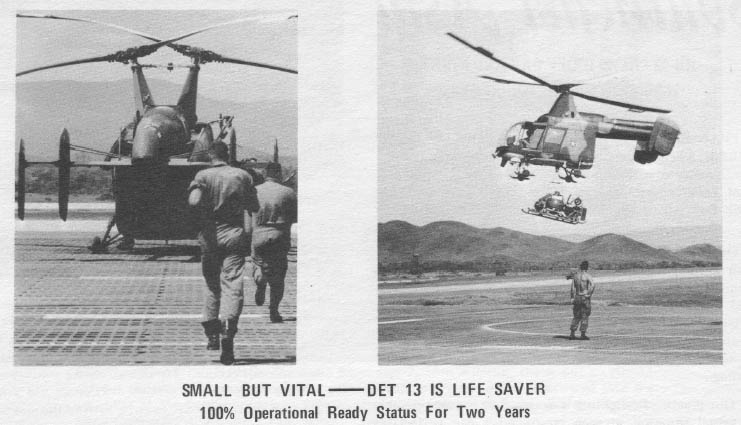 Pretty cool!  |
|
Pillar of the Community
United States
2764 Posts |
First of all, I'm sorry for the delay, this Part I supposed to end on Thursday last week... I was so busy w/ work and Scouts.... hence the delay.
The final result for Part I:
First Prize: Earle42 = 120 points
Note: Clear and coincide answers, despite 2 spelling error (Khanh, not Kahn @ answer to number 9).
Second Prize: Tim Stroud = 100 points
Note: I guess you did some search online and then cut and paste. Some of the info are irrelevant and some are inaccurate. Particularly, regarding Thieu and the gold: All the gold remained in VN and was transported to Ha Noi - there were some discussion of a similar plan as Taiwan but never executed. Thieu was forced to resign. For reference and info please check out this book: The Palace File by Gregory Tien Hung Nguyen & Jerrold L. Schecter. This book contain many classified documents.
Third Prize: nod2003 = 46 points.
Wolf & Moe: I will have something for you guys latter.
All prizes will be mailed when the contest is closed.
|
|
Pillar of the Community
United States
2764 Posts |
Part II (1 week, from the time I post these questions):
Since Part I contain too many questions so we had less participants. I will make this part shorter.
1) Please list the name of the 5 Generals (of The Republic of Vietnam) that suicide before the the fall of Saigon (April 1975). What was their highest ranking/position at the time of dead and the unit that they are commanding. Note: 10 points per completed answer (with correct spelling) = 50 points total.
2) There were 32 Generals forced into concentration camp/prison ("re-education camp"). Nine of them remained after 17 years. Please list their name and ranking. What's the name/code of the last concentration camp that they were in? Note: 5 points per name & ranking + 5 points for the concentration camp name (50 points total)
3a) Name of the "Master Mind" of North Vietnam military during the war and his rank. Note: 10 points
3b) Name of four other North Vietnamese leaders (and their rank) that directly involved in the final offensive of 1975. Note: 10 points
Edited by SA4H
06/02/2011 4:59 pm
|
|
Bedrock of the Community
United States
10065 Posts |
@SilentAsian4hire Just wanted to say thanks for the opportunity -- not only the contest, but the chance to do some good, historical research. I spent quite a few hours with my answers b/c I was enjoying the historical information. Also thanks for the correction on the spelling error  Looking forward to more reading/learning.  |
|
Pillar of the Community
United States
8904 Posts |
Quote:
3a) Name of the "Master Mind" of North Vietnam military during the war and his rank. Note: 10 points Vietnam War: Vo Nguyen Giap Military History Degree: Earned a Master of Arts in Military History from Norwich University. Early Life: Born in the village of An Xa on August 25, 1911, Vo Nguyen Giap was the son of Vo Quang Nghiem. At 16, he began attending a French lycée in Hue, but was expelled after two years for organizing a student strike. He later attended the University of Hanoi where he earned degrees in political economy and law. Departing school, he taught history and worked as a journalist until he was arrested in 1930, for supporting student strikes. Released 13 months later, he joined the Communist Party and began protesting against French rule of Indochina. During the 1930s, he resumed work as a writer for several newspapers. Exile & World War II: In 1939, Giap married fellow socialist Nguyen Thi Quang Thai. Their marriage was brief as he was forced to flee to China later that following the French outlawing of communism. While in exile, his wife, father, sister, and sister-in-law were arrested and executed by the French. In China, Giap joined with Ho Chi Minh, the founder of the Vietnamese Independence League (Viet Minh). Between 1944 and 1945, Giap returned to Vietnam to organize guerilla activity against the Japanese. Following the end of the World War II, the Viet Minh was given power by the Japanese to form a provisional government. First Indochina War: In September 1945, Ho Chi Minh proclaimed the Democratic Republic of Vietnam and named Giap as interior minister. The government was short-lived as the French soon returned to take control. Unwilling to recognized Ho Chi Minh's government, fighting soon broke out between the French and the Viet Minh. Given command of the Viet Minh's military, Giap soon found this his men could not defeat the better-equipped French and he ordered a withdrawal to bases in the countryside. With the victory of Mao Zedong's communist forces in China, Giap's situation improved as he gained a new base for training his men. Over the next seven year's Giap's Viet Minh forces successfully drove the French from most of North Vietnam's rural areas, but were unable to take any of the region's towns or cities. At a stalemate, Giap began attacking into Laos, hoping to draw the French into battle on the Viet Minh's terms. With French public opinion swinging against the war, the commander in Indochina, General Henri Navarre, sought a quick victory. To accomplish this he fortified Dien Bien Phu which was situated on the Viet Minh's supply lines to Laos. It was Navarre's goal to draw Giap into a conventional battle where he could be crushed. To deal with the new threat, Giap concentrated all of his forces around Dien Bien Phu and surrounded the French base. On May 13, 1954, his men opened fire with newly obtained Chinese 105mm guns. Surprising the French with artillery fire, the Viet Minh slowly tightened the noose on the isolated French garrison. Over the next 56 days, Giap's troops captured one French position at time until the defenders were compelled to surrender. The victory at Dien Bien Phu effectively ended the First Indochina War. In the ensuing peace accords, the country was partitioned with Ho Chi Minh leading communist North Vietnam. Vietnam War: In the new government, Giap served as minister of defense and commander-in-chief of the People's Army of Vietnam. With the outbreak of hostilities with South Vietnam, and later the United States, Giap led North Vietnam's strategy and command. In 1967, Giap oversaw the planning for the massive Tet Offensive. While initially against a conventional attack, Giap's goals were both military and political. In addition to achieving a military victory, Giap desired the offensive to spark an uprising in South Vietnam and show that American claims about the war's progress were wrong. While the 1968 Tet Offensive proved to be a military disaster for North Vietnam, Giap was able to achieve some of his political objectives. The offensive showed that North Vietnam was far from being defeated and significantly contributed to changing American perceptions about the conflict. Following Tet, peace talks began and the US ultimately withdrew from the war in 1973. Following the American departure, Giap remained in command of North Vietnamese forces and directed General Van Tien Dung and the Ho Chi Minh campaign that finally captured the South Vietnamese capital of Saigon in 1975. Postwar: With Vietnam reunified under Communist rule, Giap remained minister of defense and was promoted to deputy prime minister in 1976. He stayed in these positions until 1980 and 1982 respectively. Now retired, Giap is the author of several military texts including People's Army, People's War and Big Victory, Great Task. |
|
Bedrock of the Community
United States
10065 Posts |
I am having trouble finding all of questions 2 so will submit what I have and keep looking:
Here is the answer to question 1.
1. The five ARVN generals who committed suicide (on April 30, 1975) before the fall of Saigon were:
a. Brigadier General Le Nguyen VY was the commander of the 5th Infantry Division at Lai Khe and committed suicide by pistol at 11:00 AM at the division headquarters
b. General Le Van Hung - the Hero of An Loc -- commanded the 5th Division of An Loc during the Easter Offensive in 1972. At the time of the suicide he was the deputy commander under Nguyen Khoa Nam.
c. Major General Nguyen Khoa Nam was the Commander of IV Corps and Military Region 4. He died at 11:30 PM.
d. General Pham Van Phu -- who was the Commander of II Corps/Military Region II in Pleiku. He died in Saigon.
e. Brigadier General Tran Van Hai who was the Commander of 7th Infantry Division at Dong Tam, near My Tho 1974--1975. He died at midnight at the Division HQ at the Dong Tam Army base.
2.These ARVN generals spent 17 years in communist reeducation camps:
a. Major General Le Minh Dao led the 18th Division of the ARVN (the "Super Men" who defeated 3 North Vietnamese Army divisions in the battle at Xuan Loc).
b. Brigadier General Tran Quang Khoi commanded the AVRN III Armor Brigade and III Corp Assualt Task Force throughout the III Corp Tactical Zone
c. General Do Ke Giai, commanding general of the Vietnamese Special Forces
more to come...
edited for punctuation error
Edited by Earle42
06/03/2011 2:03 pm
|
|
Bedrock of the Community
United States
10065 Posts |
Here are the answers to part 3:
3a. The "mastermind" for North Vietnam was General Vo Nguyen Giap -- also known as Nui Lua meaning "volcano beneath the snow" (a personality of boiling interior with a cold exterior).
3b. Four leaders (with rank) of the North Vietnamese at the Battle of Xuan Loc in the Ho Chi Mihn Campaign:
a. General Van Tien Dung - PAVN Campaign Manager
b. Major General Hoang Cam - in control of the main operation against the city launched a North and NW attack on Xuan Loc with tanks and artillery.
c. Colonel Bui Cat Vu - deputy commander of the 4th Army Corps was to organize the attack on Xuan Loc from the east.
d. General Tran Van Tra -- commander of the Viet Cong National Liberation Front.
How much squash could a Sasquatch squash if a Sasquatch would squash squash? Download and read: Grading the graders Costly TPG ineptitude and No FG Kennedy halveshttps://ln5.sync.com/dl/7ca91bdd0/w...i3b-rbj9fir2 |
|
Pillar of the Community
United States
2661 Posts |
This is the best answers I could come uo with.
1
Brigadier General LE VAN HUNG
Deputy Commander of the IV Corps/Military Region 4 at Can Tho.
Brigadier General LE NGUYEN VY
Commander, 5th Infantry Division at Lai Khe.
Major General NGUYEN KHOA NAM
Commander IV Corps and Military Region 4.
Brigadier General TRAN VAN HAI
Commander, 7th Infantry Division at Dong Tam, near My Tho.
General PHAM VAN PHU
Commander, II Corps/Military Region 2.
2
Brigadier General Tran Quang Khoi
3a
Le Duan.... First Secretary (head of the Communist party)
3b
Senior General Van Tien Dung
General Nguyen Van Toan
|
| |
Replies: 38 / Views: 11,188 |
To participate in the forum you must log in or register.
Disclaimer: While a tremendous amount of effort goes into ensuring the accuracy of the information contained in this site, Coin Community assumes no liability for errors. Copyright 2005 - 2026 Coin Community Family- all rights reserved worldwide. Use of any images or content on this website without prior written permission of Coin Community or the original lender is strictly prohibited.
Contact Us | Advertise Here | Privacy Policy / Terms of Use
|
| Coin Community Forum |
© 2005 - 2026 Coin Community Forums |
| It took 0.65 seconds to rattle this change. |
 |
|
| |
|







 Posted 05/19/2011 4:36 pm


