| Author |
 Replies: 13 / Views: 2,533 Replies: 13 / Views: 2,533 |
|
|
Pillar of the Community
United States
4846 Posts |
my brother came home with a zincoln-but without the zinc! that's right, my brother used chemicals to dissolve the zinc leaving the copper reverse and obverse alone!
|
|
|
|
Moderator
 United States
14463 Posts |
bet you know what's next  EDIT: also weight and size please edit #2: when I typed please, it automatically substituted ASE for the letters a s e.  edit #3: ok, now the please is correct Edited by Fuzzy317
05/26/2011 8:39 pm
|
|
Pillar of the Community
 United States
4846 Posts |
here you go! weight= .04 grams size= same diameter as a cent(minus the notches) width= ill have to get out my brothers caliper, but if you look at the pics, you can see that its quite thin. 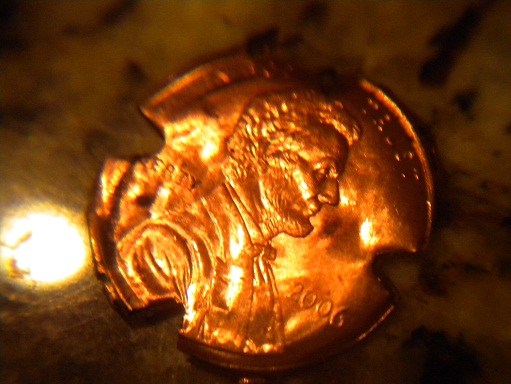 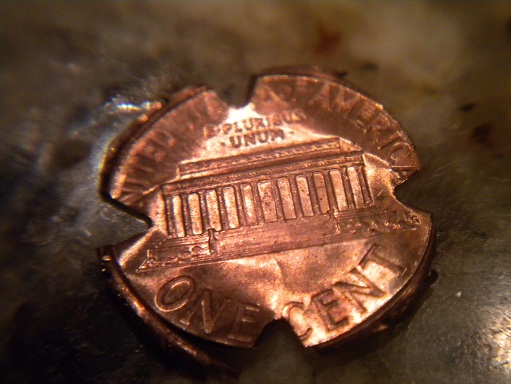 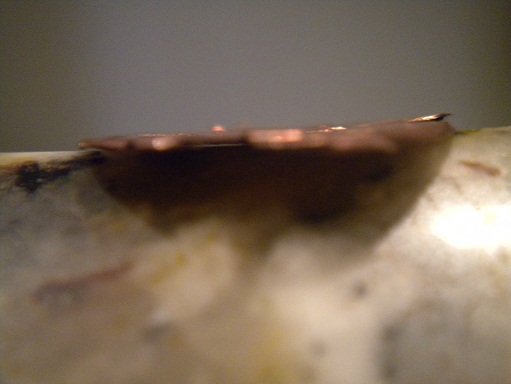 Edited by Adam_E
05/26/2011 8:47 pm
|
|
Pillar of the Community
United States
3345 Posts |
Hey dude, what did he use to erode the zinc?
Which chemicals?
|
|
Rest in Peace
United States
1729 Posts |
I have a jar full of zincolns that look like this one, or worse, after being in the ground for only about six or seven years. Chemicals? We don't need no stinkin' chemicals. Just spit on 'em and watch 'em rot.
|
|
Pillar of the Community
United States
1510 Posts |
try to spend it now!
Retired USAF 1983-2003
|
|
Pillar of the Community
United States
4846 Posts |
rachumus- his teacher used hydrochloric acid, a very dangerous -and illegal- acid.
|
|
Bedrock of the Community
United States
10065 Posts |
Adam E said: Quote:
rachumus- his teacher used hydrochloric acid, a very dangerous -and illegal- acid. Former chemistry teacher here. HCl was used for this experiment since Zn reacts so well with it. However, HCl (muriatic acid - hydrochloric acid - different names - same thing) is not illegal. In fact it is sold by pool supply places/hardware stores by the gallon. And Adam, I know when I was your age that this kind of thing fascinated me. However, unless you are properly trained/instructed how to use this acid, it can be very, very dangerous by causing severe burns. Even the vapors can harm/burn your lungs when breathing them. So please, if you get an inkling to experiment, ask you teacher to do it with you in a controlled environment. We all would hate to hear of your having been hurt while trying to have a little fun and experimentation. The teacher also could have used HNO3 (Nitric acid) to take off the copper coating and leave the Zn center. You can also remove the clad layers from dimes and quarters this way. |
|
Rest in Peace
United States
9104 Posts |
Isn't muriatic acid a lower concentration? That cent looks like it was eaten away quickly, where I've heard muriatic can take days to work through a tiny nick.
|
|
Bedrock of the Community
United States
20066 Posts |
Very cool...I see he cut the edges so the HCl would react with the zinc. He must have been watching it closely because eventually the copper would convert to copper chlorides.
Also, like Earl said, HCl is not illegal, but it is dangerous. Especially the concentrated HCl I work with in the lab routinely. I really hate it because the fumes must be dealt with carefully. One of the more nasty solutions I make sometimes is called methanolic hydrochloric acid, extremely nasty. It's simply a mixture of methanol and HCl. When the methanol evaporates it leaves behind HCl so you really have to watch it on the skin. LOL
|
|
Valued Member
United States
337 Posts |
We did this in science class as well when I was in highschool
I also remember coating a quarter with something
I wasnt a collector back then but I remember the lab specifically saying penny from 83 or later
and quarter from 1965 or later
teacher asked us why and no one knew about the metal compositions
no young coin enthusiasts were in the crowd
another question was asked in my economics class in college a year ago about coins and I answered all the questions and gave tons of extra information
the teacher said "you must collect coins" everyone looked at me like I was nuts
ok off topic, bye
|
|
Pillar of the Community
United States
721 Posts |
Quote:
The teacher also could have used HNO3 (Nitric acid) to take off the copper coating and leave the Zn center. Please be advised that while an interesting reaction, the action of nitric acid on copper generates a noxious brown gas of nitrogen dioxide and must be done in a well-ventilated area. It's a classic chemistry demonstration. HCl or muriatic acid is much safer to use, but the comments above should be well-heeded. No matter what the acid, it can cause burns if improperly handled. I would suggest using household vinegar if you want to try this at home. You'll just have to wait a lot longer. The HCl reacts faster and thus leaves behind a nice looking copper shell. |
|
Pillar of the Community
United States
625 Posts |
The drink coke will do the same thing. Used to do it as a kid. Take a zinclon, wear down a few places on the edge till you see the zinc, drop it in and leave it for a day or so. You get a nice copper shell.
|
|
Pillar of the Community
United States
721 Posts |
It's the phosphoric acid in the coca cola that does the trick. I forgot about that.
|
| |
Replies: 13 / Views: 2,533 |
|







 Posted 05/26/2011 8:45 pm


