| Author |
 Replies: 23 / Views: 3,851 Replies: 23 / Views: 3,851 |
|
Valued Member
United States
284 Posts |
What is the dividing line between a Modern and Classic coin? We seem to count Lincolns as Modern but they've been minted since 1909. The last Franklin half came off the mint lines about 48 years ago. Will we one day move the line to 1964 when almost every circulating coin lost it's silver content? -- Boris |
|
|
|
Valued Member
United States
337 Posts |
|
|
Pillar of the Community
United States
931 Posts |
I have always thought that the SILVER Washington quarters had some of the most beautiful strikes of any American coin. I think the current business strike quarters are so weak that the Silver Washington quarters should be classified as a classic era for that coin. I do think that the current proof Silver ATB Quarters are a beautiful coin worthy of the Washington quarter design. |
|
Moderator
 United States
191400 Posts |
We (in differentiating the forums) do not count Franklin half dollars as a classic. It is two years younger than the Roosevelt dime, ten years younger than the Jefferson nickel, and 16 years younger than the Washington quarter. My personal opinion on the division between classic and modern is this... If Liberty or another non-real person (the Indian Heads) is on the obverse, then it is a classic. If there is a real person on the obverse, then it is a modern. |
|
Valued Member
United States
296 Posts |
Quote:
If Liberty or another non-real person (the Indian Heads) is on the obverse, then it is a classic.
If there is a real person on the obverse, then it is a modern.
That's kinda how I always looked at it... |
|
Pillar of the Community
United States
4778 Posts |
 with jbuck. Can't imagine a coin with a real person being a classic, no matter how classic-looking it is. |
|
Valued Member
 United States
284 Posts |
So It seems that age of the coin/design doesn't indicate if the coin is a Classic or a Modern? I'm just thinking that one day Silver coinage should probably be considered Classic because it represents a time in our country's that has passed. Socially, economically, politically, etc the country is different.
What if the design of the coin changes? Suppose the Nickel loses Jefferson and gets an American Flag on the front? Does that make it a Classic then? I have to admit that I don't know if US law requires a President or some other living figure to be on the obverse.
-- Boris
|
|
Moderator
United States
191400 Posts |
Quote:
What if the design of the coin changes? I admit, this is where my view has problems. However, I feel safe for now. I honestly believe that our coins will cease production before the obverse subject changes. The politics involved with replacing any of the existing people makes it a difficult task. The mere suggestion that Reagan should replace Roosevelt on the dime caused quite the controversy. Sure, Jefferson got a makeover recently and some of the reverses have changed, but I feel that the potential uproar prevents any of these people from being replaced with anyone or anything else. |
|
Pillar of the Community
United States
597 Posts |
Quote: If Liberty or another non-real person (the Indian Heads) is on the obverse, then it is a classic. If there is a real person on the obverse, then it is a modern. darn I guess old 1775 isn't a classic yet  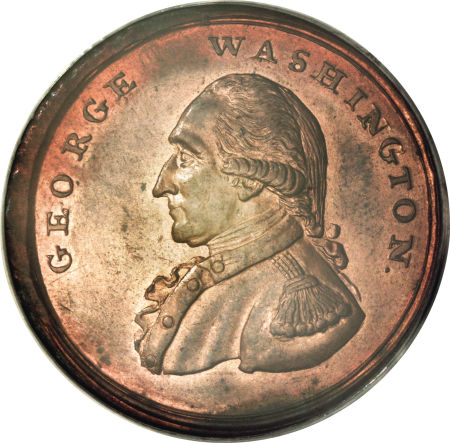 |
|
Pillar of the Community
United States
597 Posts |
|
|
Pillar of the Community
United States
2278 Posts |
What really separates classics from moderns is a series of laws starting in the fall of 1964 that completely changed collector behavior. The first froze the 1964 date in perpetuity. The government came to believe the coin shortage was being caused by coin collectors but they were really just a scape goat. The cause of the shortage was that silver prices were soaring and inflation was picking up. There was even a law proposed by Bible of Utah that would have outlawed coin collecting.
But these measures proved unnecessary since the coinage act of 1965 debased the currency and then froze the 1965 dat in perpetuity. The mint did everything it could to discourage saving of coins including the discontinuance of both mint and proof sets and the elimination of all mint marks.
People had been saving millions of coins each year and they stopped. It is this which really separates classics from moderns. Between 1932 and 1964 anything is available in unc. After 1964 availability tends to be very spotty and even well saved coins are much less common than 1964 issues.
Time don't fly, it bounds and leaps.
|
|
Moderator
United States
191400 Posts |
Quote:
darn I guess old 1775 isn't a classic yet Well, since that is not a US Mint issued coin, my rules cannot apply to it.  |
|
Valued Member
United States
163 Posts |
Quote:
What really separates classics from moderns is a series of laws starting in the fall of 1964 that completely changed collector behavior. The first froze the 1964 date in perpetuity. The government came to believe the coin shortage was being caused by coin collectors but they were really just a scape goat. The cause of the shortage was that silver prices were soaring and inflation was picking up. There was even a law proposed by Bible of Utah that would have outlawed coin collecting.
But these measures proved unnecessary since the coinage act of 1965 debased the currency and then froze the 1965 dat in perpetuity. The mint did everything it could to discourage saving of coins including the discontinuance of both mint and proof sets and the elimination of all mint marks.
People had been saving millions of coins each year and they stopped. It is this which really separates classics from moderns. Between 1932 and 1964 anything is available in unc. After 1964 availability tends to be very spotty and even well saved coins are much less common than 1964 issues. Yeah wasn't that stupid...instead of simply debasing the coins like they were going to do anyway I guess the government thought it was worth losing all the money they were going to get on Seigniorage over the harebrained idea that collectors could put a dent in the massive amount of coins produced. Edited by jarwulf
05/24/2011 6:04 pm
|
|
Pillar of the Community
United States
3077 Posts |
just thinking about today's moderns= tomorrows classics
if by some chance we have to change our currency because we go bankrupt and return to a gold/silver standard then we may have classics ,clads and then moderns
|
|
New Member
United States
42 Posts |
My modern coins spreadsheet goes back to 1958 for cents, 1938 for nickels, 1946 for dimes, and 1999 for quarters (only because I don't colect them prior to the statehood series. I guess that pretty much puts me in line with jbuck, except for counting lincoln wheats as classics. In taking a broader view, the real person/ fake person line makes perfect sense.
|
|
Moderator
United States
14463 Posts |
my opinion only: I consider modern as coins that are current produced with same obv and rev. and consider classic as coins that with major difference in obj or rev, or are no longer produced. IMO - commemoratives become classic when they are no longer produced. For me: modern coins = Native American dollars, Presidential dollars, Kennedy Halfs, ATB Quarters, Statehood quarters(maybe), Roosevelt dimes, Jefferson nickels 2006 +, Lincoln Shield Cents classic coin = everything else Edited by Fuzzy317
05/25/2011 03:06 am
|
| |
Replies: 23 / Views: 3,851 |








 Posted 05/24/2011 11:21 am


