| Author |
 Replies: 20 / Views: 2,720 Replies: 20 / Views: 2,720 |
|
Valued Member
United States
72 Posts |
I have known since I was 10 years old not to clean coins. But.... I picked up a complete Roosevelt silver dime collection for cheap recently, way under melt value. About 10 or so were really in bad shape. Recognizing the low value of the coins, and how bad some of them look, I cleaned a couple. My old blue book suggested that if you must clean a silver coin, use a paste of baking soda and water. That's what I used. I think it was worth doing, comments welcome. Here is the before and after: 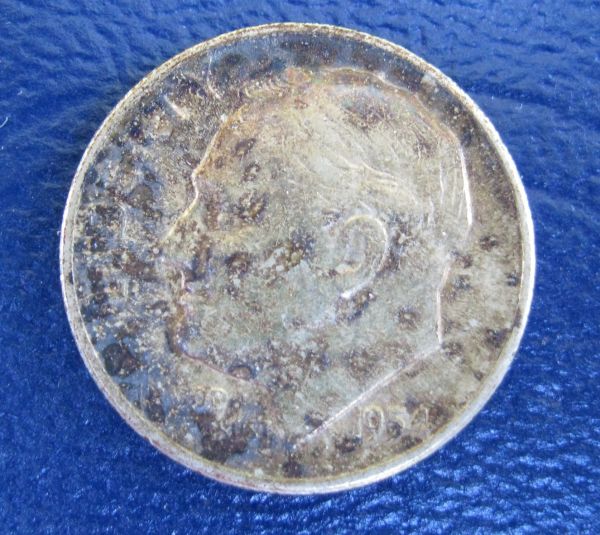 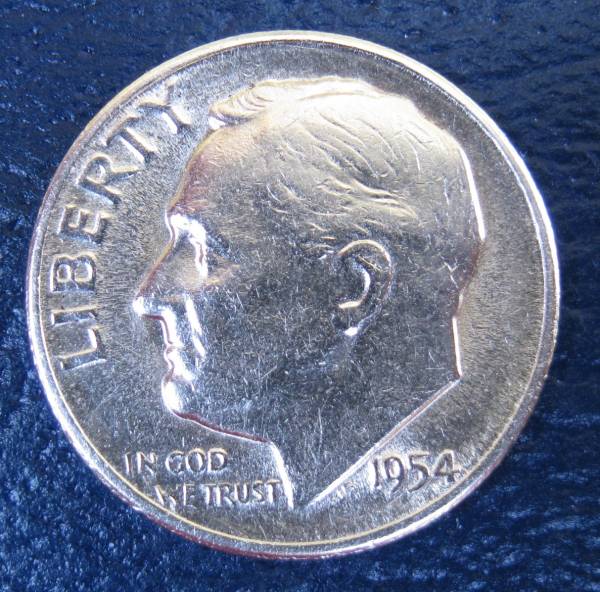 Edited by IowaHawkeye
09/14/2011 6:51 pm
|
|
|
|
Valued Member
United States
466 Posts |
wow!
I might try that for some of my really bad roosevelts I find in circulation
|
|
Pillar of the Community
United States
1151 Posts |
|
|
Valued Member
United Kingdom
66 Posts |
|
|
Bedrock of the Community
United States
11951 Posts |
Good improvement.
I see no problem trying to improve messed up coins
|
|
Pillar of the Community
United States
3345 Posts |
Good improvment but the hairlines take away eye appeal. But I would have probably cleaned it too.
|
|
Pillar of the Community
United States
745 Posts |
now you can sell it on ebay as Gem BU, like many bad sellers do  Edited by Penny4Me
09/14/2011 8:56 pm
|
|
Bedrock of the Community
United States
19995 Posts |
If you must clean silver, use an acid thiourea dip and not baking soda. If properly done, it's nearly impossible to tell.
Baking soda left hairline scratches all over the coin....personally, I prefer the toned look over this.
|
|
Bedrock of the Community
United States
12437 Posts |
Quote:
My old blue book suggested that if you must clean a silver coin, use a paste of baking soda and water. Worst...suggestion...ever  Baking soda is highly abrasive to soft silver. |
|
Moderator
 United States
56855 Posts |
|
|
Pillar of the Community
United States
3294 Posts |
Yeah, good thing you did it with a melt value coin.
|
|
Bedrock of the Community
United States
20753 Posts |
Quote:
Good improvement.
I see no problem trying to improve messed up coins
 I too have done that many times with Baking Soda and Distilled water. Should use Distilled water since some waters contain almost anything. I too have found coins at a flea market that appeared to have been in a tar pit so almost anything done to it could do little damage. On a coin that is almost gone, as this one was, makes little difference if cleaned or not. You couldn't sell it the way it was except for melting and now, as already noted, could put on ebay and make some profit. |
|
Moderator
United States
23522 Posts |
I simply cannot believe the words of encouragement I'm reading in this thread. Yeah, I get it - unimportant coin, melt value, why not? What kind of shape was that Roosevelt in, under the patina? AU? MS66? At what point do we say, "OK, fine, this one isn't worth preserving for a hundred years in the future?" More 1916 Lincoln Cents were produced than 1954-P Roosevelts. Today, less than a hundred years later, it's pretty easy to find a 1916 Lincoln that's worth $400. An MS63 Red is worth $50. I'm not one of those who advocates the "hands off under any circumstances" school of thought. The next coin I clean or otherwise alter won't be the first. But the response should fit the situation, and an abrasive never fits the situation. If you're gonna act on a coin, pretend that there will still be coin collectors when you're gone, and consider your responsibility to them. Chances are this wasn't a Mint State coin, and chances are they'll still be plentiful in 2054. Unless the current run-up on gold & silver continues for long enough to make coins like this "common date" silver become a rarity simply because nobody worried about how many would be left when they were done melting them.... An appropriate response for this coin would be a diluted thiourea solution as BadThad suggested. Yeah, it might have killed it anyways, but at least you'd have found out what was actually under the patina, rather than dictating what was going to be under the patina as the OP did when he ground the surface off of it. Sheesh.  |
|
Pillar of the Community
United States
4132 Posts |
|
|
Valued Member
 United States
72 Posts |
Folks, thanks for all the comments.
As I work my way toward the 50 post level so I can buy here on the site, I should have known better to stay away from controversial topics....
After looking at the coin in my album, it looks about as out of place as it did before cleaning. Before cleaning, it looked ugly next to the naturally toned coins. Now, it looks out of place as it is too shiny compared to the naturally toned coins.
I'll probably just sell the ugly ones as they are and replace them with better specimens.
Regards,
Mark
|
|
Pillar of the Community
United States
860 Posts |
I am in the boat with Superdave and Thad. If you are going to do it anyway, use dilute dip and patience. Full strength only takes a few seconds, diluted much longer, but this time allows evaluation, as it is an irreversible reaction. I don't want to involve a different reaction by adding sodium bicarbonate to an acid still on the coin surface as mentioned in the article, I prefer an extended cold water rinse and then an acetone rinse following to remove all water on the surface of the coin, and air dry. Many problems will never be "improved" by dipping, but many possible coins are damaged by over treating.
Jim
|
| |
Replies: 20 / Views: 2,720 |







 Posted 09/14/2011 7:20 pm





