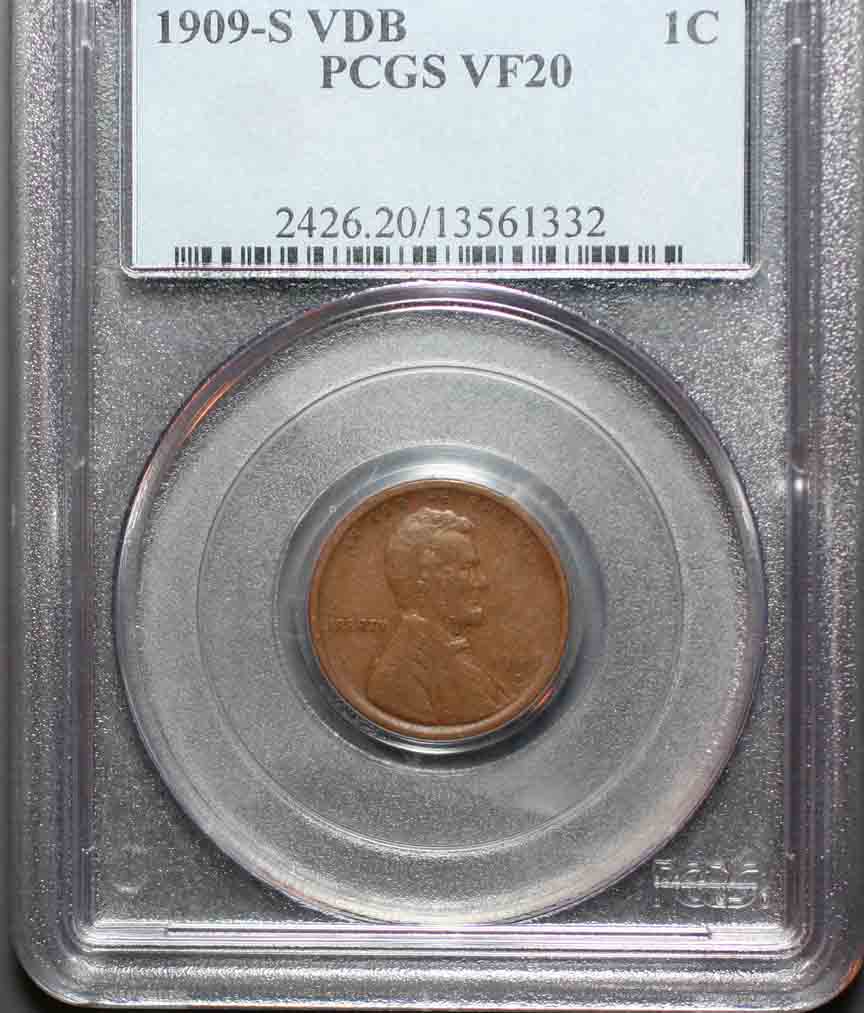
So I purchased a 1909-S VDB PCGS VF20, sight-unseen from an auction. Little-to-no problem right? No.
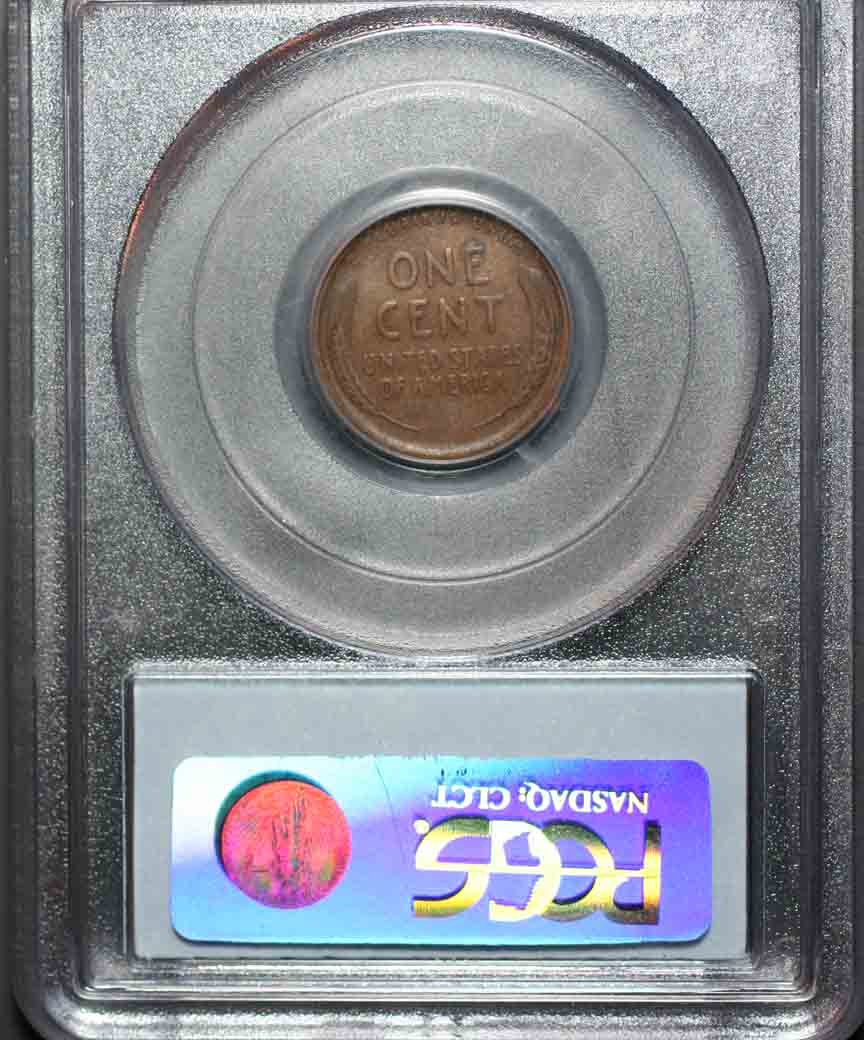
The coin is actually a 1909-S, without a VDB. I have shown it to numerous people and sure enough, no VDB.
So I remembered PCGS Guarantee.
http://www.pcgs.com/guarantee.chtmlAlright, so I figured I will send it back in. But then I got to reading what the guarantee does not cover....
-------------------------------------------
The following is further explanation of what the PCGS Guarantee does not cover.
Clerical or "mechanical" errors. PCGS occasionally makes clerical errors in inputting data which is shown on the insert in the PCGS holder; consequently the PCGS Guarantee does not cover obvious clerical errors, what we call "mechanical errors." Examples would include the following:
A date listed on the holder that does not match the date of the coin. For example, if you had a 1928 $20 St. Gaudens, but the PCGS holder showed the date as 1929 (a much more valuable coin), this coin would not be covered by the PCGS Guarantee as the date on the coin itself is obviously 1928.
A designation that is obviously incorrect. For example, if you had a 1945 Philadelphia
Mercury dime and the bands on the reverse were as flat as a pancake and obviously not fully struck, but the PCGS holder showed the designation as "FB" for fully struck crossbands, this coin would not be covered the PCGS Guarantee as the crossbands are obviously not fully struck.
Proofs shown as regular strikes and regular strikes shown as proofs. For example, if you had an obvious regular strike 1907 $2.5 gold piece, but the PCGS holder showed the coin as a proof, this coin would not be covered by the PCGS Guarantee as the difference between a regular strike and proof 1907 $2.5 is obvious.
An obviously misidentified coin. For example, if you have a Hudson silver commemorative, but the PCGS holder showed the coin as a Hawaiian silver commemorative, this coin would not be covered by the PCGS Guarantee as a Hudson is obviously not a Hawaiian.
A variety attribution that is obviously incorrect. For example, if you had a normal date 1942
Mercury dime, but the PCGS holder showed the coin as a much rarer 1942/1 overdate, this coin would not be covered by the PCGS Guarantee as the date is obviously normal. Another example would be if you had a 1945
Mercury dime with an obviously normal size mint mark, but the PCGS holder showed the coin as a "Micro S." This coin would not be covered by the PCGS Guarantee since the mint mark is obviously normal size.
A blatantly obvious clerical input mistake with respect to the actual grade of the coin. For example, if you had an 1893-O
Morgan dollar and the PCGS holder showed the coin as MS65 (a Gem quality coin), but the coin was so beat up and marked up that it would grade MS60 at best, this coin would not be covered by the PCGS Guarantee as this would be an obvious input error. The rule of thumb here would be a difference of more than two points on the grading scale.
-------------------------------------------
To me, all those seem like a load of... junk.
So do you think PCGS would make this right? From their not-liable scenarios, it seems to me they will not. I will be calling them tomorrow.
Sorry, it's a little out of focus on the obverse on the coin. It does look a lot better.








 Posted 11/01/2009 4:32 pm





