Coin Community Family of Web Sites Join Thousands of Coin, Bullion, & Money Collectors
Royal Estate Auctions - $1 Coin AuctionsRoyal Canadian Mint products, Canadian, Polish, American, and world coins and banknotes. 300,000 items to help build your collection! Vancouvers #1 Coin and Paper Money Dealer Join Thousands of Coin, Bullion, & Money Collectors Coin, Banknote and Medal Collectors's Online Mall Specializing in Modern Numismatics


Username:
Password:
Save Password
Forgot your Password?


This page may contain links that result in small commissions to keep this free site up and running.

Welcome Guest! Registering and/or logging in will remove the anchor (bottom) ads. It's Free!

Knowledge Is King?

To participate in the forum you must log in or register.
Author Previous TopicReplies: 354 / Views: 19,071Next Topic
Page: of 24
Pillar of the Community
aladinslamp's Avatar
United States
3076 Posts
 Posted 08/01/2010  11:24 pm  Show Profile   Bookmark this reply Add aladinslamp to your friends list Get a Link to this Reply
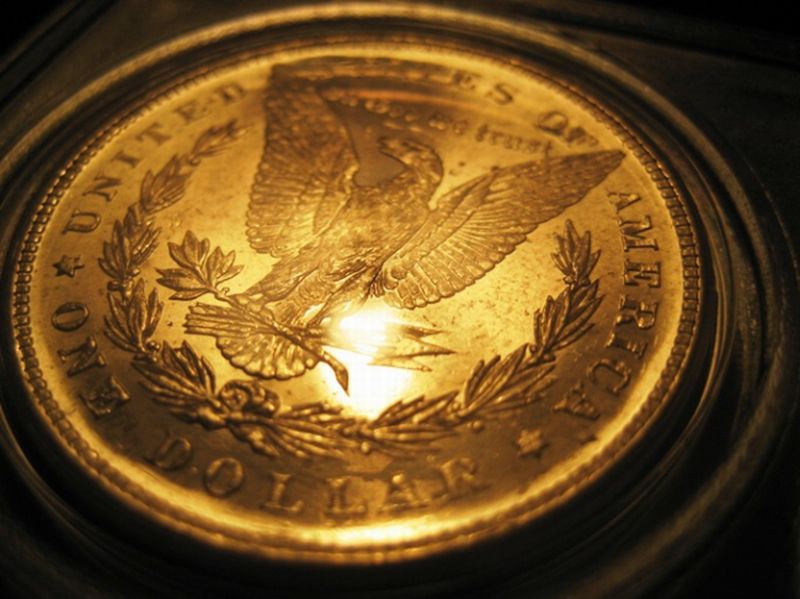
here is the 78P VAM 14.4 concave reverse, Oz's coin is both OBV and REV concaved..

Knowledge-Is-King?
Pillar of the Community
3660 Posts
 Posted 08/01/2010  11:43 pm  Show Profile   Bookmark this reply Add zeewool to your friends list Get a Link to this Reply
Carmykle, I am aware of what your point was. Being an observer to the strike itself probably would not be very telling as the distance between upper an lower dies was extremely small, and the strikes were blurringly fast.

I understand also that in 21st century Utopian terms, in laboratory environments, physicists, engineers and mathematicians could ponder limitless possibilities at great length, but to what end? This coin was produced in 1878, its predecessors were produced in 1873 and 1840, and every year in between, all of the same size and weight. What are the benefits of having equations and 'flow' channels all worked out in idea and on paper for 'who' to complete to what degree of decreed accuracy using what tools?

This is the realm of the master craftsman. Experience and sheer talent guided the engraver to the proper depth and width of each cut.

The dies were not engraved by CNC router, or any computer controlled machinery that already has all of the depth of devices entered into it as modern day process may. The working dies were created by working hubs, which were created by master dies, which were created by a master hub.

The design on a coin started out as a hand drawn sketch on paper. The engraver then prepared a wax model of this design with simple hand tools that was considerably larger (approximately five times the size of) a finished coin. This was done for ease of design engraving. From this wax model, a plaster cast was made, and from it a mold was then made, covered in copper in the form of powder, and electroplated with layers of both nickel and copper to approximately a 1/16" thickness. Finally, this mold received a backing of lead. By use of a machine called a transfer lathe, the design was reduced in pantograph from this mold to the master hub. Every stage thus far required painstaking touch up by the engraver to sustain desired design aesthetics. This was the reality of 19th century mint technology.

I rather think that the main barrier to understanding why things did not happen as you may envision the optimal process, is the hang up with "flow".....there is no flow of gas or liquid. This is displacement of a solid. Remember the example I gave of the playdough molds? How much consideration to flow was given in the creation of these toys? Were they considered manifolds by their creators, or just molds? No need to reply with answers here. You may well be as tired of this discussion as I am. Our differences are neither here nor there when it comes down to the professional and educational backgrounds of the folks who actually made these coins.
Pillar of the Community
3660 Posts
 Posted 08/02/2010  01:09 am  Show Profile   Bookmark this reply Add zeewool to your friends list Get a Link to this Reply
Carmykle, I want you to hang around here. It is rather refreshing (to me) to come across someone who may actually be interested in how things are made rather than the run of the mill 'what VAM is this and how much is it worth' verbiage that resounds through forum halls across the internet. I don't want to hear any more of that 'dork' stuff though. I don't hang with dorks.
Pillar of the Community
3660 Posts
 Posted 08/02/2010  08:34 am  Show Profile   Bookmark this reply Add zeewool to your friends list Get a Link to this Reply
There is an very interesting thread in the US coin forum on Collector's Universe.

The title of the thread is....."Time to split hairs on R-Cuds and open a can of worms".

I would not be too quick to refer to some of these folks as experts in the future. I'm the beaver.

Pillar of the Community
3660 Posts
 Posted 08/02/2010  10:15 am  Show Profile   Bookmark this reply Add zeewool to your friends list Get a Link to this Reply
Yes Gene, both 1883-O v-52 and 1878 v-14.4 display impressive concave features. What do you suppose was the cause of this?
Pillar of the Community
Ozland's Avatar
United States
709 Posts
 Posted 08/02/2010  12:14 pm  Show Profile   Bookmark this reply Add Ozland to your friends list Get a Link to this Reply
Some choices to choose from. (1) over polishing (2) improper basing (3) collapsed die.
Pillar of the Community
Ozland's Avatar
United States
709 Posts
 Posted 08/02/2010  12:22 pm  Show Profile   Bookmark this reply Add Ozland to your friends list Get a Link to this Reply
Improper basining. Sorry for the typo. Can't type.
Pillar of the Community
3660 Posts
 Posted 08/02/2010  12:40 pm  Show Profile   Bookmark this reply Add zeewool to your friends list Get a Link to this Reply
A collapsed die would be caused by insufficient mixing/improper annealing, the affected area would be localized. Scratch possibility #3

Basining and polishing are essentially the same thing, but most folks refer to basining as an event that happened at Philly during die creation, and polishing could occur at any mint at any time.

I was hoping that some one would have decided to look for similarities between these to Concave reverses. Obviously neither of these coins share these effects with other dies within their working hub origins, so the rational place to begin is in the die itself. I am sure that similarities can be found.

I never owned an 1883 coin, I have owned a few 14.4, but no more, and never considered the reasons for the concave appearance before, so I can only speculate and suggest that the key area to look for the answer will be found in the denticles.

Are the denticles weak as compared to other similarly grade coins of their respective hub groups? If so, there is the answer, no need to look any further. If not, we might need to think a bit more abstractly.
Pillar of the Community
Ozland's Avatar
United States
709 Posts
 Posted 08/02/2010  12:48 pm  Show Profile   Bookmark this reply Add Ozland to your friends list Get a Link to this Reply
From Leroy Van Allen.

VAM 52 Revised. Has Doubled Ear, O Tilted Slightly Left And Raised Polished Area At Eagle's Left Leg Of VAM 52 Pictured In The 2005 Supplement. Yes, Has Concave At Rim From Over Polishling With Very Shallow Denticles On Obverse And Reverse-Added That To VAM 52 Description. Thanks Terry For Pointing It Out. Has Planchet Striations In To Coin On Liberty Head Cheek, Date, Left Stars, E And Left Denticles From Weak Strike On That Side. Lines All Go In The Same Direction With Tan Bottom Of Original Planchet Color. Unusual Concave Rim And Shallow Denticles.
Excerpts From Leroy Van Allen Letter Dated 5-14-2010.
Pillar of the Community
3660 Posts
 Posted 08/02/2010  12:55 pm  Show Profile   Bookmark this reply Add zeewool to your friends list Get a Link to this Reply
Leroy is correct in his assessment, and you knew all along the answer to my question, so why did you throw that collapsed die thing into the mix of possibilities? Just messin' with me again?
Pillar of the Community
aladinslamp's Avatar
United States
3076 Posts
 Posted 08/02/2010  1:06 pm  Show Profile   Bookmark this reply Add aladinslamp to your friends list Get a Link to this Reply
I had thought that there would have to be weak dentil's and rim border if it were due to over polishing, just never heard of it before..
Pillar of the Community
Ozland's Avatar
United States
709 Posts
 Posted 08/02/2010  1:20 pm  Show Profile   Bookmark this reply Add Ozland to your friends list Get a Link to this Reply
For what it is worth Gene, I have never seen a coin like this before. What is the likelihood of having a coin concave on both sides? I would venture to guess not much. It is probable that 1883-O VAM 52 may be the only concave fields obverse and reverse in the entire Morgan series.

I am now actively on the look out for VAM 52 without concave fields.
Pillar of the Community
3660 Posts
 Posted 08/02/2010  1:28 pm  Show Profile   Bookmark this reply Add zeewool to your friends list Get a Link to this Reply
Good thinking Gene, that pretty much takes care of the 83-0, but what about the 14.4?
Here are 'my' musings about that one:

Likely the cause is the same, however, I do strongly suspect that there could be differences between this two coins due to their respective time frame origins and home of record.

For instance, the 83-0 called the party hearty mint home, and although it wasn't manufactured there, it most likely became a concave mutant variety there. At what point in its life did this happen though? I might contend that there could have been an earlier state that was damaged and subsequently required creative polishing to remove something.

The 14.4 on the other hand, was born in mid March of 1878, a time when the Philly mint folks had their backs (and other anatomy) to the wall trying to produce enough dies just to keep production going. I highly doubt that the Philly mint took time to rework any die, but simply discarded damaged dies and threw a new one in the press as fast as the one in use failed. I believe that this was quite the norm for the 8TF, so I think that the 14.4 actually started life as a concave reverse, from over basining.

Edited to add:
Once again, I am too slow of a typist. Oz remains one step ahead of me, I too feel, as I alluded to in this post that there could 'possibly' be an earlier state of this coin (in normal profile).

Ooooo you guys are smart !
Edited by zeewool
08/02/2010 1:37 pm
Pillar of the Community
Ozland's Avatar
United States
709 Posts
 Posted 08/02/2010  1:32 pm  Show Profile   Bookmark this reply Add Ozland to your friends list Get a Link to this Reply
Zee, This is like the messing with Sasquatch advertisements. Yes, I already knew the answer to your question. You are on your way to becoming a great vammer. You are correct to inquire about the denticles.

This is a very unusual coin and I am very happy to have it. It was a gift from Jon Engstrom, a fellow vammer.
Pillar of the Community
aladinslamp's Avatar
United States
3076 Posts
 Posted 08/02/2010  1:44 pm  Show Profile   Bookmark this reply Add aladinslamp to your friends list Get a Link to this Reply
I'm sure if there was, and should well be, a prior VAM minted without concave fields, it would take time to verify the small die marker of this coin to know what die is an exact match..much like what alan is doing with the 1902-0 and 04-0's 1902-0 VAM 45 alone has 6 or 7 die pairs involved....
  Previous TopicReplies: 354 / Views: 19,071Next Topic
Page: of 24

To participate in the forum you must log in or register.


Disclaimer: While a tremendous amount of effort goes into ensuring the accuracy of the information contained in this site, Coin Community assumes no liability for errors. Copyright 2005 - 2026 Coin Community Family- all rights reserved worldwide. Use of any images or content on this website without prior written permission of Coin Community or the original lender is strictly prohibited.
Contact Us  |  Advertise Here  |  Privacy Policy / Terms of Use

Coin Community Forum © 2005 - 2026 Coin Community Forums
It took 0.37 seconds to rattle this change. Forums